Photos: Antibes by Johan Allard, CC BY-SA 4.0, cropped; Barcelona by Canaan, CC BY-SA 4.0, cropped.
Antibes or Barcelona?
Our verdict in twelve categories, each scored against the same fixed benchmark cities, and the climate month by month, so you can choose for your trip.
Choose Antibes for
- day trips
- beaches
- wellness
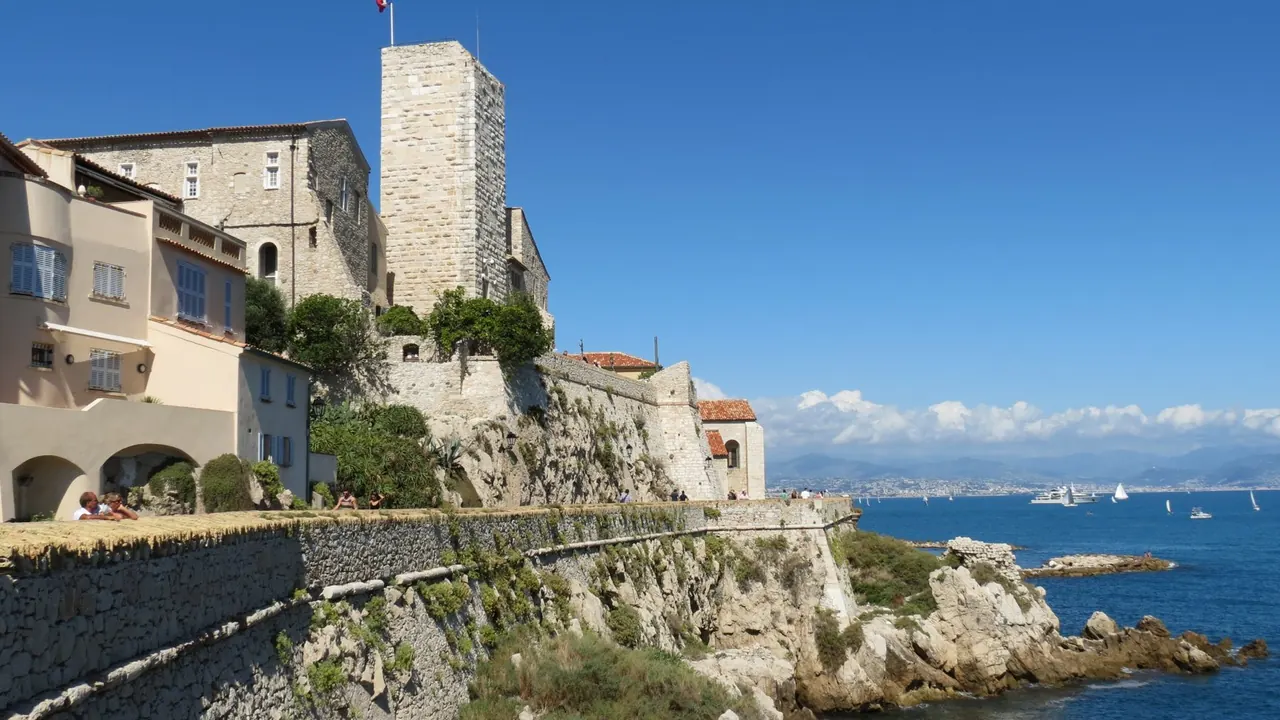
Antibes suits a slower summer by the sea. You get natural sand at Juan-les-Pins and swimming off the rocks of Cap d'Antibes, and the coastal railway takes you to Nice, Cannes, Monaco and Menton. Hill villages such as Saint-Paul-de-Vence, Eze and Grasse are close too, though they are much easier by car than by the slow local buses. It is a small town and works best as a base for the Riviera rather than a place to fill a week on its own. Choose it if sea, light and day trips matter more to you than evenings out.
Choose Barcelona for
- culture and sights
- nightlife
- shopping
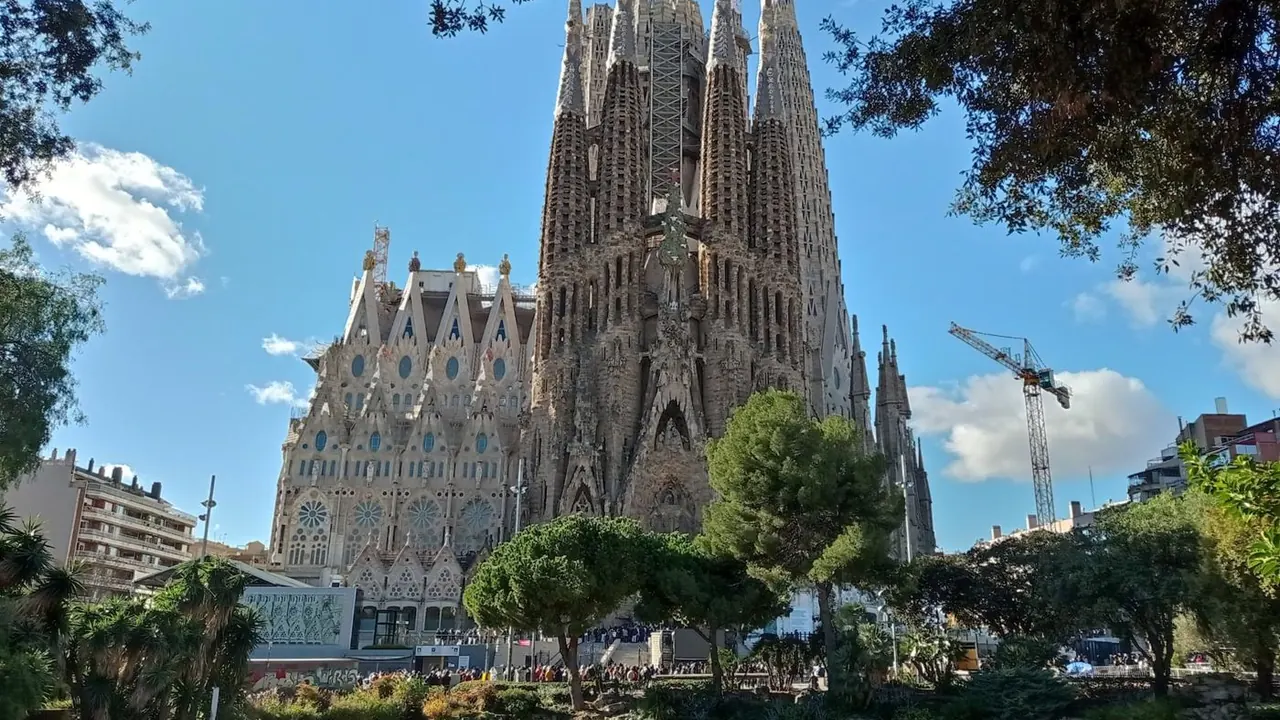
Pick Barcelona when the city itself is the point. Gaudí's Modernista buildings, the Gothic Quarter, a much deeper food scene, late nights in the Born and Gràcia, opera at the Liceu and proper shopping on the Passeig de Gràcia give you far more to do between swims, and the metro takes you from all of it to the beach. It also makes a budget go a little further and offers more for children.
Scoreboard
Twelve categories on one fixed scale from 0 to 100. The shaded stretch is the gap between the two.
Your match
Pick a travel style or drag the sliders, and both match scores follow your weighting.
Wins on day trips and beaches with your weighting.
Wins on culture and sights and nightlife with your weighting.
What matters to you?
Category by category
What the scores mean for a trip.
Beaches & swimming
Both have real sand and a sea of about the same warmth in August, so the difference is in the kind of beach. Antibes has natural, gently shelving beaches at Juan-les-Pins and La Salis, and the rocky coves of Cap d'Antibes for swimming off flat rocks into very clear water. Private clubs take much of the sand.
Barcelona's beaches are man-made and run for kilometres from Barceloneta to Mar Bella. Their strength is that they are a metro ride from the centre. In high summer they are packed and you need to watch your bags, and the better sand is a train ride away at Sitges or along the Maresme.
Food & drink
Barcelona is worth the trip for its food alone, and Antibes is not. Barcelona has Catalan cooking, the late-morning vermouth habit, counter meals in the Santa Caterina and Sant Antoni markets and a serious tasting-menu scene. Prices range from cheap set lunches upwards, and Gràcia, Poble Sec and the Eixample are the best areas to eat.
Antibes is pleasant rather than memorable. It has Niçoise dishes such as socca and pissaladière, grilled fish and rosé, and a fine morning market on Cours Masséna. But the choice is that of a coastal town, and the streets by the port lean on tourist menus.
Culture & sights
The gap here is wide. Barcelona has the Sagrada Família, La Pedrera and the rest of its Modernista buildings, a Gothic Quarter with Roman walls, the church of Santa Maria del Mar, and museums from the MNAC to the MACBA. That is easily a week's worth.
Antibes has one outstanding sight, the Picasso Museum in the Château Grimaldi, with the old town, Fort Carré and the Villa Eilenroc around it, and two days is enough. Both have a Picasso Museum, and they make a neat contrast: Antibes holds the work of a single autumn by the sea, while Barcelona's traces his early years.
Nightlife
Barcelona's nights start late and run to dawn: dinner, then bars, then clubs. Each district has its own crowd, from cocktail bars in the Born's old cellars to drinking outdoors in Gràcia's squares and serious electronic club nights. It stays busy midweek and outside the summer.
Antibes goes out mostly in July and August. Then Juan-les-Pins has beach bars and a few late clubs, and yacht crews fill the pubs near Port Vauban. Out of season it closes early, and people head to Nice for a bigger night.
Nature & outdoors
Both combine sea with hills within reach, but in different ways. In Antibes the outdoors means the coast: the path around Cap d'Antibes over wind-carved limestone, clear water for snorkelling and diving, and the red Esterel cliffs and the Gorges du Loup a drive away.
Barcelona has wild country at its edge, where the trails of Collserola start from Sarrià and Gràcia. Bigger landscapes lie further out at Montserrat, the Garraf and the Costa Brava. Summers are too hot for serious hiking, so it suits walkers best in spring and autumn.
Day trips
Antibes is the better base for touring. The coastal railway puts Nice, Cannes, Monaco and Menton within easy reach, and boats cross to the Lérins Islands. The hill villages of Saint-Paul-de-Vence, Eze and Grasse are close by, and Biot and Vallauris are right next door.
Barcelona's trips are fewer and longer but still strong. Fast trains go to Girona and to Figueres for the Dalí museum, and further south to Roman Tarragona. Closer in are Montserrat, Sitges and the cava cellars of the Penedès.
Good for families
Barcelona gives children much more to do. There is the aquarium, the CosmoCaixa science museum, the zoo and the funfair on Tibidabo, and PortAventura is about an hour south. Children are welcome in restaurants late into the evening, though the crowded old town is hard work with a pushchair.
Antibes is simpler. Its gently shelving sand suits small children well and the small town is easy to manage. Beyond the beach and the boats in Port Vauban, though, there is little built for children.
Getting around
Barcelona is easier to get around. The centre is flat and walkable, and the metro is simple, with buses, trams and local trains on the same tickets. Bike lanes cover the longer flat stretches. Only the hilltops of Park Güell, Montjuïc and Tibidabo take extra effort.
Antibes is small enough to walk, and its two stations on the coastal line make the Riviera towns easy without a car. Away from the railway the buses are slow, so Grasse and the Esterel are much simpler by car, and summer traffic on the coast road is heavy.
Shopping & style
Barcelona is a proper shopping city. Luxury and Spanish fashion houses line the Passeig de Gràcia, a big department store stands on Plaça de Catalunya, the Born has independent designers and the Raval has vintage shops. Espadrilles, ceramics and cava make good things to take home.
Shopping in Antibes is small-scale: Provençal linens, olive oil and soaps from the market and the old-town boutiques. For fashion you go to Cannes or Nice, and Biot glass and Vallauris pottery are best bought in their own villages.
Affordability
Neither is cheap, but your money goes further in Barcelona. Hotels and the entry fees for the Gaudí buildings add up, but weekday set lunches, tapas bars and transport passes keep daily costs reasonable.
In July and August, Antibes is priced like a luxury resort, and beach-club loungers and seafront terraces cost a lot too. Hotel rates drop sharply in spring and autumn, and buying food at the market and using the coastal trains help.
Live music & performing arts
Barcelona has a full programme all year: opera and ballet at the Liceu, concerts at the Palau de la Música Catalana and L'Auditori, serious theatre, jazz cellars and flamenco. The Sónar and Primavera Sound festivals come in early summer.
Antibes has one great event, Jazz à Juan, held each July under the pines since 1960. Beyond that there is the regional programme at the Anthéa theatre and some open-air events in summer. For opera you go to Nice.
Wellness & relaxation
Neither is a spa destination, and they relax in different ways. Antibes has a seawater thalassotherapy centre and the spas of the grand hotels on the cape. In May, June and September the town itself is restful.
Barcelona offers Arab-style bath houses in the old town and hotel spas, but the centre is noisy and stays up late. Calm there means long lunches, terraces in Gràcia and evening walks in Collserola or on Montjuïc.
When should you go?
Pick your month. The climate figures are measured averages, not a forecast.
Antibes in July
Barcelona in July
Daytime high, °C
Rainfall in the month, mm
Temperature and rainfall are climate normals, averaged over the years shown. Antibes: 1991-2020 normals, Nice (9.9 km from centre). Barcelona: 1991-2020 normals, Barcelona / Aeropuerto (14.4 km from centre).
Both follow the same Mediterranean pattern: mild winters around 14°C, a long hot summer, and a sea warm enough for comfortable swimming from June to September, at its warmest near 25°C in August. Antibes has the drier, sunnier summer, and July there is almost without rain. Its autumn turns wet, though, and October and November are its wettest months at over 120mm each. Barcelona's rain is spread more evenly and clears sooner, so November there is much drier.
For a beach trip, late June to mid-September suits both. September is a good compromise, with the sea still near its warmest, but in Antibes it leads straight into the rainy season. For walking the streets, May and late September are the best times in Barcelona. In August the highs near 29°C and the heat in the city make sightseeing tiring by midday. In Antibes, spring is mild and sunny enough for the path around the cape.
Which traveller are you?
On a beach and sun trip, Antibes has the edge. The sand at Juan-les-Pins and La Salis is natural and gently shelving, the coves of Cap d'Antibes have very clear water, and summer is sunnier. Barcelona's city beaches are man-made and packed.
For a culture and arts trip, Barcelona is much the richer choice. Gaudí's buildings, the Gothic Quarter, the MNAC and the Fundació Miró can fill a week, and evenings bring opera at the Liceu. You can see Antibes in two days around its Picasso Museum.
On a food and nightlife trip, Barcelona wins clearly. Catalan cooking, neighbourhood markets and tapas bars lead into nights that last until dawn in the Born, the Raval and Gràcia. Antibes eats well enough but goes quiet outside July and August.
Before you go
| Measure | Antibes | Barcelona |
|---|---|---|
| Official language | French | Spanish |
| Currency | Euro (EUR) | Euro (EUR) |
| Sockets | CE230 V, 50 Hz | CF230 V, 50 Hz |
| Driving side | Right | Right |
| Time zone | UTC+1, UTC+2 in summer | UTC+1, UTC+2 in summer |
| Emergency number | 112 | 112 |
| Elevation | 0 m | 9 m |
| Main airport | Nice-Côte d'Azur Airport (NCE)11 km from centre130 non-stop destinations | Josep Tarradellas Barcelona-El Prat Airport (BCN)13 km from centre235 non-stop destinations |
| Public holidays this year | 11 days | 14 days |
By the numbers
| Measure | Antibes | Barcelona |
|---|---|---|
| City population | 77,637 | 1,731,649 |
| People per km² | 2,930 | 17,094 |
| Museums within 10 km | 14 | 95 |
| UNESCO World Heritage sites within 50 km | 2 | 3 |
| Swim season, months above 21 °C | 4 months | 3 months |
Where else could you go?
Every comparison below shares a destination with this one, so you can follow Antibes or Barcelona somewhere new.