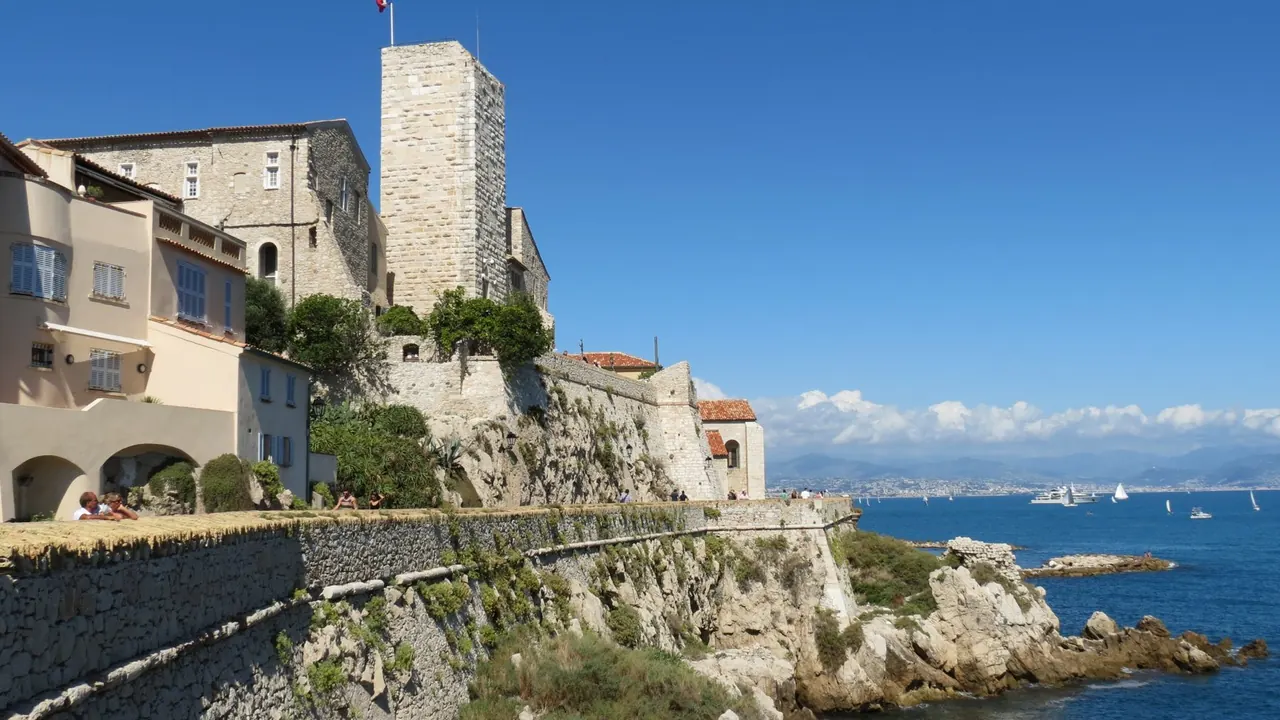
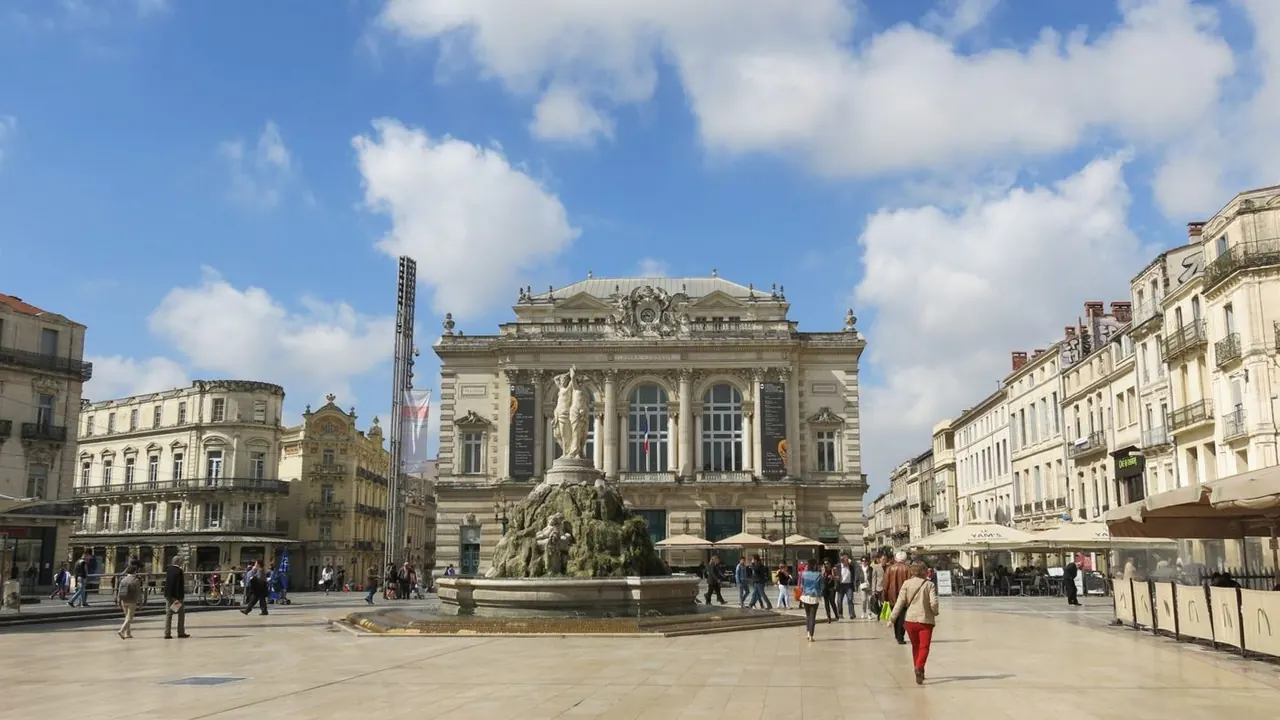
Photos: Antibes by Johan Allard, CC BY-SA 4.0, cropped; Montpellier by Peter, CC BY 2.0, cropped.
Antibes or Montpellier?
Our verdict in twelve categories, each scored against the same fixed benchmark cities, and the climate month by month, so you can choose for your trip.
Choose Antibes for
- beaches
- day trips
Antibes suits a trip built around the sea. It has real sand at La Salis and Juan-les-Pins, which is rare on this coast, clear coves around Cap d'Antibes and the whole Riviera within a short train ride. Choose it for swimming, the Picasso Museum and a few days hopping along to Nice, Monaco or the hill villages. Expect resort prices in summer and quiet evenings outside it.
Choose Montpellier for
- live music and the arts
- prices
- culture and sights
Montpellier is a proper university city, and it offers more to do once you leave the beach. It has the Musée Fabre, a year-round season of opera and dance, student bars, Languedoc wine and a tram that takes you everywhere. It is also noticeably easier on the wallet. The beaches are a tram and bus ride away and flat rather than pretty, so here the sea is a day out rather than the whole point of the trip.
Scoreboard
Twelve categories on one fixed scale from 0 to 100. The shaded stretch is the gap between the two.
Your match
Pick a travel style or drag the sliders, and both match scores follow your weighting.
Wins on beaches and day trips with your weighting.
Wins on live music and the arts and prices with your weighting.
What matters to you?
Category by category
What the scores mean for a trip.
Beaches & swimming
In Antibes the sea is part of the town. The sandy, gently shelving beaches at La Salis and Juan-les-Pins are a walk from the old town, and the rocky coves of Cap d'Antibes add very clear water off flat rocks. The catch is that private beach clubs take much of the sand at Juan-les-Pins.
Montpellier's beaches start about 11km away at Palavas and Carnon, and from there one long, flat strip of sand runs east to the dunes of l'Espiguette. The water is shallow and easy, but there are no coves or clear rocky water, and you go to the beach as a day out from the city rather than living beside it.
Food & drink
Both towns eat best from their markets, but Montpellier has more to work with. The Languedoc vineyards begin at the city's edge, oysters come from the Thau lagoon, and specialities such as tielle from Sète turn up everywhere. The student crowd keeps casual places plentiful and cheap.
Antibes cooks in the Niçoise way: socca, pissaladière, stuffed vegetables and grilled fish with rosé, all built around the Cours Masséna market. It is pleasant if you choose carefully, because the lanes near the port lean on tourist menus.
Culture & sights
Montpellier gives you a city's worth of sights. There is the car-free Écusson with its courtyard mansions, the Peyrou terrace and its aqueduct, a medical faculty dating from the Middle Ages and France's oldest botanical garden. The Musée Fabre covers European painting from the Flemish masters to Soulages, and Bofill's Antigone district adds twentieth-century architecture.
Antibes has one outstanding sight, the Picasso Museum in the Château Grimaldi on the sea wall. The ramparts, Fort Carré and the villas of the cape make a lovely setting, but the town offers a few good visits rather than a full programme.
Nightlife
Montpellier is the livelier of the two all year. Its students fill the bars around Place Jean-Jaurès and the squares of the Écusson on weeknights as well as weekends, and the night carries on at clubs towards Lattes. Antibes goes out mainly in July and August, at the beach lounges and few clubs of Juan-les-Pins and the yacht-crew pubs by Port Vauban. Out of season much of it shuts, and Nice is where people go for a bigger night.
Nature & outdoors
Both have fine outdoors close by, but of different kinds. Antibes faces the sea, with the coastal path over the limestone of the cape, clear water for snorkelling and diving, and sailing in the bay. The red cliffs of the Esterel and the Gorges du Loup are further afield.
Montpellier looks to lagoon and hills. Flamingos feed on the étangs, the Camargue is about an hour away, and you can climb Pic Saint-Loup or canoe in the Hérault gorges. Its flat, windy coast suits kitesurfing and cycling far better than snorkelling.
Day trips
Antibes sends you along the Riviera and up into its hill villages. Nice is about twenty minutes by train and Cannes is closer still, and the same coastal line runs on to Villefranche, Monaco and Menton. Boats cross to the fort and monastery of the Lérins Islands, while Saint-Paul-de-Vence, Eze and the perfume houses of Grasse sit inland, and Sanremo over the Italian border makes a longer day.
Montpellier's trips lead back into Roman and medieval Provence and Languedoc. Nîmes, with its arena and temple, is about half an hour by train, and the Pont du Gard is just beyond it. Arles and Avignon are each about an hour away, and Carcassonne's walled citadel lies further west. The fishing port of Sète and the walled town of Aigues-Mortes in the salt marshes suit shorter days.
Good for families
Montpellier gives children more to do. There is the zoo in its wooded park, the aquarium and planetarium at Odysseum, and a largely pedestrian centre with trams that are easy with a pushchair. Gentle beaches are close by for swimming days.
Antibes has sand right by town, which is rare on this coast, and it is small and easy to manage. Beyond the beach, the boats in Port Vauban and the walk round Fort Carré, though, little is built for children.
Getting around
Montpellier is easier to get around. Its tram links the station, the old town, Antigone and Odysseum, bike-share helps on the flat, and fast trains run to Nîmes, Avignon and Carcassonne. Antibes is walkable at its core and sits on the coastal railway, so Riviera towns are easy, but slow buses and summer traffic make the cape and the hill villages hard going without a car.
Shopping & style
Neither is a shopping destination, but Montpellier has more range. Boutiques, bookshops and wine shops fill the Écusson lanes, the Polygone mall sits by the Comédie, and the big brands are at Odysseum. Antibes shops on a small, local scale: the Provençal market, linens and ceramics, with Biot glass and Vallauris pottery in the neighbouring villages and Cannes or Nice for fashion.
Affordability
Montpellier is the easier place on a budget. Central hotels are moderately priced for most of the year, and student bars, market halls and lunch menus keep daily costs down. Antibes is expensive, and in summer rooms near Juan-les-Pins and on the cape are priced like a luxury resort, with beach-club loungers on top.
Both cost more in July and August. In Antibes, spring and autumn bring the sharpest drop in hotel rates while the sea is still warm enough to swim.
Live music & performing arts
Montpellier has a real stage for a city of its size. The Opéra Comédie and the Corum share a season of opera, ballet and its national orchestra. Contemporary dance is its specialism through the Montpellier Danse festival, and in summer the Radio France festival puts on many free concerts.
Antibes has one great event, Jazz à Juan, held each July under the pines by the sea since 1960. The rest of the year it relies on the Anthéa theatre, and you go to Nice for opera.
Wellness & relaxation
Neither city has a bathing tradition, so in both, wellness means spas. Antibes offers seawater thalassotherapy and the grand hotel spas on Cap d'Antibes, while Montpellier is half an hour from real thermal water at Balaruc-les-Bains on the Thau lagoon. Antibes is most restful in May, June and September, while Montpellier's student-filled centre stays lively rather than quiet.
When should you go?
Pick your month. The climate figures are measured averages, not a forecast.
Antibes in July
Montpellier in July
Daytime high, °C
Rainfall in the month, mm
Temperature and rainfall are climate normals, averaged over the years shown. Antibes: 1991-2020 normals, Nice (9.9 km from centre). Montpellier: 1991-2020 normals, Montpellier (7.8 km from centre).
Both have long, dry, sunny summers with July the driest month, but they warm up differently. Montpellier gets going sooner, reaching 23°C in May against 21°C in Antibes, and it gets hotter in midsummer, around 30°C in July, when the stone streets of the Écusson are hard work at midday. Antibes stays a degree or two cooler in summer and is slightly milder in winter. The sea is warmer in Antibes by a few degrees and stays swimmable from June into early October. Off Montpellier the water is comfortable mainly in July and August.
Autumn brings the rain to both. Antibes is the wetter of the two, with October and November the heaviest months and 138mm in November. Montpellier's wettest months are September and October. For walking the streets, Montpellier is at its best in May, June and late September. Antibes is best in June and September, when the sea is warm and the heat is easier.
Which traveller are you?
For a beach and sun trip, Antibes is the clear choice. You can walk to the sand at La Salis and Juan-les-Pins, the cape adds clear rocky coves for snorkelling, and the sea runs warmer. Montpellier's flat beaches mean a tram and bus ride.
On a culture and arts trip, Montpellier fills more days. It has the Musée Fabre, the Écusson's courtyard mansions, the Peyrou terrace and a serious season of opera, ballet and contemporary dance. Antibes has the Picasso Museum and a July jazz festival, but little beyond them.
On a tight budget, Montpellier makes your money go further. Its students keep bars and casual food cheap, central rooms stay moderately priced outside summer, and the tram is fairly priced. In high season Antibes charges resort prices for rooms, beach loungers and seafront terraces.
Before you go
| Measure | Antibes | Montpellier |
|---|---|---|
| Official language | French | French |
| Currency | Euro (EUR) | Euro (EUR) |
| Sockets | CE230 V, 50 Hz | CE230 V, 50 Hz |
| Driving side | Right | Right |
| Time zone | UTC+1, UTC+2 in summer | UTC+1, UTC+2 in summer |
| Emergency number | 112 | 112 |
| Elevation | 0 m | 7 m |
| Main airport | Nice-Côte d'Azur Airport (NCE)11 km from centre130 non-stop destinations | Montpellier-Méditerranée Airport (MPL)8 km from centre41 non-stop destinations |
| Public holidays this year | 11 days | 11 days |
By the numbers
| Measure | Antibes | Montpellier |
|---|---|---|
| City population | 77,637 | 310,240 |
| People per km² | 2,930 | 5,452 |
| Museums within 10 km | 14 | 14 |
| UNESCO World Heritage sites within 50 km | 2 | 2 |
| Swim season, months above 21 °C | 4 months | 2 months |
Where else could you go?
Every comparison below shares a destination with this one, so you can follow Antibes or Montpellier somewhere new.