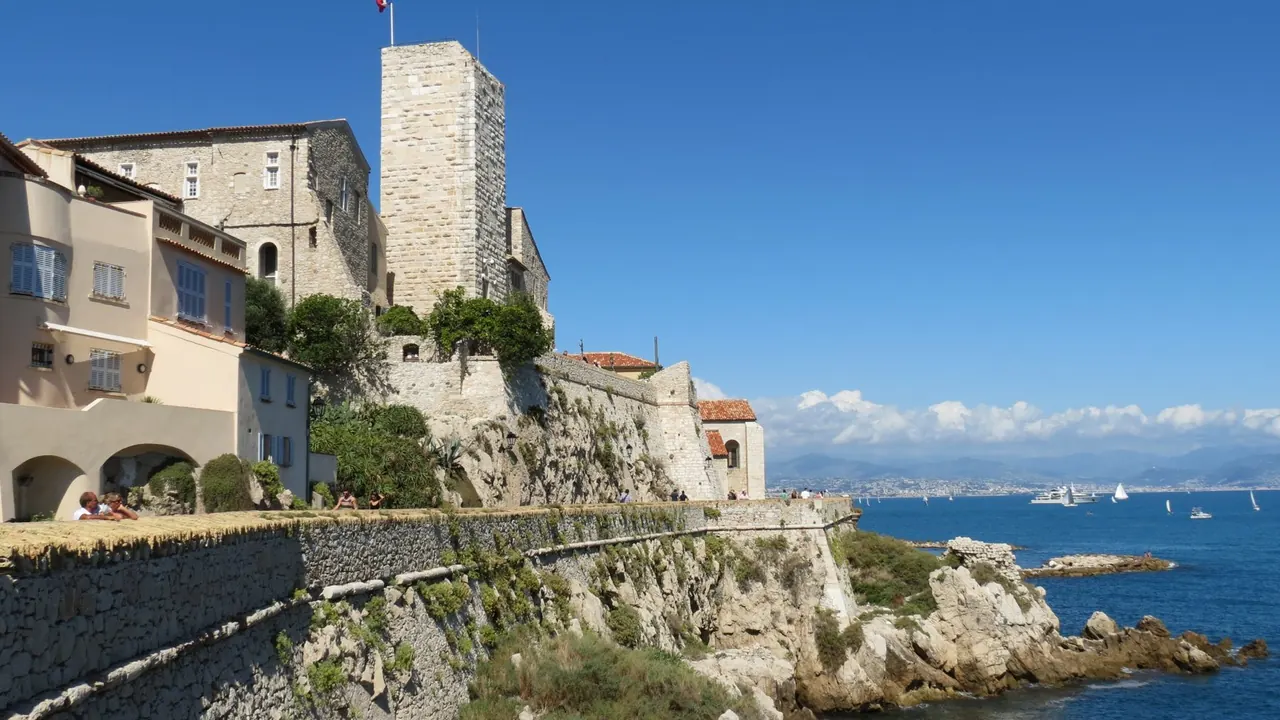
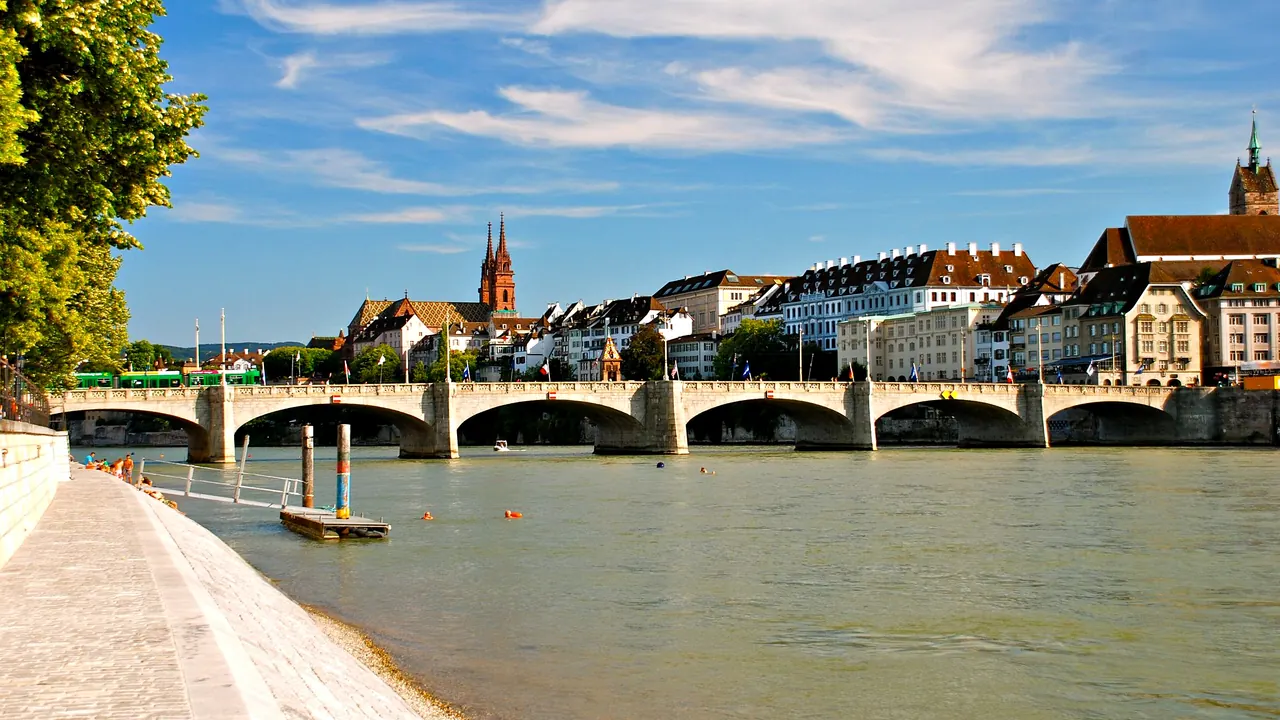
Photos: Antibes by Johan Allard, CC BY-SA 4.0, cropped; Basel by Lucazzitto, CC BY-SA 3.0, cropped.
Antibes or Basel?
Our verdict in twelve categories, each scored against the same fixed benchmark cities, and the climate month by month, so you can choose for your trip.
Choose Antibes for
- beaches
- prices
- nature and the outdoors
Antibes is for a summer by the sea. It has real sand at Juan-les-Pins and La Salis, clear water and rocky coves around Cap d'Antibes, and the coastal path over the cape. Trains run to Nice, Cannes and Monaco in minutes. It suits travellers who want to swim every day and see the Riviera in between, and its museums and evenings are a pleasant extra rather than the reason to go.
Choose Basel for
- culture and sights
- getting around
- live music and the arts
Basel rewards people who travel for art, music and easy logistics. Its museums from the Kunstmuseum to the Fondation Beyeler, the opera and orchestral seasons, and the trams that need no planning make it the stronger city break. Fast trains reach Alsace, the Black Forest and the Swiss cities. Expect Swiss prices throughout, and a river swim in place of a beach.
Scoreboard
Twelve categories on one fixed scale from 0 to 100. The shaded stretch is the gap between the two.
Your match
Pick a travel style or drag the sliders, and both match scores follow your weighting.
Wins on beaches and prices with your weighting.
Wins on culture and sights and getting around with your weighting.
What matters to you?
Category by category
What the scores mean for a trip.
Beaches & swimming
This is where Antibes leaves Basel well behind. It has sandy, gently shelving beaches at Juan-les-Pins and La Salis, snorkelling coves like La Garoupe, and flat rocks around the cape for diving into clear water, all in a sea that stays warm for four months. Expect beach clubs on much of the sand and crowded free stretches in high summer.
Basel offers something quite different. You walk up the Kleinbasel bank with a waterproof bag and drift back past the old town on the Rhine current, then dry off on the gravelly banks. It is memorable, but it is only for confident swimmers and for a short summer season.
Food & drink
Neither town is a food destination, and both eat well on what their region gives them. Antibes is Niçoise and outdoors: the Cours Masséna market each morning, socca and pissaladière, grilled fish and rosé on a terrace, with tourist menus to avoid near the port.
Basel's table borrows from three countries. You will find tarte flambée from Alsace, Baden wines and Swiss-German comfort food, with a small fine-dining tier and the Markthalle for casual meals. Everyday meals can feel dear for what they are.
Culture & sights
Basel is far the richer of the two. The Kunstmuseum's Holbeins and Old Masters, the Fondation Beyeler in its Renzo Piano building, the Museum Tinguely and the Vitra Design Museum would justify a trip on their own. The Münster, the painted Rathaus and the Spalentor give the old town real substance.
Antibes has one outstanding sight, the Picasso Museum in the Château Grimaldi, which holds the work he made there in 1946. Add Fort Carré, the ramparts and Villa Eilenroc, and two days is enough.
Nightlife
Both are quiet places after dark, but the evenings feel different. In Antibes, nightlife belongs to July and August, with beach bars and a few late clubs in Juan-les-Pins and yacht-crew pubs near Port Vauban. Out of season much of it shuts, and for a bigger night out people go to Nice.
Basel is steadier through the year. Bars cluster around the Kaserne, and a few clubs in old harbour buildings play electronic music. In summer people drink on the Rhine steps late into the evening. Its one great night out is Fasnacht, three days of drums and lanterns in late winter.
Nature & outdoors
Antibes has the edge, mainly because of the sea. The coastal path round Cap d'Antibes, snorkelling and diving in clear water, sailing in the bay, the red cliffs of the Esterel and the gorges and pre-Alps above Grasse give real variety within an hour.
Basel's outdoors is about woods and hills rather than water. The Jura, the Black Forest and the Vosges all lie close, with marked trails and some light skiing, and flat Rhine paths lead by bike into Germany and France. Walkers and cyclists will enjoy it, but it has none of the Riviera's coastline.
Day trips
Both make excellent bases, and the choice is about what kind of trips you want. From Antibes, the coastal railway strings together Nice, Cannes, Villefranche, Monaco and Menton. Boats cross to the Lérins Islands, and the hill villages of Saint-Paul-de-Vence, Eze and Grasse sit inland.
Basel's day trips cross borders instead. Colmar and the Alsace wine villages, Strasbourg, Freiburg and the Black Forest are all close, and so are Lucerne, Bern and Zurich, with the Rhine Falls a little further. They give you a wider mix of countries, while Antibes keeps you within one stretch of coast.
Good for families
Basel is slightly easier with children overall. The Zolli is one of Europe's best zoos, there are natural history and toy museums for wet days and current-pulled ferries across the Rhine, and the trams take prams. Europa-Park is about an hour away by car.
Antibes rests almost entirely on its beaches, though for small children those are a real asset. The sand shelves gently at Juan-les-Pins and La Salis, which Basel's fast river cannot match. Beyond swimming, boats in the port and the boat trip to the Lérins Islands are the main outings.
Getting around
Basel is effortless to get around. Its trams cover the city and cross into Germany and France, hotel guests travel on them free, and the main station sends direct trains to three countries, so a car is never needed.
Antibes works well on foot and along the coastal railway. The old town, the market and the port are close together, and Nice and Monaco are an easy train ride. Getting to the cape, the hill villages or the Esterel is slow by bus, though, and summer traffic and parking on the coast road are a real nuisance.
Shopping & style
Neither is a shopping destination, but Basel gives you a little more to browse. Freie Strasse and Gerbergasse have Swiss watchmakers and chocolatiers, Spalenberg has design and craft shops, and the Christmas market around the Münster is a pretty one.
Antibes is smaller in scale and more Provençal. The covered market is the place for olive oil, herbs and soaps, and the old town has boutiques selling linens and ceramics. For fashion, people go to Cannes or Nice.
Affordability
Both are costly, but Basel is the steeper bill by some way. Hotels, meals, drinks and museum tickets cost Swiss prices all year, and rooms get scarce during the big trade fairs. Free transport for hotel guests and cheaper meals just over the border help a little.
Antibes is expensive mainly in July and August, when rooms near the beaches and on the cape cost resort rates. In spring and autumn prices fall sharply, the regional trains are good value, and buying food at the market keeps costs down.
Live music & performing arts
Basel has a proper year-round stage. Theater Basel puts on opera, ballet and drama, the Stadtcasino is home to the city's symphony and chamber orchestras, and early-music concerts add something unusual. The season runs from autumn to early summer.
Antibes has a single highlight, Jazz à Juan. Founded in 1960, it fills the Pinède Gould by the sea each July. Outside that week the Anthéa theatre carries a regional programme, and for opera you would go to Nice.
Wellness & relaxation
Basel makes the better base for a spa day. The saline thermal baths at Rheinfelden are about twenty minutes away, and the German spa towns of southern Baden are close, with warm mineral pools and saunas. The city itself moves at a calm pace, with quiet Sundays and a riverside made for doing nothing.
Antibes offers thalassotherapy and the hotel spas on the cape. Its restfulness depends on the season, gentle in May, June and September, but much less so when summer crowds and traffic arrive.
When should you go?
Pick your month. The climate figures are measured averages, not a forecast.
Antibes in July
Basel in July
Daytime high, °C
Rainfall in the month, mm
Temperature and rainfall are climate normals, averaged over the years shown. Antibes: 1991-2020 normals, Nice (9.9 km from centre). Basel: 1991-2020 (sunshine 1961-1990) normals, Basel / Binningen (1.9 km from centre).
Antibes is at its best from June to September. The sea is warm enough for a proper swim through those months and reaches about 25°C in August. July and August are dry and very sunny, with highs around 28°C. That is hot for walking the old town at midday but ideal for the beach. May and early October are gentler and good for sightseeing. Heavy rain comes in autumn and peaks at about 138mm in November. Winter is mild and cool, with enough sun for walks along the coast.
Basel's seasons differ more sharply, and it gets much less sun. Winters are cold and grey, with January highs near 5°C. That is fine for museums but not for sitting by the river. Summer reaches about 26°C, warm enough for the Rhine swim from June to early September. Summer is also Basel's wettest season, the opposite of Antibes with its dry summers, so expect showers on a July visit. Late spring and September are the most comfortable months for walking the city.
Which traveller are you?
On a beach and sun trip, Antibes wins outright. Gently shelving sand at Juan-les-Pins, coves and clear water off Cap d'Antibes, and a warm sea from June to early October beat Basel's summer river float, which is fun but no substitute.
For a culture and arts trip, Basel is clearly better. Holbein in the Kunstmuseum, the Beyeler and Tinguely, the Vitra campus, and opera and ballet at Theater Basel fill several days. Antibes has its Picasso Museum and old town, which take about two.
On a trip with a tight budget, Antibes is the easier choice, though neither is cheap. In spring and autumn its hotel rates drop and market self-catering helps. Basel stays expensive all year, even with free transport and cheaper meals across the border.
Before you go
| Measure | Antibes | Basel |
|---|---|---|
| Official language | French | French, German, Italian, Romansh |
| Currency | Euro (EUR) | Swiss Franc (CHF) |
| Sockets | CE230 V, 50 Hz | CJ230 V, 50 Hz |
| Driving side | Right | Right |
| Time zone | UTC+1, UTC+2 in summer | UTC+1, UTC+2 in summer |
| Emergency number | 112 | 112 |
| Elevation | 0 m | 247 m |
| Main airport | Nice-Côte d'Azur Airport (NCE)11 km from centre130 non-stop destinations | EuroAirport Basel–Mulhouse–Freiburg (BSL)7 km from centre112 non-stop destinations |
| Public holidays this year | 11 days | 10 days |
By the numbers
| Measure | Antibes | Basel |
|---|---|---|
| City population | 77,637 | 176,329 |
| People per km² | 2,930 | 7,378 |
| Museums within 10 km | 14 | 61 |
| UNESCO World Heritage sites within 50 km | 2 | 2 |
| Swim season, months above 21 °C | 4 months | - |
Where else could you go?
Every comparison below shares a destination with this one, so you can follow Antibes or Basel somewhere new.