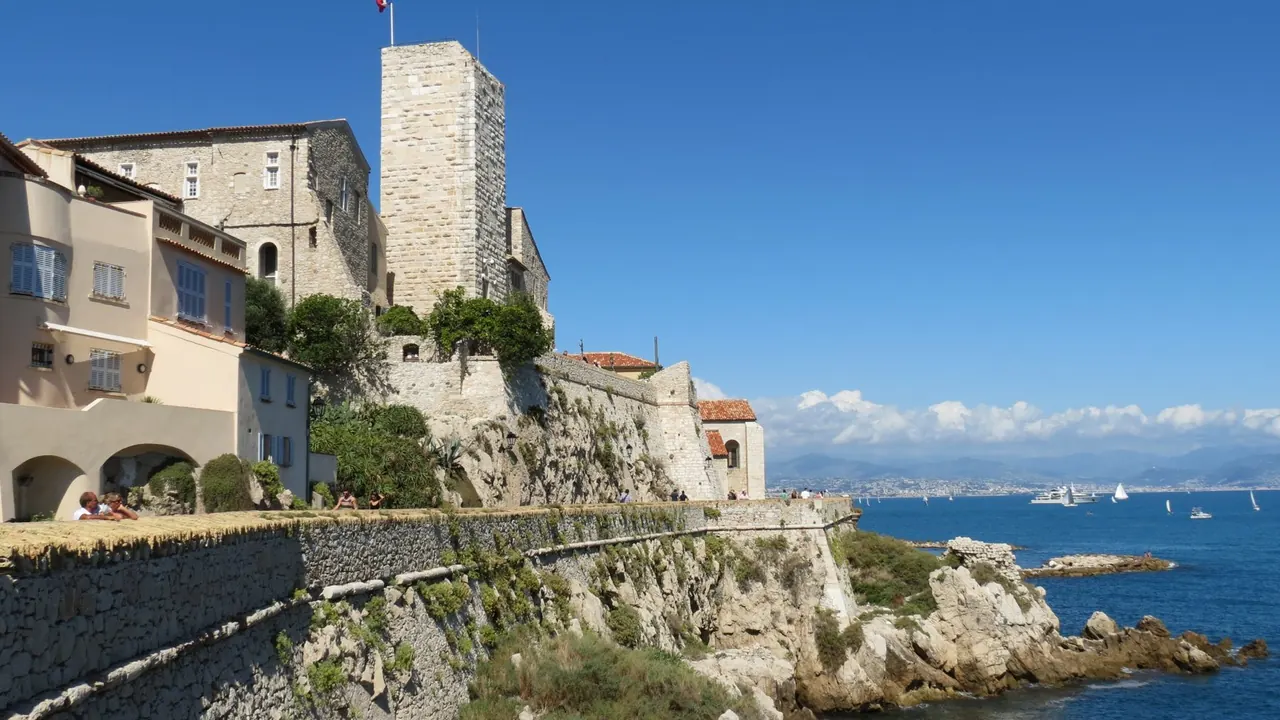
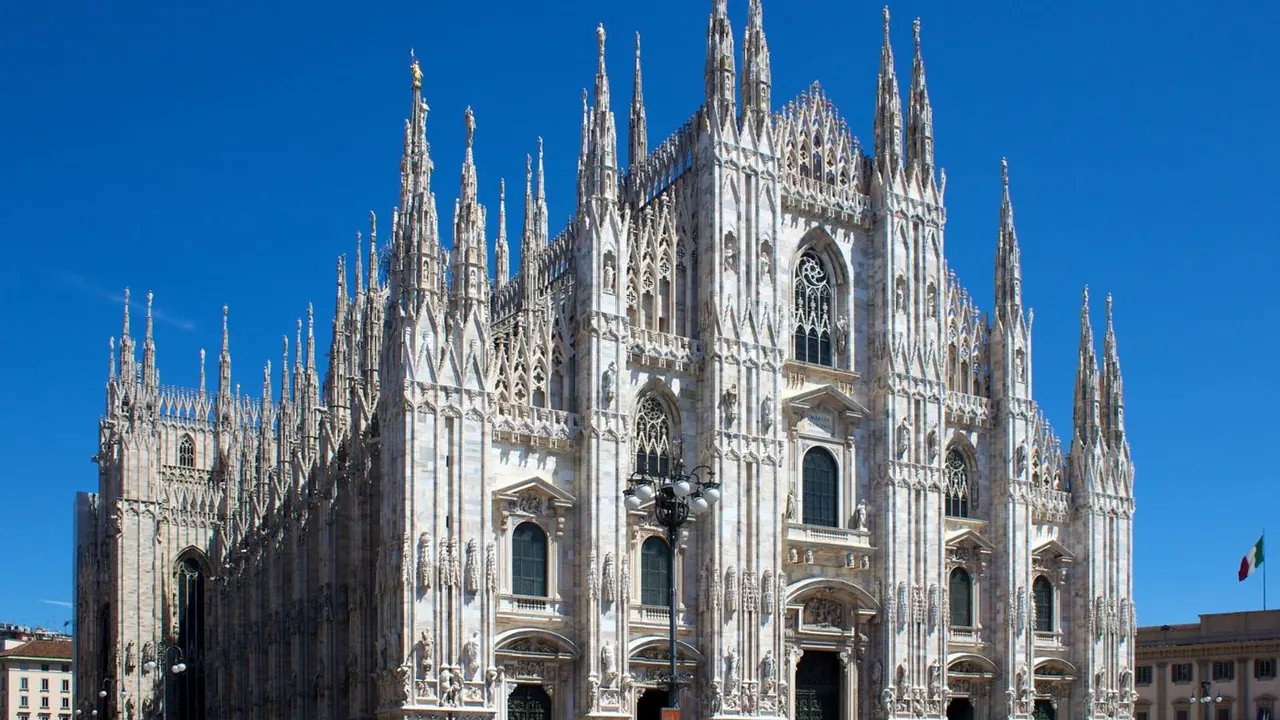
Photos: Antibes by Johan Allard, CC BY-SA 4.0, cropped; Milan by Jiuguang Wang, CC BY-SA 3.0, cropped.
Antibes or Milan?
Our verdict in twelve categories, each scored against the same fixed benchmark cities, and the climate month by month, so you can choose for your trip.
Choose Antibes for
- beaches
- nature and the outdoors
Antibes is the one for a summer vacation built around the sea. It has real sand at Juan-les-Pins and La Salis, clear coves around the cape, and Nice, Cannes and Monaco a short train ride away. It suits travellers who want to swim every day, spend an afternoon at the Picasso Museum and on the ramparts, and keep to the slow pace of a small town.
Choose Milan for
- shopping
- live music and the arts
- culture and sights
Pick Milan if the city itself is the reason for the trip. It has the Last Supper, the Duomo, the Brera galleries, La Scala and the fashion houses of the Quadrilatero, plus a far deeper food and aperitivo scene, all linked by metro and tram. It works in any season and suits people who want full days of sights, shopping and evenings out, with the lakes an hour away when they need some air.
Scoreboard
Twelve categories on one fixed scale from 0 to 100. The shaded stretch is the gap between the two.
Your match
Pick a travel style or drag the sliders, and both match scores follow your weighting.
Wins on beaches and nature and the outdoors with your weighting.
Wins on shopping and live music and the arts with your weighting.
What matters to you?
Category by category
What the scores mean for a trip.
Beaches & swimming
This is where Antibes is clearly ahead. Sand is rare on this coast, and the long, shallow beaches of Juan-les-Pins and La Salis, with views back to the ramparts, make the beach the centre of a summer stay. Around the cape, coves such as La Garoupe and the flat rocks give clear-water swimming of a different kind.
Milan has no sea at all. Locals cool off at the Idroscalo near Linate or in open-air pools, and the nearest proper swimming is from the pebbly lidos of Lake Como or Lake Maggiore, about an hour away by train.
Food & drink
Milan is the better place to eat. Its own cooking is rich and buttery, from saffron risotto to ossobuco and cotoletta, and because people come to the city from all over Italy you can also eat well from every other region, as well as at a serious fine-dining level. The early-evening aperitivo around the Navigli, Brera and Isola is a meal in itself.
Antibes eats well in a narrower, sunnier way. Mornings start at the covered market on Cours Masséna, and the Niçoise dishes, socca, pissaladière and grilled fish, go with rosé on a terrace. Outside a few good bistros and the tables on the cape, though, the choice is that of a coastal town, and the lanes near the port lean on tourist menus.
Culture & sights
Milan has the bigger sights. The marble Duomo and its rooftop spires, the Last Supper at Santa Maria delle Grazie, the Pinacoteca di Brera and Michelangelo's Rondanini Pietà in the Castello Sforzesco would anchor any trip to Italy, though they sit in clusters within a largely modern city.
Antibes has one sight of that calibre in miniature. The Picasso Museum in the Château Grimaldi holds the works he painted there in 1946, set above the sea. Around it are the old town lanes, the star-shaped Fort Carré and the lighthouse chapel on the cape, enough for a couple of unhurried days.
Nightlife
Milan has the more complete night out, and it runs all year. Evenings move from aperitivo on the Navigli towpaths to the smarter bars of Brera, the mixed and gay-friendly streets of Porta Venezia, and clubs that range from dressy venues on Corso Como to warehouse nights.
Antibes comes alive mainly in July and August, when Juan-les-Pins keeps its beach bars and clubs open late and yacht crews fill the pubs near Port Vauban. Out of season it goes quiet. The two peak at opposite times: Milan empties in August, just as the Riviera is at its liveliest.
Nature & outdoors
The two are fairly even here, but the outdoors means different things. In Antibes it begins at the door and centres on the sea: the coastal path over the limestone of the cape, snorkelling and diving in clear water, sailing in the bay, then the red Esterel cliffs and the Gorges du Loup for proper hikes.
In Milan the city itself is flat and often hazy, but trains reach the wooded shores of Como and Maggiore, the Grigne ridges for via ferrata, and the ski slopes in winter as a full day out.
Day trips
Both are excellent bases, but the trips are of a different kind. From Antibes they are short hops along one coast and up into the hills: Nice, Cannes, Monaco and Menton by train, boats to the Lérins Islands, and the hill villages of Saint-Paul-de-Vence, Eze and Grasse, though the inland ones are easier with a car.
From Milan, high-speed trains reach whole cities in their own right: Verona's arena, Turin's palaces and Bologna, as well as Bergamo, Lake Como and Lugano over the Swiss border.
Good for families
The two are about even for families, but they suit different ages. Antibes is best for small children, with sandy, shallow beaches that pebble coasts can't match and a small, safe town, but beyond swimming and boats in the harbour it has little built for children.
Milan is better for older children and wet days, with the submarine and trains at the science museum, the aquarium by Parco Sempione, and Leolandia or Gardaland within reach. Both get hot in summer, Milan more humid and Antibes more crowded.
Getting around
Milan is the easier city to get around without a car. Its flat centre is walkable from the Duomo to Brera, and five simple metro lines and a dense tram network cover the rest, with trains from three stations running straight to the lakes.
Antibes is easy only within a smaller area. The old town, the market and Port Vauban are close together, and the coastal railway reaches Nice and Monaco without trouble. Beyond that, buses to the cape and the hill villages are slow, and summer traffic and parking are a real problem.
Shopping & style
For shopping the two are hardly comparable. Milan is a world fashion capital, with the great Italian houses in the Quadrilatero around Via Montenapoleone, historic shops under the Galleria's glass roof and a long-standing department store by the Duomo. Corso Buenos Aires, the vintage shops of Brera and Porta Ticinese, and the design showrooms add variety.
Antibes offers small local pleasures instead: olive oil, herbs and soaps from the covered market, Provençal linens and ceramics in the old town, and glass and pottery in nearby Biot and Vallauris.
Affordability
Neither is cheap, and costs peak at different moments. In Antibes, July and August are the problem, when rooms near the beaches and on the cape are priced like a luxury resort and beach-club loungers add up. Spring and autumn are much cheaper, and buying food at the market saves a lot.
Milan stays expensive all year and gets worse during trade fairs and fashion weeks. Aperitivo snacks as a light supper, office-worker lunch menus and a hotel near a metro stop outside the centre help to keep costs down.
Live music & performing arts
Milan is far ahead here. La Scala's season of opera and ballet opens each December on the feast of Sant'Ambrogio, and the Piccolo Teatro, a fine symphony orchestra and big summer concerts at San Siro fill the rest of the year.
Antibes has one major event, Jazz à Juan, held every July since 1960 under the pines a few steps from the sea. Beyond that there is a regional programme at the Anthéa theatre, and for opera people go to Nice. The timing works in Antibes' favour in summer, when Milan's opera and concert halls go quiet.
Wellness & relaxation
Neither is a spa destination, and they are about equal, but rest takes different forms. In Antibes it comes from seawater thalassotherapy, grand-hotel spas on the cape and the slow rhythm of May, June and September, while high summer is anything but restful.
Milan offers a thermal spa complex with outdoor pools and the 1930s Bagni Misteriosi pools in summer, but for real calm most visitors take the train to the lakes.
When should you go?
Pick your month. The climate figures are measured averages, not a forecast.
Antibes in July
Milan in July
Daytime high, °C
Rainfall in the month, mm
Where the figures come from
Milan has no rain gauge within 25 km of the centre, so its rainfall comes from a gridded climate dataset read at the city rather than from a gauge further away.
Milan's sunshine is measured 41 km from the centre, at Novara / Cameri.
Temperature and rainfall are climate normals, averaged over the years shown. Antibes: 1991-2020 normals, Nice (9.9 km from centre). Milan: 1991-2020 normals, Milano / Linate (8 km from centre).
Antibes has a classic Riviera summer. From June to September the days are warm, almost no rain falls in July and August, and the sea reaches 25°C in August, so swimming lasts from June into early October. Autumn is when the rain arrives, building to 138mm in November. Winters are mild enough, around 13°C in January, for walking the coastal path and the old town in the sunshine.
Milan's year runs to greater extremes. July and August reach about 30°C and feel heavy on the plain, and January drops to around 7°C, grey and short of sun. Rain falls in every season and is heaviest in autumn. For walking the streets the best months are April, May, September and early October. Those are also Antibes' quieter shoulder months, so a spring or autumn trip suits either city, while high summer clearly favours the coast.
Which traveller are you?
For a beach and sun trip, Antibes wins easily. It has gently shelving sand at Juan-les-Pins, clear rocky coves on Cap d'Antibes and a warm sea through the summer. Milan is landlocked, and its swimming means an artificial basin, city pools or a train to the lakes.
On a culture and arts trip, Milan has far more to offer: Leonardo's Last Supper, the Duomo roof, the Brera paintings and an opera evening at La Scala. Antibes has a fine Picasso Museum and a pretty old town, but you can see it all in two days.
For a shopping trip, Milan is one of the world's fashion capitals, with the flagships around Via Montenapoleone, the Galleria and its design showrooms. Shopping in Antibes means market olive oil, soaps and Provençal linens, and for fashion people go to Cannes or Nice.
Before you go
| Measure | Antibes | Milan |
|---|---|---|
| Official language | French | Italian |
| Currency | Euro (EUR) | Euro (EUR) |
| Sockets | CE230 V, 50 Hz | CFL230 V, 50 Hz |
| Driving side | Right | Right |
| Time zone | UTC+1, UTC+2 in summer | UTC+1, UTC+2 in summer |
| Emergency number | 112 | 112 |
| Elevation | 0 m | 138 m |
| Main airport | Nice-Côte d'Azur Airport (NCE)11 km from centre130 non-stop destinations | Milan Malpensa International Airport (MXP)40 km from centre208 non-stop destinations |
| Public holidays this year | 11 days | 13 days |
By the numbers
| Measure | Antibes | Milan |
|---|---|---|
| City population | 77,637 | 1,354,196 |
| People per km² | 2,930 | 7,453 |
| Museums within 10 km | 14 | 88 |
| UNESCO World Heritage sites within 50 km | 2 | 4 |
| Swim season, months above 21 °C | 4 months | - |
Where else could you go?
Every comparison below shares a destination with this one, so you can follow Antibes or Milan somewhere new.