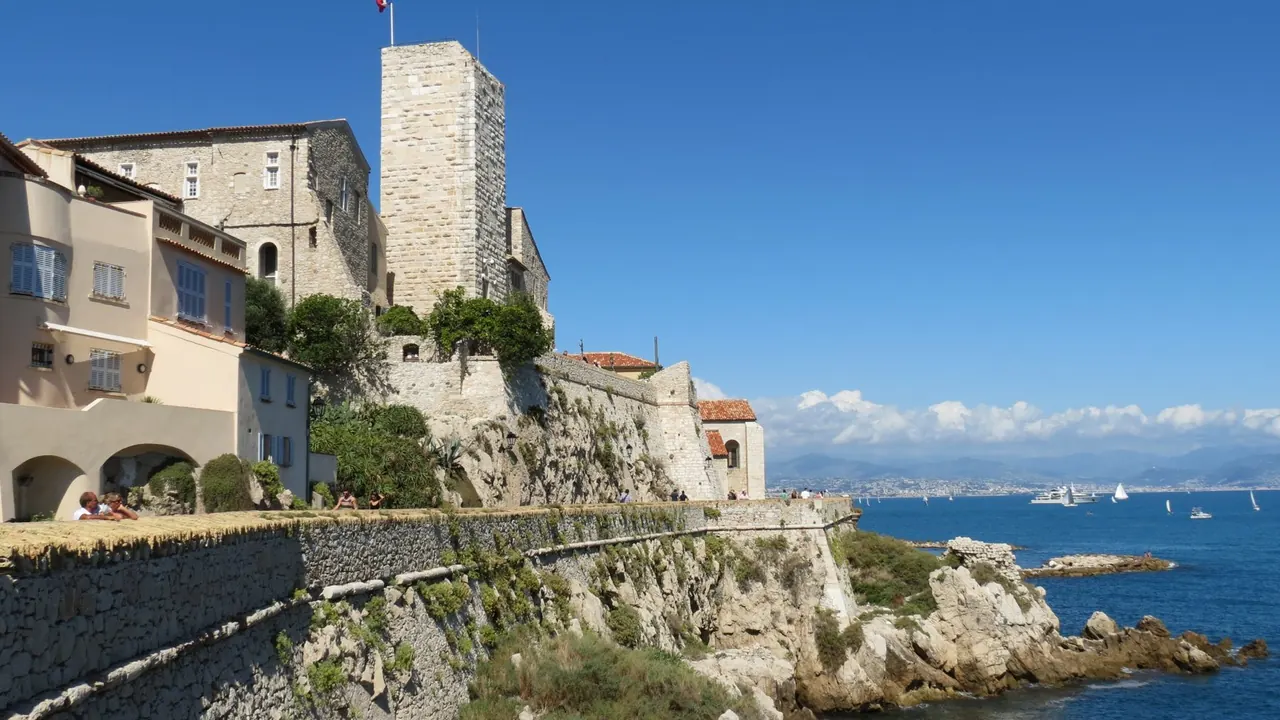
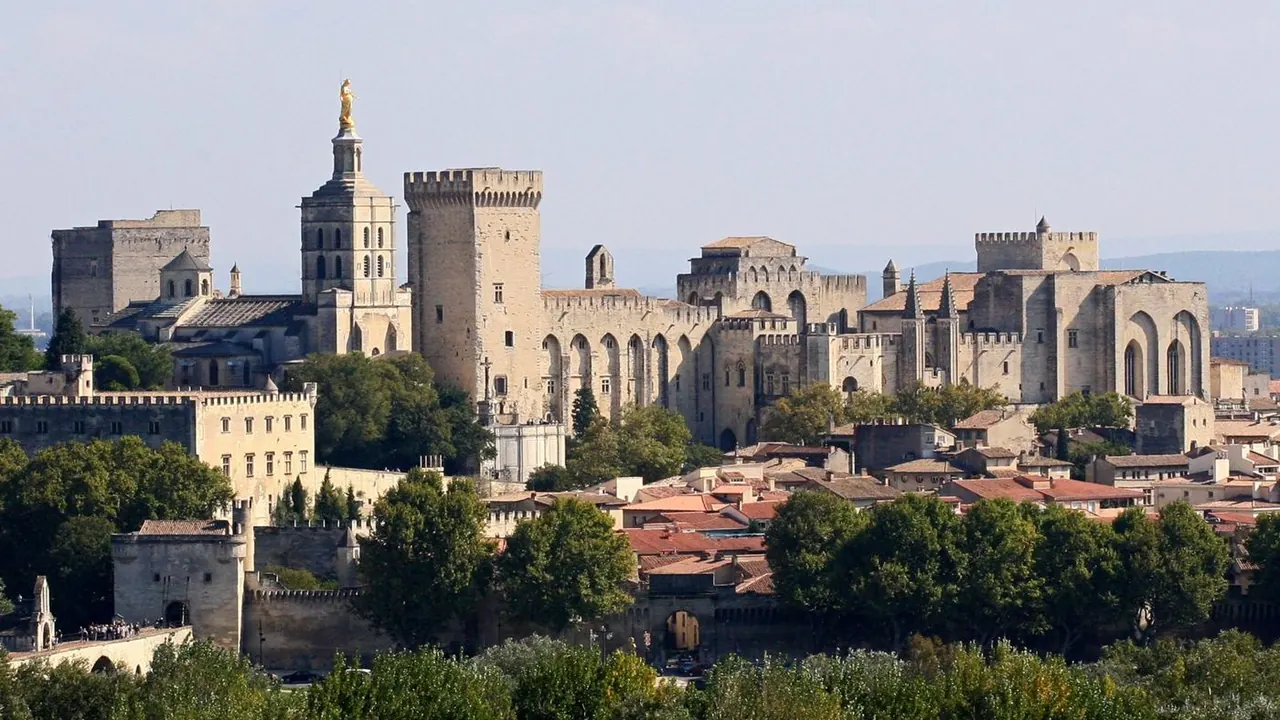
Photos: Antibes by Johan Allard, CC BY-SA 4.0, cropped; Avignon by BlueBreezeWiki, CC BY-SA 3.0, cropped.
Antibes or Avignon?
Our verdict in twelve categories, each scored against the same fixed benchmark cities, and the climate month by month, so you can choose for your trip.
Choose Antibes for
- beaches
- nightlife
- families
Antibes is the pick for a summer by the sea. It has real sand at Juan-les-Pins and La Salis and clear coves around Cap d'Antibes, and the coastal railway puts Nice, Cannes and Monaco within easy reach. It suits travellers who want a swim in every day, families with small children, and people who like summer evenings that run late. The budget has to stretch to Riviera prices.
Choose Avignon for
- live music and the arts
- culture and sights
- prices
Choose Avignon if the trip is about what you see and hear rather than where you swim. The papal palace, the ramparts and the museums give it far more history, and in July the festival turns it into a theatre town. The Roman sites of Nîmes, Arles and Orange, the Luberon villages and the Rhône vineyards are all close. It also costs less than the coast, though July rooms are the exception, and a hire car opens up most of the countryside.
Scoreboard
Twelve categories on one fixed scale from 0 to 100. The shaded stretch is the gap between the two.
Your match
Pick a travel style or drag the sliders, and both match scores follow your weighting.
Too close to call, 1 point apart
Wins on beaches and nightlife with your weighting.
Wins on live music and the arts and culture and sights with your weighting.
What matters to you?
Category by category
What the scores mean for a trip.
Beaches & swimming
This is the widest gap between the two. Antibes has sand at Juan-les-Pins and La Salis, which is rare on this coast, and rocky coves such as La Garoupe around the cape. The sea is warm from June into early October, though private beach clubs take much of the sand.
Avignon has no beach of its own. The swimming is in the Gardon pools below the Pont du Gard, half an hour away by car, or on the Camargue sands more than an hour south. Most visitors settle for a hotel pool.
Food & drink
Both cook Provençal and both have a fine covered market, but Avignon has the edge. At Les Halles on Place Pie, counters cook lunch from what the stalls sell. The inland kitchen of daube, lamb and tians draws on the plain around the town, and Châteauneuf-du-Pape and the Côtes du Rhône fill the glasses.
Antibes cooks in the Niçoise style: socca, pissaladière, grilled fish and rosé, bought or eaten around the Cours Masséna market. There are some serious tables on the cape, but the streets by the port are full of tourist menus.
Culture & sights
Avignon has far more to see. The Palais des Papes, the cathedral and the broken Pont Saint-Bénezet form a UNESCO-listed group, and medieval ramparts still circle the town. The Petit Palais, the Musée Calvet and the Collection Lambert add serious art.
Antibes rests on one fine museum, the Picasso collection in the Château Grimaldi. Beyond that it has the old town lanes, Fort Carré and a few small museums. They fill a pleasant morning or two between swims but are not the reason to go.
Nightlife
Neither is a nightlife town, but Antibes offers more in summer. In July and August, Juan-les-Pins keeps its beach bars, lounges and a few clubs going until the early hours. Yacht crews fill the pubs and wine bars by Port Vauban.
In Avignon an evening out means an aperitif on Place Pie, and the streets are quiet by midnight, with almost no clubs. Festival July is the exception, when the squares stay full late. Otherwise people go to Marseille or Montpellier for a real night out, just as Antibes sends them to Nice.
Nature & outdoors
Both are good bases for the outdoors, but in different ways. In Antibes the outdoors means the sea: the coastal path around the cape, snorkelling and diving in clear water, sailing and paddleboarding. The red cliffs of the Esterel and the Gorges du Loup are within reach for hiking.
Around Avignon the outdoors is inland. Mont Ventoux draws cyclists and hikers, and there are the ochre trails of the Luberon, the Dentelles and the Alpilles, and canoeing on the Gardon. In the Camargue you can see flamingos and white horses. Spring and autumn suit it best, because summer heat and the mistral can make it hard going.
Day trips
From Antibes the day trips follow the coast by rail. Nice, Cannes, Monaco and Menton are all on the line, so you don't need a car, and boats cross to the Lérins Islands. Inland, Saint-Paul-de-Vence, Eze and the perfume houses of Grasse make a gentler day out, and Sanremo across the Italian border is within reach.
Avignon swaps the sea for Roman sites and the countryside. The arenas of Nîmes and Arles, the theatre at Orange and the Pont du Gard are all within half an hour. Further out are the Luberon villages, the antiques dealers of L'Isle-sur-la-Sorgue and the vineyards of Châteauneuf-du-Pape. The Roman towns are easy by train, but the villages really need a car.
Good for families
Antibes suits children better, mainly because of its sandy, gently shelving beaches, which small children find much easier than pebbles. Boats in the port and the walk round Fort Carré fill the time between swims, and older children can snorkel off the cape.
Avignon has a few things children enjoy in town: the tablet tour of the Palais des Papes, dancing on the bridge from the song and the Rocher des Doms playground. The best family days, though, are at the Pont du Gard or in the Camargue, and both need a car. The cobbles are hard work with a pushchair.
Getting around
The two are equally easy to get around, with similar strengths. Each has a walkable core: the old town and port in Antibes, the area inside the ramparts in Avignon. Each also has good rail links to bigger towns, along the coastal line from Antibes and by regional and TGV trains to Arles, Nîmes and Marseille from Avignon.
The weak point is the same in both. The hill villages, Mont Ventoux and the Esterel all need a car. Antibes adds summer traffic on the coast road, while Avignon's cobbles and the mistral make walking more tiring.
Shopping & style
Neither town is a place to shop seriously, and in both the things worth taking home are Provençal. Where they differ is in where you find them. Antibes keeps its best buys in the covered market and the independent shops of the old town, and for crafts you go to the villages that make them, Biot for glass and Vallauris for pottery.
Avignon is more of an ordinary working town. Both have a Rue de la République, but Antibes' has independent boutiques while Avignon's is lined with high-street chains. Avignon's souvenirs are mostly things to eat and drink, such as calissons, tapenade and Rhône wine bought from the growers. Its equivalent of the craft-village trip is an outing to the antiques dealers of L'Isle-sur-la-Sorgue.
Affordability
Avignon is the cheaper stay. It has the prices of a provincial town, with fair set lunches and wine at producers' prices. Rooms inside the walls only become steep during the July festival, though a hire car adds to the bill.
Antibes has Riviera prices. In summer, rooms on the cape and near Juan-les-Pins are priced like a luxury resort, and beach loungers are costly too. Visiting in spring or autumn, buying food at the market and using the cheap coastal trains all help.
Live music & performing arts
Avignon is the clear choice. The Festival d'Avignon, founded in 1947, fills the Cour d'honneur of the Palais des Papes each July. Alongside it, the Off fringe puts on more than a thousand shows a day across town. Outside July, the Opéra Grand Avignon, small theatres and a jazz club keep a programme going.
Antibes has one major event, Jazz à Juan, held under the pines each July and among Europe's oldest jazz festivals. Beyond that there is the Anthéa theatre, and people go to Nice for opera.
Wellness & relaxation
Neither has a bathing tradition, so the two offer different ways to relax. Antibes has seawater thalassotherapy and the grand hotel spas on Cap d'Antibes, with slow market mornings and walks on the ramparts in May, June and September.
In Avignon the calm comes from shaded squares under plane trees and the Rocher des Doms garden in the late afternoon. Many people who come to unwind stay outside town among the vineyards and lavender, with a pool. Both are least restful in July, Antibes because of beach crowds and Avignon because of the festival.
When should you go?
Pick your month. The climate figures are measured averages, not a forecast.
Antibes in July
Avignon in July
Daytime high, °C
Rainfall in the month, mm
Where the figures come from
Avignon has no rain gauge within 25 km of the centre, so its rainfall comes from a gridded climate dataset read at the city rather than from a gauge further away.
Avignon's sunshine is measured 65 km from the centre, at Marseille / Marignane.
Temperature and rainfall are climate normals, averaged over the years shown. Antibes: 1991-2020 normals, Nice (9.9 km from centre). Avignon: 2005-2020 (sunshine 1991-2020, rainfall 1991-2020) normals, Avignon / Morières-lès-Avignon (8.6 km from centre).
Antibes is a sea vacation from June to September. Days peak at about 28°C, warm without being harsh, and by August the water reaches 25°C, staying swimmable into early October. July and August are almost dry and the sunniest months. The rain comes in autumn and builds to a November peak of 138mm, but winters are mild enough for walks on the coastal path.
Avignon runs hotter in summer and colder in winter. July reaches about 32°C, too hot for long days on the cobbles, so April to early June and September to mid-October are the months for sightseeing and the countryside. Its wettest month comes a month earlier than on the coast, in October, and winter highs drop to 11°C, a couple of degrees below Antibes. Both have plenty of summer sunshine, and Avignon has slightly more.
Which traveller are you?
On a beach and sun trip, Antibes wins easily. Its sandy, gently shelving beaches and the clear coves off Cap d'Antibes are close at hand. From Avignon, the nearest swim is a river pool or a drive of over an hour to the Camargue.
For a culture and arts trip, Avignon is the better base. The Palais des Papes, the ramparts and the Petit Palais lead the sights, and the July festival fills every courtyard with theatre. Roman Nîmes, Arles and Orange are also close by.
On a tight budget, Avignon goes further, as long as you avoid July. Side-street set lunches, a walled centre you can explore for free and wine from local producers keep costs down. Antibes prices its summer rooms and beach loungers like a luxury resort.
Before you go
| Measure | Antibes | Avignon |
|---|---|---|
| Official language | French | French |
| Currency | Euro (EUR) | Euro (EUR) |
| Sockets | CE230 V, 50 Hz | CE230 V, 50 Hz |
| Driving side | Right | Right |
| Time zone | UTC+1, UTC+2 in summer | UTC+1, UTC+2 in summer |
| Emergency number | 112 | 112 |
| Elevation | 0 m | 10 m |
| Main airport | Nice-Côte d'Azur Airport (NCE)11 km from centre130 non-stop destinations | Marseille Provence Airport (MRS)65 km from centre126 non-stop destinations |
| Public holidays this year | 11 days | 11 days |
By the numbers
| Measure | Antibes | Avignon |
|---|---|---|
| City population | 77,637 | 92,188 |
| People per km² | 2,930 | 1,420 |
| Museums within 10 km | 14 | 11 |
| UNESCO World Heritage sites within 50 km | 2 | 6 |
| Swim season, months above 21 °C | 4 months | - |
Where else could you go?
Every comparison below shares a destination with this one, so you can follow Antibes or Avignon somewhere new.