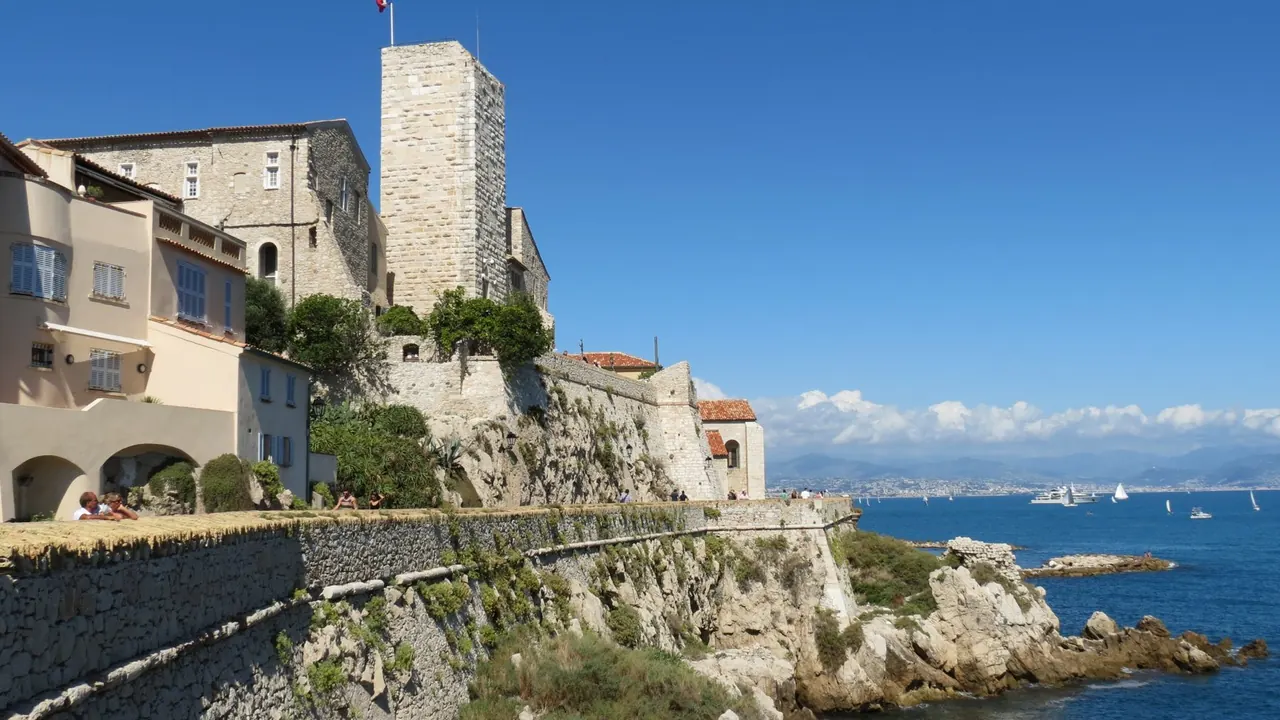
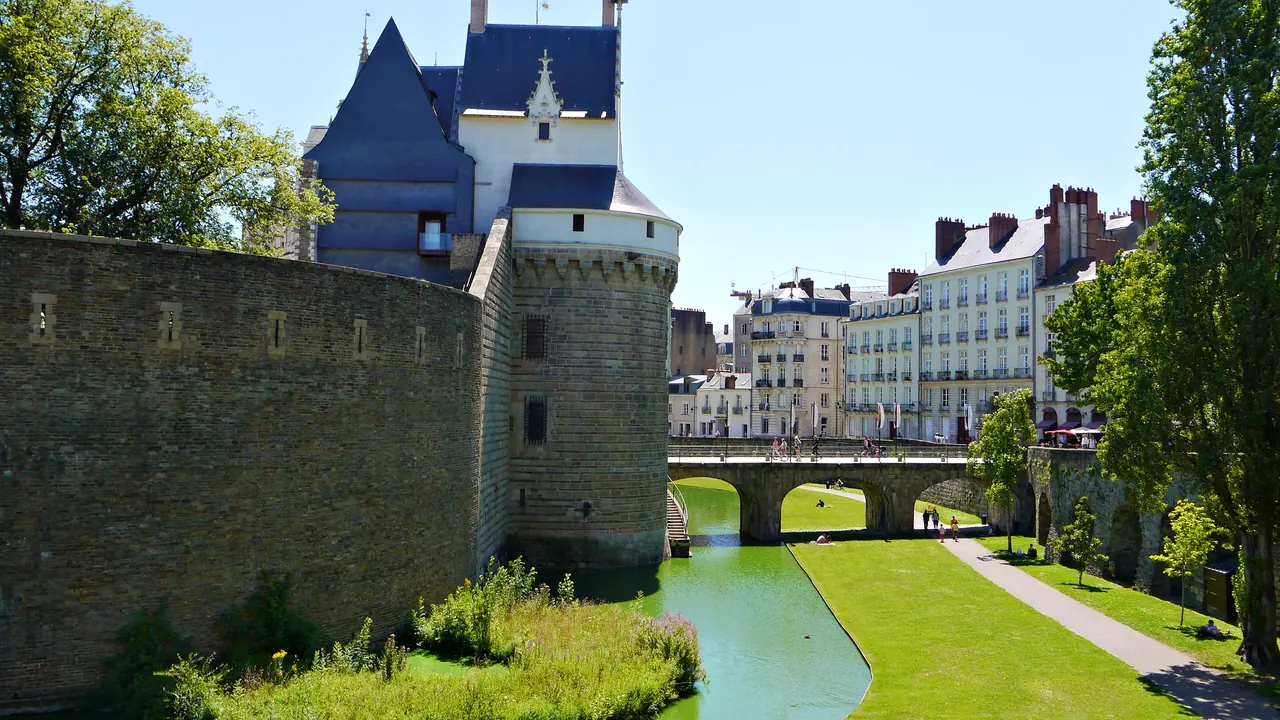
Photos: Antibes by Johan Allard, CC BY-SA 4.0, cropped; Nantes by Carole44, CC BY-SA 3.0, cropped.
Antibes or Nantes?
Our verdict in twelve categories, each scored against the same fixed benchmark cities, and the climate month by month, so you can choose for your trip.
Choose Antibes for
- beaches
- day trips
- nature and the outdoors
Antibes is the choice for a summer by the sea. Its sandy, gently shelving beaches at Juan-les-Pins and La Salis are rare on the Riviera, and the clear coves of Cap d'Antibes are made for snorkelling. The coastal railway makes Nice, Cannes, Monaco and Menton easy, and Saint-Paul-de-Vence, Eze and Grasse are a drive or a slow bus ride inland. Expect resort prices in high summer, and a quiet town once the season ends.
Choose Nantes for
- live music and the arts
- culture and sights
- prices
For more city in your stay, and a smaller bill, go to Nantes. The moated château and its frank history museum, a serious art collection, an opera house, a winter classical festival and the mechanical elephant of the Machines de l'Ile fill a long weekend in any month. Trams make it easy to get around. The Atlantic beaches are a day out rather than part of each day, and the sea there stays cool.
Scoreboard
Twelve categories on one fixed scale from 0 to 100. The shaded stretch is the gap between the two.
Your match
Pick a travel style or drag the sliders, and both match scores follow your weighting.
Wins on beaches and day trips with your weighting.
Wins on live music and the arts and culture and sights with your weighting.
What matters to you?
Category by category
What the scores mean for a trip.
Beaches & swimming
This is Antibes' strongest card. Juan-les-Pins and La Salis offer the sandy, gently shelving shore that most of this coast lacks, and the cape adds rocky coves such as La Garoupe for swimming in very clear water. Beach clubs take much of the sand, though, and the free stretches fill early in high summer.
From Nantes the beach is an excursion of about 50km. La Baule's broad sheltered bay and the coves around Pornic are clean and good for children, but the Atlantic stays cooler and the season is shorter.
Food & drink
Nantes eats a little better. This is the home of beurre blanc, served on pike-perch or sole, with oysters from the nearby coast, buckwheat galettes and crisp Muscadet from the vineyards just outside town. Bistros in the Bouffay lanes and around Graslin are fairly priced, and the Talensac market shows off the region's produce.
Antibes offers Niçoise cooking: socca, pissaladière, stuffed vegetables and grilled fish with rosé, centred on the morning market on Cours Masséna. It has fine dining on the cape, but tourist menus near the port mean you have to choose carefully. Neither town is worth the journey for food alone.
Culture & sights
Nantes has more depth. The Château des Ducs de Bretagne houses a well-made city museum that deals openly with the Atlantic slave trade, and the riverside memorial to abolition continues that story. The Gothic cathedral, the Musée d'Arts, the leaning merchant façades of Ile Feydeau and the Jules Verne museum fill two or three days.
Antibes has one outstanding sight, the Picasso Museum in the Château Grimaldi, which holds the works he made there in 1946. The old town lanes, the ramparts, the star-shaped Fort Carré and the Villa Eilenroc on the cape make up the rest, and two days covers it all.
Nightlife
Nantes has the better night out, largely because a big student population keeps it going all year. Evenings start in the pubs and terraces of the medieval Bouffay quarter and move later to riverside bars and clubs in the old banana warehouses on the Ile de Nantes.
Antibes comes alive only in summer, when the beach bars and clubs of Juan-les-Pins stay open late and yacht crews fill the English-speaking pubs near Port Vauban. Out of season much of it shuts, and anyone wanting more heads to Nice.
Nature & outdoors
Antibes has the more dramatic outdoors. The coastal path around the cape crosses wind-carved limestone with views to the Alps, and the clear water is good for snorkelling and diving. The red cliffs of the Esterel, the Gorges du Loup and the pre-Alps above Grasse offer real hiking within an hour or so.
Around Nantes the country is flat and full of water. You can canoe or take a boat up the Erdre, cycle the Loire à Vélo route through the vineyards, or punt and birdwatch in the Brière marshes. The best walking there is on the cliffs of the Côte Sauvage and around Pornic.
Day trips
Antibes sits in one of Europe's densest stretches of places to visit. Nice, Cannes, Villefranche, Monaco and Menton are all on one coastal line, boats cross to the Lérins Islands, and Saint-Paul-de-Vence, Eze, Grasse, Biot and Vallauris are close by. Italy is an easy day.
Nantes is a good base too, but the places are further apart. Angers and its Apocalypse Tapestry are under an hour by train, Guérande's salt marshes and the walled town of Vannes are about an hour away, and Saumur and the Loire châteaux are within two hours. Expect more travelling between sights than on the Riviera.
Good for families
Nantes is the easier family city. Children can ride the giant mechanical elephant and the sea-creature carousel at the Machines de l'Ile, the Jardin des Plantes has playgrounds, and trams make a buggy simple. The safari park at Port-Saint-Père and the Puy du Fou are within driving range.
Antibes relies on its beach. Its sandy, shallow shore suits small children better than the pebbles elsewhere on the coast, and the town is safe and small. Beyond the boats in Port Vauban and the trip to the Lérins Islands, though, there is little built for children, and August heat shapes the day.
Getting around
Nantes is simpler. Its compact, flat centre walks easily, three tram lines and a busway connect everything, river shuttles cross the Loire, and fast trains reach Paris in about two hours. You only need a car for the vineyards and the marshes.
Antibes works well on foot between the old town and the port, and its coastal railway handles the Riviera towns. Further out it gets harder. Buses to the cape and the hill villages are slow, and summer traffic and parking on the coast road are a real nuisance.
Shopping & style
Nantes has more to browse. The three-level 19th-century Passage Pommeraye is a pleasure in itself, Rue Crébillon has a department store and the main fashion chains, and the streets around Bouffay and Decré hold independent designers and second-hand shops.
Antibes keeps things small and Provençal: olive oil, soaps and herbs from the covered market, and linens and ceramics in the old town lanes. For fashion, people take the train to Cannes or Nice. Neither town has much luxury retail.
Affordability
Antibes asks a good deal more of your budget, and high summer is when it costs most. A beachside room at Juan-les-Pins or on the cape in July and August, a hired lounger and an aperitif on a seafront terrace all carry Riviera mark-ups. Coming in spring or autumn cuts hotel bills sharply while the sea is still swimmable, and shopping at the Cours Masséna market to cook for yourself saves a lot, as do the cheap coastal trains.
Nantes is the gentler spend. Beds are easy to come by, so your evenings out in Graslin or Bouffay decide the bill more than your room does, with dinner and drinks at ordinary French levels. The one thing that raises it is a high-summer trip to La Baule or Pornic, where seaside prices apply.
Live music & performing arts
Nantes has the fuller calendar. La Folle Journée packs short classical concerts into a few winter days, the Théâtre Graslin is home to the regional opera, and the national orchestra plays in the city. The Lieu Unique in the old biscuit factory stages contemporary work, and the city's tradition of giant street puppetry spills into public squares.
Antibes has one landmark event: Jazz à Juan, held each July under the pines of the Pinède Gould since 1960. Outside it there is the Anthéa theatre and open-air summer shows, and opera means a trip to Nice.
Wellness & relaxation
Neither town has a bathing tradition, and both turn to the French seawater cure. In Antibes the thalassotherapy centre and the grand hotel spas on Cap d'Antibes are close at hand, and May, June and September bring a gentle pace, though July and August are crowded and far from restful.
In Nantes the established thalassotherapy centres are at La Baule and Pornic, about an hour away. In the city, relaxing means a day spa or a slow afternoon in the Jardin des Plantes or by the Erdre, and the unhurried pace stays much the same all year.
When should you go?
Pick your month. The climate figures are measured averages, not a forecast.
Antibes in July
Nantes in July
Daytime high, °C
Rainfall in the month, mm
Temperature and rainfall are climate normals, averaged over the years shown. Antibes: 1991-2020 normals, Nice (9.9 km from centre). Nantes: 1991-2020 normals, Nantes (6.6 km from centre).
Antibes has a long, dry, sunny summer. From June to September the sea is warm enough for daily swimming, reaching about 25°C in August, and July and August highs of around 28°C make midday walking in the old town hard work. July is almost rainless, but autumn turns wet, with October and November the rainiest months at up to 138mm. Winter is mild and bright enough for walking the cape path, though too cool for the beach.
Nantes is cooler, greyer and damper all year. Summer highs stay comfortable for sightseeing, so July and August are good months to walk the city, but the Atlantic only peaks at about 19°C and the swimming season on the coast is short. Rain is spread across the year rather than packed into one season, and the dull, wet winter is chilly, with January highs near 9°C. Spring and early autumn suit Nantes well. Antibes is best from May to September.
Which traveller are you?
On a beach and sun trip, Antibes wins easily. You get real sand within walking distance, clear water off the rocks of Cap d'Antibes, warm seas through the summer and far more sunshine. From Nantes the nearest beaches are an hour away, on a cooler Atlantic.
For a culture and arts trip, choose Nantes. The Château des Ducs, the cathedral, the Musée d'Arts and the merchant houses of Ile Feydeau give you more to see, and opera, orchestral concerts and La Folle Journée add evenings that Antibes cannot match.
On a trip on a tight budget, Nantes stretches the money further. Hotels are easy to find at regional-city rates, trams and walking keep transport cheap, and set lunches are good value. Antibes in summer costs what a luxury resort costs.
Before you go
| Measure | Antibes | Nantes |
|---|---|---|
| Official language | French | French |
| Currency | Euro (EUR) | Euro (EUR) |
| Sockets | CE230 V, 50 Hz | CE230 V, 50 Hz |
| Driving side | Right | Right |
| Time zone | UTC+1, UTC+2 in summer | UTC+1, UTC+2 in summer |
| Emergency number | 112 | 112 |
| Elevation | 0 m | 2 m |
| Main airport | Nice-Côte d'Azur Airport (NCE)11 km from centre130 non-stop destinations | Nantes Atlantique Airport (NTE)8 km from centre97 non-stop destinations |
| Public holidays this year | 11 days | 11 days |
By the numbers
| Measure | Antibes | Nantes |
|---|---|---|
| City population | 77,637 | 327,734 |
| People per km² | 2,930 | 5,027 |
| Museums within 10 km | 14 | 11 |
| UNESCO World Heritage sites within 50 km | 2 | 0 |
| Swim season, months above 21 °C | 4 months | None |
Where else could you go?
Every comparison below shares a destination with this one, so you can follow Antibes or Nantes somewhere new.
- Cannesvs Antibes
- Nicevs Antibes
- Monacovs Antibes
- Saint-Tropezvs Antibes
- Marseillevs Antibes
- Genoavs Antibes