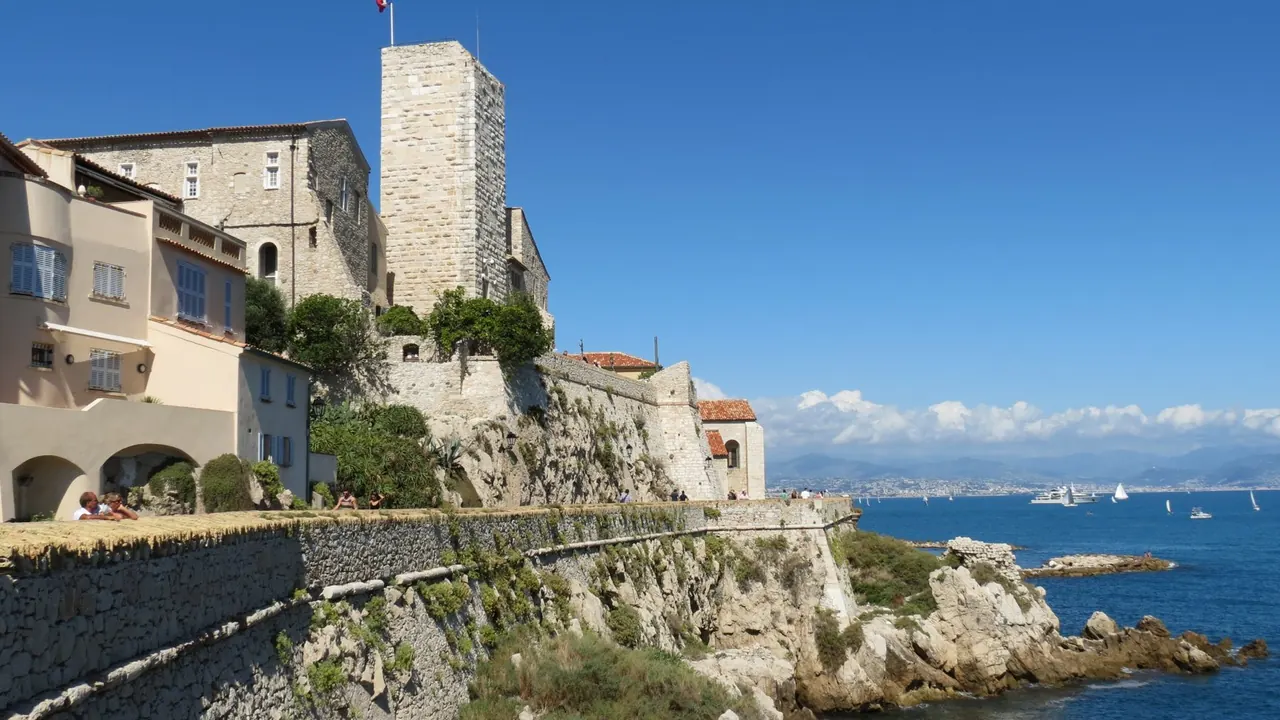
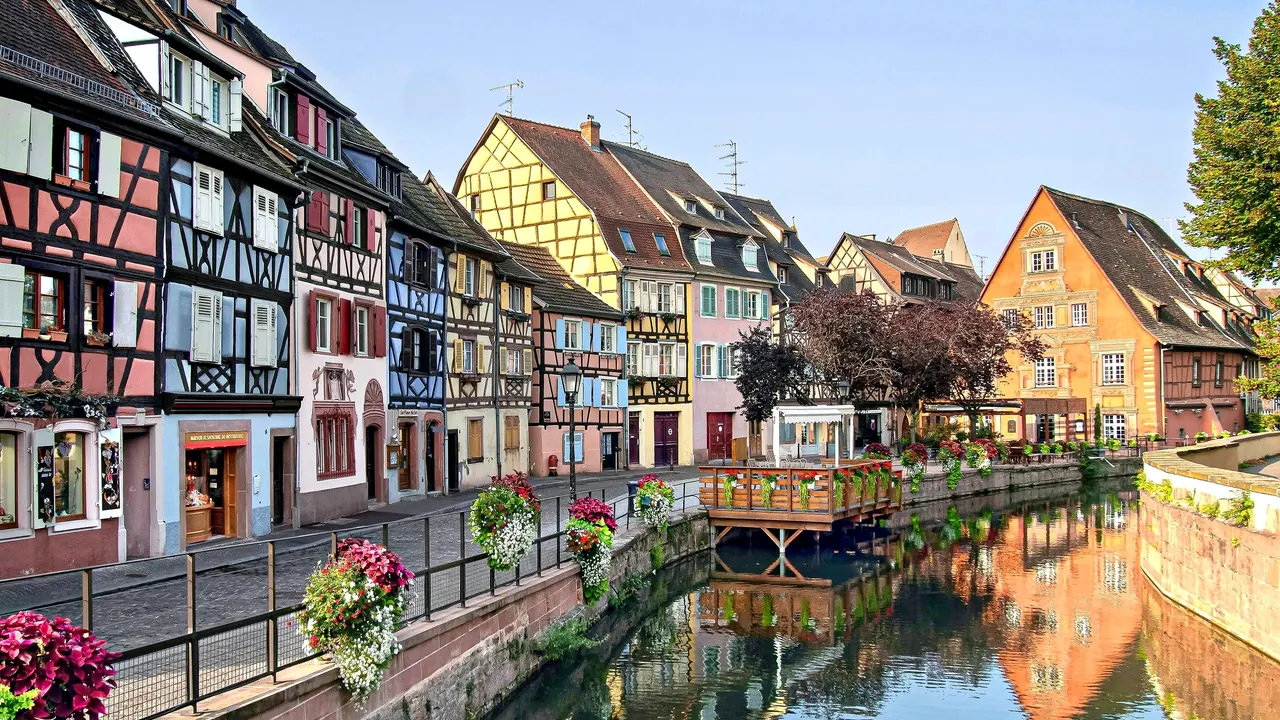
Photos: Antibes by Johan Allard, CC BY-SA 4.0, cropped; Colmar by Rolf Kranz, CC BY-SA 4.0, cropped.
Antibes or Colmar?
Our verdict in twelve categories, each scored against the same fixed benchmark cities, and the climate month by month, so you can choose for your trip.
Choose Antibes for
- beaches
- nightlife
- wellness
Antibes is the pick for a summer by the sea. Real sand at Juan-les-Pins and La Salis, clear coves around Cap d'Antibes and a coastal railway that puts Nice, Cannes and Monaco within easy reach make it a base for swimming, sun and hopping along the Riviera. Jazz à Juan and the late bars of Juan-les-Pins take care of the evenings. You will pay for all this, and high summer gets crowded.
Choose Colmar for
- culture and sights
- prices
- food and drink
Colmar suits travellers who would rather spend the day in a painted, half-timbered old town and the evening over choucroute and Riesling in a winstub. For anyone who cares about painting, the Isenheim Altarpiece alone justifies the trip. The wine villages and Vosges trails are on the doorstep, and families get storks, boat rides and animal parks nearby. It is easier on the budget, but quiet after dinner and nowhere near a beach.
Scoreboard
Twelve categories on one fixed scale from 0 to 100. The shaded stretch is the gap between the two.
Your match
Pick a travel style or drag the sliders, and both match scores follow your weighting.
Wins on beaches and nightlife with your weighting.
Wins on culture and sights and prices with your weighting.
What matters to you?
Category by category
What the scores mean for a trip.
Beaches & swimming
This is the widest gap between the two. Antibes has proper sand at Juan-les-Pins and La Salis, plus rocky coves and flat swimming rocks around Cap d'Antibes, and the summer sea is warm enough for long swims. Private beach clubs take much of the sand, though, and the free stretches fill early in August.
Colmar lies inland on the Alsace plain, so swimming means a municipal pool or a small lake up in the Vosges valleys. If your trip depends on the water, choose Antibes.
Food & drink
Colmar is the better place to eat, because it has a whole regional cuisine to explore. Winstubs serve baeckeoffe, choucroute and tarte flambée with munster cheese from the valleys. Riesling and Gewurztraminer come from the slopes just outside town, with cellar tastings a short drive away.
Antibes eats well around its covered market on Cours Masséna, with socca, pissaladière and grilled fish, but the choice is that of a seaside town and the streets by the port lean on tourist menus. The busiest streets in both towns have tired menus, so choose with care in either.
Culture & sights
Colmar has much more to see. Its old town of painted half-timbered houses, the Maison Pfister and the canals of Petite Venise has survived as a whole. The Unterlinden Museum's Isenheim Altarpiece is a painting people travel specifically to see, and Schongauer's Madonna in the Dominican church is a second reason to come.
Antibes has one outstanding sight, the Picasso Museum in the Château Grimaldi on the sea wall, along with Fort Carré and the old town ramparts. These make a good morning or two between swims, but they are not the reason for the trip.
Nightlife
Neither is a place for a big night out, but Antibes has more going on. In July and August, Juan-les-Pins keeps its beach bars and a few clubs open into the early hours, and yacht crews fill the pubs and wine bars near Port Vauban.
In Colmar the evening ends with dinner and a glass of wine in a winstub or on a terrace by the canal, and the streets go quiet early. For a real night out you take the train in both cases, to Nice from Antibes and to Strasbourg from Colmar.
Nature & outdoors
Both have fine country close by, but of very different kinds. Around Antibes it is sea and limestone: the coastal path round the cape, clear water for snorkelling and diving, and sailing in the bay. For proper hiking there are the red cliffs of the Esterel and the Gorges du Loup.
Colmar's outdoors is green and hilly: marked paths through the vines between wine villages, then the forested Vosges with their glacial lakes, the Route des Crêtes over the Grand Ballon and some modest winter skiing. Colmar is the better place for cycling and walking. Antibes is the place to get into the water.
Day trips
From Antibes, the day trips run along the coast. Nice and Cannes are minutes away by train, and the same line carries on to Villefranche, Monaco and Menton, while boats cross to the fort and monastery on the Lérins Islands. Inland, Saint-Paul-de-Vence, Eze and the perfume houses of Grasse make a very different day, and Sanremo across the Italian border is within reach.
From Colmar, the trips go to wine villages and over borders. Riquewihr, Eguisheim and Kaysersberg lie a few kilometres apart on the Route des Vins, and Haut-Koenigsbourg looks down from its ridge. Strasbourg's cathedral is half an hour away by train, and Basel and Freiburg make easy days in Switzerland and Germany. Choose Antibes for a string of seaside towns, and Colmar for vineyard villages and the old cities of the upper Rhine.
Good for families
Colmar has more for children overall. In town there are boat rides through Petite Venise, a little tourist train and storks on the rooftops. A drive away are the stork and otter park at Hunawihr, the macaques of the Montagne des Singes, Haut-Koenigsbourg castle and Europa-Park across the Rhine.
Antibes has something Colmar cannot offer: a sandy, gently shelving beach that suits small children. Beyond that the town has little built for kids, and the heat and crowds of August take some planning.
Getting around
The two work in much the same way. Each has a compact centre best seen on foot, and a railway line that makes the bigger neighbours easy: Nice and Cannes along the coast from Antibes, Strasbourg and Mulhouse from Colmar.
The difference lies further out. Around Antibes the trouble is summer traffic and parking on the coast road, with slow buses to Cap d'Antibes and the hill villages. Around Colmar, buses between the wine villages are few, but the quiet vineyard roads make a bicycle a real alternative to a car.
Shopping & style
Neither town is a shopping destination. Fashion buyers go elsewhere, to Cannes or Nice from Antibes. What differs is what you bring home. In Antibes that means Provençal goods from the covered market and the old town boutiques, such as olive oil, herbs, soaps and linens, with Biot glass and Vallauris pottery in nearby villages.
Colmar sells Alsace: wine straight from the producer, kougelhopf moulds, Soufflenheim pottery, printed table linen and gingerbread. Its Christmas markets make December the high point of the shopping year.
Affordability
Colmar is the cheaper of the two, with the prices of a provincial French town rather than a Riviera resort. Set lunches, regional wine and village tastings cost little. Rooms are where the cost bites, in summer and during the Christmas markets.
Antibes is expensive, especially in July and August, when rooms near the beaches and on Cap d'Antibes, and loungers at the beach clubs, cost resort rates. Visiting in spring or autumn, self-catering from the market and taking the coastal trains all bring the cost down.
Live music & performing arts
Both are festival towns rather than places with a year-round stage, but Antibes has the bigger name. Jazz à Juan, held under the pines by the sea since 1960, is one of Europe's oldest jazz festivals, and the Anthéa theatre puts on plays and dance through the rest of the year.
Colmar's small Italian-style theatre hosts touring productions from the Opéra national du Rhin. Its year peaks with a classical music festival in early July and a jazz festival in autumn. For serious opera or orchestral music, you go to Nice from Antibes and to Strasbourg or Basel from Colmar.
Wellness & relaxation
Antibes has more on offer for pampering: a seawater thalassotherapy centre and the grand hotel spas on Cap d'Antibes, which non-guests can often book. It is most restful in May, June and September, since high summer brings crowds.
Colmar has only hotel spas. Rest comes easily there all the same, with quiet evenings by the canals and slow walks through the vines once the day-trippers have gone. Neither town has thermal baths.
When should you go?
Pick your month. The climate figures are measured averages, not a forecast.
Antibes in July
Colmar in July
Daytime high, °C
Rainfall in the month, mm
Temperature and rainfall are climate normals, averaged over the years shown. Antibes: 1991-2020 normals, Nice (9.9 km from centre). Colmar: 1991-2020 normals, Ihringen (21.1 km from centre).
Antibes has the long warm season. From June to September daytime highs sit in the mid to upper twenties, peaking around 28°C in July and August. The sea is warm enough to swim from June into early October and reaches about 25°C in August. Summer is very dry and sunny, but the rain comes in autumn, and November is the wettest month at around 138mm. Winters are mild and fairly sunny, fine for walking the coastal path but not for the beach.
Colmar swings much further through the year. Winter highs of around 6°C make December and January cold and grey, and the town gets far less sunshine than the coast in every month. Spring warms up quickly and summer reaches the mid twenties. Rain falls all year, though, and is heaviest in late spring and early summer, with about 87mm in May. June and September, warm without being hot, are the most comfortable months for walking the old town and the vineyards. October is cooler but still pleasant.
Which traveller are you?
On a beach and sun trip, Antibes wins outright. Juan-les-Pins and La Salis have gently shelving sand, the coves of Cap d'Antibes have clear water for snorkelling, and the summer sea is warm. Colmar has only pools and small mountain lakes.
For a culture and arts trip, Colmar goes deeper. Its late-medieval old town has survived as a complete whole, and the Unterlinden Museum holds Grünewald's Isenheim Altarpiece. Antibes has the Picasso Museum and its sea ramparts, but fewer sights around them.
On a trip on a tight budget, Colmar is easier. Set lunches, regional wine and free or cheap cellar tastings keep costs moderate, and staying in a nearby village saves more. In summer, Antibes prices its rooms and beach loungers like a luxury resort.
Before you go
| Measure | Antibes | Colmar |
|---|---|---|
| Official language | French | French |
| Currency | Euro (EUR) | Euro (EUR) |
| Sockets | CE230 V, 50 Hz | CE230 V, 50 Hz |
| Driving side | Right | Right |
| Time zone | UTC+1, UTC+2 in summer | UTC+1, UTC+2 in summer |
| Emergency number | 112 | 112 |
| Elevation | 0 m | 185 m |
| Main airport | Nice-Côte d'Azur Airport (NCE)11 km from centre130 non-stop destinations | EuroAirport Basel–Mulhouse–Freiburg (BSL)55 km from centre112 non-stop destinations |
| Public holidays this year | 11 days | 11 days |
By the numbers
| Measure | Antibes | Colmar |
|---|---|---|
| City population | 77,637 | 66,970 |
| People per km² | 2,930 | 1,006 |
| Museums within 10 km | 14 | 9 |
| UNESCO World Heritage sites within 50 km | 2 | 3 |
| Swim season, months above 21 °C | 4 months | - |
Where else could you go?
Every comparison below shares a destination with this one, so you can follow Antibes or Colmar somewhere new.
- Cannesvs Antibes
- Nicevs Antibes
- Monacovs Antibes
- Saint-Tropezvs Antibes
- Baselvs Colmar
- Strasbourgvs Colmar