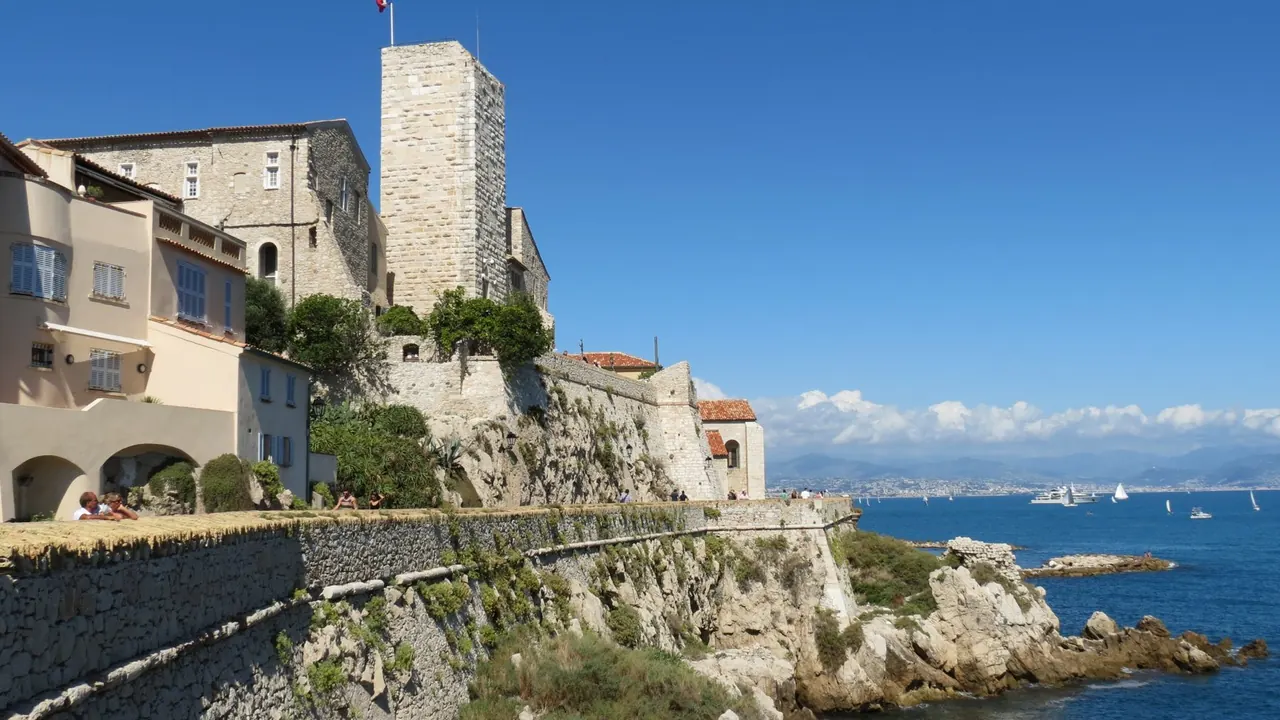
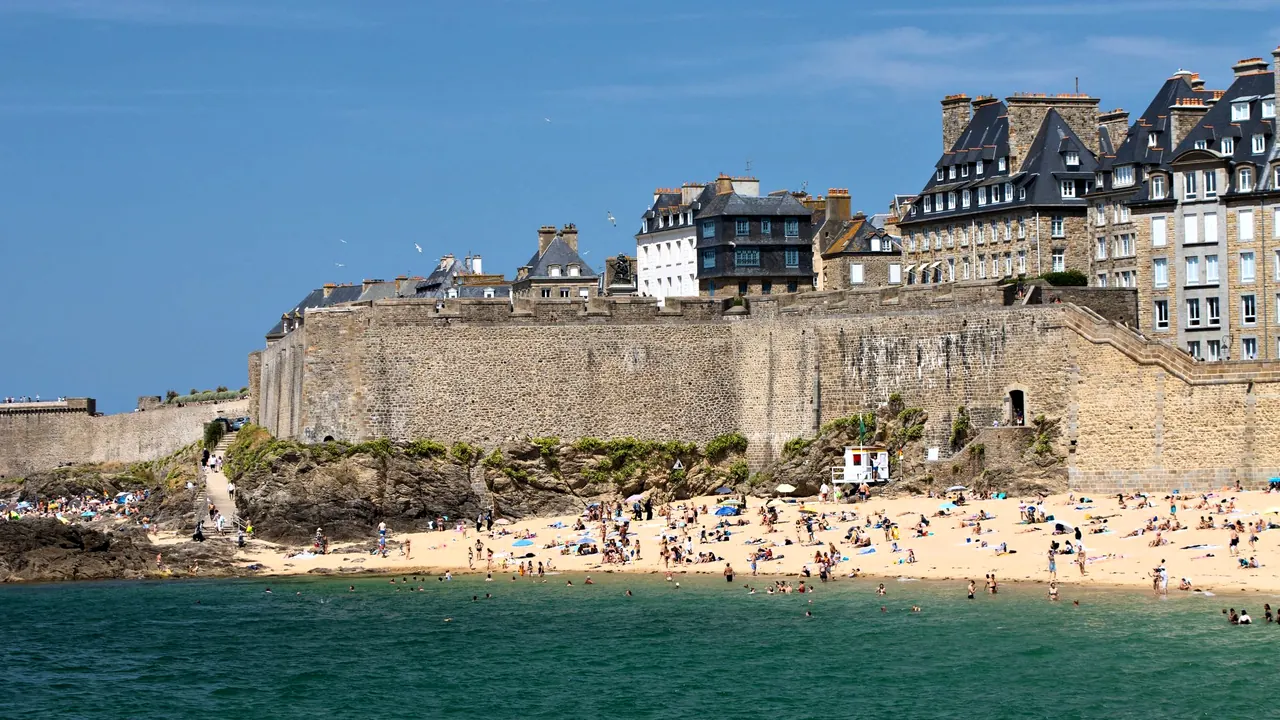
Photos: Antibes by Johan Allard, CC BY-SA 4.0, cropped; Saint-Malo by Efrem Efre, Pexels License.
Antibes or Saint-Malo?
Our verdict in twelve categories, each scored against the same fixed benchmark cities, and the climate month by month, so you can choose for your trip.
Choose Antibes for
- beaches
- nightlife
- day trips
Antibes is the pick for a warm-water Mediterranean summer. Its sandy beaches at Juan-les-Pins and La Salis, its clear coves around Cap d'Antibes and its central place on the Riviera railway make it a good base for swimming in the mornings and taking the train to Nice, Monaco or a hill village in the afternoon. It suits couples and friends who want sun, Jazz à Juan in July and a livelier summer evening, and who don't mind paying Riviera rates.
Choose Saint-Malo for
- wellness
- prices
- families
Saint-Malo is better for a cooler, gentler trip built around tides, ramparts and Breton food. Families with children of school age will find more to keep them busy here: the sea pool at Bon-Secours, walking out to the island forts and the Grand Aquarium. Travellers who want a restful seawater break in spring or autumn get a proper thalassotherapy tradition, and the town costs a little less than the Riviera.
Scoreboard
Twelve categories on one fixed scale from 0 to 100. The shaded stretch is the gap between the two.
Your match
Pick a travel style or drag the sliders, and both match scores follow your weighting.
Wins on beaches and nightlife with your weighting.
Wins on wellness and prices with your weighting.
What matters to you?
Category by category
What the scores mean for a trip.
Beaches & swimming
Antibes clearly wins for swimming. On a coast mostly lined with pebbles it has real sand at Juan-les-Pins and La Salis, plus clear rocky coves such as La Garoupe, and the water is warm enough for long swims through the summer. The catch is that private beach clubs take much of the sand, and the free stretches fill early in high season.
Saint-Malo's beaches are big and dramatic rather than warm. The Grand Plage du Sillon runs for kilometres, and at low tide the sand doubles and you can walk out to the island forts. The cold Channel water means most of the day is spent on the sand, and the walled sea pool at Bon-Secours is the most reliable place for a proper dip.
Food & drink
The two eat equally well but very differently. Antibes cooks in the Niçoise style, with socca, pissaladière, stuffed vegetables and rosé, and its covered market on Cours Masséna is the best place to start the day. Saint-Malo is about buckwheat galettes, dry cider, salted-butter caramel and oysters eaten by the harbour wall at Cancale.
Both towns have tourist menus in their busiest streets, near Port Vauban in Antibes and inside the walls in Saint-Malo. The better meals are found a little further out, on Cap d'Antibes in one case and in Saint-Servan or towards Cancale in the other.
Culture & sights
Each town makes a good day or two of sightseeing, but the main attraction is different. Antibes has one real art museum, the Picasso collection in the Château Grimaldi above the sea, along with Fort Carré and the villas of the cape.
Saint-Malo has almost no museums worth the trip. Its sight is the town itself: a full circuit of ramparts, granite houses rebuilt after 1944, Chateaubriand's tomb on the Grand Bé and the shipowners' malouinières in the countryside around it.
Nightlife
Antibes gives you more of a night out, at least in summer. Juan-les-Pins has beach bars, lounges and a few clubs that stay open until the early hours in July and August, and the yacht crews keep the pubs near Port Vauban busy. Nice is close by for anything bigger.
Saint-Malo evenings rarely go beyond a drink after dinner in the pubs and Irish-style bars inside the walls. There are no clubs to speak of, and outside summer weekends the town is quiet early.
Nature & outdoors
Both are coastal walking towns, and the landscapes are very different. Antibes has a limestone path round the cape, clear water for snorkelling and diving, and real hills nearby: the red Esterel cliffs and the gorges and pre-Alps above Grasse.
Saint-Malo's outdoors is shaped by the tides, which rise and fall up to about 13m. Here you get the GR34 towards Pointe du Grouin and Cap Fréhel, kayaking on the Rance, kitesurfing on windy days and seals around the islands, but the farmland inland is flat.
Day trips
Antibes is the better base for day trips. Nice, Cannes, Monaco and Menton are all on the same coastal railway, and boats leave for the Lérins Islands. The hill villages of Saint-Paul-de-Vence, Eze and Grasse are close, and Biot and Vallauris are right next door.
Saint-Malo has fewer outings, but one of them is Mont-Saint-Michel, about an hour away. Dinan, Dinard, Cancale and Rennes make a good week of trips, though most of them are much easier with a car than by train.
Good for families
Saint-Malo keeps children busier. Rampart walks, pirate stories, the tidal pool at Bon-Secours, causeway walks to the forts and the Grand Aquarium give a family plenty to do beyond the sand, though parents need to keep an eye on the fast tides.
In Antibes, the shallow sandy beaches suit toddlers better, and the warm sea helps. Apart from the beach and boats in the port, there is little made for children, and August heat means planning around the middle of the day.
Getting around
Both are easy on foot in the centre and harder once you leave town. In Antibes the coastal railway is the big advantage, linking Antibes and Juan-les-Pins stations to the whole Riviera, while Grasse and the Esterel need a car.
Saint-Malo has direct high-speed trains to Rennes and Paris and a passenger boat to Dinard. Mont-Saint-Michel and the coastal villages, though, have only thin bus links.
Shopping & style
Neither town is a shopping destination, and fashion means going to Cannes or Nice from Antibes, or to Rennes from Saint-Malo. What you bring home differs. Antibes offers Provençal market goods such as olive oil, herbs, soaps and linens, with Biot glass and Vallauris pottery nearby. Saint-Malo sells striped sailor tops, salted butter and caramels, cider and Quimper-style faience.
Affordability
Saint-Malo is the cheaper of the two, though neither is a bargain in July and August. Galettes with cider and set lunch menus keep everyday meals reasonable, and walking and local buses cost little.
Antibes in high summer is priced like a luxury resort, especially near Juan-les-Pins and on the cape, and beach-club loungers make it more expensive still. The cheap regional trains and self-catering from the market help, and spring and autumn are much better value in both towns.
Live music & performing arts
Antibes has the stronger headline event. Jazz à Juan has been held under the pines by the sea every July since 1960, and the Anthéa theatre runs a regional programme the rest of the year.
In Saint-Malo, most of the cultural calendar is festivals: the indie La Route du Rock, the literary Étonnants Voyageurs and the comics festival Quai des Bulles. Between them there is little on, and for opera both towns send you elsewhere, to Nice or Rennes.
Wellness & relaxation
Saint-Malo is the better place for a restful stay. Seawater thalassotherapy is part of local tradition here, with a large centre and heated pools on the Sillon beachfront, and empty low-tide sands to walk in the quieter seasons.
Antibes has a thalassotherapy centre and spas in the grand hotels on the cape, but no comparable tradition. It is most restful in May, June and September, when slow market mornings and evenings on the ramparts take the place of high-summer crowds.
When should you go?
Pick your month. The climate figures are measured averages, not a forecast.
Antibes in July
Saint-Malo in July
Daytime high, °C
Rainfall in the month, mm
Where the figures come from
Saint-Malo has no rain gauge within 25 km of the centre, so its rainfall comes from a gridded climate dataset read at the city rather than from a gauge further away.
Saint-Malo's sunshine is measured 68 km from the centre, at Rennes.
Temperature and rainfall are climate normals, averaged over the years shown. Antibes: 1991-2020 normals, Nice (9.9 km from centre). Saint-Malo: 2002-2020 (sunshine 1991-2020, rainfall 1991-2020) normals, Dinard (7.9 km from centre).
Antibes has a true Mediterranean summer. From June to September afternoons are warm to hot, reaching about 28°C in July and August, and the sea is warm enough for long swims from June into early October. It peaks at around 25°C in August. Summer is also very dry and sunny. The rain comes in autumn, and October and November are the wettest months at well over 120mm each. Winters are mild enough for walking the old town and the cape path, though too cool for the beach.
Saint-Malo stays much cooler all year. Summer highs sit in the low twenties and the Channel never gets much above 18°C, so even August is better for the sand than for long swims. Rain falls fairly evenly through the year and is heaviest from October to December, and Brittany gets far less sunshine than the Riviera, especially in winter. In return the town is comfortable for walking from spring to autumn, without the midsummer heat that can make Antibes tiring at midday.
Which traveller are you?
On a beach and sun trip, Antibes wins. The sea is warm enough to stay in for hours and dry summers make beach days dependable, though the free sand fills early. Saint-Malo offers more room but only brief, bracing swims.
On a family trip with children, Antibes suits toddlers, with warm, shallow water, but has little else once the beach palls. Saint-Malo is better for school-age children, with more to do beyond the sand, though the tides need watching.
For a relaxing and wellness trip, Antibes offers warmth and outdoor days in late spring, but treatments are an add-on rather than the point. Saint-Malo wins, because the seawater cure is what the town does, and its quiet low seasons are long.
Before you go
| Measure | Antibes | Saint-Malo |
|---|---|---|
| Official language | French | French |
| Currency | Euro (EUR) | Euro (EUR) |
| Sockets | CE230 V, 50 Hz | CE230 V, 50 Hz |
| Driving side | Right | Right |
| Time zone | UTC+1, UTC+2 in summer | UTC+1, UTC+2 in summer |
| Emergency number | 112 | 112 |
| Elevation | 0 m | 0 m |
| Main airport | Nice-Côte d'Azur Airport (NCE)11 km from centre130 non-stop destinations | Rennes-Saint-Jacques Airport (RNS)68 km from centre15 non-stop destinations |
| Public holidays this year | 11 days | 11 days |
By the numbers
| Measure | Antibes | Saint-Malo |
|---|---|---|
| City population | 77,637 | 47,439 |
| People per km² | 2,930 | 1,296 |
| Museums within 10 km | 14 | 3 |
| UNESCO World Heritage sites within 50 km | 2 | 2 |
| Swim season, months above 21 °C | 4 months | None |
Where else could you go?
Every comparison below shares a destination with this one, so you can follow Antibes or Saint-Malo somewhere new.
- Cannesvs Antibes
- Nicevs Antibes
- Monacovs Antibes
- Saint-Tropezvs Antibes
- Aix-en-Provencevs Antibes
- Marseillevs Antibes