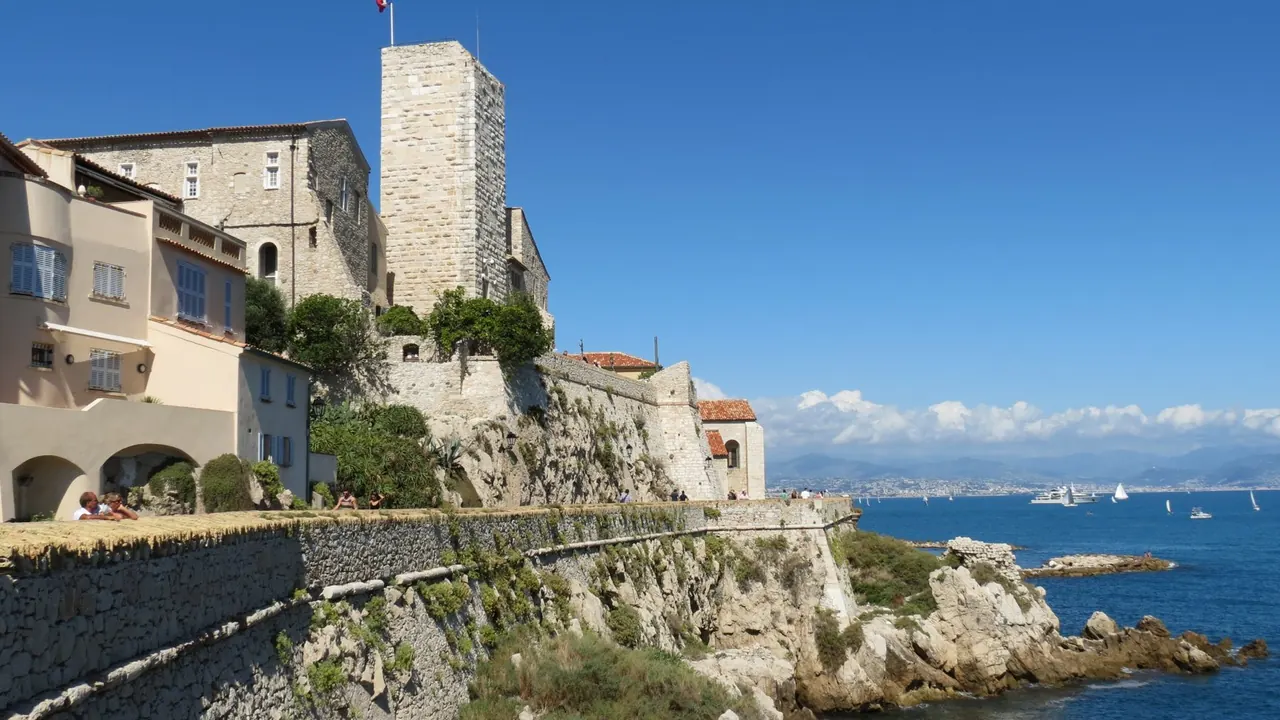
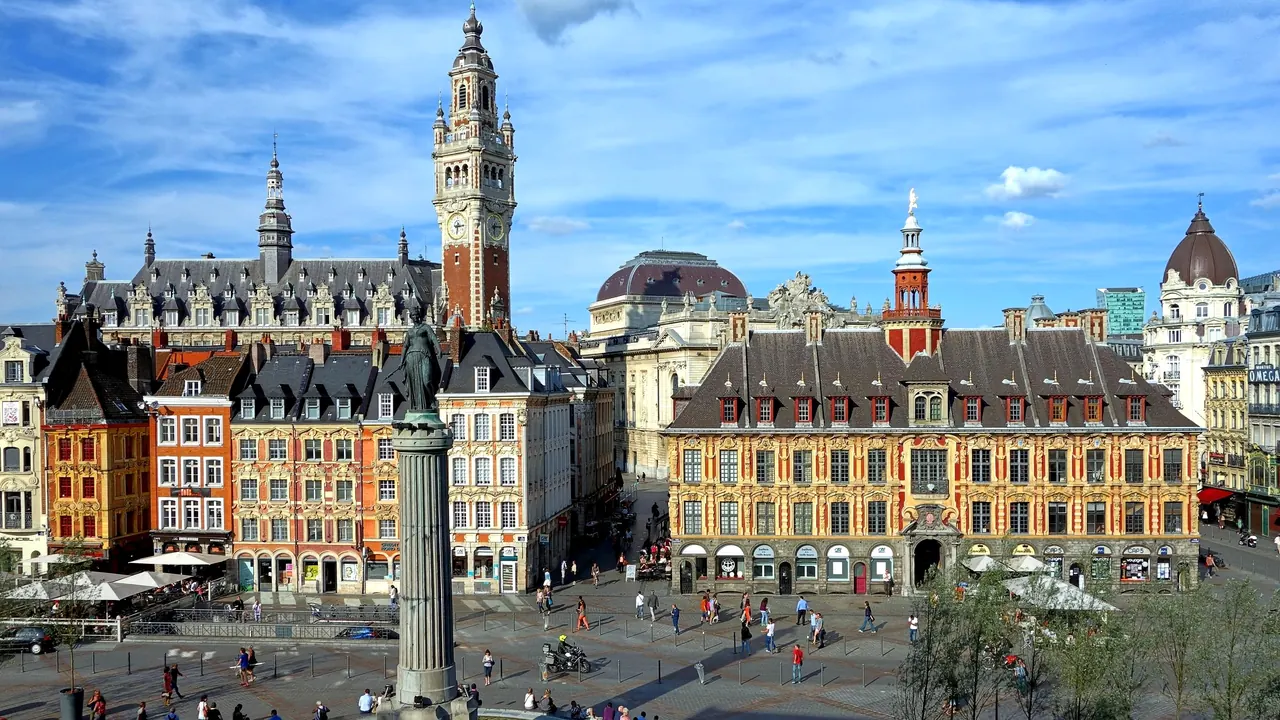
Photos: Antibes by Johan Allard, CC BY-SA 4.0, cropped; Lille by Velvet, CC BY-SA 3.0, cropped.
Antibes or Lille?
Our verdict in twelve categories, each scored against the same fixed benchmark cities, and the climate month by month, so you can choose for your trip.
Choose Antibes for
- beaches
- nature and the outdoors
- wellness
Antibes is the one for a summer vacation built around the sea. It has real sand at Juan-les-Pins and La Salis, clear coves around the cape, a coastal path on the doorstep and the whole Riviera strung along one railway line. It suits travellers who want swimming, walking and long market mornings more than a full cultural programme, and who accept resort prices in high summer.
Choose Lille for
- shopping
- culture and sights
- prices
Choose Lille if you want a city rather than a resort. It has a major art museum, a Flemish old town of carved brick, estaminet cooking and serious beer, student bars that fill all year and a proper opera and theatre season, all in a compact centre with a metro. It costs less, works in any season because little depends on the weather, and fast trains put Brussels, Bruges and Paris within a day.
Scoreboard
Twelve categories on one fixed scale from 0 to 100. The shaded stretch is the gap between the two.
Your match
Pick a travel style or drag the sliders, and both match scores follow your weighting.
Too close to call, 1 point apart
Wins on beaches and nature and the outdoors with your weighting.
Wins on shopping and culture and sights with your weighting.
What matters to you?
Category by category
What the scores mean for a trip.
Beaches & swimming
This is where the two cities differ most. Antibes has real sand on a coast mostly known for pebbles: the long beach at Juan-les-Pins, La Salis facing the ramparts, and rocky coves on the cape where you swim off flat stones into very clear water. Private clubs take much of the sand, but public stretches sit between them.
Lille is inland and offers no beach life at all. A day out to Malo-les-Bains at Dunkirk or the Opal Coast dunes means wind, sand yachting and a sea that stays cold even in August, which makes it a bracing walk rather than a swim.
Food & drink
Lille has the stronger food identity. Its estaminets serve Flemish dishes such as carbonnade and potjevleesch, pungent Maroilles turns up everywhere, and beer culture shapes the evening, with brewery taps and Belgian ales. The Sunday market at Wazemmes adds a multi-ethnic side, though fine dining is thin.
Antibes eats in the Niçoise style: socca, stuffed vegetables, grilled fish and rosé outdoors, with the covered market on Cours Masséna at its heart. There is serious dining on the cape, but the range is that of a coastal town and the streets by the port lean on tourist menus.
Culture & sights
Lille offers a good deal more to see. The Palais des Beaux-Arts, with its Flemish masters and relief maps of fortified towns, is reason enough to go, and the Vieille Bourse, the Grand Place and the UNESCO belfry make Vieux-Lille a sight in itself. La Piscine in Roubaix and the LaM modern art museum are a metro or tram ride away.
Antibes's highlight is the Picasso Museum in the Château Grimaldi, holding the work he made there in 1946, with the old town lanes, Fort Carré and Villa Eilenroc around it. It is charming but small, and a couple of days covers it.
Nightlife
Lille goes out more, and does so all year. A large student population fills the cheap bars on Rue Masséna and Rue Solférino on Thursday nights, while Vieux-Lille's brick cellars hold beer cafés and cocktail bars for a calmer crowd.
Antibes is a summer place after dark. In July and August Juan-les-Pins keeps beach bars and a few clubs open late, and the yacht crews drink in the pubs by Port Vauban, but out of season it goes quiet. For a big night, one city sends you to Nice and the other across the border into Belgium.
Nature & outdoors
Antibes has far more landscape within reach. The path around the cape crosses wind-carved limestone with views to the Alps, the clear water suits snorkelling, diving and paddleboarding, and the Esterel's red cliffs are under an hour away, with the Gorges du Loup and the pre-Alps for real hiking.
Lille's surroundings are flat farmland. The Citadel park and the Deûle towpaths make for easy cycling, and the low Monts de Flandre give short walks with wide views, but the dramatic scenery of Cap Blanc-Nez means a long day out.
Day trips
Both are superb bases, but for very different journeys. From Antibes the trips are Riviera towns and hill villages: Nice, Cannes, Monaco and Menton on the coastal line, the Lérins Islands by boat, and Saint-Paul-de-Vence, Eze and Grasse inland, with Sanremo across the Italian border.
Lille's trips are cities and capitals reached by fast train: Brussels in about half an hour, Ghent and Bruges, Paris by TGV, even London for the ambitious. Closer to home there are Arras, Amiens Cathedral and the Louvre-Lens, and the First World War battlefields around Ypres and the Somme.
Good for families
Neither city is built for children, and the two are about equal for a family stay, with quite different strengths. Antibes has the beach: sandy, gently shelving shore that suits toddlers, with boats in the port and the boat to the Lérins Islands for older children, though August heat means early starts.
Lille has more for a rainy day. There are the small zoo and playgrounds in the Citadel park, the natural history museum and the hands-on Forum des Sciences, with Pairi Daiza and the Nausicaá aquarium as bigger outings. Watch out for Vieux-Lille's cobbles with a pushchair.
Getting around
Lille is easier to get around. Its flat, compact centre is walkable, the two main stations stand side by side near the old town, and the automated VAL metro and the tram reach Roubaix and Tourcoing, so a car is more burden than help.
Antibes's old town, market and port are close together on foot, and the coastal railway makes the Riviera towns simple. Beyond the line it gets harder: buses to the cape and hill villages are slow, Grasse and the Esterel really need a car, and summer traffic on the coast road is heavy.
Shopping & style
Lille is the better place to shop. Rue Neuve and the Euralille mall cover the chains, Vieux-Lille has independent fashion, design shops and the city's few luxury labels, and the Braderie each September turns the streets into a vast flea market.
In Antibes shopping means the Provençal market for olive oil, herbs and soap, plus small boutiques selling linens and ceramics. For fashion people go to Cannes or Nice, and Biot glass and Vallauris pottery are best bought in those villages.
Affordability
Lille is the cheaper of the two. Rooms are reasonable for most of the year, estaminet meals and beer are fairly priced, and the metro and museums cost little, although prices rise during the Braderie and big trade fairs.
Antibes in July and August is priced like a luxury resort, especially near the beaches and on the cape, with costly loungers and seafront terraces. Spring and autumn bring hotel rates down sharply, and the coastal trains and market self-catering help at any time.
Live music & performing arts
Lille has a full season year-round. The Opéra de Lille, the Orchestre National de Lille and the Théâtre du Nord, one of France's national theatres, cover opera, symphonic music and drama, while the Zénith and the Aéronef bring touring bands.
Antibes has one landmark event, Jazz à Juan, held each July under the pines by the sea since 1960, and worth timing a trip around for jazz lovers. Outside that, the Anthéa theatre runs a regional programme and opera means going to Nice.
Wellness & relaxation
Antibes is the more restful choice, though neither has a bathing tradition. It offers seawater thalassotherapy and the grand hotel spas on Cap d'Antibes, and in May, June and September it settles into a slow round of markets, shaded lunches and evening walks on the ramparts.
Lille relaxes in tea rooms and on café terraces, with hotel and day spas. The nearest real thermal bath is a short train ride away at Saint-Amand-les-Eaux. The pace is easy, but rest is not why people go.
When should you go?
Pick your month. The climate figures are measured averages, not a forecast.
Antibes in July
Lille in July
Daytime high, °C
Rainfall in the month, mm
Temperature and rainfall are climate normals, averaged over the years shown. Antibes: 1991-2020 normals, Nice (9.9 km from centre). Lille: 1991-2020 normals, Lille (7.8 km from centre).
Antibes has a true Mediterranean summer. June, July and August are hot, sunny and nearly dry, with highs around 28°C at the peak and the sea warming to about 25°C, so beach days are close to guaranteed. The autumn rain starts in September. The days are still warm and the sea is still fine for swimming, but heavier showers arrive, and the rain builds through October to November, the wettest month at about 138mm. May and early October are mild in-between months, good for walking the old town and the cape path. Winters stay mild and fairly bright, but the sea is far too cool for a swim.
Lille is cooler and greyer all year. Summer is warm rather than hot, peaking around 24°C, which makes July and August comfortable for long days on foot. Rain falls fairly evenly through every month, and summer is no drier than the rest of the year. Winters are cold and dark, with highs near 7°C and little sunshine, so the city is at its best from May to September. In the colder months Antibes stays milder and sunnier, but Lille's museums and estaminets cope with winter better than a beach resort can.
Which traveller are you?
For a beach and sun trip, Antibes wins easily. Its gently shelving sand, warm summer sea and reliable sunshine are the whole point of a stay, while Lille's nearest beach is a windy North Sea strand an hour away by train.
On a culture and arts trip, Lille is the better choice. The Palais des Beaux-Arts, Vieux-Lille's Flemish baroque streets, La Piscine and a full opera and theatre season give far more depth than Antibes's Picasso Museum and ramparts.
For an outdoors trip, pick Antibes. The Cap d'Antibes path, snorkelling and sailing in clear water, the red cliffs of the Esterel and the gorges above Grasse beat Lille's flat canal towpaths and low Flanders hills.
Before you go
| Measure | Antibes | Lille |
|---|---|---|
| Official language | French | French |
| Currency | Euro (EUR) | Euro (EUR) |
| Sockets | CE230 V, 50 Hz | CE230 V, 50 Hz |
| Driving side | Right | Right |
| Time zone | UTC+1, UTC+2 in summer | UTC+1, UTC+2 in summer |
| Emergency number | 112 | 112 |
| Elevation | 0 m | 17 m |
| Main airport | Nice-Côte d'Azur Airport (NCE)11 km from centre130 non-stop destinations | Lille Airport (LIL)8 km from centre61 non-stop destinations |
| Public holidays this year | 11 days | 11 days |
By the numbers
| Measure | Antibes | Lille |
|---|---|---|
| City population | 77,637 | 238,246 |
| People per km² | 2,930 | 6,846 |
| Museums within 10 km | 14 | 23 |
| UNESCO World Heritage sites within 50 km | 2 | 6 |
| Swim season, months above 21 °C | 4 months | - |
Where else could you go?
Every comparison below shares a destination with this one, so you can follow Antibes or Lille somewhere new.