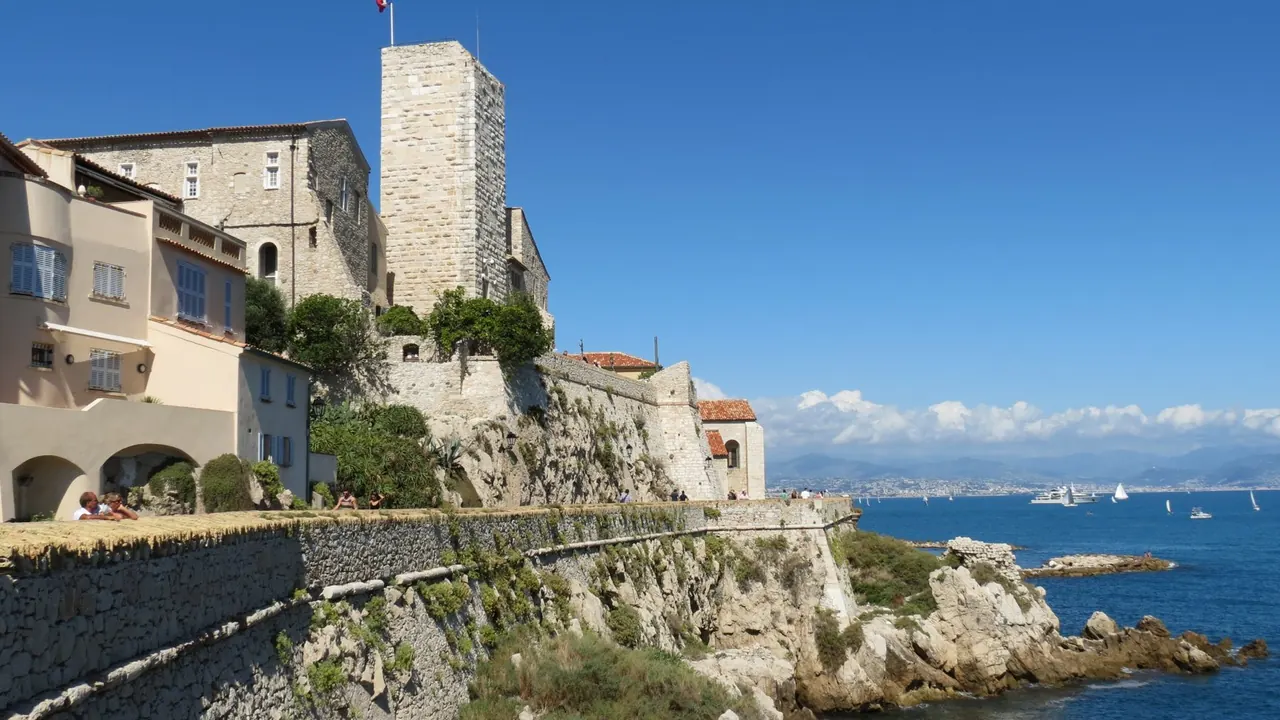
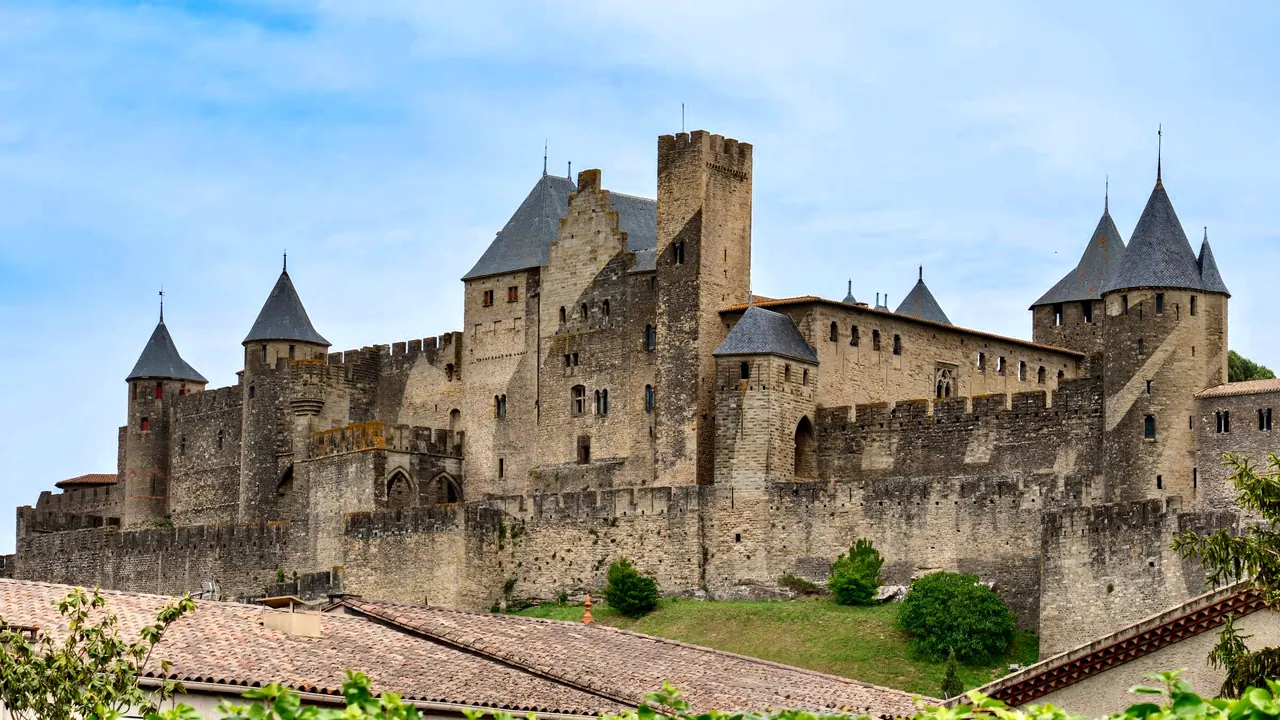
Photos: Antibes by Johan Allard, CC BY-SA 4.0, cropped; Carcassonne by Susanne Jutzeler, suju-foto, Pexels License.
Antibes or Carcassonne?
Our verdict in twelve categories, each scored against the same fixed benchmark cities, and the climate month by month, so you can choose for your trip.
Choose Antibes for
- beaches
- nightlife
- getting around
Antibes is for a summer by the sea with plenty to do beyond it. It has real sandy beaches at Juan-les-Pins and La Salis, clear coves around the cape, and the whole Riviera within reach by coastal train. It suits travellers who want swimming in the morning, Nice or Monaco in the afternoon and a terrace in the evening, and who can accept Côte d'Azur prices to get it.
Choose Carcassonne for
- prices
- culture and sights
Carcassonne is the better pick for history and for a lower budget. The walled Cité and the Cathar castles in the hills to the south are the main reasons to go, and wine country, cassoulet and the Canal du Midi fill the rest of the stay. Expect quiet evenings, a car for the best outings and noticeably smaller bills than on the Riviera.
Scoreboard
Twelve categories on one fixed scale from 0 to 100. The shaded stretch is the gap between the two.
Your match
Pick a travel style or drag the sliders, and both match scores follow your weighting.
Wins on beaches and nightlife with your weighting.
Wins on prices and culture and sights with your weighting.
What matters to you?
Category by category
What the scores mean for a trip.
Beaches & swimming
This is where the two differ most. Antibes is a genuine beach town, with long sandy shores at Juan-les-Pins and La Salis that are rare on a coast mostly made of pebbles, and rocky coves such as La Garoupe for clear-water swimming. The private beach clubs take a lot of the sand, but there are free public stretches between them.
From Carcassonne, a swim means the supervised reservoir at Lac de la Cavayère or the drive of about an hour to Gruissan or Narbonne-Plage. Those beaches are good for a day, but the tramontane wind can make the sea choppy, and you can't step out of your door onto the sand.
Food & drink
Antibes eats slightly better, mostly because of its range. The covered market on Cours Masséna, Niçoise dishes such as socca and pissaladière, grilled fish and some serious tables on Cap d'Antibes give it more variety. The streets around the port, though, lean on tourist menus.
Carcassonne is narrower but has a clear identity: cassoulet, plus the reds of Corbières and Minervois and Limoux blanquette at fair prices. The rule is the same in both towns. Eat away from the main sight, which here means the Bastide around Place Carnot rather than the set menus inside the Cité.
Culture & sights
Antibes has enough for a couple of easy days, though none of it is a great monument. The high point is the Picasso Museum in the Château Grimaldi on the sea wall, which still holds the work he made there in the autumn of 1946. After that come the lanes and sea ramparts of the old town, the star-shaped Fort Carré above Port Vauban, and Villa Eilenroc and the Garoupe chapel out on the cape.
Carcassonne is in another league for history. La Cité, with its double ring of walls and fifty-two towers above the Aude, is the most complete medieval fortified town in Europe. Below it, the thirteenth-century grid of the Bastide and the UNESCO-listed Canal du Midi add a second layer. Each town takes about two days to see, but only Carcassonne has a sight that people plan a whole trip around.
Nightlife
Neither is a nightlife destination, but Antibes at least has a summer season. Juan-les-Pins runs beach bars and a few clubs into the early hours in July and August, and the yacht crews keep the pubs near Port Vauban busy. Nice is close for anything bigger.
In Carcassonne the night is a floodlit walk on the walls and a glass on Place Carnot, and serious going out means Toulouse or Montpellier.
Nature & outdoors
Antibes has more on offer, and much of it is in the sea. Snorkelling, diving and paddleboarding in the clear water off the cape go alongside the coastal path, with the red cliffs of the Esterel and the gorges above Grasse within an hour.
Carcassonne's outdoors is entirely on land: beech forest in the Montagne Noire, garrigue and castle ridges in the Corbières, and rafting in the upper Aude gorges. The flat, plane-shaded Canal du Midi towpath is an easy cycling option, but almost everything else needs a car.
Day trips
Both make excellent bases, and Antibes is the easier one. Nice, Cannes, Monaco and Menton are all on the coastal railway, and Saint-Paul-de-Vence, Grasse, Biot and the Lérins Islands are close by. You can fill a week without hiring a car.
Carcassonne's outings are more dramatic but more spread out. Peyrepertuse and Quéribus on their ridges, Lagrasse, Minerve and the wine estates mostly need a car, and the train covers only Toulouse and Narbonne.
Good for families
These two are about level for families, but they appeal in different ways. In Antibes the draw is the shallow sandy beach, in a small, safe town with boats in the harbour, but little else is built for children.
Carcassonne's draw is the castle itself, with drawbridges, jousting and falconry in summer, plus the lake beach, a water park and the animal park. Its steep cobbles are hard work with a pushchair, so it suits school-age children better than toddlers.
Getting around
Antibes is easier without a car. The old town, the market and the port are a short walk apart, and two stations put the rest of the coast within easy reach by train. The weak points are the slow buses inland and the summer traffic on the coast road.
Carcassonne's flat Bastide is easy to walk, but the Cité is a climb of about twenty-five minutes, and the countryside that makes the area special is barely served by public transport.
Shopping & style
Shopping is small-scale in both towns, though Antibes is the better browse. Its covered market, Provençal linens and ceramics and the old-town boutiques are worth an hour, and the boutiques of Cannes and Nice are a short ride away.
In Carcassonne, the Cité sells mostly plastic swords and Cathar trinkets. The things worth bringing home are wine, blanquette and tinned cassoulet.
Affordability
Carcassonne costs noticeably less. It is priced like a provincial southern town, with moderate rooms in the Bastide, cheap wine and good set lunches. Hire car costs and premium hotels inside the walls are the main extras.
Antibes in July and August is priced like a luxury resort, and the beach clubs and seafront terraces add to the bill. Spring, autumn and self-catering from the market narrow the gap without closing it.
Live music & performing arts
Each town has one standout summer event, and Antibes's carries more weight. Jazz à Juan, held under the pines since 1960, is one of Europe's oldest jazz festivals, and the Anthéa theatre keeps a programme going the rest of the year.
The Festival de Carcassonne in July puts concerts and theatre in the open-air theatre inside the Cité walls, which is an unforgettable setting, and Bastille Day brings fireworks over the ramparts. Out of season, Carcassonne is quieter still.
Wellness & relaxation
Antibes has slightly more pampering on offer, with a seawater thalassotherapy centre and grand-hotel spas on Cap d'Antibes that non-guests can often book.
Carcassonne relies on a few hotel spas and the small, old-fashioned thermal villages of the upper Aude, such as Alet-les-Bains. Its real calm comes from slow walks along the canal. In both towns, the restful months are the ones either side of high summer.
When should you go?
Pick your month. The climate figures are measured averages, not a forecast.
Antibes in July
Carcassonne in July
Daytime high, °C
Rainfall in the month, mm
Where the figures come from
Carcassonne has no rain gauge within 25 km of the centre, so its rainfall comes from a gridded climate dataset read at the city rather than from a gauge further away.
Carcassonne's sunshine is measured 68 km from the centre, at Perpignan.
Temperature and rainfall are climate normals, averaged over the years shown. Antibes: 1991-2020 normals, Nice (9.9 km from centre). Carcassonne: 1999-2020 (sunshine 1991-2020, rainfall 1991-2020) normals, Carcassonne (2.8 km from centre).
Summer is hot in both, but the sea only matters in Antibes. There it is warm enough to swim from June into early October, at its warmest in August at about 25°C, and July and August are almost dry. In Carcassonne, July and August reach about 29°C, which makes the steep, exposed ramparts of the Cité hard going at midday. Late spring and September are the comfortable months for walking the walls and the Cathar hills.
The two part ways in autumn and winter. Antibes stays milder in winter, but the rain arrives in force from September and peaks in November at about 138mm, so autumn there is greener and wetter than its summer suggests. Carcassonne's rain is spread more evenly through the year, without such a peak. Its winters are cooler, with January highs around 10°C, and it gets a little less sunshine than the coast in every month.
Which traveller are you?
For a beach and sun trip, choose Antibes. It has gently shelving sand, swimming off the rocks around the cape and a sea that stays warm for four months. Carcassonne's nearest beaches are a lake or an hour's drive to the coast.
On a culture and arts trip, Carcassonne gives you more. The double-walled Cité, the Château Comtal, the stained glass of Saint-Nazaire and the Cathar castles add up to a stronger story than Antibes, where the Picasso Museum and the ramparts are the main sights.
For a trip on a tight budget, Carcassonne is clearly kinder. Rooms in the Bastide, cheap local wine and set lunches cost far less than the summer rates around Juan-les-Pins, as long as you stay outside the Cité walls and travel in spring or autumn.
Before you go
| Measure | Antibes | Carcassonne |
|---|---|---|
| Official language | French | French |
| Currency | Euro (EUR) | Euro (EUR) |
| Sockets | CE230 V, 50 Hz | CE230 V, 50 Hz |
| Driving side | Right | Right |
| Time zone | UTC+1, UTC+2 in summer | UTC+1, UTC+2 in summer |
| Emergency number | 112 | 112 |
| Elevation | 0 m | 81 m |
| Main airport | Nice-Côte d'Azur Airport (NCE)11 km from centre130 non-stop destinations | Carcassonne Salvaza Airport (CCF)4 km from centre10 non-stop destinations |
| Public holidays this year | 11 days | 11 days |
By the numbers
| Measure | Antibes | Carcassonne |
|---|---|---|
| City population | 77,637 | 46,080 |
| People per km² | 2,930 | 708 |
| Museums within 10 km | 14 | 6 |
| UNESCO World Heritage sites within 50 km | 2 | 2 |
| Swim season, months above 21 °C | 4 months | - |
Where else could you go?
Every comparison below shares a destination with this one, so you can follow Antibes or Carcassonne somewhere new.
- Cannesvs Antibes
- Nicevs Antibes
- Monacovs Antibes
- Saint-Tropezvs Antibes
- Toulousevs Carcassonne
- Montpelliervs Carcassonne