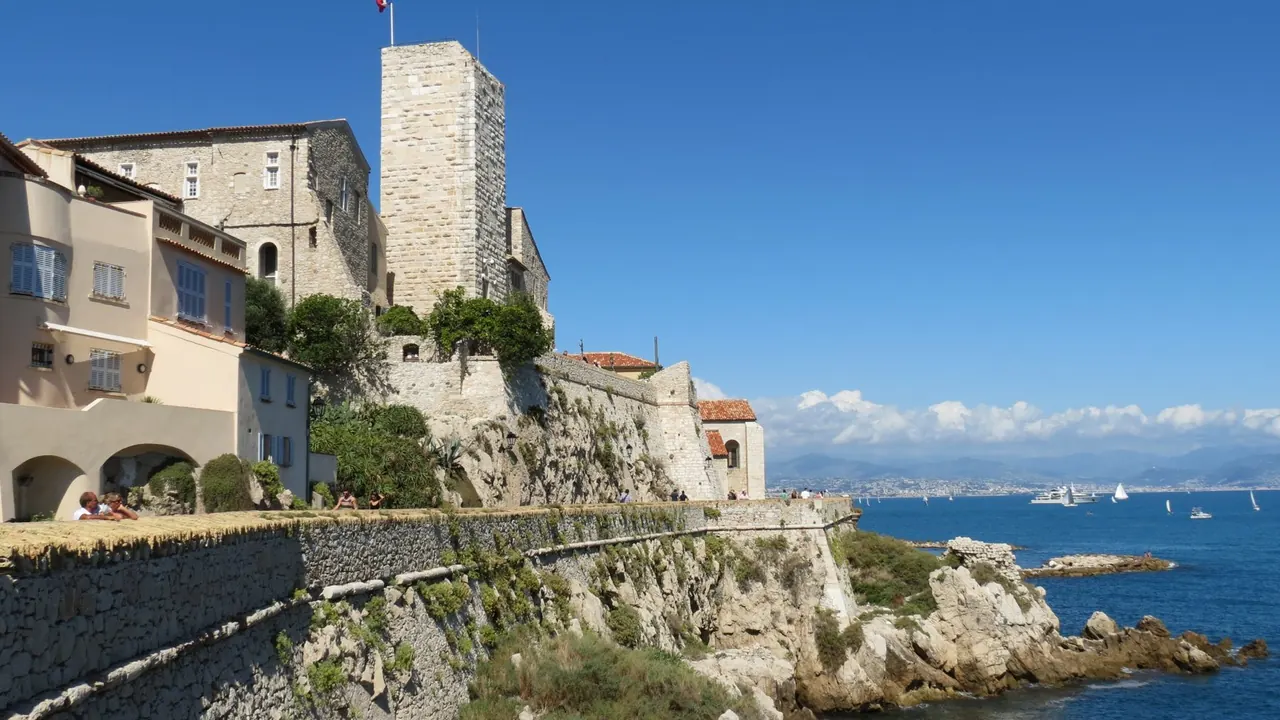
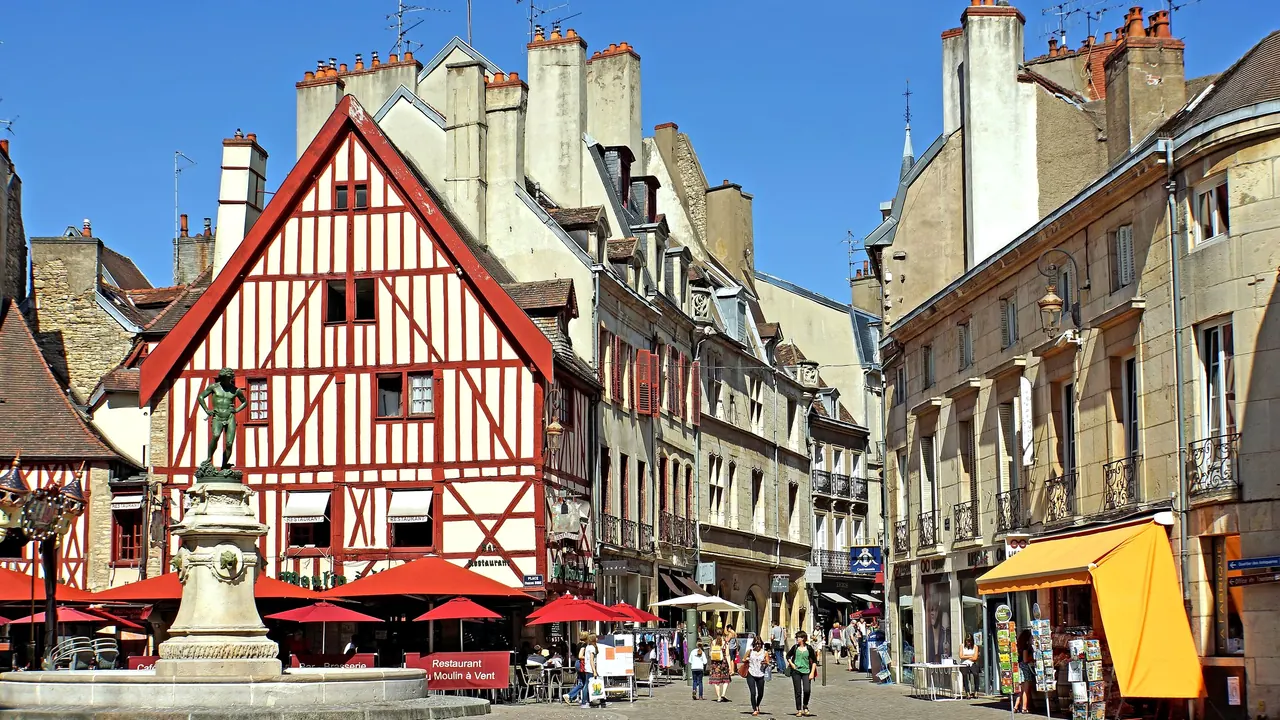
Photos: Antibes by Johan Allard, CC BY-SA 4.0, cropped; Dijon by Dennis G. Jarvis, CC BY-SA 2.0, cropped.
Antibes or Dijon?
Our verdict in twelve categories, each scored against the same fixed benchmark cities, and the climate month by month, so you can choose for your trip.
Choose Antibes for
- beaches
- nature and the outdoors
- families
Antibes is the pick for a summer trip built around the sea. Real sand at Juan-les-Pins and La Salis, clear coves around the cape and a coastal railway to Nice, Cannes and Monaco make it a strong base for swimmers, families with small children and anyone who wants the Riviera on their doorstep. The catch is the price, especially in high summer.
Choose Dijon for
- culture and sights
- prices
- food and drink
Choose Dijon if the trip is about eating, drinking and looking at things. The Burgundian table, the wine villages that begin at the edge of town and the ducal palace with its museum give it more depth for food lovers and culture seekers, and it costs noticeably less. There is no sea, though, and its winters are grey and cold.
Scoreboard
Twelve categories on one fixed scale from 0 to 100. The shaded stretch is the gap between the two.
Your match
Pick a travel style or drag the sliders, and both match scores follow your weighting.
Wins on beaches and nature and the outdoors with your weighting.
Wins on culture and sights and prices with your weighting.
What matters to you?
Category by category
What the scores mean for a trip.
Beaches & swimming
This is the widest gap between the two. Antibes has the long, gently shelving sand of Juan-les-Pins and La Salis, which is rare on a coast that is mostly pebble, plus coves and flat-rock swimming around Cap d'Antibes. Private beach clubs take part of the sand, and the free stretches fill early in high summer.
Dijon is hours from any coast. Lac Kir, the reservoir on the western edge of the city, has a supervised lawn-and-sand bathing area for a hot afternoon. Beyond that, swimming means a pool.
Food & drink
Antibes cooks in the Niçoise way: socca, pissaladière, stuffed vegetables and grilled fish with rosé, all built around the morning market on Cours Masséna. It is pleasant, but the range is that of a coastal town, and the lanes near the port lean on tourist menus.
Dijon goes much deeper. As the gateway to Burgundy it has the classic slow-cooked dishes, its own mustard, pain d'épices and cassis, the iron market hall of Les Halles, and wine bars pouring village Burgundies by the glass from vineyards that start at the edge of town. For a trip planned around eating and wine, it is clearly the better choice.
Culture & sights
Antibes has one outstanding sight, the Picasso Museum in the Château Grimaldi on the sea wall. Around it are the ramparts, the star-shaped Fort Carré and Villa Eilenroc on the cape, and two days covers the lot.
Dijon has more to work through. It was the capital of the Dukes of Burgundy, and their palace now holds one of France's oldest fine arts museums, home to the carved Valois tombs. Add the half-timbered streets, Notre-Dame with its gargoyles and lucky owl, the Romanesque crypt of Saint-Bénigne and Sluter's Well of Moses, and you have two or three days of real substance.
Nightlife
Neither is a place for big nights, but Antibes has the livelier summer. In July and August, Juan-les-Pins keeps beach bars, lounges and a few clubs going into the early hours, and the old-town pubs by Port Vauban fill with yacht crews. Nice is close if you want more. Out of season it goes very quiet.
Dijon's evenings follow the university calendar rather than the weather. Rue Berbisey and the squares around Place Émile Zola mean wine bars, beer and late dinners, with only a handful of clubs, and outside term the streets empty by midnight.
Nature & outdoors
Antibes has the more striking outdoors. The coastal path around Cap d'Antibes crosses wind-carved limestone above water clear enough for snorkelling and diving, and the bay suits sailing and paddleboarding. The red cliffs of the Esterel and the gorges and pre-Alps above Grasse are close enough for proper hiking.
Dijon's country is gentler. West of town, the combes have walking trails and cliffs for climbing, the Burgundy Canal towpath gives long, flat cycling, and the signed vineyard route towards Beaune is the classic ride. The granite hills and lakes of the Morvan are the wildest landscape nearby, but there are no mountains and no sea to swim or dive in.
Day trips
Both make excellent bases, Antibes slightly more so. From the middle of the Riviera, trains run to Nice, Cannes, Monaco and Menton, boats cross to the Lérins Islands, and the hill villages of Saint-Paul-de-Vence, Eze and Grasse lie inland. Italy is within a day.
Dijon's excursions centre on wine and abbeys: the Route des Grands Crus through Gevrey-Chambertin and Vougeot to Beaune, then Fontenay Abbey, Semur-en-Auxois and, on a longer day, Vézelay. Beaune and Besançon are easy by train, but most of the wine villages need a car, a bike or a tour.
Good for families
Antibes suits children better, mainly because of the sand. Its shallow, gently shelving beaches are easy for small swimmers, and the boats in Port Vauban, Fort Carré and the crossing to the Lérins Islands fill the gaps. August heat and full beaches call for early starts.
Dijon is safe, small and largely pedestrian. It has a natural history museum and planetarium at the Jardin de l'Arquebuse, play areas in the Parc de la Colombière and paddling at Lac Kir. Its tastings and fine art museums, though, are aimed at parents.
Getting around
Antibes is easy on foot between the old town, the market and the port, and the coastal railway is excellent for the Riviera towns. Further out it gets slow: buses to the cape and the hill villages take their time, and summer traffic and parking on the coast road are a real headache.
Dijon is the simpler city to move around. Its pedestrian core puts the station, market, palace and cathedral minutes apart, two tram lines reach the outskirts and Lac Kir, and regional trains run down the wine route to Beaune. Only the wine villages away from the line call for a car.
Shopping & style
Neither is a shopping destination, and both are best for things to eat or take home. Antibes leans Provençal: olive oil, herbs and soaps at the covered market, linens and ceramics in the old-town boutiques, and Biot glass and Vallauris pottery in the villages nearby.
In Dijon you fill your bag with mustard, pain d'épices, cassis, Burgundy from the wine merchants and cheese from Les Halles. Rue de la Liberté also has a department store and French chains, which Antibes lacks. For serious fashion, Antibes sends you to Cannes or Nice, and Dijon has little to offer.
Affordability
Antibes is the dearer of the two. In July and August, rooms near the beaches and on the cape cost luxury-resort rates, and loungers and seafront terraces add up. Spring and autumn, self-catering from the market and the cheap coastal trains bring the bill down.
Dijon has the moderate hotels and fair bistro set lunches of a French regional city, and wine by the glass is cheap. The costs there come from the wine itself: serious restaurants, cellar tastings and good bottles.
Live music & performing arts
Antibes has one famous fixture, Jazz à Juan, held under the pines at Juan-les-Pins every July since 1960. The Anthéa theatre and summer open-air events fill the rest of the year, and for opera you go to Nice.
Dijon has the steadier season. The Opéra de Dijon plays in the nineteenth-century Grand Théâtre and the acoustically fine Auditorium, alongside a national drama centre and a venue for touring bands. Its programme follows the academic year, so it is strongest just when Antibes is quiet.
Wellness & relaxation
Antibes has the edge for pampering, with a seawater thalassotherapy centre and the grand-hotel spas on Cap d'Antibes, which outside guests can often book. In May, June and September the town slows to market mornings and evening walks on the ramparts, though high summer is anything but restful.
Dijon has no spa tradition and only a few hotel spas, some offering grape-based treatments. Its calm comes from the provincial pace instead: long lunches, quiet squares and slow afternoons among the vines.
When should you go?
Pick your month. The climate figures are measured averages, not a forecast.
Antibes in July
Dijon in July
Daytime high, °C
Rainfall in the month, mm
Temperature and rainfall are climate normals, averaged over the years shown. Antibes: 1991-2020 normals, Nice (9.9 km from centre). Dijon: 1991-2020 normals, Dijon (7 km from centre).
Antibes follows the Mediterranean pattern. June to August are hot, sunny and nearly dry, and the sea warms to about 25°C in August, so swimming lasts from June into early October. The rains begin in September and grow heavier through October and November, which is the wettest month at 138mm. Winters stay mild, with highs around 13°C, so walking the cape path and the old town is still comfortable.
Dijon has a continental climate and much colder winters, with highs of 6°C in December and January and very little sun. Its rain is spread fairly evenly through the year, so summer has its share of wet days too. The best months are May to September, when afternoons of up to 27°C are good for long walks round the old centre and cycling in the vineyards. Early autumn stays pleasant for a while, then the cold arrives.
Which traveller are you?
On a beach and sun trip, Antibes wins outright. It has real sand at Juan-les-Pins and La Salis, rocky coves on Cap d'Antibes and warm, clear sea all summer. Dijon's only answer is the bathing lawn at Lac Kir.
For a culture and arts trip, Dijon offers more. The Palace of the Dukes, the Valois tombs, Notre-Dame's gargoyles and a proper opera season go deeper than Antibes, where the Picasso Museum and the ramparts fill a day or two.
On a tight budget, Dijon is the easier choice. Hotels are moderate, bistro set lunches are fair and the centre is walkable. Antibes in summer prices its rooms like a luxury resort and charges for beach-club loungers.
Before you go
| Measure | Antibes | Dijon |
|---|---|---|
| Official language | French | French |
| Currency | Euro (EUR) | Euro (EUR) |
| Sockets | CE230 V, 50 Hz | CE230 V, 50 Hz |
| Driving side | Right | Right |
| Time zone | UTC+1, UTC+2 in summer | UTC+1, UTC+2 in summer |
| Emergency number | 112 | 112 |
| Elevation | 0 m | 220 m |
| Main airport | Nice-Côte d'Azur Airport (NCE)11 km from centre130 non-stop destinations | Lyon Saint-Exupéry Airport (LYS)178 km from centre141 non-stop destinations |
| Public holidays this year | 11 days | 11 days |
By the numbers
| Measure | Antibes | Dijon |
|---|---|---|
| City population | 77,637 | 161,830 |
| People per km² | 2,930 | 3,890 |
| Museums within 10 km | 14 | 8 |
| UNESCO World Heritage sites within 50 km | 2 | 1 |
| Swim season, months above 21 °C | 4 months | - |
Where else could you go?
Every comparison below shares a destination with this one, so you can follow Antibes or Dijon somewhere new.