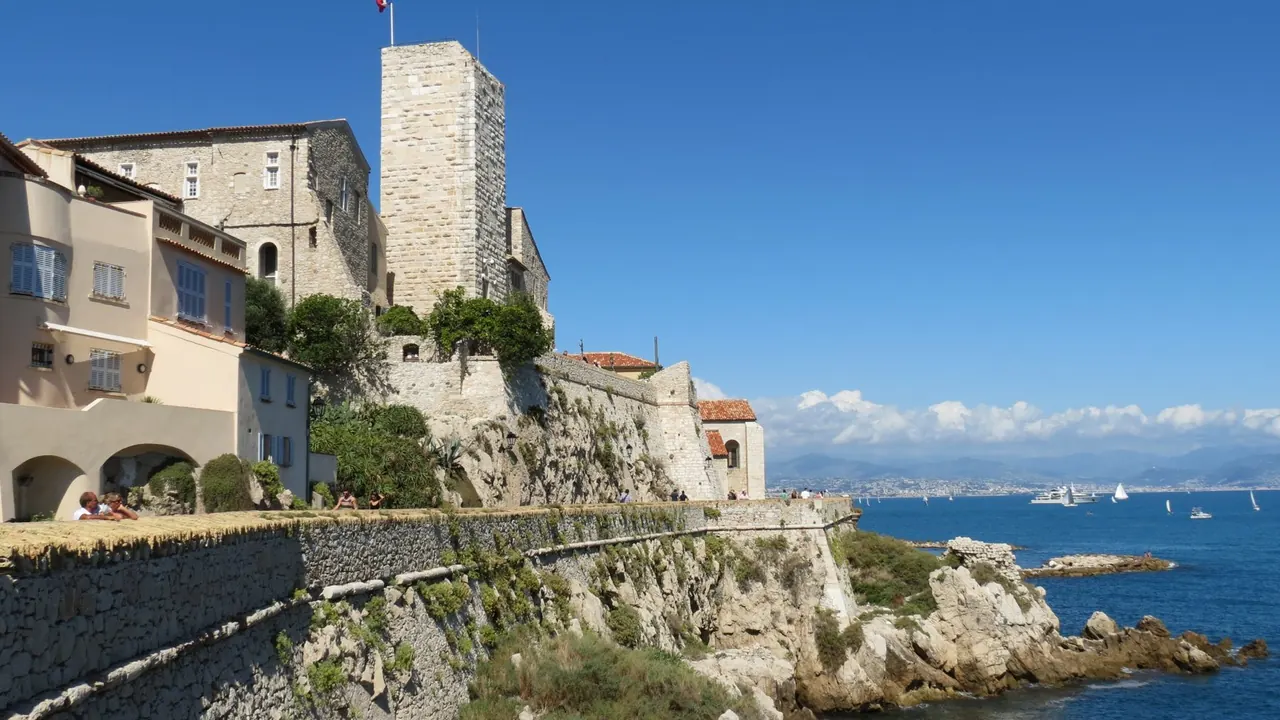
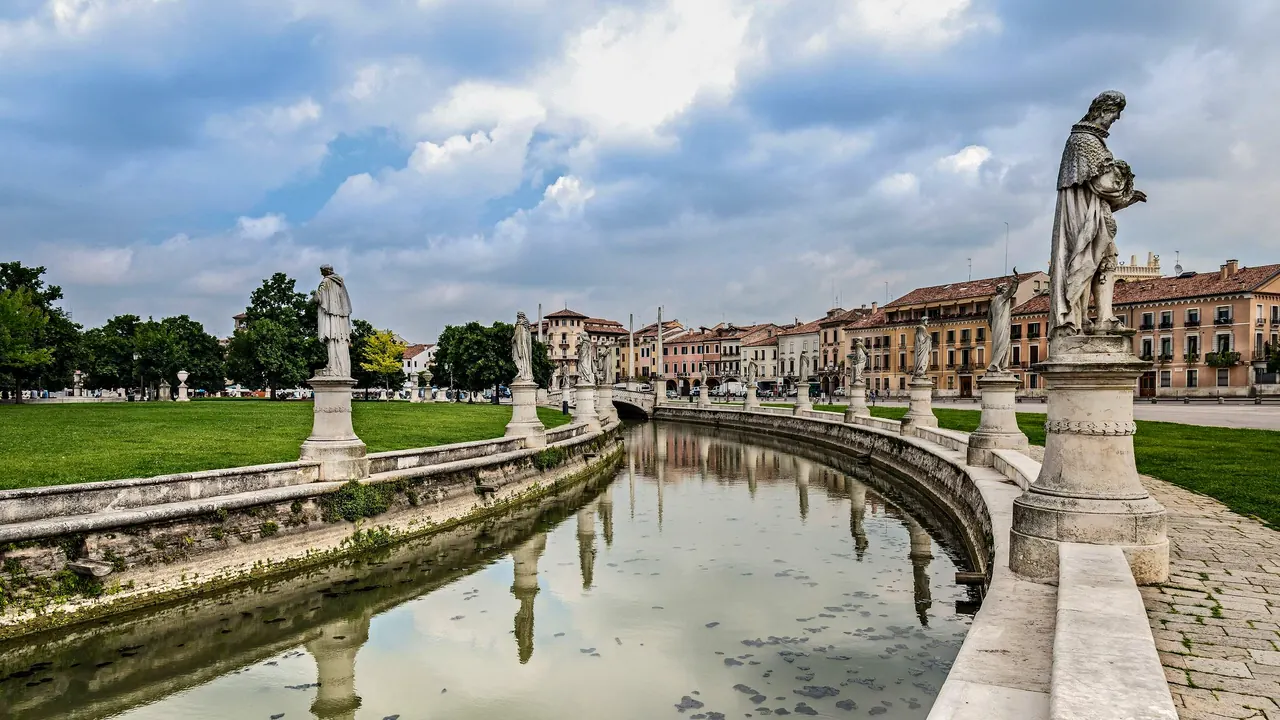
Photos: Antibes by Johan Allard, CC BY-SA 4.0, cropped; Padua by Didier Descouens, CC BY-SA 4.0, cropped.
Antibes or Padua?
Our verdict in twelve categories, each scored against the same fixed benchmark cities, and the climate month by month, so you can choose for your trip.
Choose Antibes for
- beaches
- nature and the outdoors
- families
Antibes is the one for a summer by the sea. It has real sand at Juan-les-Pins and La Salis, clear water for snorkelling round Cap d'Antibes, and Nice, Monaco and the hill villages a short train ride or drive away. It suits couples and families who want to swim by day and sit on a terrace in the evening, and who accept that it costs more and that the sights take only a couple of days.
Choose Padua for
- culture and sights
- wellness
- prices
If the art matters more than the beach, pick Padua. Giotto's frescoes in the Scrovegni Chapel, the Basilica of Saint Anthony and the old university fill a few rich days. The station also puts Venice, Vicenza, Verona and Bologna within easy reach of a cheaper bed. Add the thermal pools of Abano Terme and the evening spritz in the market squares, and Padua is the better base for a slower, more cultural trip in spring or autumn.
Scoreboard
Twelve categories on one fixed scale from 0 to 100. The shaded stretch is the gap between the two.
Your match
Pick a travel style or drag the sliders, and both match scores follow your weighting.
Wins on beaches and nature and the outdoors with your weighting.
Wins on culture and sights and wellness with your weighting.
What matters to you?
Category by category
What the scores mean for a trip.
Beaches & swimming
This is where Antibes pulls furthest ahead. It has sandy, gently shelving beaches at Juan-les-Pins and La Salis, and rocky coves and flat swimming rocks around Cap d'Antibes, all a short walk or bus ride from town. Private clubs take much of the sand, though, and the free stretches fill early in high summer.
Padua is inland, so the sea means a trip of about an hour to Sottomarina or the Lido of Venice. The Adriatic there is shallow, calm and warm, which is good for paddling, but the shore is a flat line of umbrellas with none of the scenery of the cape.
Food & drink
Padua eats better. Its Venetian home cooking, from bigoli with duck sauce to baccalà and spring risotto, has more depth, and so do the twin markets in Piazza delle Erbe and Piazza della Frutta. The standing spritz and Euganean wines make drinking part of the day, though there is little fine dining.
Antibes has its own morning market on Cours Masséna and Niçoise staples such as socca, pissaladière and grilled fish, with a few serious restaurants on the cape. The choice is that of a coastal town, and the streets by the port need picking through to avoid tourist menus.
Culture & sights
Padua is in another league here. Giotto's Scrovegni frescoes, the fourteenth-century fresco group at the Eremitani and the Baptistery, and Donatello's work at the Basilica of Saint Anthony all stand within a short walk. So do the great frescoed hall of the Palazzo della Ragione and the anatomical theatre at Palazzo Bo. Nearly every stop in the centre is a major one.
Antibes has one standout sight, the Picasso Museum in the Château Grimaldi on the sea wall, along with the ramparts, Fort Carré and the Villa Eilenroc. It makes pleasant sightseeing between swims, and two days covers it.
Nightlife
Neither offers a big night out, and the difference lies in season and style. Antibes goes out in July and August, when Juan-les-Pins keeps its beach bars and a few clubs open into the early hours and the pubs near Port Vauban fill with yacht crews. Out of season it closes early, and Nice is the place for more.
Padua's evenings centre on the aperitivo, with students and locals standing over spritz glasses in Piazza delle Erbe and Piazza dei Signori. It is busiest during university term and quiet in high summer, almost the reverse of Antibes.
Nature & outdoors
Antibes has the better outdoors close at hand. The coastal path round Cap d'Antibes runs over carved limestone, with clear water below for snorkelling and diving. The red cliffs of the Esterel and the gorges and hills above Grasse offer real hiking within reach.
On Padua's flat plain you have to head out first. The Euganean Hills, about 15km away, have trails, vineyards and cycling roads, and the Brenta towpaths make easy bike rides. The pre-Alps around Monte Grappa and Asiago are a longer drive.
Day trips
Both are exceptional bases, and Padua comes out slightly ahead. Venice is under half an hour by train and can be visited again and again. Vicenza, Verona, Bologna and Ferrara are also easy by rail, and the Brenta villas and walled towns such as Montagnana and Este are close by.
Antibes sits in the middle of the Riviera, with Nice, Cannes, Monaco and Menton along one coastal line, the Lérins Islands by boat and hill villages like Saint-Paul-de-Vence and Eze inland. What tips the balance is Venice: few bases anywhere have a city of that weight so close.
Good for families
Antibes is the easier choice for families, mostly because of the sand. The gently shelving beaches at Juan-les-Pins and La Salis suit small children far better than the pebbles elsewhere on the coast. The boats in Port Vauban and the walk round Fort Carré fill the gaps between swims, though August heat and crowds take some planning.
Padua is safe and flat, and children are welcome in its trattorias. Prato della Valle is a good place for them to run around, but the main sights are frescoes and churches. Families staying there tend to rely on outings to Gardaland, Lake Garda or the Adriatic.
Getting around
Padua is simpler to get around. Its compact centre is mostly closed to traffic, arcades shelter you from rain and sun, and a tram runs from the station to Prato della Valle. Main lines lead quickly in every direction, so you rarely need a car.
In Antibes, the old town and Port Vauban are close together on foot, Juan-les-Pins is a flat half-hour walk away, and the coastal railway reaches Nice and Monaco. Away from the coast, slow buses and heavy summer traffic make Grasse or the Esterel much easier with a car.
Shopping & style
Padua has a little more to offer. The arcaded streets between the station and the squares have Italian fashion and shoe shops, university bookshops, and delicatessens under the Palazzo della Ragione. A large antiques market fills Prato della Valle one Sunday a month.
Antibes stays small: the covered market for olive oil, herbs and soaps, and boutiques selling Provençal linen and ceramics. Both send serious fashion shoppers elsewhere, Antibes to Cannes and Nice, Padua to Venice and Milan.
Affordability
Padua is clearly the cheaper of the two. Its hotels are moderately priced for northern Italy, which is why many people sleep there and visit Venice by day. A standing spritz or a trattoria meal is fair value, and rooms only get dearer around trade fairs and graduations.
In July and August, rooms near Juan-les-Pins and on the cape in Antibes are priced like a luxury resort, and beach-club loungers add to the bill. Coming in spring or autumn, self-catering from the market and using the good-value coastal trains narrow the gap.
Live music & performing arts
Neither has much on stage, and the difference is in the rhythm. Antibes has one famous moment, Jazz à Juan, held each July since 1960 under the pines by the sea. Beyond that it has the Anthéa theatre and summer events in the old town.
Padua runs a steadier programme all year. There is theatre and some opera at the Teatro Verdi, a chamber orchestra playing in the Sala dei Giganti and the Basilica, and small student music venues. For grand opera, Antibes looks to Nice and Padua to the Fenice in Venice and the Arena in Verona.
Wellness & relaxation
Padua has a major asset nearby. Abano Terme and Montegrotto Terme, about 12km out, form one of Europe's largest thermal districts, with hot mineral pools and mud treatments. Many of the spa hotels take day visitors, so a soak fits easily after a morning of sightseeing.
Antibes has no bathing tradition, only seawater therapy and the grand hotel spas on Cap d'Antibes. It is most restful in May, June and September, with market mornings and evening walks on the ramparts, while the crowds of high summer take that away.
When should you go?
Pick your month. The climate figures are measured averages, not a forecast.
Antibes in July
Padua in July
Daytime high, °C
Rainfall in the month, mm
Where the figures come from
Padua's temperatures are measured 35 km from the centre, at Treviso / Istrana.
Padua has no rain gauge within 25 km of the centre, so its rainfall comes from a gridded climate dataset read at the city rather than from a gauge further away.
Padua's sunshine is measured 36 km from the centre, at Treviso / S. Angelo.
Temperature and rainfall are climate normals, averaged over the years shown. Antibes: 1991-2020 normals, Nice (9.9 km from centre). Padua: 1991-2020 normals, Treviso / Istrana (35.4 km from centre).
Antibes has the longer beach season. The sea is warm enough to swim in from June to early October and reaches about 25°C in August. July and August are dry, very sunny and hot without being oppressive, at around 28°C. The rain comes in autumn, and October and November are the wettest months at well over 100mm. Winters stay mild and much sunnier than Padua's, good for walking the coastal path.
Padua changes more through the year. In July and August it reaches about 31°C and the air sits heavy on the plain, which makes a day of walking the streets tiring. Winters are cold and often foggy, at around 8°C. Rain is spread fairly evenly across the year, so the best months for the city are May, June, September and early October. The Adriatic, an hour away, is warm in high summer, but a swim there is a day out rather than part of the stay.
Which traveller are you?
On a beach and sun trip, Antibes is the clear pick. Juan-les-Pins and La Salis have sand that shelves gently into the bay, the coves of Cap d'Antibes have clear water, and the dry summer keeps the swimming going for months. From Padua, the sea is a day out.
For a culture and arts trip, Padua wins easily. It has Giotto's Scrovegni frescoes, the UNESCO-listed fresco cycles, Donatello's work at the Basilica of Saint Anthony and the oldest anatomical theatre in the world. Venice and Vicenza are close by train. Antibes has the Picasso Museum and little else of that weight.
On a relaxing and wellness trip, Padua has the thermal district of Abano and Montegrotto nearby, where spa hotels with hot mineral pools take day visitors. Antibes offers seawater therapy and hotel spas on the cape, and its summer crowds make it far less restful.
Before you go
| Measure | Antibes | Padua |
|---|---|---|
| Official language | French | Italian |
| Currency | Euro (EUR) | Euro (EUR) |
| Sockets | CE230 V, 50 Hz | CFL230 V, 50 Hz |
| Driving side | Right | Right |
| Time zone | UTC+1, UTC+2 in summer | UTC+1, UTC+2 in summer |
| Emergency number | 112 | 112 |
| Elevation | 0 m | 12 m |
| Main airport | Nice-Côte d'Azur Airport (NCE)11 km from centre130 non-stop destinations | Venice Marco Polo Airport (VCE)39 km from centre103 non-stop destinations |
| Public holidays this year | 11 days | 13 days |
By the numbers
| Measure | Antibes | Padua |
|---|---|---|
| City population | 77,637 | 206,496 |
| People per km² | 2,930 | 2,220 |
| Museums within 10 km | 14 | 29 |
| UNESCO World Heritage sites within 50 km | 2 | 5 |
| Swim season, months above 21 °C | 4 months | 4 months |
Where else could you go?
Every comparison below shares a destination with this one, so you can follow Antibes or Padua somewhere new.