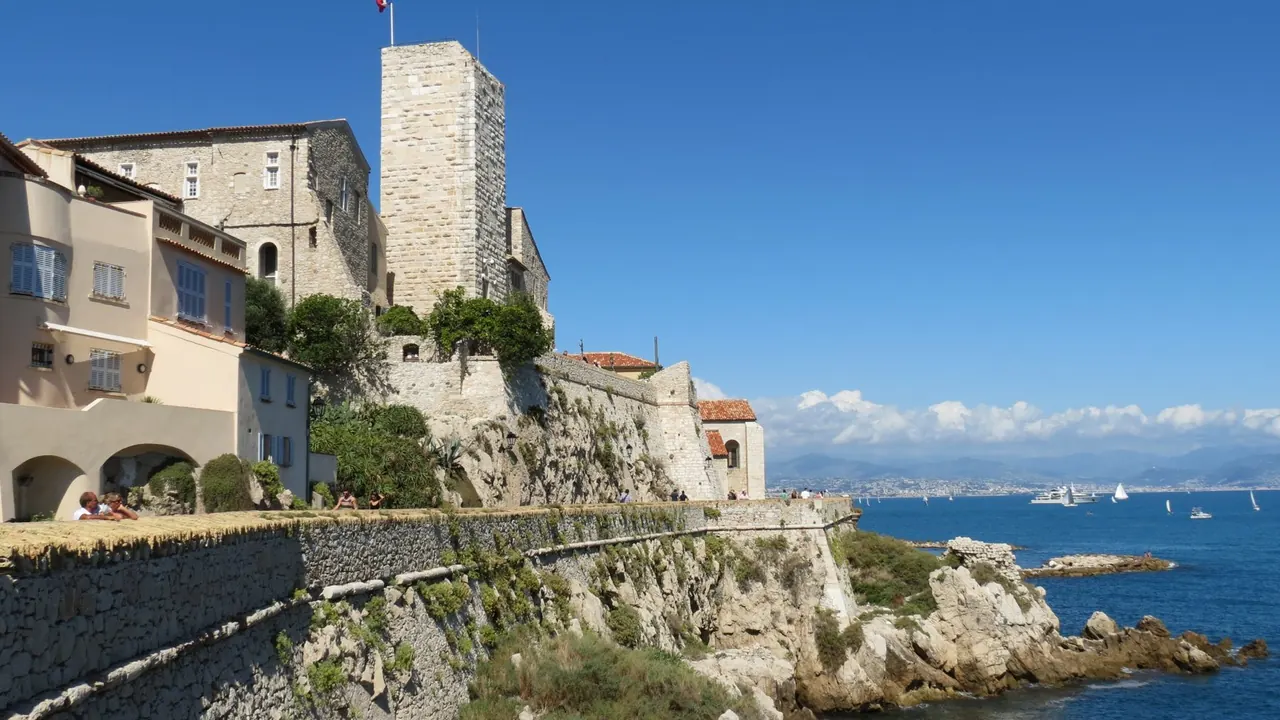
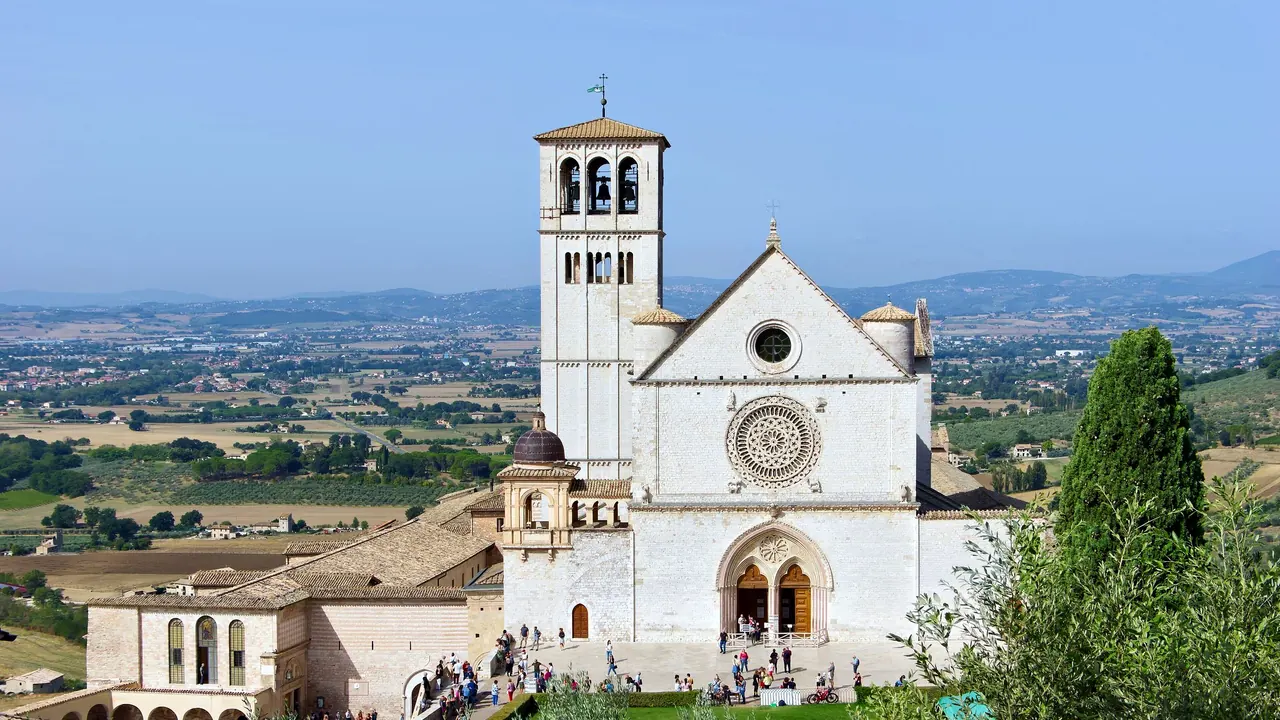
Photos: Antibes by Johan Allard, CC BY-SA 4.0, cropped; Assisi by Berthold Werner, CC BY-SA 4.0, cropped.
Antibes or Assisi?
Our verdict in twelve categories, each scored against the same fixed benchmark cities, and the climate month by month, so you can choose for your trip.
Choose Antibes for
- beaches
- nightlife
- families
Antibes suits a summer trip built around the sea. It has sandy, gently shelving beaches at Juan-les-Pins and La Salis, clear water for snorkelling off the cape, a covered market for long mornings and the coastal railway running to Nice, Cannes and Monaco. Families with small children, swimmers and anyone who wants a late drink in July will find far more here, as long as they accept Riviera prices.
Choose Assisi for
- culture and sights
- prices
Travellers who come for art, history and quiet will be happier in Assisi. The Basilica of San Francesco and its frescoes put it in a different class for sightseeing. It costs noticeably less, with convent guesthouses and agriturismi, and around it lie Spello, Perugia, Spoleto and the rest of Umbria. There is no beach and almost no nightlife, and for many visitors the silent evenings in the lanes are part of the reason to go.
Scoreboard
Twelve categories on one fixed scale from 0 to 100. The shaded stretch is the gap between the two.
Your match
Pick a travel style or drag the sliders, and both match scores follow your weighting.
Wins on beaches and nightlife with your weighting.
Wins on culture and sights and prices with your weighting.
What matters to you?
Category by category
What the scores mean for a trip.
Beaches & swimming
For swimming, the two are not comparable. Antibes has some of the few sandy beaches on this part of the coast, long and shallow at Juan-les-Pins and La Salis, plus rocky coves such as La Garoupe where the water is very clear. The main drawbacks are the private beach clubs and the free stretches filling up early in August.
Assisi is a hill town in central Italy with no sea within easy reach. The nearest swimming is at the small lido beaches on Lake Trasimeno, about 45 minutes' drive away, so in practice a hotel pool is the realistic answer.
Food & drink
Antibes offers more to eat. The covered market on Cours Masséna sets the rhythm of the morning, Niçoise dishes such as socca and pissaladière are everywhere, and there is serious cooking on Cap d'Antibes as well as grilled fish and rosé by the sea. Near the port, tourist menus are the thing to avoid.
Assisi's cooking is excellent in its own way, built on black truffle strangozzi, Castelluccio lentils, wild boar, Subasio olive oil and Montefalco's Sagrantino. The range is narrower, though, with no market hall, little fine dining and set menus for tour groups near the basilica. The best meals are in small trattorias on the side lanes and in country agriturismi.
Culture & sights
Here Assisi is far ahead. The Basilica of San Francesco is one of the great monuments of Europe, with the Lower Church's frescoes by Cimabue, Simone Martini and Lorenzetti beneath the Saint Francis cycle in the Upper Church. Around it stand the Temple of Minerva, Santa Chiara, the Rocca Maggiore and the Porziuncola below the walls, all in pink Subasio stone.
Antibes has one standout, the Picasso Museum in the Château Grimaldi, where the works he made in 1946 still hang above the sea. Fort Carré, the ramparts and the Garoupe chapel are pleasant additions rather than reasons to make the trip.
Nightlife
Antibes at least has some nightlife in summer. Juan-les-Pins keeps its beach bars and a few clubs open into the early hours in July and August, and the yacht crews fill the pubs and wine bars by Port Vauban. Out of season it shuts down, and Nice is where people go for more.
Assisi has essentially no nightlife at all. After dinner and a glass of Sagrantino, the floodlit lanes are empty by eleven. Anyone who wants bars should stay in Perugia instead.
Nature & outdoors
Antibes has the edge because it offers both sea and mountains. The cape path runs over wind-carved limestone, the water around it is good for snorkelling, diving and paddleboarding, and the red Esterel cliffs and the gorges and pre-Alps above Grasse are within easy driving distance. The town itself, though, is flat and built up.
Assisi's outdoors is all on land and starts at the town walls. A path climbs Monte Subasio past the Eremo delle Carceri to open summit meadows, and the valley floor below is good for cycling between olive groves and vineyards. The Valnerina and the Sibillini are longer outings by car.
Day trips
Both towns make excellent bases, and the difference is in the kind of place you visit. From Antibes you follow the coast, with Nice, Cannes, Monaco and Menton on one railway line, boats to the Lérins Islands, and hill villages such as Saint-Paul-de-Vence and Grasse behind.
From Assisi the trips go to Umbrian hill towns: Spello, Perugia and Spoleto by train, and Gubbio, Todi and Orvieto further out, with Cortona and Montepulciano across the Tuscan border. More of these need a car than on the Riviera.
Good for families
Antibes works better with children, mainly because of the sand. The shallow beaches at Juan-les-Pins and La Salis suit toddlers, the town is small and easy to manage, and older children can snorkel or take the boat to the Lérins Islands.
Assisi is warm towards children but offers them little. The stepped streets are hard with a pushchair, and the frescoed churches call for silence. The Rocca Maggiore and a walk on Subasio are the highlights, and many families stay at a valley agriturismo with a pool instead.
Getting around
Antibes is the easier of the two. The old town, market and port are close together on flat ground, Juan-les-Pins is a level walk away, and two stations on the coastal line make car-free trips simple. A car only really matters for Grasse and the Esterel, and summer traffic makes driving there tiresome.
Assisi's centre is small but steep, with stairs between the basilica and Piazza del Comune. The station is 4km below in Santa Maria degli Angeli, so arriving by train means a bus or taxi up the hill, and beyond the valley railway most visitors hire a car.
Shopping & style
Neither is a shopping destination, but Antibes offers a little more. Its covered market, independent boutiques on Rue de la République with Provençal linens and ceramics, and Biot glass and Vallauris pottery nearby make for good browsing. For fashion, people go to Cannes or Nice.
In Assisi most stalls sell rosaries and Tau crosses. The things worth buying are Assisi embroidery, Deruta ceramics, truffle products and Sagrantino.
Affordability
Assisi is clearly cheaper. The basilicas and most churches are free, convent guesthouses offer clean, simple rooms at low cost, and eating a few lanes back from the main sights keeps bills down. Only Easter and the big feast days push hotel rates up inside the walls.
Antibes in July and August costs as much as a luxury resort, with expensive beach loungers and seafront terraces. Spring and autumn rates, the cheap coastal trains and food bought at the market are the ways to save.
Live music & performing arts
Antibes comes out ahead thanks to one landmark event, Jazz à Juan. Founded in 1960, it brings July concerts under the pines of the Pinède Gould, and the Anthéa theatre programmes plays, dance and concerts through the year.
Assisi's music is mostly sacred: organ recitals and choirs in the basilica around religious feasts, plus the costumed singing and processions of Calendimaggio in spring. For opera, or for a jazz festival of its own, it relies on Perugia.
Wellness & relaxation
The two are evenly matched for a relaxing stay, but they offer very different kinds of rest. Antibes has treatments: a seawater thalassotherapy centre and grand hotel spas on the cape, best enjoyed in May, June or September before the crowds arrive.
Assisi has stillness rather than spas. Convent retreats, silent walks up to the Eremo delle Carceri and empty early mornings after the tour groups leave give it a calm that comes from the place itself.
When should you go?
Pick your month. The climate figures are measured averages, not a forecast.
Antibes in July
Assisi in July
Daytime high, °C
Rainfall in the month, mm
Where the figures come from
Assisi's temperatures are measured 51 km from the centre, at Frontone.
Assisi has no rain gauge within 25 km of the centre, so its rainfall comes from a gridded climate dataset read at the city rather than from a gauge further away.
Temperature and rainfall are climate normals, averaged over the years shown. Antibes: 1991-2020 normals, Nice (9.9 km from centre). Assisi: 1991-2020 normals, Frontone (50.5 km from centre).
Antibes is a June to September place. Summer is hot, sunny and almost dry, and the sea warms to about 25°C in August, so swimming is easy through those months and still pleasant in early October. The rain comes in autumn and peaks at about 138mm in November. Winters are mild enough for walking the cape path and the old town, but the beaches empty and much of Juan-les-Pins closes.
Assisi swings further between the seasons. July reaches about 30°C, which makes the steep lanes and the climb up Monte Subasio hard work in the afternoon, and January days peak at around 7°C. Its best months are April and May, when the slopes flower, and September and October, the finest walking season, though autumn is also when rain picks up. If you want to swim, go to Antibes in high summer. If you want to walk and see the sights, Assisi in spring or autumn is the better choice.
Which traveller are you?
For a beach and sun trip, Antibes is the obvious pick. It has real sand on the Riviera, warm clear water from June into October and rocky coves around the cape. Assisi is two hours from either coast, and the nearest swimming is a murky lake.
On a culture and arts trip, Assisi gives far more. The two stacked churches of San Francesco hold frescoes by Giotto's circle, Cimabue and Lorenzetti, and Spoleto, Perugia and Orvieto are easy day trips. In Antibes, the Picasso Museum is the one major sight.
On a tight budget, Assisi makes the money go further. Convent guesthouses and valley agriturismi are cheap, and the basilicas are free to enter. Antibes in summer is priced like a luxury resort, and only spring, autumn and self-catering from the market soften the cost.
Before you go
| Measure | Antibes | Assisi |
|---|---|---|
| Official language | French | Italian |
| Currency | Euro (EUR) | Euro (EUR) |
| Sockets | CE230 V, 50 Hz | CFL230 V, 50 Hz |
| Driving side | Right | Right |
| Time zone | UTC+1, UTC+2 in summer | UTC+1, UTC+2 in summer |
| Emergency number | 112 | 112 |
| Elevation | 0 m | 424 m |
| Main airport | Nice-Côte d'Azur Airport (NCE)11 km from centre130 non-stop destinations | Perugia San Francesco d'Assisi – Umbria International Airport (PEG)9 km from centre17 non-stop destinations |
| Public holidays this year | 11 days | 13 days |
By the numbers
| Measure | Antibes | Assisi |
|---|---|---|
| City population | 77,637 | 27,605 |
| People per km² | 2,930 | 147 |
| Museums within 10 km | 14 | 14 |
| UNESCO World Heritage sites within 50 km | 2 | 2 |
| Swim season, months above 21 °C | 4 months | - |
Where else could you go?
Every comparison below shares a destination with this one, so you can follow Antibes or Assisi somewhere new.
- Cannesvs Antibes
- Nicevs Antibes
- Monacovs Antibes
- Saint-Tropezvs Antibes
- San Marinovs Assisi
- Sienavs Assisi