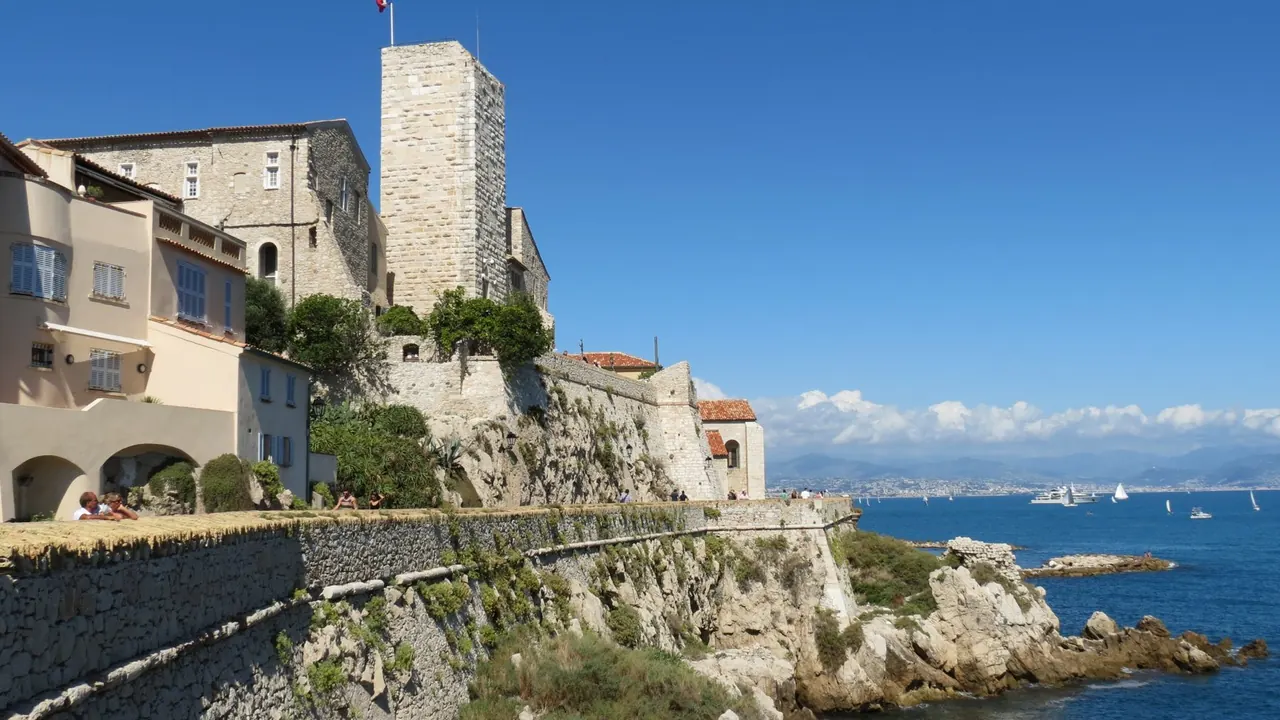
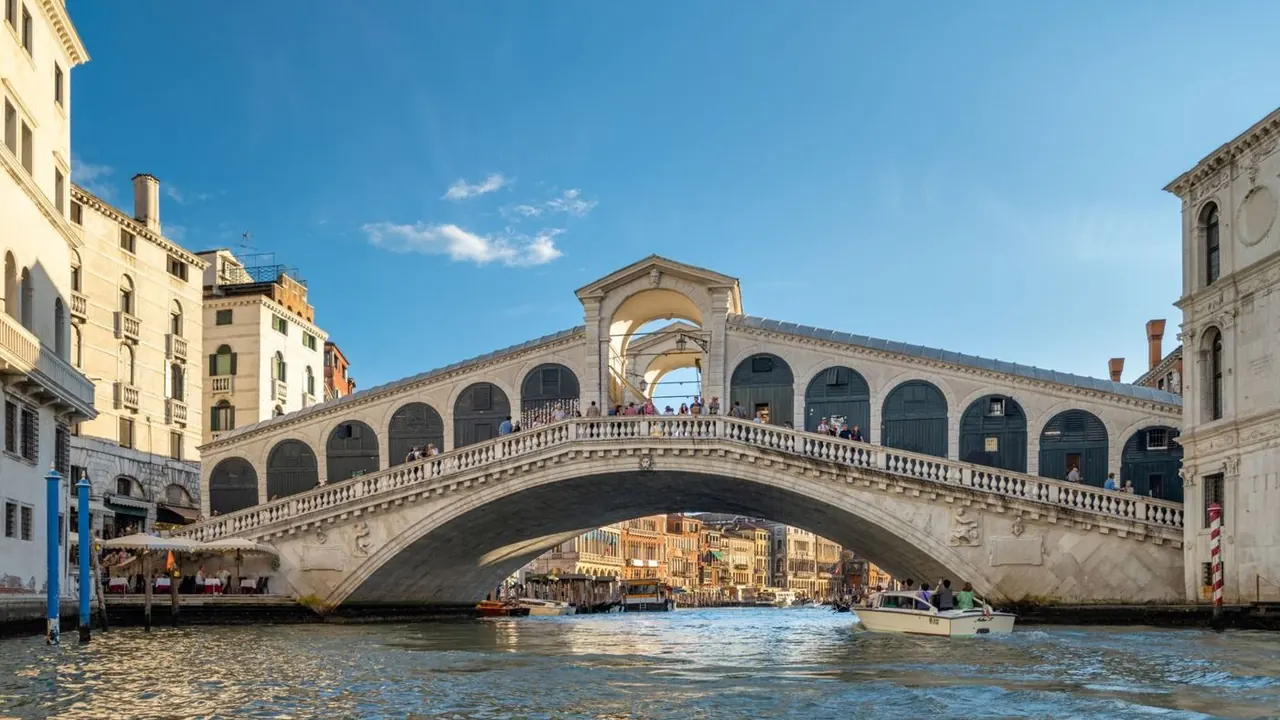
Photos: Antibes by Johan Allard, CC BY-SA 4.0, cropped; Venice by David Vives, Pexels License.
Antibes or Venice?
Our verdict in twelve categories, each scored against the same fixed benchmark cities, and the climate month by month, so you can choose for your trip.
Choose Antibes for
- nature and the outdoors
- beaches
- nightlife
Antibes is the pick for a summer by the sea. It has sandy, gently shelving beaches, clear water round the cape for snorkelling, a coastal path to walk, and the whole Riviera strung along one railway line, so a week can mix swimming with Nice, Cannes and the hill villages. It is also easier with small children and a little kinder on the budget, though it isn't cheap.
Choose Venice for
- culture and sights
- live music and the arts
- shopping
Venice suits the traveller who comes to look. Its palaces, churches and paintings by Titian and Tintoretto put it among the deepest art cities in Europe. Evenings bring opera at La Fenice and cicchetti at a bar counter rather than late nights. Expect crowds on the main routes, steep prices and stepped bridges, but wandering the quieter sestieri pays off.
Scoreboard
Twelve categories on one fixed scale from 0 to 100. The shaded stretch is the gap between the two.
Your match
Pick a travel style or drag the sliders, and both match scores follow your weighting.
Wins on nature and the outdoors and beaches with your weighting.
Wins on culture and sights and live music and the arts with your weighting.
What matters to you?
Category by category
What the scores mean for a trip.
Beaches & swimming
Antibes is a beach town in its own right. The sandy, gently shelving shore at Juan-les-Pins and La Salis is close to the old town, and the rocks and coves of Cap d'Antibes give swimming in very clear water.
Venice has sand too, on the Lido, a short boat ride from San Marco, and its shallow sea suits waders. But the water is greenish, getting there takes up part of the day, and most visitors manage one afternoon at most. In both places private beach clubs take much of the sand, with free public stretches between them or at the ends.
Food & drink
Venice is the better place to eat, mainly because of its bacari. They serve cicchetti such as creamed salt cod and sarde in saor at the counter, alongside lagoon cooking from the Rialto market, including cuttlefish risotto made black with its ink. In both towns you need to choose carefully near the obvious spots, San Marco in one and the port in the other.
Antibes eats well in a simpler way. There is the Provençal market on Cours Masséna, Niçoise dishes such as socca and pissaladière, and rosé taken outdoors. It is pleasant, but not a reason to travel.
Culture & sights
This is where the gap is widest. In Venice the city itself is the sight: palaces and churches built on water. On top of that come the Doge's Palace, the Basilica of San Marco, Titian in the Frari, the Accademia and the Biennale, and a week does not exhaust it.
Antibes has one strong museum, the Picasso collection in the Château Grimaldi, plus Fort Carré and an attractive old town behind its ramparts. That makes a fine couple of days, and the art villages inland add more, but it is on a different scale.
Nightlife
Neither is a place for nightlife, but Antibes stays up later, at least in summer. In July and August, Juan-les-Pins has beach bars, lounges and a few clubs open into the small hours, and yacht crews fill the pubs and wine bars near Port Vauban.
Venice is liveliest at aperitivo time, with spritzes along the Fondamenta della Misericordia and students in Campo Santa Margherita. After that it goes quiet around midnight. What it offers instead is a silent walk beside the canals.
Nature & outdoors
Antibes has far more of the outdoors on hand. The path round Cap d'Antibes, clear water for snorkelling and diving, sailing in the bay and the red porphyry trails of the Esterel under an hour away make an active trip easy. The pre-Alps above Grasse add proper hikes.
In Venice, nature means the lagoon: marshes around Torcello with herons and flamingos, kayaking, and lessons in Venetian rowing. Everything else nearby is flat, and the mountains are a long trip away.
Day trips
Both are excellent bases, and the difference is in where you go. From Antibes the coastal railway links Nice, Cannes, Monaco and Menton. Boats cross to the Lérins Islands, and hill villages such as Saint-Paul-de-Vence and Eze lie inland, so your days are spent by the sea or in villages on the hills.
From Venice, fast trains reach art cities: Padua with its Scrovegni Chapel, Verona with its arena, Palladio's Vicenza, and Bologna further off. The lagoon islands of Murano, Burano and Torcello make a day out by boat.
Good for families
Antibes is easier with young children. Sandy, shelving beaches, a small and safe centre and flat walks round the port and Fort Carré make for simple days, though there is little built for children and August needs early starts.
Children love the boats and car-free alleys of Venice, and Murano's glass furnaces and the Lido go down well. But the stepped bridges are hard work with a pushchair, summer crowds are heavy and playgrounds are scarce. It works best as a short stay with older children.
Getting around
Once you are there, Venice is the easier place to get about. It is a car-free city where almost everything lies within a forty-minute walk, and water buses run along the Grand Canal and out to the islands. The alleys are confusing, though, and the bridges are hard on wheeled luggage.
Antibes is compact too, with the old town, market and port close together, and its coastal stations put the Riviera within easy reach without a car. Further out it gets harder: buses to the cape and hill villages are slow, and summer traffic and parking make driving a chore.
Shopping & style
Venice has far more to shop for. Murano glass, Burano lace, papier-mâché masks, marbled paper and furlane slippers come from workshops still working in Dorsoduro, Castello and on Murano. The big fashion names line Calle Larga XXII Marzo, though imported copies crowd the main routes.
Shopping in Antibes is small-scale: olive oil, herbs and soap at the covered market, and Provençal linens and ceramics in the old town lanes. For fashion, people go to Cannes or Nice, and Biot glass and Vallauris pottery are best bought in their own villages.
Affordability
Neither is a cheap vacation, but Venice costs more. Rooms in the historic centre, water transport priced for visitors and entry charges at most sights and churches add up quickly. Saving money means eating cicchetti at the counter or staying in Mestre.
Antibes is expensive too, with luxury-resort room rates in July and August and costly beach-club loungers. Still, cheap regional trains, free stretches of beach and market food for self-catering help more, and hotel rates drop sharply in spring and autumn.
Live music & performing arts
Venice has a proper year-round programme. La Fenice runs a full season of opera, ballet and concerts, the Teatro Goldoni stages drama, and the Biennale adds festivals of contemporary work. Vivaldi is played most evenings in churches and scuole grandi, some of it excellent.
Antibes has one great event, Jazz à Juan, held each July under the pines of the Pinède Gould since 1960. Otherwise the Anthéa theatre offers a regional programme, and opera means a trip to Nice.
Wellness & relaxation
Neither has a bathing tradition, and in both, a spa day usually means a hotel spa. Antibes adds seawater thalassotherapy, while Venice is about an hour from the thermal pools and hot mud of Abano and Montegrotto.
The calm comes in different forms. Antibes is restful in May, June and September, with market mornings and walks along the ramparts. Venice's quiet comes from having no traffic, and you find it early or late in the day, in Castello, Cannaregio or on Giudecca.
When should you go?
Pick your month. The climate figures are measured averages, not a forecast.
Antibes in July
Venice in July
Daytime high, °C
Rainfall in the month, mm
Where the figures come from
Venice has no rain gauge within 25 km of the centre, so its rainfall comes from a gridded climate dataset read at the city rather than from a gauge further away.
Venice's sunshine is measured 26 km from the centre, at Treviso / S. Angelo.
Temperature and rainfall are climate normals, averaged over the years shown. Antibes: 1991-2020 normals, Nice (9.9 km from centre). Venice: 1991-2020 normals, Venezia / Tessera (6.7 km from centre).
Antibes has the longer season. Summers are dry and very sunny, with highs around 28°C and almost no rain in July. The sea is warm enough to swim from June into early October. Late spring and September are the best times for walking the old town and the cape path. October and November are the wettest months, but winters stay mild at around 13°C, with enough sun for a walk along the coast.
Venice swings further between seasons. July and August are about as warm as Antibes and the Lido sea is just as warm, but summer is humid and less sunny. There is no dry season, because the rain is spread through the year. Winter is cold and grey, with highs near 7°C. The best months for walking the city are May, June and September. April and October are cooler but still pleasant, though October brings the most rain.
Which traveller are you?
On a beach and sun trip, Antibes is the clear choice. Sand at Juan-les-Pins and La Salis, clear coves round Cap d'Antibes and a long, dry summer beat an afternoon at the Lido, where the Adriatic is shallow but greenish.
For a culture and arts trip, Venice wins easily. San Marco, the Accademia, Tintoretto's Scuola Grande di San Rocco and a night at La Fenice fill a week. Antibes is done in two days after the Picasso Museum and the ramparts.
On an outdoors trip, Antibes gives far more to do: the cape path, snorkelling and diving, sailing, the red cliffs of the Esterel and real hiking above Grasse. Venice offers kayaking on the lagoon and flat cycling along the Lido.
Before you go
| Measure | Antibes | Venice |
|---|---|---|
| Official language | French | Italian |
| Currency | Euro (EUR) | Euro (EUR) |
| Sockets | CE230 V, 50 Hz | CFL230 V, 50 Hz |
| Driving side | Right | Right |
| Time zone | UTC+1, UTC+2 in summer | UTC+1, UTC+2 in summer |
| Emergency number | 112 | 112 |
| Elevation | 0 m | 2 m |
| Main airport | Nice-Côte d'Azur Airport (NCE)11 km from centre130 non-stop destinations | Venice Marco Polo Airport (VCE)7 km from centre103 non-stop destinations |
| Public holidays this year | 11 days | 13 days |
By the numbers
| Measure | Antibes | Venice |
|---|---|---|
| City population | 77,637 | 250,369 |
| People per km² | 2,930 | 602 |
| Museums within 10 km | 14 | 52 |
| UNESCO World Heritage sites within 50 km | 2 | 5 |
| Swim season, months above 21 °C | 4 months | 4 months |
Where else could you go?
Every comparison below shares a destination with this one, so you can follow Antibes or Venice somewhere new.