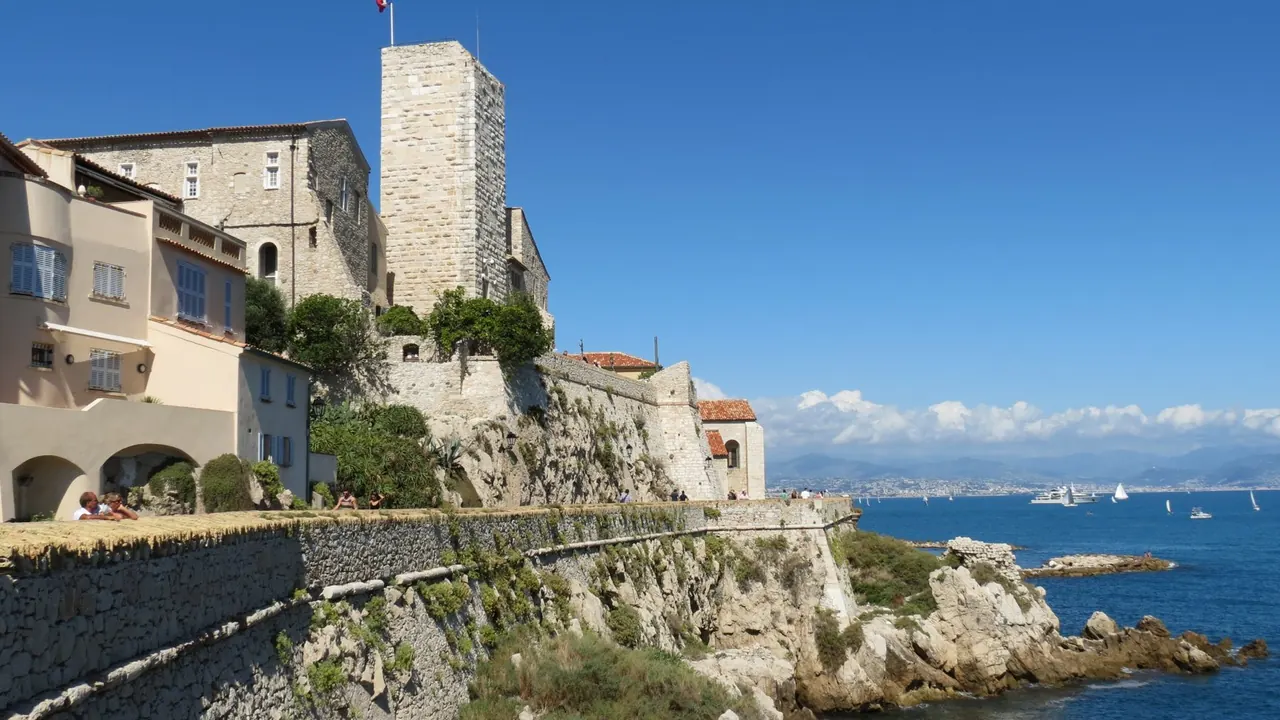
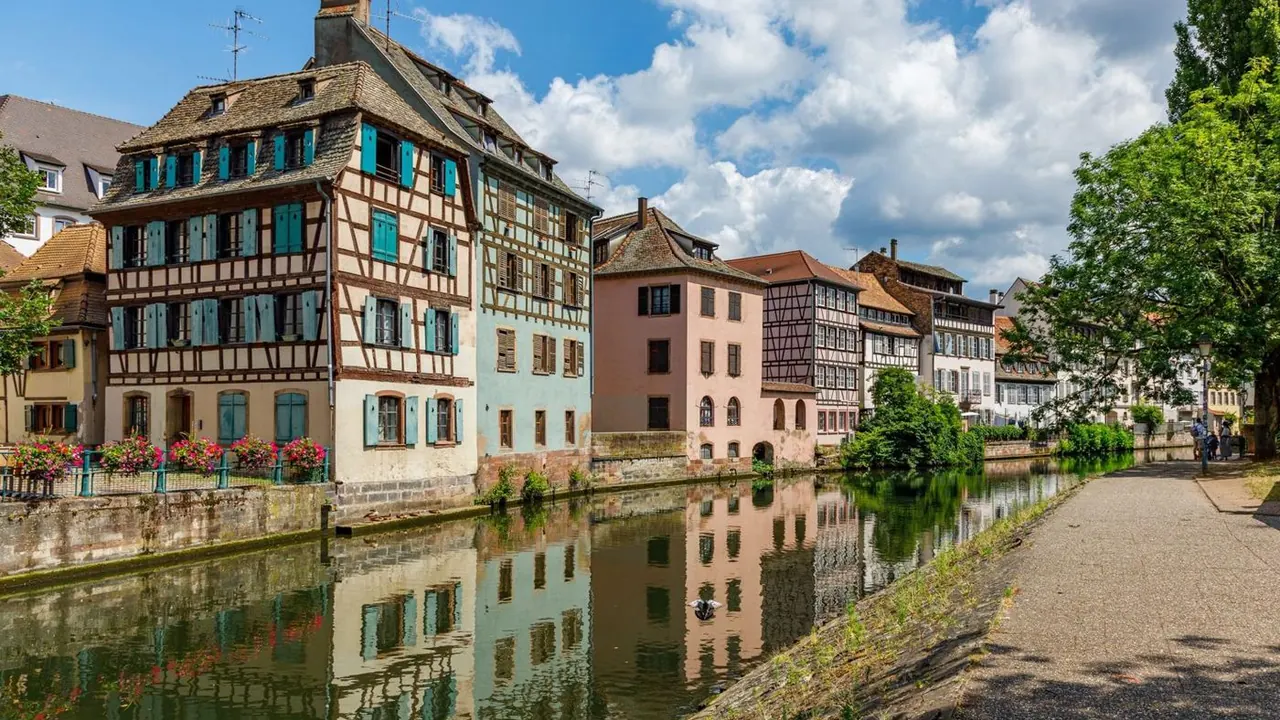
Photos: Antibes by Johan Allard, CC BY-SA 4.0, cropped; Strasbourg by Edoardo Colombo, Pexels License.
Antibes or Strasbourg?
Our verdict in twelve categories, each scored against the same fixed benchmark cities, and the climate month by month, so you can choose for your trip.
Choose Antibes for
- beaches
- nature and the outdoors
- day trips
Antibes is the one for a summer by the sea. It has sandy beaches at Juan-les-Pins and La Salis and clear coves round the cape, and the whole Riviera lies along a single railway line, from Cannes to Monaco and Menton. It suits travellers who want to swim every day and fill the other hours with short trips along the coast. In return they accept higher costs and a town with little left to see once the Picasso Museum and the ramparts are done.
Choose Strasbourg for
- culture and sights
- live music and the arts
- getting around
Choose Strasbourg for a city stay with more to it, in almost any season. It has a great cathedral and a UNESCO-listed old town, three museums under one roof in the Palais Rohan, an opera house, a leading theatre and winstub cooking with Alsace wine. Trams and bikes make it easy without a car, day-to-day costs are lower, and the wine route, Colmar and the Black Forest add plenty to do beyond the city. The one thing it cannot offer is the sea.
Scoreboard
Twelve categories on one fixed scale from 0 to 100. The shaded stretch is the gap between the two.
Your match
Pick a travel style or drag the sliders, and both match scores follow your weighting.
Wins on beaches and nature and the outdoors with your weighting.
Wins on culture and sights and live music and the arts with your weighting.
What matters to you?
Category by category
What the scores mean for a trip.
Beaches & swimming
This is the clearest gap between the two. Antibes has real sand, which is rare on this coast. Its beaches at Juan-les-Pins and La Salis shelve gently, and the rocky coves around the cape, such as La Garoupe, have very clear water. The catch is that private clubs take up much of the sand.
Strasbourg is far from any sea. In summer people swim in lifeguarded gravel-pit lakes such as the Baggersee, which the tram reaches and which has grassy banks and calm fresh water. That is a pleasant hot afternoon, not a reason to plan a trip.
Food & drink
Strasbourg is the better place to eat. Alsatian cooking, which mixes French and German traditions, has a strong identity of its own: choucroute, baeckeoffe and tarte flambée, eaten in wood-panelled winstubs with Riesling from vineyards just south of the city. There is a strong fine-dining tier as well. The food is rich and suits a cold day better than a hot one.
Antibes eats in a lighter, Niçoise way, with socca, stuffed vegetables, grilled fish and rosé on a terrace, and its covered market on Cours Masséna is its best feature. The range is that of a small coastal town, though, and the streets near the port rely on tourist menus.
Culture & sights
Strasbourg has much more to see. The cathedral with its astronomical clock, the half-timbered houses of Petite France and the German-built Neustadt together make up a UNESCO-listed old town. Add the Palais Rohan, the Alsatian Museum and the modern art museum by the river, and two or three days pass easily.
Antibes has one outstanding sight, the Picasso Museum in the Château Grimaldi on the sea wall, which still holds the work Picasso made there in 1946. The ramparts, Fort Carré and Villa Eilenroc on the cape make a good two days, but on a much smaller scale.
Nightlife
Neither city is a place for big nights out, but they go out in different ways. In Antibes it is a summer affair. In July and August, beach bars, lounges and a few clubs in Juan-les-Pins stay open into the early hours, and yacht crews fill the pubs near Port Vauban. Out of season much of it closes.
Strasbourg is steadier through the year, thanks to its large student population. Student bars, beer cellars and riverside terraces fill Krutenau and the streets around Place Saint-Étienne. There are few clubs, though, and the city is quiet by midnight on weeknights.
Nature & outdoors
Antibes has the edge, mostly because of the sea. The coastal path around Cap d'Antibes, snorkelling and diving in clear water, and sailing on the bay are all on the doorstep. The red cliffs of the Esterel and the hills above Grasse are under an hour away.
Strasbourg's outdoors is flatter and greener. Storks and herons live in the Rhine forests, and long, level cycling routes run out into Germany. The Vosges and the Black Forest offer proper hiking, but both are about an hour away and easier to reach with a car.
Day trips
Both are excellent bases, and Antibes is slightly better placed. Nice, Cannes, Monaco and Menton are all on one coastal railway line, and boats cross to the Lérins Islands. The hill villages of Saint-Paul-de-Vence, Eze and Grasse are close, as are Biot and Vallauris, and Italy is an easy day out.
Strasbourg's trips span two countries. Colmar and the Alsace wine villages lie to the south, and Baden-Baden, Freiburg and Heidelberg are across the Rhine. The distances are a little longer, and the wine route is much easier with a car or a bike.
Good for families
Strasbourg gives children more to do. The centre is compact and mostly car-free. Boat trips round the Grande Ile, storks and rowing boats in the Orangerie park and the hands-on Le Vaisseau science centre fill several days, and Europa-Park is about an hour away.
Antibes has one great advantage for small children: sandy, gently shelving beaches. The town is small and easy to manage, but apart from the beach and the boats in the port, little is built for children, and the heat and crowds of August need planning around.
Getting around
Strasbourg is the easier city to get around. The island centre is mostly pedestrianised, trams run to the station, the European quarter and across the Rhine to Kehl, and separated bike lanes cover the city, so you will not need a car.
In Antibes the old town, the market and the port are close enough to walk between, and its two stations make trips along the coast simple. Local buses are slow, though, the inland sights really need a car, and summer traffic and parking on the coast road are hard work.
Shopping & style
Antibes is a small place to shop, and its best buys are local. You will find olive oil, herbs and soaps at the covered market, and Provençal linens and ceramics in the boutiques of the old town lanes. There is no department store or luxury street, so for fashion people take the train to Cannes or Nice.
Strasbourg has much more choice. Chain stores and a large department store line the streets around Place Kléber and the Rue des Grandes Arcades, while the lanes near the cathedral have bookshops and delicatessens. Soufflenheim pottery, gingerbread and Alsace wine make good things to take home. December's Christmas market, one of the oldest in Europe, fills the centre with craft stalls, though many of them sell mass-produced goods.
Affordability
Strasbourg is easier on the budget, though it is not a cheap city. Winstub meals, wine by the pichet, trams and bike hire are all reasonably priced, and the cathedral and old town streets are free. Rooms are the main cost, and they rise sharply during the Christmas market and when the European Parliament sits.
Antibes is expensive, especially in July and August, when hotels near the beaches and on the cape charge luxury-resort prices. Spring and autumn bring rates down while the sea is still warm enough to swim, and buying food at the market to cook yourself saves a good deal.
Live music & performing arts
Antibes has one event of real standing, Jazz à Juan. Since 1960 it has held concerts each July under the pines of the Pinède Gould, close to the sea at Juan-les-Pins. For the rest of the year, the Anthéa theatre puts on a regional programme of plays and dance, and for opera or an orchestra you have to go to Nice.
Strasbourg offers far more, and across the whole season rather than in a single month. The Opéra national du Rhin performs on Place Broglie, the Strasbourg Philharmonic plays a full season, and the Théâtre National de Strasbourg is one of France's leading stages. Each autumn the Musica festival is devoted to contemporary music. You will find little live music on the street, though, so plan your evenings out in advance.
Wellness & relaxation
Strasbourg is the more restful choice. It has its own early twentieth-century public baths, with tiled pools, a hammam and saunas, and the thermal baths of Baden-Baden are under an hour away. Canal-side walks and cycling by the river keep the pace slow, except in December.
Antibes has no tradition of public baths. Wellness there means a thalassotherapy centre and the spas of the grand hotels on the cape. The town is calmest in May, June and September, while the crowds of July and August make it far less relaxing.
When should you go?
Pick your month. The climate figures are measured averages, not a forecast.
Antibes in July
Strasbourg in July
Daytime high, °C
Rainfall in the month, mm
Temperature and rainfall are climate normals, averaged over the years shown. Antibes: 1991-2020 normals, Nice (9.9 km from centre). Strasbourg: 1991-2020 normals, Strasbourg (9.1 km from centre).
Antibes is at its best in summer. The sea is warm enough to swim in from June to early October and reaches about 25°C in August. July and August are dry, sunny and hot, around 28°C, which is ideal for the beach but tiring for long walks at midday. Rain sets in from September, and November is the wettest month at 138mm. Winters stay mild and fairly bright, so the coastal path and the old town are still pleasant to walk.
Strasbourg swings much more between seasons. Winters are cold and grey, with January highs around 5°C and very little sunshine. Summer reaches about 26°C, comfortable for sightseeing on foot. Rain falls through the whole year, with the heaviest summer showers from May to July. Late spring and September are the easiest months for long days in the streets.
Which traveller are you?
For a beach and sun trip, Antibes is the clear choice. It has sandy, gently shelving beaches at Juan-les-Pins and La Salis, clear coves around the cape and long dry summers. Strasbourg can only offer inland lakes, which are fine for an afternoon at most.
On a culture and arts trip, Strasbourg gives you far more. It has a UNESCO-listed old town and cathedral, the Palais Rohan museums, a national opera and one of France's leading theatres. Antibes has the Picasso Museum and Jazz à Juan, but little beyond them.
On a tight budget, your money goes further in Strasbourg. Winstub meals, wine by the pichet, cheap trams and free sights keep costs moderate. Antibes charges luxury-resort prices for its summer rooms and beach loungers, and only gets cheaper outside the main season.
Before you go
| Measure | Antibes | Strasbourg |
|---|---|---|
| Official language | French | French |
| Currency | Euro (EUR) | Euro (EUR) |
| Sockets | CE230 V, 50 Hz | CE230 V, 50 Hz |
| Driving side | Right | Right |
| Time zone | UTC+1, UTC+2 in summer | UTC+1, UTC+2 in summer |
| Emergency number | 112 | 112 |
| Elevation | 0 m | 132 m |
| Main airport | Nice-Côte d'Azur Airport (NCE)11 km from centre130 non-stop destinations | Strasbourg Airport (SXB)10 km from centre43 non-stop destinations |
| Public holidays this year | 11 days | 11 days |
By the numbers
| Measure | Antibes | Strasbourg |
|---|---|---|
| City population | 77,637 | 293,771 |
| People per km² | 2,930 | 3,752 |
| Museums within 10 km | 14 | 21 |
| UNESCO World Heritage sites within 50 km | 2 | 1 |
| Swim season, months above 21 °C | 4 months | - |
Where else could you go?
Every comparison below shares a destination with this one, so you can follow Antibes or Strasbourg somewhere new.