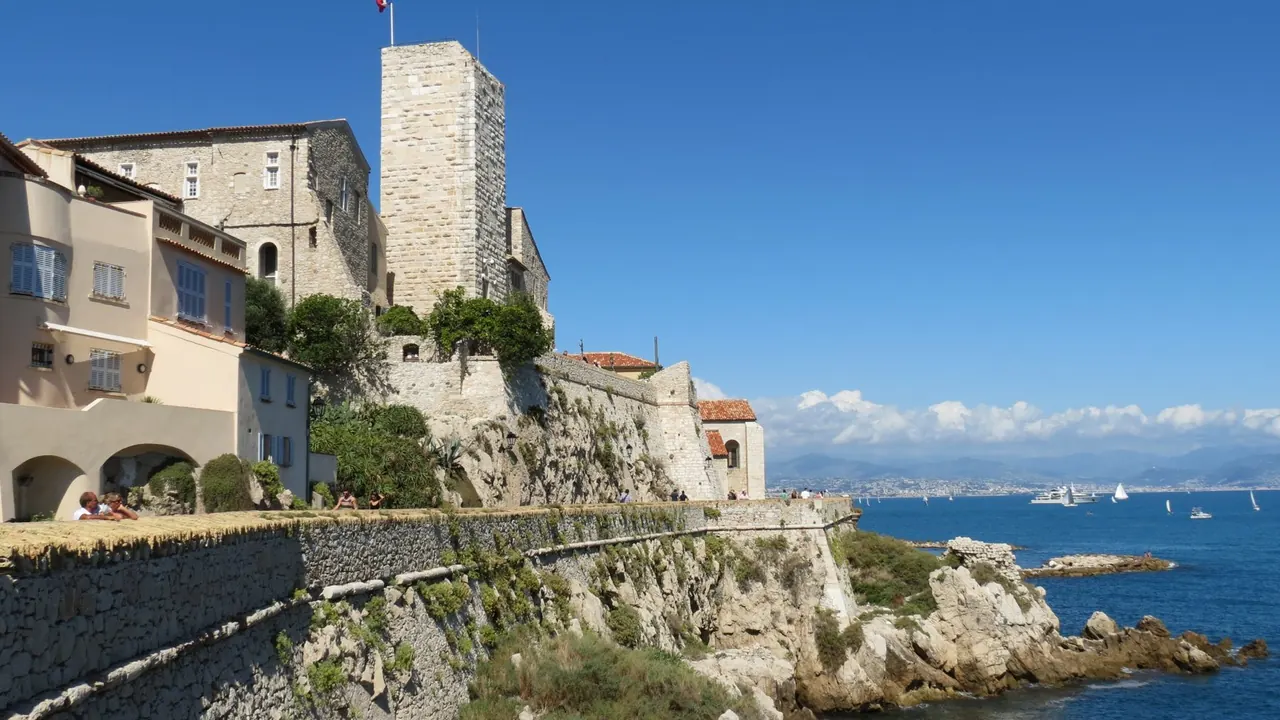
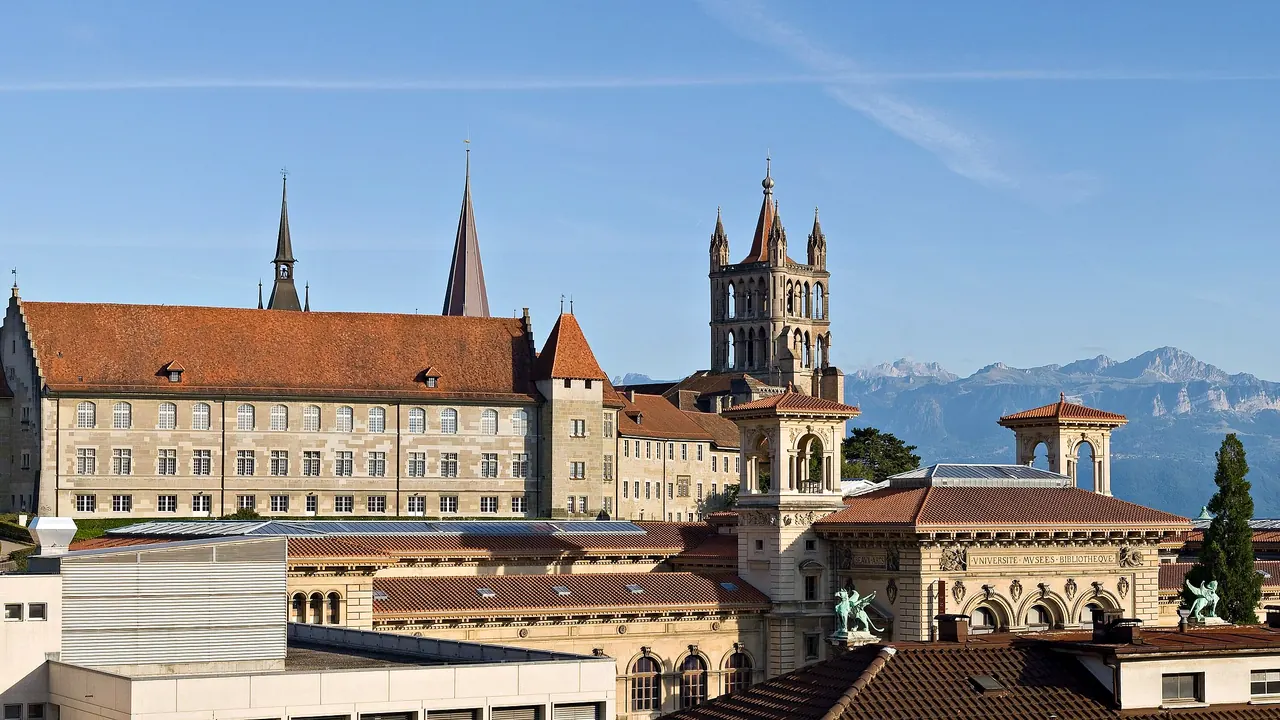
Photos: Antibes by Johan Allard, CC BY-SA 4.0, cropped; Lausanne by Christian Mehlführer, CC BY-SA 3.0, cropped.
Antibes or Lausanne?
Our verdict in twelve categories, each scored against the same fixed benchmark cities, and the climate month by month, so you can choose for your trip.
Choose Antibes for
- beaches
- prices
- day trips
Antibes is the one for a summer trip built around the sea. It has real sand at Juan-les-Pins and La Salis, clear coves off Cap d'Antibes and long dry months, and the coastal railway puts Nice, Cannes and Monaco within easy reach. It is also the gentler of the two on the wallet, especially in spring and autumn, though neither place is cheap.
Choose Lausanne for
- live music and the arts
- getting around
- culture and sights
If you would rather have mountains, vineyards and an evening at the ballet than a sunlounger, choose Lausanne. The Lavaux terraces, the Vaud Alps and the Jura are all a short train ride away. Its museums and dance companies give a few days of culture more depth, and the metro and Swiss trains make it easy to get about without a car. Expect lake swimming rather than a beach, and Swiss prices for everything.
Scoreboard
Twelve categories on one fixed scale from 0 to 100. The shaded stretch is the gap between the two.
Your match
Pick a travel style or drag the sliders, and both match scores follow your weighting.
Wins on beaches and prices with your weighting.
Wins on live music and the arts and getting around with your weighting.
What matters to you?
Category by category
What the scores mean for a trip.
Beaches & swimming
This is where Antibes pulls clearly ahead. It has true sand, rare on this coast, at Juan-les-Pins and La Salis, plus rocky coves such as La Garoupe around the cape. The sea is warm enough for swimming from June into October. Private beach clubs take much of the sand, and the free stretches fill early in high summer.
Lausanne swaps the sea for Lake Geneva. You swim from lawns, piers and pebble edges at Vidy, Bellerive and Lutry, and the old Bellerive lido is the classic afternoon. It is a pleasant summer extra, but the season is short and there is no sand to lie on.
Food & drink
The two are fairly evenly matched, but they eat very differently. Antibes is about southern produce and outdoor eating. The covered market on Cours Masséna, socca and pissaladière, grilled fish and rosé on a terrace are the highlights, though tourist menus crowd the streets near the port.
Lausanne is Alpine and lakeside: perch fillets, papet vaudois, fondue in winter. Its real strengths are wine, with Chasselas tasted at the growers' caveaux in Lavaux, and a top tier of celebrated restaurants. Cheap, casual meals are harder to find there.
Culture & sights
Lausanne offers more to see. The painted portal of its cathedral, where a watchman still calls the hours, sits above a steep old town of covered stairways. Below it are the Olympic Museum at Ouchy, the museum cluster at Plateforme 10 by the station and the unusual Collection de l'Art Brut.
Antibes is smaller in scope but has one standout: the Picasso Museum in the Château Grimaldi, holding work he made there in 1946. Add the ramparts, Fort Carré over Port Vauban and the Garoupe chapel, and two relaxed days cover it all.
Nightlife
Neither is a party destination, and they differ mostly in when they come alive. Antibes is a summer affair: Juan-les-Pins runs late with beach bars and a few clubs in July and August, and the yacht crews fill the pubs by Port Vauban. Out of season it goes quiet and people head to Nice.
Lausanne keeps going all year thanks to its students. Weekends gather in the Flon, a former warehouse valley packed with clubs and late bars, and in summer the evenings spill onto the lakefront at Ouchy. Weeknights are calm, and drinks cost a lot.
Nature & outdoors
Lausanne has the bigger landscape on its doorstep. The French Alps rise straight out of the lake opposite, and the UNESCO-listed Lavaux terraces make a superb walk between Lutry and Saint-Saphorin. Within about an hour you can hike or ski at Villars, Les Diablerets and Glacier 3000, or head into the Jura for cycling and cross-country trails.
Antibes is more about the sea. The limestone path around Cap d'Antibes, snorkelling and diving in clear water, and sailing in the bay are the local pleasures. Proper hiking means a drive to the red cliffs of the Esterel or the Gorges du Loup.
Day trips
Both are excellent bases, so the choice comes down to what kind of outing you want. From Antibes, the coastal train strings together Nice, Cannes, Monaco and Menton, and boats run to the Lérins Islands. Inland are perched villages such as Saint-Paul-de-Vence and Eze, perfume-making Grasse and Picasso's Vallauris. Sanremo in Italy is within reach too, though the hill villages are easier by car.
From Lausanne the outings are Swiss towns and castles: Montreux and Chillon along the lake, Bern's arcades, Gruyères and walled Murten, with Évian across the water by boat. Almost all of these work by train alone.
Good for families
Lausanne has more laid on for children. The Olympic Museum is hands-on, there is a freshwater aquarium-vivarium, and the Sauvabelin woods have an animal park, pedal boats and a lookout tower. Paddle steamers turn a lake crossing into an outing of its own. Steep streets and costly restaurants are the catch.
Antibes has one strong card: shallow, sandy beaches that suit toddlers better than the pebbles found elsewhere on the Riviera. Beyond the beach, the boats in the port and the walk to Fort Carré, there is little aimed at children, and August heat and crowds take planning.
Getting around
Lausanne is easier, even with its hills. The m2 metro climbs from the lakeshore through the Flon to the upper town, buses and lake boats fill the gaps, and Swiss trains reach almost anywhere you would want to go. A car is only worth having for remote mountain valleys.
In Antibes, the old town, market and port are pleasant on foot, and the coastal railway handles the Riviera towns well. Beyond that, buses to the cape and the hill villages are slow, and summer traffic and parking on the coast road can be a real trial.
Shopping & style
Lausanne has somewhat more choice. Rue de Bourg is the place for Swiss watches, jewellery and chocolatiers, with international brands around Place Saint-François and a few design shops in the Flon. It is still a short list, and few people travel there to shop.
Antibes is smaller and more local. You will find olive oil, herbs and soaps at the covered market, and Provençal linens and ceramics in the old town boutiques. For fashion, people go to Cannes or Nice, and glass and pottery are best bought in Biot and Vallauris.
Affordability
Neither is a bargain, but Antibes costs noticeably less. Its high-summer rooms and beach clubs are expensive, yet rates fall sharply in spring and autumn, the old town has cheaper places to eat, and the coastal trains are good value.
Lausanne is costly in every season, from hotels and wine to a simple lunch. Budget travellers there live on supermarket picnics, the free lakeside promenades and the odd glass of Chasselas in a village caveau.
Live music & performing arts
Lausanne has a far richer stage life for its size. Dance leads it, with the Béjart Ballet Lausanne and the Prix de Lausanne for young dancers. Add the Théâtre de Vidy's contemporary productions, a full opera season and a respected chamber orchestra, with Montreux's July jazz festival just along the lake.
Antibes revolves around one event, Jazz à Juan, held each July under the pines since 1960. Otherwise the Anthéa theatre runs a regional programme, and opera means a trip to Nice.
Wellness & relaxation
Lausanne is the more restful choice. You can wander the lakeside promenades and the quiet Lavaux vineyard lanes, the grand lakeside hotels have spas, and real thermal springs are close by train at Yverdon-les-Bains and Lavey-les-Bains.
Antibes offers seawater thalassotherapy and the hotel spas on Cap d'Antibes, but no warm springs. It is at its most relaxing in May, June and September, with slow market mornings and evening walks on the ramparts. High summer crowds make it anything but calm.
When should you go?
Pick your month. The climate figures are measured averages, not a forecast.
Antibes in July
Lausanne in July
Daytime high, °C
Rainfall in the month, mm
Where the figures come from
Lausanne's temperatures are measured 40 km from the centre, at Payerne.
Lausanne has no rain gauge within 25 km of the centre, so its rainfall comes from a gridded climate dataset read at the city rather than from a gauge further away.
Temperature and rainfall are climate normals, averaged over the years shown. Antibes: 1991-2020 normals, Nice (9.9 km from centre). Lausanne: 1991-2020 (sunshine 1961-1990) normals, Payerne (39.7 km from centre).
Antibes is at its best in summer. June to August is hot, dry and very sunny, with highs of 28°C in July and August. The sea warms to about 25°C by August and stays pleasant for swimming from June into early October. The autumn rains start in September and build to a peak of around 138mm in November, so September is still warm for the beach but less reliably dry. Winter is mild enough for walking the ramparts and the cape path, though too cool to swim. May and June are the most comfortable months for exploring on foot.
Lausanne has a much colder winter, with highs around 4°C, short grey days and little sun. That is the season for the nearby Alps rather than the town. Rain falls all year and is actually heaviest in summer, around 115mm in July, so its warm months are greener and less settled than the dry Riviera summer. June to early September is the time for lake swimming and vineyard walks, and spring and early autumn suit sightseeing on its steep streets.
Which traveller are you?
On a beach and sun trip, Antibes wins easily. Its gently shelving sand at Juan-les-Pins and La Salis, clear water off the cape and long, dry summers give you a true beach vacation. Lausanne offers only a short season of lake bathing from lawns and shingle.
For a culture and arts trip, Lausanne gives you more. There is the Gothic cathedral, the Olympic Museum, Plateforme 10 and the Collection de l'Art Brut, and in the evenings the Béjart Ballet, the Théâtre de Vidy and a full opera season. Antibes centres on its Picasso Museum and July jazz.
On an outdoors trip, Lausanne is the stronger base. The Lavaux vineyard paths, summer hiking and winter skiing in the Vaud Alps and the long ridges of the Jura are all about an hour away by train. Antibes has its coastal path, snorkelling and the Esterel.
Before you go
| Measure | Antibes | Lausanne |
|---|---|---|
| Official language | French | French, German, Italian, Romansh |
| Currency | Euro (EUR) | Swiss Franc (CHF) |
| Sockets | CE230 V, 50 Hz | CJ230 V, 50 Hz |
| Driving side | Right | Right |
| Time zone | UTC+1, UTC+2 in summer | UTC+1, UTC+2 in summer |
| Emergency number | 112 | 112 |
| Elevation | 0 m | 495 m |
| Main airport | Nice-Côte d'Azur Airport (NCE)11 km from centre130 non-stop destinations | Geneva International Airport (GVA)52 km from centre150 non-stop destinations |
| Public holidays this year | 11 days | 9 days |
By the numbers
| Measure | Antibes | Lausanne |
|---|---|---|
| City population | 77,637 | 144,873 |
| People per km² | 2,930 | 3,499 |
| Museums within 10 km | 14 | 31 |
| UNESCO World Heritage sites within 50 km | 2 | 3 |
| Swim season, months above 21 °C | 4 months | - |
Where else could you go?
Every comparison below shares a destination with this one, so you can follow Antibes or Lausanne somewhere new.
- Cannesvs Antibes
- Nicevs Antibes
- Monacovs Antibes
- Saint-Tropezvs Antibes
- Genevavs Lausanne
- Chamonixvs Lausanne