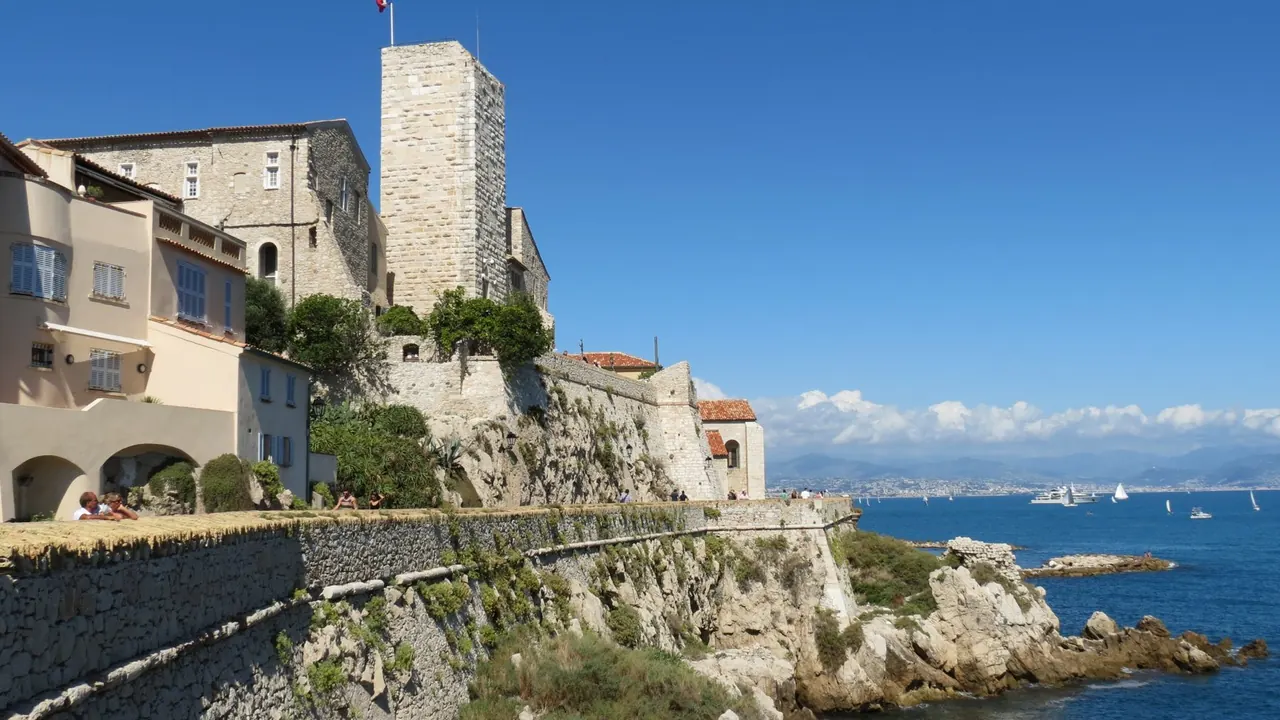
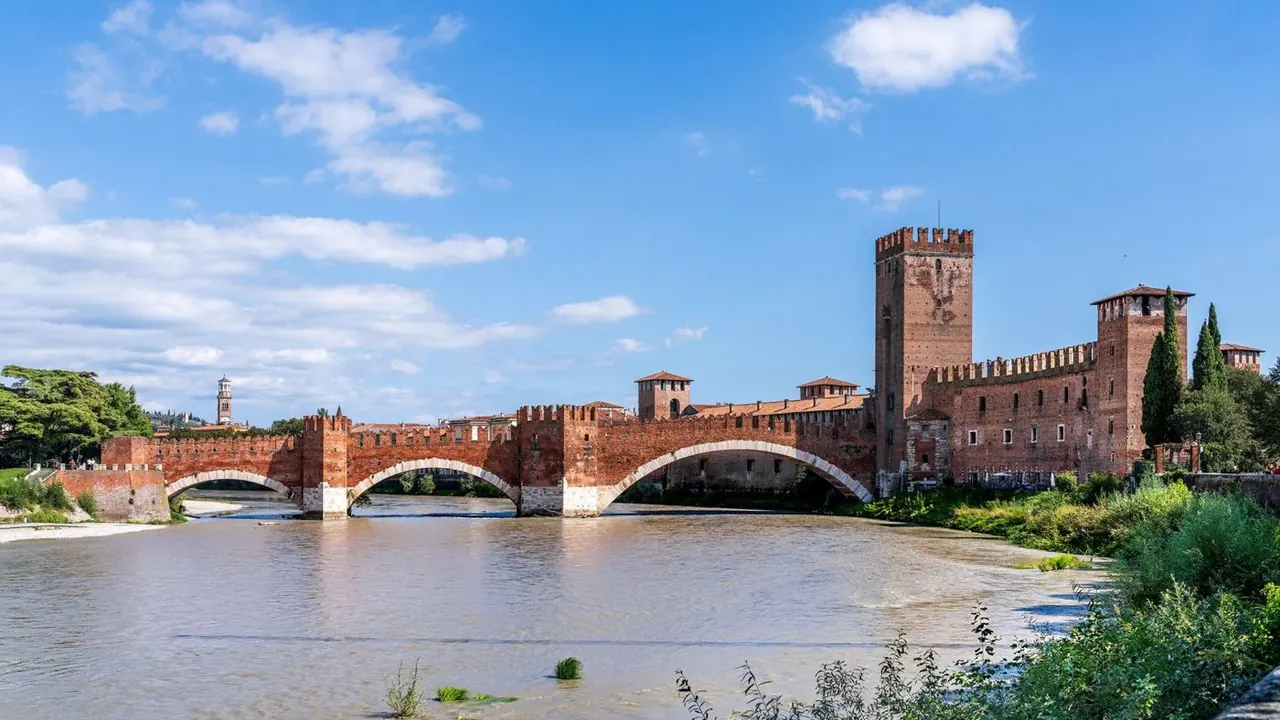
Photos: Antibes by Johan Allard, CC BY-SA 4.0, cropped; Verona by NorbertNagel, CC BY-SA 4.0, cropped.
Antibes or Verona?
Our verdict in twelve categories, each scored against the same fixed benchmark cities, and the climate month by month, so you can choose for your trip.
Choose Antibes for
- beaches
- nature and the outdoors
- nightlife
Antibes is the pick for a summer by the sea. It has real sandy beaches at Juan-les-Pins and La Salis and clear coves around the cape. The whole Riviera, from Cannes to Menton, is strung along the coastal railway. It suits travellers who want to swim every day, who see the Picasso Museum and the old town ramparts as an evening stroll rather than the reason for coming, and who accept that it costs more.
Choose Verona for
- culture and sights
- live music and the arts
- shopping
If the city itself is the point, Verona serves you far better. The Roman Arena, Romanesque churches and Castelvecchio give much more to see. Opera on the ancient stone tiers is a summer night the Riviera cannot match, and the Veneto cooking and Valpolicella wines reward long meals. Lake Garda covers the odd swim, and Venice, Padua and Vicenza are each an easy train ride away.
Scoreboard
Twelve categories on one fixed scale from 0 to 100. The shaded stretch is the gap between the two.
Your match
Pick a travel style or drag the sliders, and both match scores follow your weighting.
Wins on beaches and nature and the outdoors with your weighting.
Wins on culture and sights and live music and the arts with your weighting.
What matters to you?
Category by category
What the scores mean for a trip.
Beaches & swimming
Antibes wins easily here. It has some of the rare sand on this coast, long and shallow at Juan-les-Pins and facing the ramparts at La Salis. Around Cap d'Antibes there are rocky coves and flat rocks to swim from. Private beach clubs take a good share of the sand, but you can be in the sea a few minutes after leaving your room.
Verona has no shore of its own. Swimming means Lake Garda, about half an hour away, with lidos, lawns and Sirmione's limestone shelves in calm water without tides. It makes a pleasant afternoon, but it is no reason to base yourself in the city.
Food & drink
Antibes eats simply and well around its covered market on Cours Masséna. Expect Niçoise dishes such as socca, pissaladière and grilled fish, rosé on a terrace, and some serious dining out on the cape. Beyond that the choice is that of a coastal town, and the streets near the port lean on tourist menus.
Verona gives food lovers more to work with. Its osterie around Piazza delle Erbe and in Veronetta serve Amarone risotto, bigoli with duck and bollito with pearà. Valpolicella, Soave and Bardolino are all made within a short drive, so an evening glass at a counter becomes part of the trip. Tired tourist cooking clusters around the Arena, much as it does by the port in Antibes.
Culture & sights
Verona is in a different league for sightseeing. Its UNESCO-listed centre fits a Roman amphitheatre, a Roman theatre, the Scaliger tombs, San Zeno's bronze doors and Carlo Scarpa's Castelvecchio museum into a loop of the Adige that you can walk. That is enough for two or three full days.
Antibes has one strong card, the Picasso Museum in the Château Grimaldi on the sea wall, which still holds the work he made there in 1946. Fort Carré, the ramparts, the old town lanes and Villa Eilenroc complete a list that fits easily between swims.
Nightlife
Neither is a place for big nights out, but their evenings feel different. Antibes comes alive mainly in July and August, when Juan-les-Pins has beach bars and clubs running into the early hours and yacht crews fill the pubs near Port Vauban. Out of season much of it shuts.
Verona's evenings revolve around aperitivo in Piazza delle Erbe and cheaper student wine bars in Veronetta. There is no dance scene in the centre, though the opera crowd fills the streets near midnight in summer. Choose Antibes for dancing in high summer and Verona for long glasses of wine at any time of year.
Nature & outdoors
Both have good country close by, but of different kinds. Antibes is about the sea: the coastal path over limestone around the cape, clear water for snorkelling and diving, and sailing in the bay. The red cliffs of the Esterel are under an hour west, and the pre-Alps above Grasse offer proper hiking.
Verona looks to hills and lake. You can walk and cycle through the Valpolicella vineyards or follow the long Adige valley cycle route north. Monte Baldo's ridges rise above Lake Garda, with reliable wind for windsurfing at the lake's northern end, and the Lessinia plateau has beech woods and gorges.
Day trips
Both are excellent bases, offering very different days out. From Antibes the coastal railway reaches Nice, Cannes, Monaco and Menton, and boats cross to the Lérins Islands. Inland lie the hill villages of Saint-Paul-de-Vence, Eze and Grasse, so a week mixes seaside towns with villages high on the hills.
Verona offers great art cities instead. Venice, Padua with Giotto's chapel, Vicenza with its Palladio buildings and Mantua are all within about an hour by train. Garda's harbours and the Soave and Valpolicella wineries are closer still.
Good for families
Verona gives families more to do. Gardaland, the lakeside water parks and the safari section of Parco Natura Viva are within easy reach, and the Arena tends to grip a child's imagination. Most of the attractions outside town are easier with a car.
Antibes has a narrower strength, but a real one: gently shelving sand that suits toddlers far better than the pebbles elsewhere on the Riviera, in a small town that is easy to manage. Once the beach is done, there is little beyond boats in the port and the Lérins crossing.
Getting around
Verona is slightly the easier place to get about. Everything inside the river loop, from the Arena to Castelvecchio and the Roman theatre, is a short, flat walk along mostly car-free streets. Fast trains run to Venice, Milan and Peschiera, and only the wine villages and the Lessinia really need a car.
Antibes is walkable too, with the old town, market and port close together and Juan-les-Pins half an hour away on foot, and its two stations make the Riviera simple. The gap shows inland, where slow buses and summer traffic on the coast road make Grasse or the Esterel hard work without a car.
Shopping & style
Verona has the stronger shopping, though neither city is a reason to travel for it. Via Mazzini's marble-paved stretch carries Italian fashion labels, the side streets add jewellers and shoe shops, and Amarone and pandoro make good things to bring home.
Antibes keeps things small and local. The covered market sells olive oil, herbs and soaps, the old town has Provençal linen and ceramics, and there is no luxury street at all. People go to Cannes or Nice for fashion, and Biot glass and Vallauris pottery are best bought in those villages.
Affordability
Verona is gentler on the wallet, though neither is cheap. Its big expense is rooms in the historic centre, especially on opera nights and during trade fairs. Eating in Veronetta's student osterie and at the wine counters stays fair, and the walkable centre keeps transport costs low.
Antibes in July and August is priced like a luxury resort, and beach-club loungers and seafront terraces add to the bill. Hotel rates drop sharply in spring and autumn, and picnics from the market and the regional trains help.
Live music & performing arts
Verona wins clearly. On most summer evenings Verdi and Puccini play to thousands on the stone tiers of the Roman Arena, which is reason enough to come. The Roman theatre's summer festival and the Teatro Filarmonico's season in the cooler months fill out the rest of the year.
Antibes has one great annual event, Jazz à Juan, held each July under the pines at Juan-les-Pins and among Europe's oldest jazz festivals. Beyond that, the Anthéa theatre's regional programme is the main offer, and for opera you go to Nice.
Wellness & relaxation
Verona has the edge, thanks to warm springs nearby. Sirmione's thermal pools face Lake Garda, a spring-fed lake near Lazise sits in an old villa garden, and the springs at Caldiero have been used since Roman times. In town, river walks and the terraces of the Giardino Giusti keep the pace slow away from the Arena crowds.
Antibes offers thalassotherapy and grand-hotel spas on the cape rather than hot springs. It is most restful in May, June and September, when market mornings and walks on the ramparts set the pace. High summer crowds work against it.
When should you go?
Pick your month. The climate figures are measured averages, not a forecast.
Antibes in July
Verona in July
Daytime high, °C
Rainfall in the month, mm
Temperature and rainfall are climate normals, averaged over the years shown. Antibes: 1991-2020 normals, Nice (9.9 km from centre). Verona: 1991-2020 normals, Verona / Villafranca (11.6 km from centre).
Antibes is built for summer swimming. The sea is warm enough from June to early October and reaches about 25°C in August. July is almost dry at 13mm and very sunny. Autumn is when the rain arrives, building to 138mm in November. Winters stay mild enough for walks along the coast, with daytime highs in the low to mid teens.
Verona has a sharper year. July and August reach 30°C, which is hot for a day on its stone streets, and January highs of 7°C make winter cold and often grey. Rain is spread across the year, so there is no dry summer as there is in Antibes. May, June and September are the best months for walking the centre, and from June to early September the Arena opera season also runs.
Which traveller are you?
On a beach and sun trip, Antibes is the clear choice. Its gently shelving sand at Juan-les-Pins and La Salis, the clear-water coves on the cape and a dry, sunny summer beat Verona's narrow, crowded lake beaches, which remain a side trip.
For a culture and arts trip, Verona gives far more. The Arena, San Zeno, Castelvecchio and the Roman theatre fill two or three days. Summer opera under the stars is the highlight, and Padua, Vicenza and Venice are all close by rail.
On a family trip with children, Verona edges ahead. Gardaland, the Parco Natura Viva safari zoo and calm lake swimming are all about half an hour out, though a car helps. Antibes offers safe sandy beaches but little else built for children.
Before you go
| Measure | Antibes | Verona |
|---|---|---|
| Official language | French | Italian |
| Currency | Euro (EUR) | Euro (EUR) |
| Sockets | CE230 V, 50 Hz | CFL230 V, 50 Hz |
| Driving side | Right | Right |
| Time zone | UTC+1, UTC+2 in summer | UTC+1, UTC+2 in summer |
| Emergency number | 112 | 112 |
| Elevation | 0 m | 59 m |
| Main airport | Nice-Côte d'Azur Airport (NCE)11 km from centre130 non-stop destinations | Verona Villafranca Valerio Catullo Airport (VRN)10 km from centre96 non-stop destinations |
| Public holidays this year | 11 days | 13 days |
By the numbers
| Measure | Antibes | Verona |
|---|---|---|
| City population | 77,637 | 255,588 |
| People per km² | 2,930 | 1,285 |
| Museums within 10 km | 14 | 18 |
| UNESCO World Heritage sites within 50 km | 2 | 5 |
| Swim season, months above 21 °C | 4 months | - |
Where else could you go?
Every comparison below shares a destination with this one, so you can follow Antibes or Verona somewhere new.