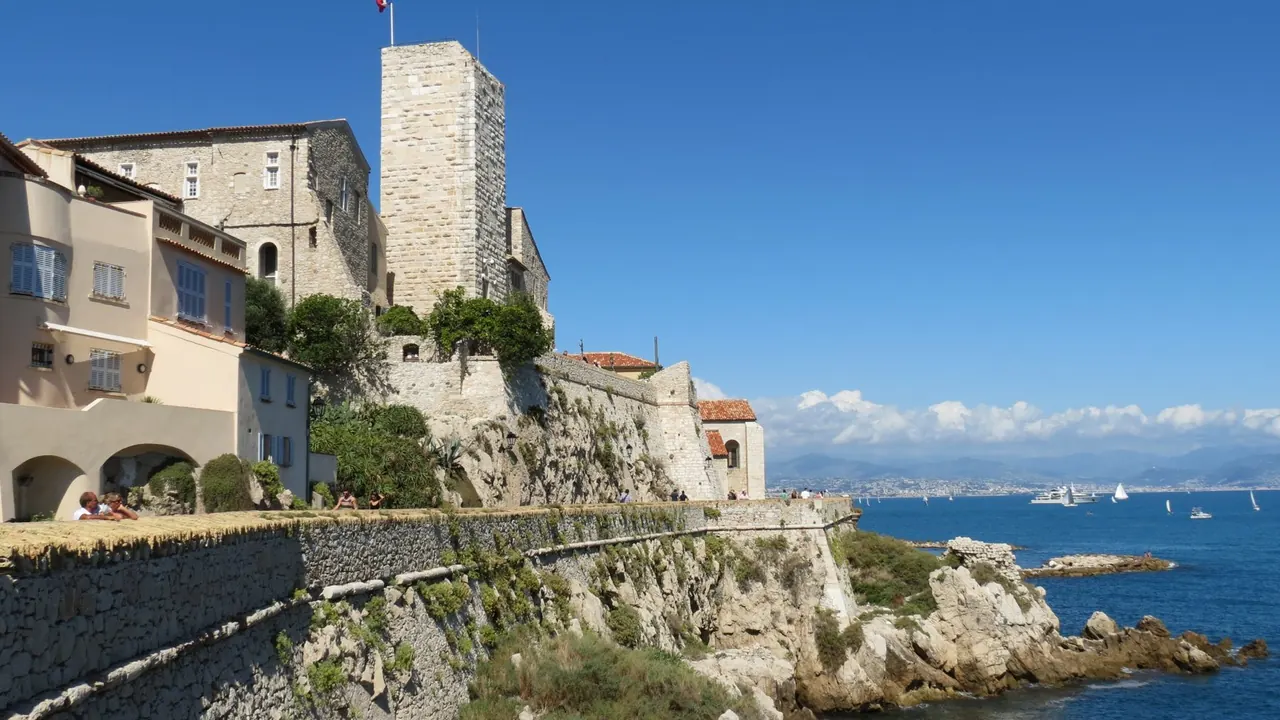
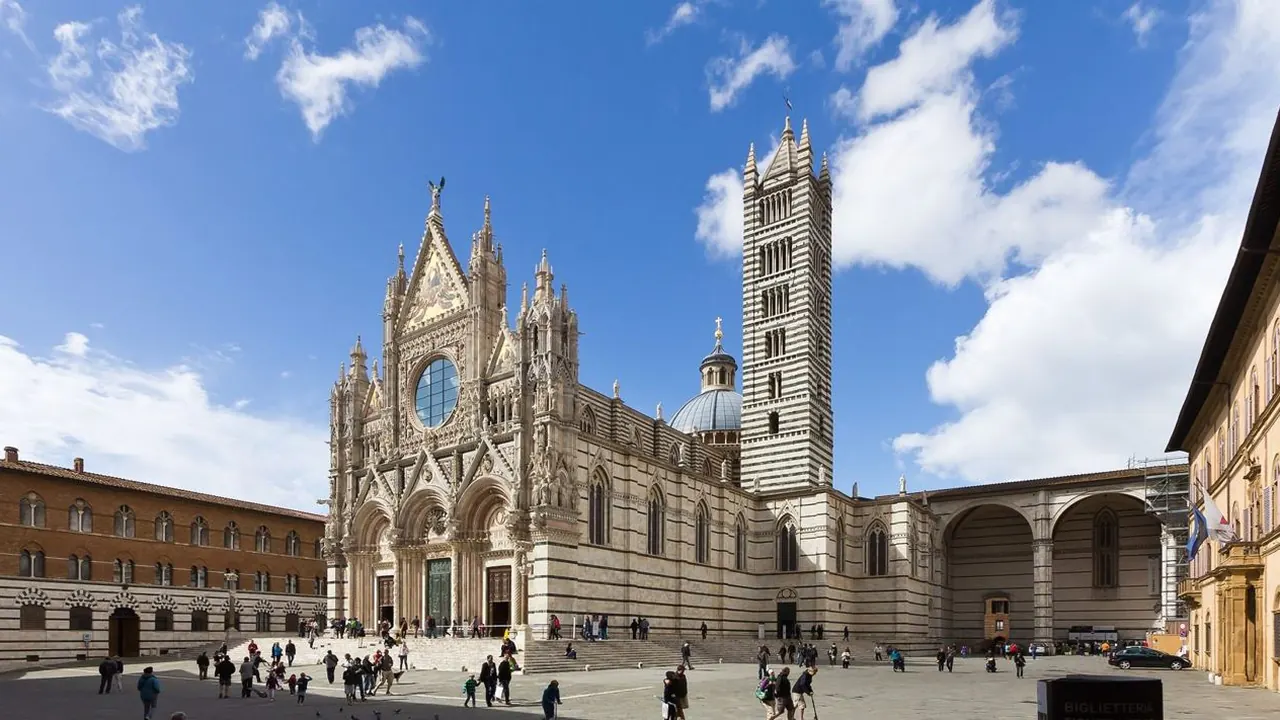
Photos: Antibes by Johan Allard, CC BY-SA 4.0, cropped; Siena by Raimond Spekking, CC BY-SA 4.0, cropped.
Antibes or Siena?
Our verdict in twelve categories, each scored against the same fixed benchmark cities, and the climate month by month, so you can choose for your trip.
Choose Antibes for
- beaches
- families
- nightlife
Antibes is the choice for a summer trip built around the sea. It has real sand at Juan-les-Pins and La Salis, clear coves off Cap d'Antibes and the whole Riviera within reach by coastal train. It suits families with small children and anyone who wants a late drink on a July night, provided the budget can take Riviera prices.
Choose Siena for
- culture and sights
- wellness
- food and drink
Travellers who care more about art, food and wine than about swimming will be happier in Siena. The medieval centre, the Duomo and the Lorenzetti frescoes give you far more to see, and the Tuscan cooking and local wines outclass the Riviera's coastal fare. The thermal pools and hill towns to the south make for slow, restoring days, and the town costs a little less. The trade-off is quiet evenings and no sea at all.
Scoreboard
Twelve categories on one fixed scale from 0 to 100. The shaded stretch is the gap between the two.
Your match
Pick a travel style or drag the sliders, and both match scores follow your weighting.
Too close to call, 1 point apart
Wins on beaches and families with your weighting.
Wins on culture and sights and wellness with your weighting.
What matters to you?
Category by category
What the scores mean for a trip.
Beaches & swimming
This is where the two places differ most. Antibes has some of the only real sand on this part of the coast, at Juan-les-Pins and La Salis, plus rocky coves and flat swimming rocks around Cap d'Antibes. Expect private beach clubs and crowded free stretches in high summer.
Siena is an inland hill town, and for most visitors swimming means a hotel or agriturismo pool. The Maremma beaches are a full day's round trip by car, so anyone who wants the sea should book a few nights on the coast.
Food & drink
Siena eats better. Hand-rolled pici, ribollita, cinta senese pork and a baking tradition of panforte and ricciarelli give it a strong local table. Chianti Classico, Brunello and Vino Nobile are poured by the glass, and the best meals come from family osterie in the contrade.
Antibes has its pleasures: the morning market on Cours Masséna, socca, pissaladière and grilled fish with rosé outdoors. Outside a few good bistros and the restaurants on the cape, though, the streets by the port lean on tourist menus, and few people choose the town for its food.
Culture & sights
Siena is in another league here. The whole medieval centre is a sight in itself, from the sloping Campo and the Palazzo Pubblico to the Duomo's inlaid floor, the Museo dell'Opera and the vast Santa Maria della Scala. Two or three full days are well spent.
Antibes offers one outstanding visit, the Picasso Museum in the Château Grimaldi, along with the old ramparts, Fort Carré and Villa Eilenroc on the cape. It is pleasant sightseeing between swims rather than the reason for a trip.
Nightlife
Antibes gives you more of a night out, but mostly in July and August. Juan-les-Pins then has beach bars, lounges and clubs open into the early hours, and the lanes by Port Vauban fill with yacht crews in English-style pubs. Outside those months it closes early.
Siena's evenings are dinner, wine on the Campo and a stroll, with a few student pubs and almost no clubs. The Palio nights are the lively exception.
Nature & outdoors
Antibes looks to the sea and Siena to farmland, and that decides what you do outdoors. Around Antibes it means the coastal path over the wind-carved limestone of Cap d'Antibes, snorkelling and diving in clear water and sailing in the bay. The land by the town is flat and built up, so proper hiking means heading to the red cliffs of the Esterel or the gorges and pre-Alps above Grasse.
Siena sits in classic Tuscan farmland, with the bare clay hills of the Crete Senesi and the UNESCO-listed Val d'Orcia to the south. Cycling the white gravel strade bianche is the signature activity, and walkers can follow stretches of the Via Francigena, but there is no coast and there are no high mountains.
Day trips
Both are superb bases, and Siena edges ahead on sheer depth. Florence, San Gimignano, Volterra, the Chianti villages, Pienza, Montalcino and abbeys such as San Galgano and Sant'Antimo all lie within a day. Reaching most of them, though, means hiring a car.
Antibes wins on ease. Nice, Cannes, Monaco and Menton are short train rides along the coast, boats cross to the Lérins Islands, and Saint-Paul-de-Vence, Eze and Grasse sit just inland. Most of these places, and even Italy, are easy to reach without driving.
Good for families
Antibes suits children better, mostly because of its sandy, shallow beaches, which are kinder to toddlers than the pebbles found elsewhere on the coast. Boats in the port, ice cream on the ramparts and snorkelling for older children fill the days, though August heat calls for early starts.
Siena is safe and almost free of cars, and older children enjoy climbing the Torre del Mangia. Its steep, stepped streets and lack of child-focused attractions mean families usually stay at a countryside farmhouse with a pool.
Getting around
Both centres are best on foot, and both need a car for the countryside. Antibes is flat between the old town, the port and Juan-les-Pins, and its coastal railway links the main Riviera towns, though summer traffic and parking are a trial.
Siena's three ridges mean steep climbs, and escalators lift you from the station in the valley. Trains are slow, so buses do the run to Florence.
Shopping & style
Neither is a shopping destination, but the souvenirs differ. Antibes offers Provençal linens, olive oil and soaps from its covered market, with Biot glass and Vallauris pottery close by and the fashion streets of Cannes and Nice a short ride away. Siena has Italian shoes and leather on Banchi di Sopra, hand-painted majolica, contrada scarves and panforte to take home, plus a big weekly market by the Fortezza.
Affordability
Siena is the easier place on the wallet, though neither is cheap. Its osteria lunches with house wine are good value, and staying in an agriturismo outside the walls cuts costs. Rooms climb around the Palio, and museum entry fees add up.
Antibes in July and August prices beach hotels and loungers like a luxury resort. Spring and autumn, self-catering from the market and the inexpensive coastal trains bring it within reach.
Live music & performing arts
The two are level, but they offer different music. Antibes has one famous event, Jazz à Juan, held each July under the pines by the sea since 1960, and the Anthéa theatre for the rest of the year.
Siena's strength is classical: the Accademia Chigiana's summer concerts in palaces and churches, alongside Siena Jazz and winter seasons at the Rinnovati and Rozzi theatres. Opera lovers head to Nice or Florence.
Wellness & relaxation
Siena is the better choice for unwinding, thanks to the warm springs around it. Rapolano Terme's travertine pools, the steaming medieval bath at Bagno Vignoni and the free limestone pools of Bagni San Filippo pair well with a stay at a rural farmhouse.
Antibes offers thalassotherapy and grand hotel spas on the cape. It is at its most restful in May, June and September, when market mornings and evening walks on the ramparts are unhurried.
When should you go?
Pick your month. The climate figures are measured averages, not a forecast.
Antibes in July
Siena in July
Daytime high, °C
Rainfall in the month, mm
Where the figures come from
Siena's temperatures are measured 45 km from the centre, at Arezzo.
Siena has no rain gauge within 25 km of the centre, so its rainfall comes from a gridded climate dataset read at the city rather than from a gauge further away.
Temperature and rainfall are climate normals, averaged over the years shown. Antibes: 1991-2020 normals, Nice (9.9 km from centre). Siena: 2006-2017 (rainfall 1991-2020) normals, Arezzo (45 km from centre).
Antibes is a summer place. The sea is warm enough to swim from June to early October and peaks around 25°C in August, while July and August are almost dry and very sunny. Autumn rain arrives in force from October, with November the wettest month at about 138mm. Winters are mild enough for walking the cape path, though the beach towns go quiet.
Siena has a sharper climate. July and August reach about 31°C, which makes the steep streets hard going in the afternoon, and January highs of around 9°C make winter crisp rather than mild. The best months for walking the town and the countryside are April, May, September and early October. Siena's rain also peaks in November, so late autumn is wet in both places.
Which traveller are you?
For a beach and sun trip, Antibes is the clear answer. Its sandy, gently shelving beaches and clear coves around the cape put swimming at the centre of each day, while Siena's nearest beaches are a full day's outing away.
On a culture and arts trip, Siena wins easily. A UNESCO-listed medieval centre, the Duomo, Duccio's Maestà and the Sienese painters of the Pinacoteca outweigh Antibes, where the Picasso Museum and the old ramparts take a day or two.
On a family trip with young children, Antibes works better. Shallow sandy water suits small swimmers, and the flat town is easy with a pushchair. Siena's steep lanes are hard work and it has nothing built for children, so families usually stay in the countryside instead.
Before you go
| Measure | Antibes | Siena |
|---|---|---|
| Official language | French | Italian |
| Currency | Euro (EUR) | Euro (EUR) |
| Sockets | CE230 V, 50 Hz | CFL230 V, 50 Hz |
| Driving side | Right | Right |
| Time zone | UTC+1, UTC+2 in summer | UTC+1, UTC+2 in summer |
| Emergency number | 112 | 112 |
| Elevation | 0 m | 322 m |
| Main airport | Nice-Côte d'Azur Airport (NCE)11 km from centre130 non-stop destinations | Florence Airport, Peretola (FLR)55 km from centre46 non-stop destinations |
| Public holidays this year | 11 days | 13 days |
By the numbers
| Measure | Antibes | Siena |
|---|---|---|
| City population | 77,637 | 52,812 |
| People per km² | 2,930 | 446 |
| Museums within 10 km | 14 | 30 |
| UNESCO World Heritage sites within 50 km | 2 | 5 |
| Swim season, months above 21 °C | 4 months | - |
Where else could you go?
Every comparison below shares a destination with this one, so you can follow Antibes or Siena somewhere new.