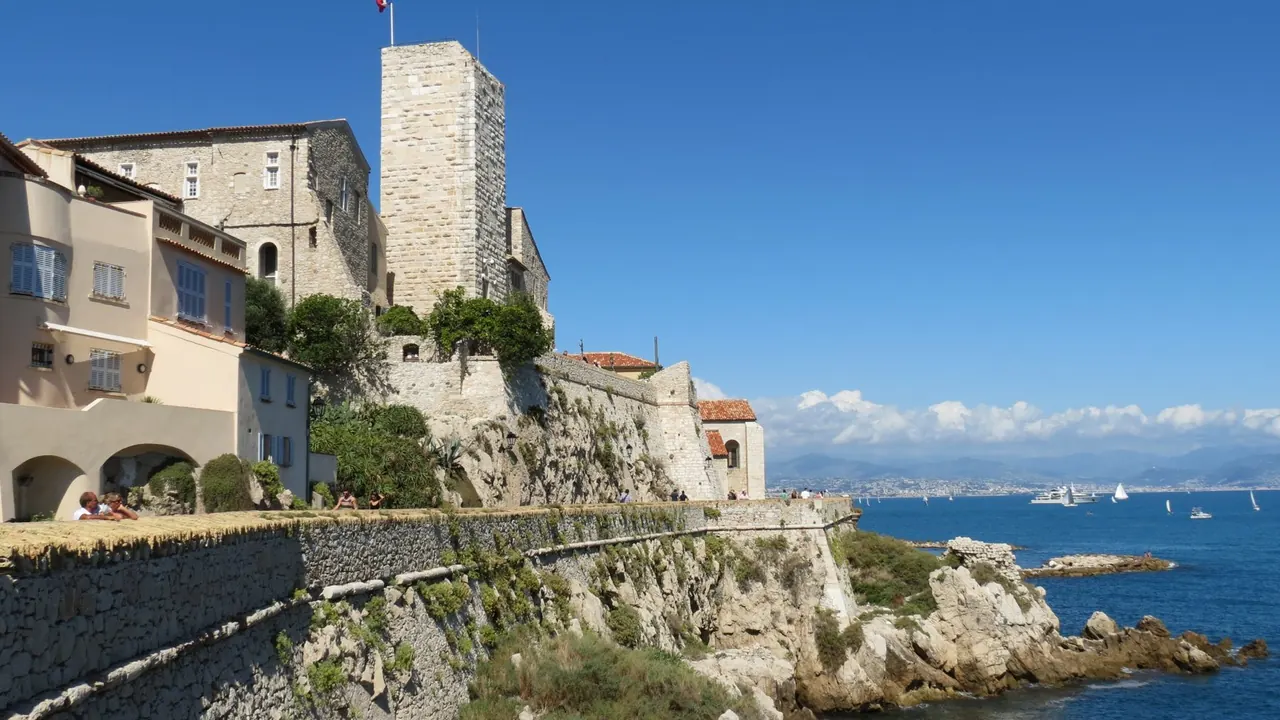
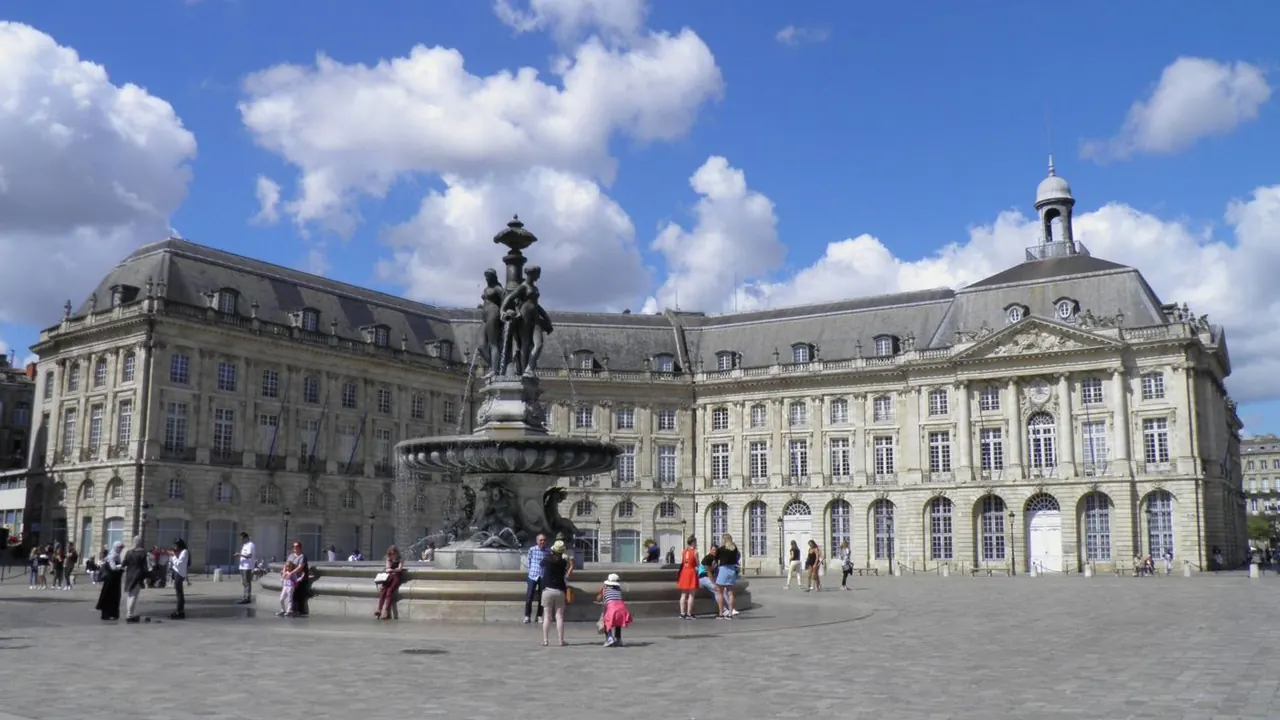
Photos: Antibes by Johan Allard, CC BY-SA 4.0, cropped; Bordeaux by Gzen92, CC BY-SA 4.0, cropped.
Antibes or Bordeaux?
Our verdict in twelve categories, each scored against the same fixed benchmark cities, and the climate month by month, so you can choose for your trip.
Choose Antibes for
- beaches
- nature and the outdoors
- day trips
Antibes suits a summer trip built around the sea. Sand starts at the edge of town, the cape has clear water for snorkelling, and the coastal railway puts Nice, Cannes and Monaco within easy reach, so it works best for travellers who want swimming by day and a different Riviera town every few days. Expect resort prices in high summer and a town that goes quiet once the season ends.
Choose Bordeaux for
- food and drink
- culture and sights
- shopping
Bordeaux is the better choice when the meal, the wine and the streets are the point. Its classical centre rewards days of slow walking, the food and wine go far deeper, and trams and flat pedestrian streets make a car unnecessary. It holds up well in spring and autumn and in the evenings, but the beach is a day out rather than part of every day.
Scoreboard
Twelve categories on one fixed scale from 0 to 100. The shaded stretch is the gap between the two.
Your match
Pick a travel style or drag the sliders, and both match scores follow your weighting.
Wins on beaches and nature and the outdoors with your weighting.
Wins on food and drink and culture and sights with your weighting.
What matters to you?
Category by category
What the scores mean for a trip.
Beaches & swimming
Antibes is a real beach town, unusually so on a coast mostly made of pebbles. The fine sand at Juan-les-Pins and La Salis is a walk from your room, and the coves and flat rocks around Cap d'Antibes give clear water for swimming. The catch is that private clubs hold much of the sand, and the free stretches fill early in high summer.
Bordeaux stands on the Garonne, so every swim means an hour by train or car. The reward is wild Atlantic sand at Lacanau, with surf and rip currents that keep you inside the flags, or the calmer, warmer Arcachon basin below the Dune du Pilat. It makes a fine day out, but you cannot fit a quick swim into a normal day.
Food & drink
Bordeaux is the better place to eat and drink, and wine is the reason. Médoc, Saint-Émilion, Graves and Sauternes are poured by the glass all over town, steaks are grilled over vine cuttings and Arcachon oysters are eaten at the counters of the Marché des Capucins. Chartrons, Saint-Pierre and Saint-Michel all have serious bistros.
Antibes eats well at a smaller scale. Mornings start at the Provençal market on Cours Masséna, and the cooking is Niçoise: socca, pissaladière, grilled fish and rosé. Beyond a few good bistros and the dining on the cape, choose carefully, because the streets near the port lean on tourist menus.
Culture & sights
Bordeaux has much more to see, and most of it is the city itself. Long streets of 18th-century limestone run along the river past the Place de la Bourse and the Grand Théâtre, with Gothic churches and the Grosse Cloche between them. The Musée d'Aquitaine and the CAPC add depth, and three or four days pass easily.
Antibes has one sight of real weight: the Picasso Museum in the Château Grimaldi, holding the work he painted there in 1946. The ramparts, Fort Carré and the lighthouse chapel on the cape make a pleasant round, but two days covers it.
Nightlife
Bordeaux has the fuller and steadier night out. Wine bars and terraces fill the squares of Saint-Pierre, students keep Place de la Victoire loud, and the warehouse clubs of the Quai de Paludate run until morning, best on term-time weekends.
In Antibes, going out depends on the season. In July and August Juan-les-Pins has beach bars and a few late clubs, and the pubs near Port Vauban fill with yacht crews, but out of season it closes early and anyone after a big night takes the train to Nice.
Nature & outdoors
Antibes has the more varied outdoors. The path round Cap d'Antibes crosses carved limestone with views to the Alps, and the clear water off the cape suits snorkelling, diving and paddleboarding. Within an hour you reach the red cliffs of the Esterel and real hiking in the Gorges du Loup and the hills above Grasse.
The country around Bordeaux is flat, and its best outdoor days are on the coast: climbing the Dune du Pilat, kayaking or birdwatching on the Arcachon basin, or surfing at Lacanau. Cycling the greenways through the vineyards is the easy pleasure, but there are no hills to hike within reach.
Day trips
Both make excellent bases, but Antibes has more within easy reach. One coastal railway line strings together Cannes, Nice, Villefranche, Monaco and Menton. Boats cross to the Lérins Islands, and Saint-Paul-de-Vence, Eze, Grasse, Biot and Vallauris sit in the hills nearby, with Italy at the end of the line.
From Bordeaux the trips are mostly about wine. Medieval Saint-Émilion is a short train ride, and Arcachon is an easy hour away. The châteaux of the Médoc and Sauternes are the real prize, but they need a car or a tour.
Good for families
Neither city is much better for families than the other, but the trips are different. Antibes is a beach vacation: sandy, shallow water suits small children, the town is small and easy, and the boats in Port Vauban fill the hours between swims, though there is little else built for children.
Bordeaux is a city trip that happens to suit families. Trams and car-free streets suit pushchairs, and children can splash in the Miroir d'eau or visit the Jardin Public and Cap Sciences. The beaches and the Dune du Pilat take a day out.
Getting around
Bordeaux is the easier city to move around. Its flat, largely pedestrian centre runs along the left bank from Chartrons to Saint-Michel, and clear tram lines and bike lanes cover the rest, so you need a car only for the wine estates.
In Antibes, the old town, market and port are compact enough to walk, and the coastal railway is excellent for other Riviera towns. Away from that line it gets harder. Buses to the cape and the hill villages are slow, the Esterel and Grasse really need a car, and summer traffic on the coast road is heavy.
Shopping & style
Bordeaux has far more shopping. Rue Sainte-Catherine has the chains and a department store, the Triangle d'Or has luxury labels and Rue Notre-Dame in Chartrons has antiques. Above all, the wine cellars stock everything from table wine to old vintages and will ship your bottles home.
Antibes keeps to small, local things: olive oil, herbs and soaps from the covered market, and Provençal linens and ceramics in the old town lanes. For fashion, people go to Cannes or Nice, and the glass and pottery are best bought in Biot and Vallauris.
Affordability
Neither is cheap, but Bordeaux is easier on the budget. Its hotels cost what you would expect in a prosperous regional city, and set lunches and inexpensive trams keep daily costs down, with the money going on château tastings and good bottles.
In high summer Antibes charges resort prices, both for rooms near Juan-les-Pins and on the cape and for loungers at the beach clubs. Spring and autumn bring rates down sharply, and the regional trains and market picnics help.
Live music & performing arts
Bordeaux offers more through the year. Opera and ballet fill the gilded 1780 Grand Théâtre, the national orchestra plays nearby, and halls for jazz, world music and touring acts round out a solid regional scene. Most of it pauses in high summer.
Antibes comes into its own just when Bordeaux goes quiet. Jazz à Juan, running since 1960, puts concerts under the pines by the sea each July. Outside the festival there is the regional programme at the Anthéa theatre, and for opera you go to Nice.
Wellness & relaxation
The two are level here, and neither has a bathing tradition. Antibes offers seawater thalassotherapy and the spas of the grand hotels on the cape, and it is most restful in May, June and September, before or after the summer crowds.
Bordeaux's answer is vinotherapy, grape-based treatments at spa hotels among the vineyards just outside town, plus long lunches and walks along the quays. Anyone wanting real thermal springs can reach Dax in about an hour and a half.
When should you go?
Pick your month. The climate figures are measured averages, not a forecast.
Antibes in July
Bordeaux in July
Daytime high, °C
Rainfall in the month, mm
Temperature and rainfall are climate normals, averaged over the years shown. Antibes: 1991-2020 normals, Nice (9.9 km from centre). Bordeaux: 1991-2020 normals, Bordeaux / Merignac (9.5 km from centre).
Antibes is the warmer and sunnier of the two, and its summer is the reason to go. The sea is warm enough for a swim from June to early October and reaches about 25°C in August, while July is almost dry at 13mm of rain. Spring and late September are the gentlest time for walking the old town and the cape. Autumn brings heavy rain, with November the wettest month at about 138mm, but even winter afternoons stay mild.
Bordeaux runs cooler and greyer for most of the year, with damp winters of around 11°C and rain spread more evenly across the months, heaviest from November to January. Its summer highs of about 28°C are as warm as on the Riviera, which still suits long evenings on the quays. May, June and September are the most comfortable months for a city stay. Antibes keeps a clear lead in sunshine all year.
Which traveller are you?
On a beach and sun trip, Antibes is the clear choice. Sandy, gently shelving beaches at Juan-les-Pins and La Salis are a short walk from town, and the sea is warmer. From Bordeaux the Atlantic is a day out, with cooler water and strong surf.
For a food and nightlife trip, Bordeaux pulls ahead. Its wine bars, oyster counters and south-western cooking give you a different meal every day, and the evenings carry on through the year from Saint-Pierre to the clubs on the Quai de Paludate. Antibes goes quiet out of season.
On a culture and arts trip, Bordeaux gives you more to see. You get a whole UNESCO-listed classical centre, several solid museums and a season of opera and ballet at the Grand Théâtre. Antibes has the outstanding Picasso Museum but takes only a couple of days.
Before you go
| Measure | Antibes | Bordeaux |
|---|---|---|
| Official language | French | French |
| Currency | Euro (EUR) | Euro (EUR) |
| Sockets | CE230 V, 50 Hz | CE230 V, 50 Hz |
| Driving side | Right | Right |
| Time zone | UTC+1, UTC+2 in summer | UTC+1, UTC+2 in summer |
| Emergency number | 112 | 112 |
| Elevation | 0 m | 1 m |
| Main airport | Nice-Côte d'Azur Airport (NCE)11 km from centre130 non-stop destinations | Bordeaux–Mérignac Airport (BOD)11 km from centre95 non-stop destinations |
| Public holidays this year | 11 days | 11 days |
By the numbers
| Measure | Antibes | Bordeaux |
|---|---|---|
| City population | 77,637 | 267,991 |
| People per km² | 2,930 | 5,425 |
| Museums within 10 km | 14 | 18 |
| UNESCO World Heritage sites within 50 km | 2 | 4 |
| Swim season, months above 21 °C | 4 months | - |
Where else could you go?
Every comparison below shares a destination with this one, so you can follow Antibes or Bordeaux somewhere new.