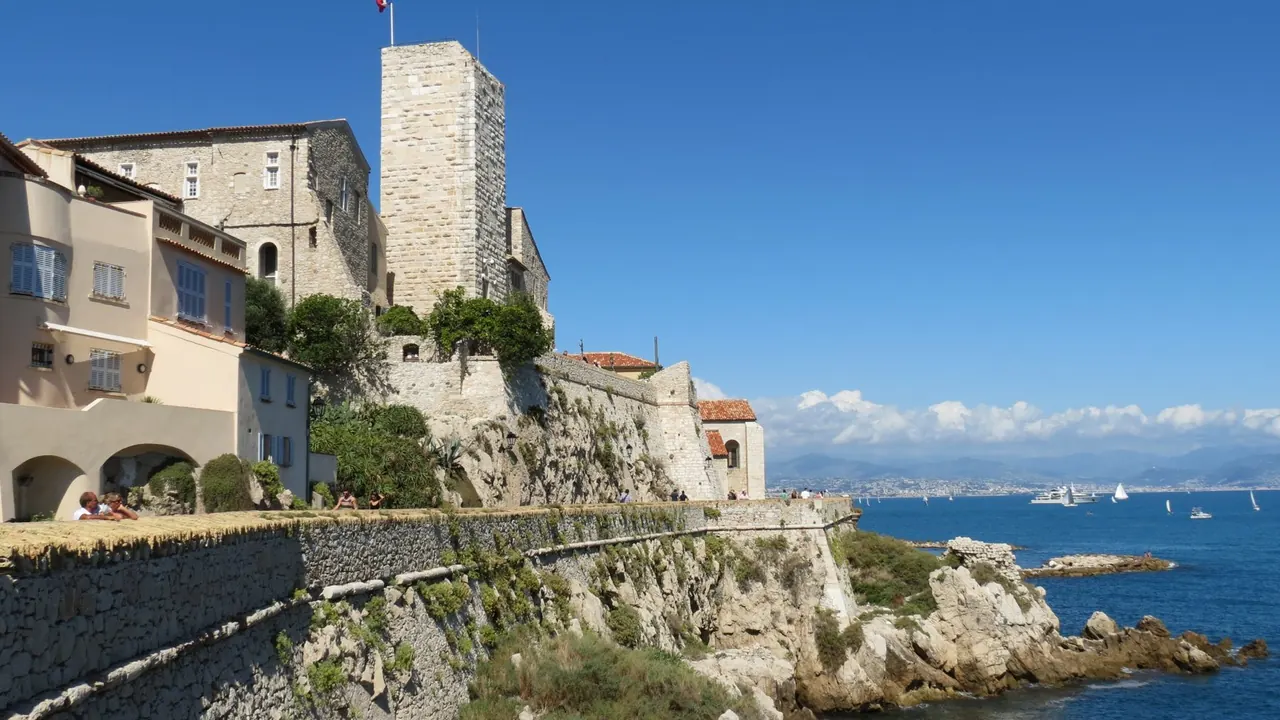
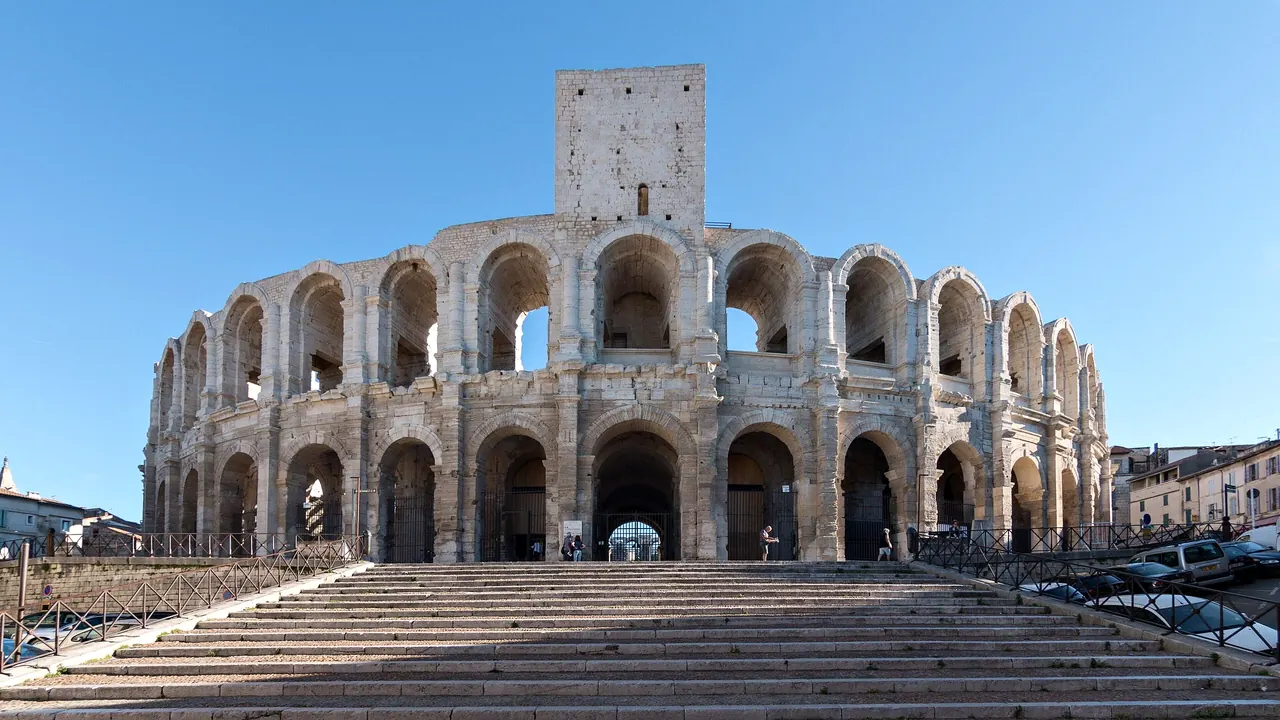
Photos: Antibes by Johan Allard, CC BY-SA 4.0, cropped; Arles by Martin Kraft, CC BY-SA 3.0, cropped.
Antibes or Arles?
Our verdict in twelve categories, each scored against the same fixed benchmark cities, and the climate month by month, so you can choose for your trip.
Choose Antibes for
- beaches
- nightlife
- families
Antibes is the one for a summer trip built around the sea. It has proper sand at Juan-les-Pins and La Salis, clear coves around Cap d'Antibes, and a railway along the coast that puts Nice, Cannes and Monaco within easy reach without a car. Summer evenings are livelier and young children are easier to keep happy. The catch is the cost, which is high in July and August.
Choose Arles for
- culture and sights
- prices
Arles suits travellers who would rather spend the day among Roman stones than on a lounger. The arena, the antique theatre, Saint-Trophime and the places Van Gogh painted are all a short walk apart, and the Camargue's lagoons and flamingos start at the edge of town. It costs noticeably less and goes quiet early, and the sea is somewhere you drive to for a day rather than the point of the trip.
Scoreboard
Twelve categories on one fixed scale from 0 to 100. The shaded stretch is the gap between the two.
Your match
Pick a travel style or drag the sliders, and both match scores follow your weighting.
Wins on beaches and nightlife with your weighting.
Wins on culture and sights and prices with your weighting.
What matters to you?
Category by category
What the scores mean for a trip.
Beaches & swimming
Antibes is a real beach town, and one of the few places on this coast with sand rather than pebbles. Juan-les-Pins and La Salis are long and gently shelving, and the rocky shore of Cap d'Antibes adds clear water and small coves. Beach clubs take a good share of the sand, and the free stretches fill early in high summer.
From Arles the sea means a 40km drive across the Camargue to Saintes-Maries-de-la-Mer, or further out to the wild strands of Piémanson and Beauduc. These beaches are open and uncrowded, but they have little shade or service and come with wind and mosquitoes. They make a good day out, not a base for a beach vacation.
Food & drink
The two eat equally well, but they cook differently. Antibes follows the Niçoise kitchen of socca, pissaladière, stuffed vegetables and grilled fish, with a covered market on Cours Masséna every morning and tourist menus to steer around near the port.
Arles cooks with a Camargue accent: gardiane bull stew, red rice, tellines and saucisson d'Arles. Its great food event is the long Saturday market on the Boulevard des Lices. In winter it has fewer places open.
Culture & sights
Arles has much more to see. Its arena, which is still in use, the antique theatre, the cryptoporticus galleries and the Alyscamps make up one of the finest Roman ensembles in France. Add the cloister of Saint-Trophime, the museum with its Roman barge pulled from the Rhône, the Van Gogh foundation and Gehry's tower at Luma, and you have a full itinerary in a compact town.
Antibes has one outstanding sight in the Picasso Museum at the Château Grimaldi, along with ramparts, Fort Carré above Port Vauban and a handful of small museums. It is a pleasant backdrop to a beach stay rather than a reason to come.
Nightlife
Neither town is a party destination, but Antibes has more going on. In July and August, Juan-les-Pins keeps beach bars and a few clubs open into the early hours, and the yacht crews fill the pubs and wine bars near Port Vauban.
Arles winds down after dinner on the Place du Forum, and it has no club scene. It only stays up late during the Easter and September ferias, when bodegas fill the streets for a few days.
Nature & outdoors
The outdoors is just as good in both, but the settings could hardly be more different. Antibes faces the sea: the limestone path around the cape, snorkelling and paddleboarding in clear water, and the red cliffs of the Esterel and the hills above Grasse for proper hiking.
Arles faces a wetland. The Camargue starts at the edge of town, with flamingos, white horses and black bulls, explored on horseback or by bike along the dykes. The Alpilles ridges add hiking among olive groves. Arles is best in spring and autumn, because summer brings heat and mosquitoes.
Day trips
Both are excellent bases, and the choice comes down to which Provence you want to see. From Antibes the trips run along the Riviera by train to Nice, Cannes, Monaco and Menton, out by boat to the Lérins Islands and up to hill villages such as Saint-Paul-de-Vence, Eze and Grasse.
From Arles they lead into Roman and papal Provence: Avignon and Nîmes by train, the Pont du Gard, Les Baux, Saint-Rémy and walled Aigues-Mortes. A car helps more here, because the villages are poorly served by buses.
Good for families
Antibes is the easier choice with small children, mainly because of the safe, sandy, gently shelving beaches right in town, with boats in the harbour and ice cream on the ramparts to fill the rest of the day.
Arles works better for older children who like history and animals. They can clamber around the arena and the dark cryptoporticus, ride ponies at a Camargue ranch and watch flamingos. Cobbles, summer heat and car-dependent outings make it more work with a buggy.
Getting around
Antibes is the easier place to manage without a car. Two stations on the coastal railway put Nice, Cannes, Monaco and Menton a short ride away, and the old town, the market and Port Vauban are close together on foot. Further out, buses to Cap d'Antibes and the hill villages are slow, and the coast road clogs in summer.
The centre of Arles is just as walkable, with a free shuttle looping the old town and trains to Avignon, Nîmes and Marseille. The Camargue's reserves, ranches and wild beaches are another matter. Buses there are infrequent, so most people staying several days hire a car or cycle along the dykes.
Shopping & style
Neither is a shopping town, and both send fashion shoppers elsewhere: Antibes to Cannes and Nice, Arles to Aix and Marseille. What you take home is what differs. Antibes offers Provençal linens and deli goods in the old town, with Biot glass and Vallauris pottery in the villages next door.
Arles adds things that are its own: gardian shirts and hats, santons, Camargue salt and rice, and fine bookshops and photography prints in what is a publishing town.
Affordability
Arles is the cheaper stay by a clear margin. Its hotels and lunch menus are priced like a provincial French town, and a combined pass covers the sights, though the car most visitors hire adds to the bill.
Antibes charges luxury-resort rates near the beaches in high summer, and beach loungers and seafront terraces add more. Spring and autumn, self-catering from the market and the cheap regional trains bring it closer to Arles.
Live music & performing arts
In Antibes, live music mostly means one long-running jazz festival by the sea. Jazz à Juan, started in 1960, holds its concerts each July under the pines of the Pinède Gould. For the rest of the year there is the regional programme of plays, dance and concerts at the Anthéa theatre.
Arles has more summer stages and older ones. It holds concerts in its Roman theatre and arena, world music in the courtyards during Les Suds, and brass bands in the streets at the Easter and September ferias. For opera, Antibes looks to Nice, and Arles to Avignon or Marseille.
Wellness & relaxation
Antibes has the better choice of treatments, with a seawater thalassotherapy centre and grand-hotel spas on Cap d'Antibes that often take non-guests. It is most restful in May, June and September, when the summer crush has not yet arrived or has gone.
Arles offers little in the way of spas. Its kind of rest is slower days: siestas through the heat, quiet evenings by the Rhône, and converted farmhouses in the Camargue and Alpilles with pools to idle beside.
When should you go?
Pick your month. The climate figures are measured averages, not a forecast.
Antibes in July
Arles in July
Daytime high, °C
Rainfall in the month, mm
Where the figures come from
Arles's temperatures are measured 28 km from the centre, at Nimes / Courbessac.
Arles has no rain gauge within 25 km of the centre, so its rainfall comes from a gridded climate dataset read at the city rather than from a gauge further away.
Temperature and rainfall are climate normals, averaged over the years shown. Antibes: 1991-2020 normals, Nice (9.9 km from centre). Arles: 1991-2020 (sunshine 1981-2010) normals, Nimes / Courbessac (28 km from centre).
Both towns are warm and dry from June to early September, but summer feels very different in each. Antibes peaks at around 28°C and has the sea right there to cool off in, and the water stays warm enough to swim from June into early October. Arles sits inland on the Rhône and reaches about 31°C in July and August. That makes long afternoons in the old streets hard going, and the Camargue beaches are a little cooler for swimming than the Riviera's.
For sightseeing on foot, Arles is at its best in May, June and September. Antibes is pleasant to walk around for a longer stretch, with mild spring days and winter highs a couple of degrees above those in Arles. Autumn brings the rain to both. Antibes is the wetter of the two, with about 138mm in November, while Arles gets most of its rain in October.
Which traveller are you?
On a beach and sun trip, choose Antibes. The gently shelving sand of Juan-les-Pins and La Salis is a short walk from town, the coves at La Garoupe are good for snorkelling, and the sea stays warm all summer. From Arles, the beach means a drive across the marshes.
For a culture and arts trip, Arles goes much deeper. It has a UNESCO-listed group of Roman monuments, Romanesque carving at Saint-Trophime, the Alyscamps that Van Gogh painted and a summer photography festival. Antibes has its Picasso Museum and a couple of days of smaller sights.
On a trip on a tight budget, Arles gives up less. Most of its pleasures cost nothing: the arena walls from the street, the Rhône quays, the Saturday market and bike rides into the Camargue. In Antibes the public sand is free, but beach clubs and seafront terraces line it on every side.
Before you go
| Measure | Antibes | Arles |
|---|---|---|
| Official language | French | French |
| Currency | Euro (EUR) | Euro (EUR) |
| Sockets | CE230 V, 50 Hz | CE230 V, 50 Hz |
| Driving side | Right | Right |
| Time zone | UTC+1, UTC+2 in summer | UTC+1, UTC+2 in summer |
| Emergency number | 112 | 112 |
| Elevation | 0 m | 0 m |
| Main airport | Nice-Côte d'Azur Airport (NCE)11 km from centre130 non-stop destinations | Marseille Provence Airport (MRS)54 km from centre126 non-stop destinations |
| Public holidays this year | 11 days | 11 days |
By the numbers
| Measure | Antibes | Arles |
|---|---|---|
| City population | 77,637 | 51,811 |
| People per km² | 2,930 | 68 |
| Museums within 10 km | 14 | 3 |
| UNESCO World Heritage sites within 50 km | 2 | 5 |
| Swim season, months above 21 °C | 4 months | 2 months |
Where else could you go?
Every comparison below shares a destination with this one, so you can follow Antibes or Arles somewhere new.
- Cannesvs Antibes
- Nicevs Antibes
- Monacovs Antibes
- Avignonvs Arles
- Saint-Tropezvs Antibes
- Montpelliervs Arles