French Alps or French Riviera?
Our verdict in twelve categories, each scored against the same fixed benchmark cities, and the climate month by month, so you can choose for your trip.
Choose French Alps for
- wellness
- nature and the outdoors
- families
Choose the French Alps if the mountains are the point of the trip. In winter that means the huge linked ski areas of the Tarentaise. In summer it means walking, climbing and cycling under Mont Blanc and in the Vanoise and Écrins. The Alps also suit families who want ski schools and car-free resorts, and anyone after a slow spa stay in Aix-les-Bains or Évian. In return you accept towns that offer half days of sightseeing and evenings that are mostly après-ski.
Choose French Riviera for
- beaches
- live music and the arts
- culture and sights
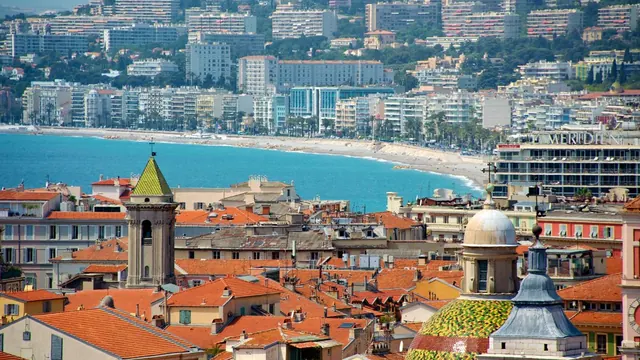
The Riviera is the better pick for a summer by the sea with a city attached. It has sandy beaches at Cannes and Pampelonne, the Matisse, Chagall and Picasso museums, the cooking of Nice, opera in Monaco and a coastal railway that links it all. That puts it ahead on almost everything except mountains, rest and children's activities. Neither region is cheap, so cost alone will not decide between them.
Scoreboard
Twelve categories on one fixed scale from 0 to 100. The shaded stretch is the gap between the two.
Your match
Pick a travel style or drag the sliders, and both match scores follow your weighting.
Wins on wellness and nature and the outdoors with your weighting.
Wins on beaches and live music and the arts with your weighting.
What matters to you?
Category by category
What the scores mean for a trip.
Beaches & swimming
The French Alps have no sea, only lakes. Lake Annecy is clear and pleasant in high summer, with grassy beaches and jetties at Sévrier and Talloires. Still, the beaches are small, the season is short and swimming is a side pleasure of a lake stay.
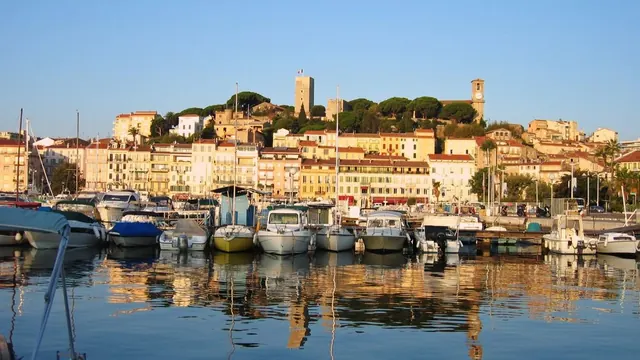
The Riviera is a proper beach destination. You can choose between pebbles at Nice and Menton, sand at Cannes, Juan-les-Pins and Pampelonne, and rocky coves in the Esterel, and the sea stays warm enough to swim from June into early October. The catch is the private concessions and the crowded public stretches in July and August.
Food & drink
Alpine food has far less range than the Riviera's. Everyday cooking in the mountains means melted cheese: fondue, raclette and tartiflette, made with Beaufort and Reblochon bought from the farm. It is hearty after a day outside but gets repetitive over a week, and the decorated kitchens around Lake Annecy and in Courchevel are the exception.
The Riviera's cooking is lighter and more varied. Nice has a cuisine of its own, built on olive oil, vegetables and herbs, with socca, pissaladière and daube with ravioli, and the Cours Saleya market is a better place to graze than any resort menu. Serious restaurants also run from Menton to Cannes, so once you move away from the set menus on the seafront, the coast is the better place to eat.
Culture & sights
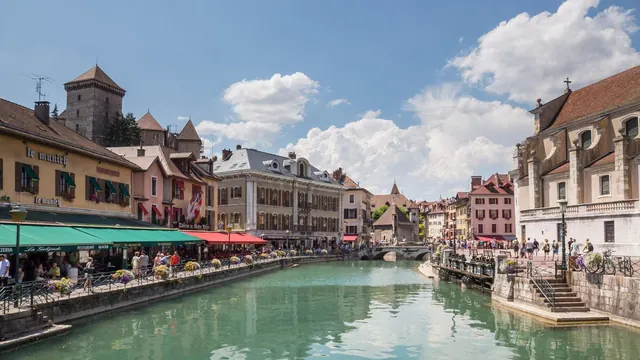
Sightseeing in the Alps fills half days: Annecy's canals and the Palais de l'Isle, the ducal château in Chambéry, Grenoble's fine-arts museum and the Vauban walls at Briançon. They are pleasant, but few people plan a trip around them.
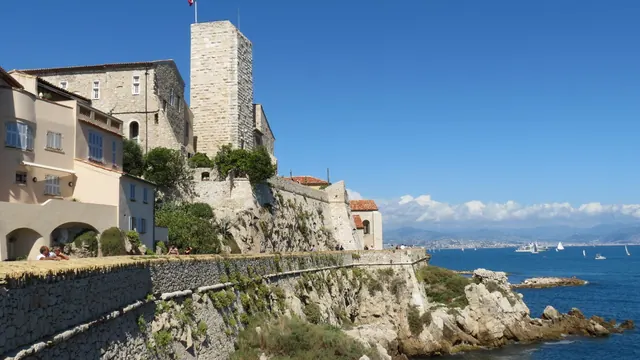
The Riviera has a modern-art circuit of real weight. There are Matisse and Chagall museums in Nice, Picasso in Antibes, Matisse's chapel at Vence and the Fondation Maeght, plus Monaco's palace, the Villa Ephrussi and the Roman trophy at La Turbie. A visitor interested in culture will be much busier here.
Nightlife
The two go out in opposite seasons. Alpine nightlife is winter après-ski: dancing on tables at mountain restaurants and late clubs in Val Thorens or Val d'Isère, while many family villages are quiet by ten. In summer, evenings come down to Annecy's terraces and Grenoble's student bars.
The Riviera's season is summer, and it has more on offer. There are beach clubs in Saint-Tropez and Monaco, late bars in Cannes and Juan-les-Pins, and wine bars and pubs in the lanes of Nice's old town and port, where students keep things going all year. It is the more varied night out, though rarely a cheap one.
Nature & outdoors
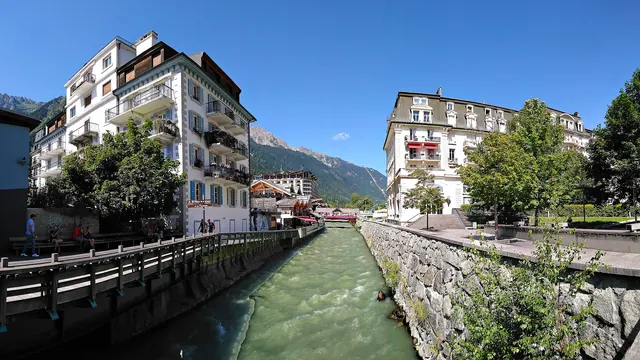
Both have mountains, but the Alps have them on a far greater scale. The Aiguille du Midi cable car takes you up among the glaciers above Chamonix, the Vanoise and Écrins hold ibex and wild passes, and in winter the Tarentaise ski areas are among the largest anywhere.
The Riviera's appeal is mountains meeting the sea. It has paths round Cap Ferrat and Cap d'Antibes, red rock in the Esterel, diving off the Lérins islands, and the Mercantour about one and a half hours inland. It offers more on the water but less in scale, and summer heat and fire closures shut some trails.
Day trips
Both offer plenty of outings, but of different kinds. From Annecy or Lake Geneva, the Alps reach out to cities and neighbouring countries: Geneva, the ferries to Lausanne and Lavaux, Lyon by train, and Aosta through the Mont Blanc tunnel. Deep in the Tarentaise valleys, though, the drive takes up most of the day.
The Riviera's trips are shorter and closer together. The coastal train runs to Villefranche, Monaco and Menton, and there are hilltop villages such as Eze and Saint-Paul-de-Vence, Grasse, the Lérins islands by boat and Italian market towns just over the border. Many are variations on a pretty village, where the Alps offer bigger changes of scene.
Good for families
The Alps are set up for children in a way the coast is not. Ski schools with snow gardens, car-free resorts such as Avoriaz and Flaine, and summer outings on the Mer de Glace railway or spotting marmots give families a ready-made programme, though cold mornings and transfer days take effort.
On the Riviera, family days centre on gently shelving sand at Juan-les-Pins and Fréjus, Monaco's aquarium and Parc Phoenix. Summer heat, traffic, expensive family rooms and hill villages full of steps make it harder going, so early summer or September works best.
Getting around
In the Alps, lifts make a resort easy to get around once you are there. Getting there means a transfer from Geneva, Lyon or Grenoble, Saturday queues up the Tarentaise and patchy buses to the higher villages. In summer the lakes and passes lie in separate valleys, so a car is close to essential.
The Riviera is far easier without one. A single coastal railway links Cannes, Antibes, Nice, Monaco and Menton, and Nice has a tram to the airport and a walkable centre. Only Saint-Tropez and the hill villages call for more patience.
Shopping & style
Shopping in the Alps is narrow but useful. Chamonix is one of Europe's best places for technical mountain gear, and Courchevel and Megève have luxury boutiques for the winter crowd. Beaufort cheese, Génépi and Opinel knives make good things to take home.
The Riviera has much more to browse. The big fashion names line the Croisette in Cannes and the streets around the Monte-Carlo casino, and Nice has department stores. Its crafts are distinctive too: perfume in Grasse, bubbled glass in Biot, pottery in Vallauris and a Monday antiques market on the Cours Saleya.
Affordability
Neither is a budget destination, and each is dearest in a different season. In the Alps the big costs come in winter: lift passes, equipment hire, ski school and chalets in school-vacation weeks. Summer stays and towns such as Grenoble and Chambéry have ordinary French prices.
The Riviera is dearest in summer, when rooms in Saint-Tropez, Monaco and Cannes cost as much as anywhere in Europe. Nice is the sensible base, the trains and buses are cheap, and the public beaches and coastal paths are free. In both regions, the quieter months between seasons cost noticeably less.
Live music & performing arts
There is little music or theatre in the Alps. Grenoble has an arts centre and a chamber orchestra, Annecy and Chambéry have small civic stages, and summer brings chamber music at Évian and concerts in mountain churches. In the ski season it is mostly bands in après-ski bars.
The Riviera has a real programme. Monte-Carlo's gilded opera house, its philharmonic orchestra and the Ballets de Monte-Carlo fill the winter, and Nice has its own opera and orchestra. Summer adds jazz in the pine grove at Juan-les-Pins and on Place Masséna in Nice.
Wellness & relaxation
The Alps have a spa tradition that goes back to Roman times. Aix-les-Bains has its Belle Époque hotels, Évian its lakeside promenades and Saint-Gervais its baths in a gorge below Mont Blanc, and small towns such as Brides-les-Bains exist for the cure. Add quiet summer days by Lake Annecy and the region is an easy place to slow down, as long as you avoid a resort in full ski season.
The Riviera offers thalassotherapy in Monaco and on the capes, and large hotel spas on Cap Ferrat and Cap d'Antibes. Whether you get any rest depends on timing: July and August are loud, and spring or autumn in the hill villages suits a slower stay better.
When should you go?
Pick your month. The climate figures are measured averages, not a forecast.
French Alps in July
French Riviera in July
Daytime high, °C
Rainfall in the month, mm
Where the figures come from
French Alps's temperatures are measured 35 km from the centre, at Bourg-St-Maurice.
French Alps's station stands 179 m below the place it is measured for, so that place is likely a little cooler than the figures say.
French Alps has no rain gauge within 25 km of the centre, so its rainfall comes from a gridded climate dataset read at the destination rather than from a gauge further away.
Temperature and rainfall are climate normals, averaged over the years shown. French Alps: 1999-2020 (rainfall 1991-2020) normals, Bourg-St-Maurice (35.1 km from centre). French Riviera: 1991-2020 normals, Nice (9.8 km from centre).
In the Alps, around the lakes and valley towns where most visitors stay, summer is the warm window. June to August bring warm days, Lake Annecy is good for swimming from late June to early September, and valley walking is comfortable. Rain is spread across the whole year rather than coming in one season, and it is heaviest in late autumn and early winter, around 169mm in December. January highs of about 5°C in the valleys mean snow higher up, and that snow carries the ski season from December to April.
The Riviera has a true dry summer. July sees only about 13mm of rain, the sea warms to 25°C by August, and the days are long and sunny from May to August. The midday heat of July and August makes the lanes of the hill villages tiring, so May, June and September are easier for sightseeing. Autumn is the wet season on the coast, peaking at around 138mm in November. Winters stay mild enough for walking the promenades while the Alps are under snow.
Which traveller are you?
For an outdoors trip, the French Alps are the clear choice. Glaciers seen from the Aiguille du Midi, the Tour du Mont Blanc, ibex in the Vanoise and the vast Tarentaise ski areas outclass the Riviera's cape paths and coves.
On a relaxing and wellness trip, the Alps also suit better. Aix-les-Bains has taken the waters since Roman times, Évian and Saint-Gervais have long thermal traditions of their own, and Lake Annecy offers quiet summer days. The Riviera's spas sit among loud summer resorts.
On a beach and sun trip, the French Riviera wins easily. It has real sea, sand at Cannes, Juan-les-Pins and Pampelonne, clear coves in the Esterel and a dry, sunny summer. The Alps have only small lake beaches with a short season.
Before you go
| Measure | French Alps | French Riviera |
|---|---|---|
| Official language | French | French |
| Currency | Euro (EUR) | Euro (EUR) |
| Sockets | CE230 V, 50 Hz | CE230 V, 50 Hz |
| Driving side | Right | Right |
| Time zone | UTC+1, UTC+2 in summer | UTC+1, UTC+2 in summer |
| Emergency number | 112 | 112 |
| Main airport | Geneva International Airport (GVA)150 non-stop destinations | Nice-Côte d'Azur Airport (NCE)130 non-stop destinations |
| Public holidays this year | 11 days | 11 days |
By the numbers
| Measure | French Alps | French Riviera |
|---|---|---|
| Swim season, months above 21 °C | - | 4 months |
Where else could you go?
Every comparison below shares a destination with this one, so you can follow French Alps or French Riviera somewhere new.
- Swiss Alpsvs French Alps
- Provencevs French Riviera
- Lake Comovs French Alps
- Cinque Terrevs French Riviera
- Corsicavs French Riviera
- Black Forestvs French Alps