Black Forest or French Alps?
Our verdict in twelve categories, each scored against the same fixed benchmark cities, and the climate month by month, so you can choose for your trip.
Choose Black Forest for
- live music and the arts
- wellness
- prices
The Black Forest suits a slower, gentler trip: spa days in Baden-Baden, walks through fir forest and high pasture, long dinners with Baden wine, and a different country within reach most mornings. It is the easier region for families, it costs less, and its railways and free guest transport cards let you see a good part of it without a car.
Choose French Alps for
- nightlife
- beaches
- nature and the outdoors
Pick the French Alps when the mountains are the reason for going. Mont Blanc, the glaciers above Chamonix, the Vanoise and Écrins parks and some of the largest ski areas anywhere put it in another league for hiking, climbing and skiing, and in winter the big resorts have a real après-ski scene. In return you get a dearer, more strenuous trip with more time spent on transfers and mountain roads.
Scoreboard
Twelve categories on one fixed scale from 0 to 100. The shaded stretch is the gap between the two.
Your match
Pick a travel style or drag the sliders, and both match scores follow your weighting.
Too close to call, 2 points apart
Wins on live music and the arts and wellness with your weighting.
Wins on nightlife and beaches with your weighting.
What matters to you?
Category by category
What the scores mean for a trip.
Beaches & swimming
Neither region has a sea, so this comes down to lakes, and the Black Forest's are the lesser ones. Titisee and Schluchsee have small beaches and boat hire, but the water stays cool and the season is short, so the heated outdoor pools in the spa towns are often the more comfortable swim.
The French Alps give swimmers much more to work with. Lake Annecy is clear and noticeably warmer in high summer, with grassy public beaches and jetties at Sévrier, Talloires and Menthon-Saint-Bernard, and Lac du Bourget, little Aiguebelette and the pebbly Lake Geneva lidos add variety. It still makes a summer lake stay, not a beach vacation.
Food & drink
The Black Forest has the edge, mainly because its table is more varied. Cooking here leans towards France, Baiersbronn packs in an unusual number of top restaurants, and country inns serve smoked ham, trout, venison and Flammkuchen, washed down with Pinot from the Kaiserstuhl and Markgräflerland and with fruit brandies from small distilleries.
Savoyard food is rich and memorable, built on Reblochon, Beaufort, fondue and tartiflette, with lake perch and féra and a few celebrated kitchens around Annecy, Megève and Courchevel. Below that top tier, though, resort menus keep coming back to melted cheese, and a week of it can feel samey.
Culture & sights
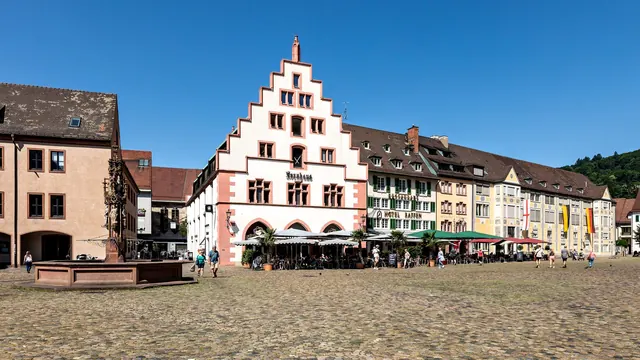
Both regions spread their heritage across many small places, and the Black Forest's set is slightly richer. Freiburg's red sandstone Minster and car-free old town, Baden-Baden's spa quarter and museums, the UNESCO-listed monastery at Maulbronn and half-timbered towns like Gengenbach and Schiltach fill several days.
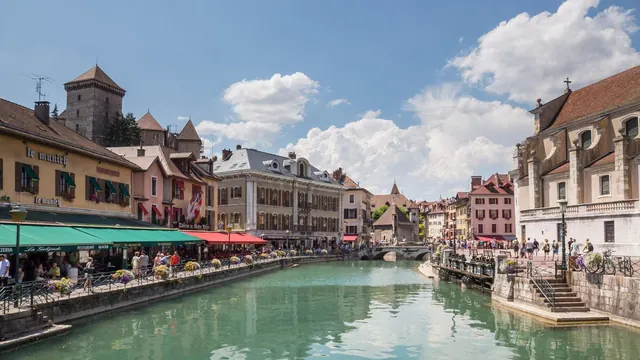
In the French Alps, Annecy's canals and island prison, the ducal château at Chambéry, Grenoble's fine-arts museum and Briançon's Vauban walls are good half days. They fit between mountain days rather than shaping the trip.
Nightlife
Black Forest evenings end early, apart from Freiburg, where term-time student pubs, wine bars and summer beer gardens make for a pleasant night, and Baden-Baden, which offers its casino and a few elegant bars.
The French Alps have the livelier scene, but only in winter. From December to April, Val d'Isère, Val Thorens and Méribel party from the slopes in late afternoon into the small hours, with Courchevel the glossy version. In summer things move to Annecy's lakeside terraces and Grenoble's bars, and many family villages are asleep by ten.
Nature & outdoors
The Black Forest is fine walking country, with dark fir forests, open high pastures, the Wutach Gorge and the Triberg waterfalls, and the Westweg running the length of the range. Its highest point, the Feldberg, tops out below 1,500m, and its skiing is modest.
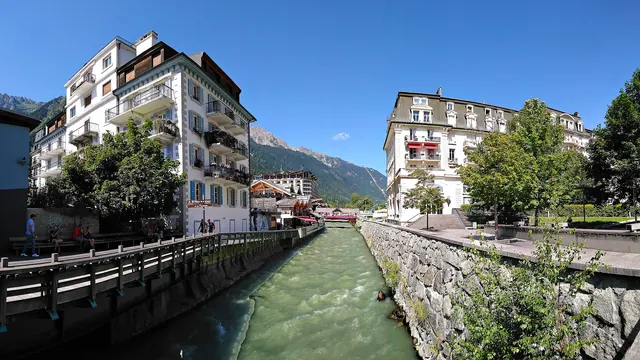
The French Alps work on another scale entirely. Mont Blanc towers over Chamonix, cable cars climb to glaciers, the Vanoise and Écrins hold ibex and wild passes, and the Tarentaise ski areas are among the largest in the world. For serious hiking, mountaineering, cycling over the great passes or skiing, there is no contest.
Day trips
The Black Forest's position where Germany, France and Switzerland meet makes it the better base for outings. Strasbourg, Basel, Colmar and the Alsace wine villages are all close, and Heidelberg, Speyer and the towns of Lake Constance lie at the edges.
From the French Alps, the good options depend on your base. Annecy and the Lake Geneva shore have Geneva, the Lausanne ferries and Lyon within reach, and from Chamonix Aosta and Martigny are close. The deep Tarentaise resort valleys are cut off, though, and most of the day goes on the road.
Good for families
The Black Forest is the easier place to bring children. Europa-Park at Rust can fill several days on its own, and summer toboggan runs, treetop walks, wildlife parks, pedal boats on Titisee and short, gentle walks keep the rest of the trip low-effort, with farm stays as an easy base.
The French Alps are excellent for teaching children to ski, with snow gardens and car-free resorts like Avoriaz and Flaine where you walk to the slope. Altitude, cold mornings, ski gear and long transfer days are hard on small children, though, and away from the snow there is little built purely for fun.
Getting around
Without a car, the Black Forest goes further. The Rhine valley line links Baden-Baden, Offenburg and Freiburg quickly, the Schwarzwaldbahn and Höllentalbahn climb into the hills, and many hosts hand out free local transport cards. Village buses are sparse, so a car still helps for linking lakes and waterfalls.
The French Alps are simple once you are in a resort, where lifts tie whole valleys together. Getting there means a flight into Geneva, Lyon or Grenoble, then a transfer, with Saturday queues up the Tarentaise in winter and snow chains on many roads. In summer the lakes and passes are scattered enough that a car is close to essential.
Shopping & style
Neither region is a shopping destination, but the French Alps offer a little more. Chamonix is one of Europe's best places to buy climbing and ski gear, Courchevel and Megève have luxury boutiques, and Annecy's markets sell Beaufort, Génépi and Opinel knives to take home.
The Black Forest's signature buys are cuckoo clocks from the workshops around Triberg, wood carvings and fruit brandy, with Freiburg's independent shops and Baden-Baden's small upmarket quarter for everything else.
Affordability
The Black Forest is the cheaper trip. Valley guesthouses, farm stays and inn meals are fairly priced, the free transport cards save real money, and hiking and village wandering cost little. Baden-Baden's grand hotels, the famous northern restaurants and Europa-Park are the big expenses.
A ski week in the French Alps is costly. Lift passes, hire, ski school and resort lodging add up fast, and Courchevel or Val d'Isère sit among Europe's dearest addresses. Summer stays, low-season weeks and bases like Grenoble, Chambéry or the Bauges villages bring costs down to ordinary French levels.
Live music & performing arts
For an evening of serious music, the Black Forest is far ahead. Baden-Baden's Festspielhaus draws international orchestras, opera and ballet, with its Easter festival as the high point, and Freiburg adds a municipal theatre, a concert hall and a respected baroque ensemble.
In the French Alps, Grenoble's arts centre and chamber orchestra carry the year-round programme, and summer brings chamber music at Évian and concerts in mountain churches. In ski season, live entertainment mostly means bands in après-ski bars.
Wellness & relaxation
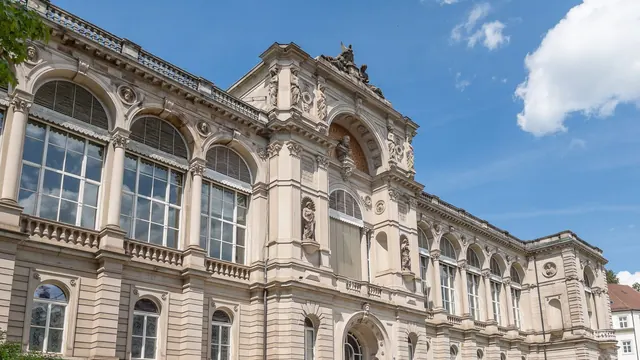
Taking the waters is the heart of the Black Forest. Baden-Baden's domed Friedrichsbad and the Caracalla baths sit in a town of parks built for slow days, ringed by smaller spa towns such as Badenweiler and Bad Wildbad. Quiet guesthouses, saunas and forest trails mean the whole trip can stay unhurried.
The French Alps have a fine spa tradition too, at Aix-les-Bains, Évian and Saint-Gervais, and hot tubs that look out over the snow. Still, most visitors come for an active trip, and a ski resort at full speed is rarely restful.
When should you go?
Pick your month. The climate figures are measured averages, not a forecast.
Black Forest in July
French Alps in July
Daytime high, °C
Rainfall in the month, mm
Where the figures come from
French Alps's temperatures are measured 35 km from the centre, at Bourg-St-Maurice.
French Alps's station stands 179 m below the place it is measured for, so that place is likely a little cooler than the figures say.
French Alps has no rain gauge within 25 km of the centre, so its rainfall comes from a gridded climate dataset read at the destination rather than from a gauge further away.
Temperature and rainfall are climate normals, averaged over the years shown. Black Forest: 1991-2020 normals, Freiburg (0.6 km from centre). French Alps: 1999-2020 (rainfall 1991-2020) normals, Bourg-St-Maurice (35.1 km from centre).
Around the Black Forest's main bases, summer is the clear season. Highs reach about 27°C in July, warm enough for a lake swim in July and August, and May to September suits long walks, with July the sunniest month at roughly 250 hours of sunshine. May is the wettest month at about 103mm. Winter days are cold and short, and the weather only suits skiing or a spa stay.
The French Alps figures describe the lower valley and lake bases around Annecy and Chambéry, not the high resorts, which are noticeably cooler in summer. Low down, summer warmth is close to the Black Forest's, and the lakes are swimmable from late June to early September. What sets these bases apart is the rain: wetter in every month, peaking at about 169mm in December and staying above 100mm even in high summer. Higher up, much of that winter precipitation falls as snow. Come in July to September for lakes and walking, or in midwinter for skiing.
Which traveller are you?
On an outdoors trip, choose the French Alps and pick the season first: summer for the Tour du Mont Blanc, climbing and cycling the great passes, winter for skiing. Stay in one valley, because the drives between valleys eat whole days.
For a relaxing and wellness trip, the Black Forest is made for rest itself, not recovery after hard days out. Settle in one spa town for the week and alternate bath days with gentle walks and slow dinners, with no lift pass to get value from.
For a trip on a tight budget, the Black Forest is the safer choice: valley guesthouses, inn meals and free guest transport cards keep costs low. The Alps work if you self-cater, avoid peak ski weeks or base yourself in Grenoble or Chambéry.
Before you go
| Measure | Black Forest | French Alps |
|---|---|---|
| Official language | German | French |
| Currency | Euro (EUR) | Euro (EUR) |
| Sockets | CF230 V, 50 Hz | CE230 V, 50 Hz |
| Driving side | Right | Right |
| Time zone | UTC+1, UTC+2 in summer | UTC+1, UTC+2 in summer |
| Emergency number | 112 | 112 |
| Main airport | EuroAirport Basel–Mulhouse–Freiburg (BSL)112 non-stop destinations | Geneva International Airport (GVA)150 non-stop destinations |
| Public holidays this year | 12 days | 11 days |
Where else could you go?
Every comparison below shares a destination with this one, so you can follow Black Forest or French Alps somewhere new.
- Swiss Alpsvs French Alps
- Swiss Alpsvs Black Forest
- Lake Comovs French Alps
- Lake Comovs Black Forest
- French Rivieravs French Alps
- Provencevs French Alps