Black Forest or Swiss Alps?
Our verdict in twelve categories, each scored against the same fixed benchmark cities, and the climate month by month, so you can choose for your trip.
Choose Black Forest for
- prices
- food and drink
- culture and sights
The Black Forest suits a slower, gentler trip built around good food, wine and spa towns, with the option of crossing into Alsace, Strasbourg or Basel for the day. The hills are walkable rather than towering, Europa-Park keeps children busy, and Freiburg and Baden-Baden bring culture and concerts that the Alps cannot match. It also costs far less.
Choose Swiss Alps for
- nature and the outdoors
- getting around
- nightlife
Pick the Swiss Alps when the mountains themselves are the point. Glaciers, the Matterhorn and the Jungfrau peaks, trails that start at cable-car stations and some of the best ski areas anywhere put it in another league outdoors, and trains reach nearly every village without a car. You pay heavily for that, and outside a few big resorts the evenings, food and culture are thinner.
Scoreboard
Twelve categories on one fixed scale from 0 to 100. The shaded stretch is the gap between the two.
Your match
Pick a travel style or drag the sliders, and both match scores follow your weighting.
Wins on prices and food and drink with your weighting.
Wins on nature and the outdoors and getting around with your weighting.
What matters to you?
Category by category
What the scores mean for a trip.
Beaches & swimming
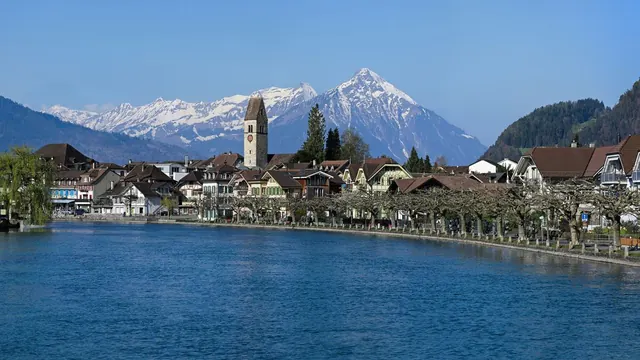
Neither has a coast, so swimming in both means lakes, and the Alps have more of it, with warmer water at the southern end. Lake Thun, Lake Brienz and the central Swiss lakes have lidos with jetties and diving boards, and the Caumasee near Flims makes a striking mountain dip. In Ticino, Lake Lugano and Lake Maggiore warm to about 23°C.
The Black Forest's swimming is a smaller affair: bathing areas and boat hire on Titisee and Schluchsee, quieter reservoirs and heated pools in the spa towns. In both regions a swim is something to fit in after a hike in July and August.
Food & drink
The Black Forest eats better and more widely. Baiersbronn's cluster of top restaurants, French-leaning country cooking with smoked ham, trout and venison, and the Pinots of the Kaiserstuhl and Markgräflerland give it depth from the farm wine tavern up to the tasting menu. Freiburg's Minster market adds fresh local produce every day.
The Alps are narrower: fondue, raclette, rösti and air-dried Graubünden beef, best eaten on a hut terrace at the top of a lift, with expensive fine dining concentrated in Zermatt, St Moritz and Gstaad. The real find is Valais wine such as Petite Arvine and Cornalin, rarely seen outside Switzerland.
Culture & sights
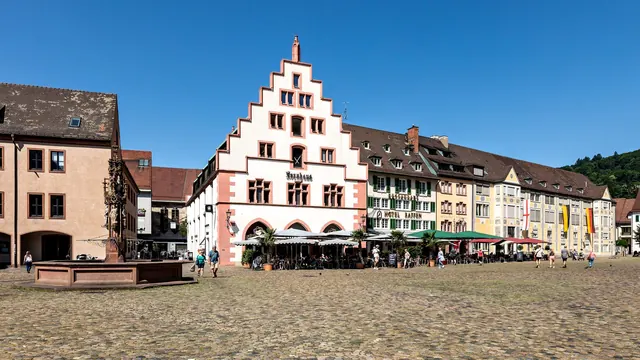
Heritage is scattered in both, but the Black Forest has more substantial towns to anchor it. Freiburg's red sandstone Minster and car-free old town, Baden-Baden's spa quarter and art museums on the Lichtentaler Allee, and the UNESCO-listed monastery at Maulbronn give it real centres, with half-timbered Gengenbach and Schiltach in between.
In the Alps the heritage is part of the landscape: sgraffito houses in Guarda, the Albula and Bernina railways, Sion's two hilltop castles, Bellinzona's three, and the Carolingian frescoes at Müstair. All of it rewards a stop between hikes, but none of it is worth a journey for culture alone.
Nightlife
Neither is a night-out destination, but the Alps give you more, as long as you come in winter. Verbier's late clubs and slope-side terraces, Zermatt's bars at the foot of the pistes and the polished hotel bars of St Moritz make après-ski a real scene in high season. The summer hiking villages are asleep by eleven.
In the Black Forest, the one place with life after dinner is Freiburg. Its student pubs, wine bars and summer beer gardens fill up on term-time weekends, and Baden-Baden adds its casino.
Nature & outdoors
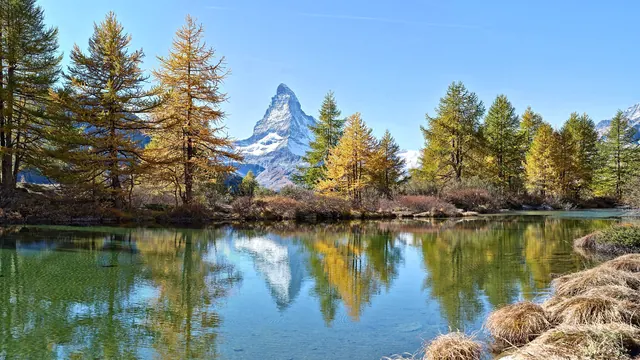
The Alps are on another scale. You get the Eiger, Mönch and Jungfrau above the Lauterbrunnen valley, the Matterhorn, the Aletsch glacier and the ibex of the Swiss National Park, reached by cable cars that put hikers straight into high country. Winter brings world-class skiing, and summer brings glacier tours and via ferratas.
The Black Forest is gentler walking country of dark fir ridges and gorges. Its highest point is the Feldberg at 1,493m, and from there you can see the Alps themselves on clear days. The Westweg, the Wutach Gorge and the Triberg falls make fine hiking and cycling, but the skiing is modest.
Day trips
The Black Forest sits where three countries meet, and that gives it the stronger list. Basel is a short train ride from Freiburg, and Strasbourg's cathedral and Petite France are under an hour from Offenburg. Colmar and the Alsace wine villages, Heidelberg and Lake Constance are all within reach, so one week can take in German, French and Swiss towns.
From the Bernese Oberland, the Alps reach Bern, Thun and Lucerne by train, with Gruyères, the Lavaux terraces and Chillon further west. The trips are pleasant and simple by rail, but fewer of these places are destinations in their own right the way Strasbourg or Colmar are.
Good for families
Europa-Park at Rust, with its themed hotels and indoor water park, gives the Black Forest a draw the Alps simply lack. The forest adds treetop walks, wildlife parks, the Steinwasen suspension bridge and pedal boats on Titisee, and farm stays at a lower, easier altitude suit toddlers well.
The Alps are still easy with children, with ski schools in Grindelwald and Saas-Fee, summer toboggan runs, cogwheel trains and car-free villages such as Wengen where children can walk freely. There is no big theme park, though, and the altitude needs care with very young children.
Getting around
The Alps make travelling without a car remarkably simple. Trains, postbuses, lake steamers and lifts run on connected timetables, almost every village is served, and Zermatt, Wengen and Mürren ban private cars altogether. The catch is distance: crossing from the Bernese Oberland to the Engadine takes a long day.
The Black Forest only works without a car along the Rhine valley line, the Schwarzwaldbahn and the Höllentalbahn, helped by the free transport cards many hosts hand out. Away from these lines the buses are sparse, so most visitors who want waterfalls, lakes and half-timbered towns in one day end up driving the winding hill roads.
Shopping & style
Cuckoo clocks are the Black Forest's signature buy, sold in the workshops and showrooms around Triberg alongside hand-blown glass and bottles of fruit brandy. For everyday shopping, Freiburg's old town has independent shops and department stores, and Baden-Baden adds a small quarter of upmarket fashion and jewellery.
In the Alps, the things worth taking home are mostly edible: cheese bought from the dairy, Valais wine and Graubünden air-dried meat, along with Brienz woodcarving and cowbells. Zermatt and Interlaken sell serious mountain gear, and St Moritz and Gstaad have short streets of luxury boutiques. With no department stores to speak of, the Alps suit a shopping trip no better than the forest does.
Affordability
Here the gap is wide. The Black Forest costs what southern Germany costs. Family guesthouses and farm stays are fairly priced, inn meals are filling, and the free bus and train cards cut daily spending. Only Baden-Baden, the famous northern restaurants and Europa-Park push the bill up.
The Alps are among the most expensive places in the world to vacation. Hotels in Zermatt or St Moritz, simple lunches at mountain huts and above all the cable cars and mountain railways add up quickly. Self-catering, travel passes and quieter valleys such as Goms or the Ticino side only soften the cost.
Live music & performing arts
The Black Forest has the fuller programme, and not only in one season. Baden-Baden's Festspielhaus, one of Germany's largest halls, brings international orchestras, opera and ballet, with the Easter festival as its high point. Freiburg has a municipal theatre with opera and drama, and a well-known baroque ensemble is based in the city.
The Alps' music comes in summer festivals: the Verbier Festival in July and the Menuhin Festival in the churches around Gstaad. Both are excellent but short. With no resident opera or theatre, the rest of the year means brass bands, yodelling and alphorn evenings.
Wellness & relaxation
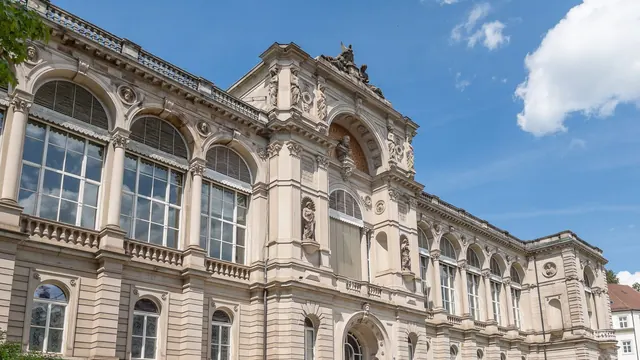
Both are first-rate places to rest, and the difference is the setting. The Black Forest's bathing culture is refined and town-based: the domed Friedrichsbad and the Caracalla baths among Baden-Baden's parks, the Roman ruins at Badenweiler and a ring of smaller spa towns. Around them are guesthouses with saunas and forest bathing trails.
The Alps put the baths in the mountains: Leukerbad's open-air hot pools under sheer cliffs, the stone bath at Vals and the Tamina gorge springs of Bad Ragaz. The grand hotels of St Moritz and Gstaad have serious spas, and car-free villages add the quiet.
When should you go?
Pick your month. The climate figures are measured averages, not a forecast.
Black Forest in July
Swiss Alps in July
Daytime high, °C
Rainfall in the month, mm
Where the figures come from
Swiss Alps has no rain gauge within 25 km of the centre, so its rainfall comes from a gridded climate dataset read at the destination rather than from a gauge further away.
Swiss Alps's sunshine is measured 66 km from the centre, at Sion.
Temperature and rainfall are climate normals, averaged over the years shown. Black Forest: 1991-2020 normals, Freiburg (0.6 km from centre). Swiss Alps: 2005-2020 (sunshine 1961-1990, rainfall 1991-2020) normals, Meiringen / Unterbach (19.5 km from centre).
Both are at their best in summer for walking, but the Black Forest warms earlier and further. Where its figures are taken, daytime highs reach about 27°C in July, warm enough for a lake swim at Titisee or Schluchsee, and May to September are comfortable for hiking. At the Alpine measuring point, summer runs a few degrees cooler at about 24°C in July. June to August are also the wettest months there, at well over 120mm, so showers come with the hiking season. The high passes only open once the snow has cleared.
Winters are cold in both and colder in the Alps, where January highs in the valley barely reach 3°C. Autumn favours the Alps: September and October stay noticeably sunnier there, which makes early autumn a fine time for high walks, while the Black Forest turns grey from October. In spring the forest is milder and drier from April.
Which traveller are you?
For an outdoors trip, choose the Swiss Alps. Lifts carry you straight into high mountain country, the range serves walkers in summer and skiers in winter, and its scale makes the Black Forest's rounded hills feel like a gentle warm-up.
On a family trip with children, the Black Forest is easier going. It has one of Europe's largest theme parks on its western edge, which the Alps cannot offer. The hills are lower and kinder to small legs, and family-run guesthouses keep the days relaxed.
On a tight budget, the Black Forest wins easily. Prices are ordinary for Germany, much of what you do there costs little, and many hosts give guests free local transport. In the Alps, careful planning only trims a bill that stays high.
Before you go
| Measure | Black Forest | Swiss Alps |
|---|---|---|
| Official language | German | French, German, Italian, Romansh |
| Currency | Euro (EUR) | Swiss Franc (CHF) |
| Sockets | CF230 V, 50 Hz | CJ230 V, 50 Hz |
| Driving side | Right | Right |
| Time zone | UTC+1, UTC+2 in summer | UTC+1, UTC+2 in summer |
| Emergency number | 112 | 112 |
| Main airport | EuroAirport Basel–Mulhouse–Freiburg (BSL)112 non-stop destinations | Zürich Airport (ZRH)226 non-stop destinations |
| Public holidays this year | 12 days | 10 days |
Where else could you go?
Every comparison below shares a destination with this one, so you can follow Black Forest or Swiss Alps somewhere new.
- French Alpsvs Swiss Alps
- Lake Comovs Swiss Alps
- French Alpsvs Black Forest
- Lake Gardavs Swiss Alps
- Lake Comovs Black Forest
- Austrian Alpsvs Swiss Alps