Austrian Alps or Swiss Alps?
Our verdict in twelve categories, each scored against the same fixed benchmark cities, and the climate month by month, so you can choose for your trip.
Choose Austrian Alps for
- prices
- culture and sights
- live music and the arts
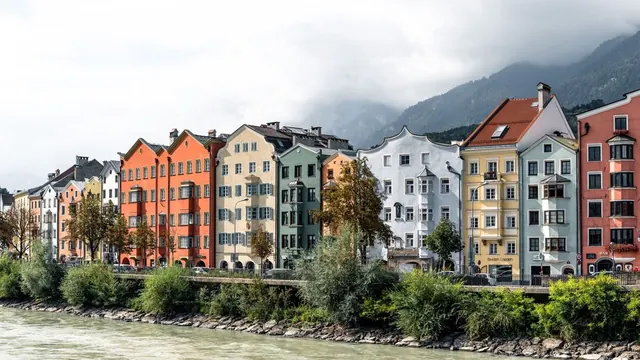
The Austrian Alps suit travellers who want the mountains alongside towns with real history and a bill that is easier to manage. Salzburg and Innsbruck give a base with baroque streets, palaces and, in summer, some of Europe's great music festivals. The Carinthian lakes are warm enough for a proper bathing summer, the family hotels are made for children, and winter evenings in the big ski villages run loud and late.
Choose Swiss Alps for
- getting around
- wellness
- nature and the outdoors
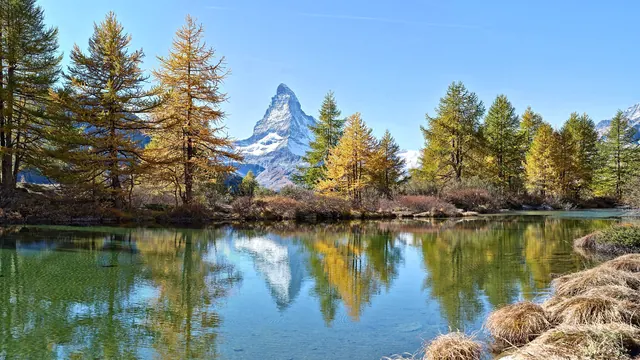
Choose the Swiss Alps for the famous peaks and the ease of reaching them. The Matterhorn, the Jungfrau and the Aletsch glacier are all reached by train, cable car and postbus on timetables that connect, and car-free villages such as Zermatt and Wengen are quiet and calm. Culture and nightlife come second here, and the costs are steep, so this suits a trip where the scenery and the peace are the whole point and the budget can take it.
Scoreboard
Twelve categories on one fixed scale from 0 to 100. The shaded stretch is the gap between the two.
Your match
Pick a travel style or drag the sliders, and both match scores follow your weighting.
Wins on prices and culture and sights with your weighting.
Wins on getting around and wellness with your weighting.
What matters to you?
Category by category
What the scores mean for a trip.
Beaches & swimming
Austria has the better swimming, thanks to Carinthia. The Wörthersee, Millstätter See and Faaker See warm up to the mid-twenties in high summer. Velden and Pörtschach build whole summers around lidos with lawns and diving boards, so a lake vacation there works on its own terms.
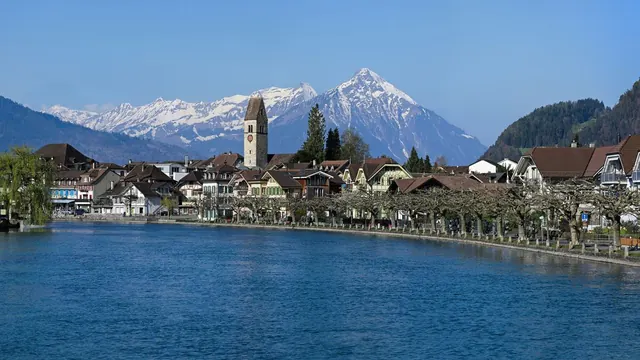
Swiss lakes are spotless but cooler, with Thun and Brienz reaching about 20°C in a good August. You need to go south to Lugano or Maggiore in Ticino to approach Carinthian warmth. In Switzerland a swim fits between hikes rather than being the reason for the trip.
Food & drink
The two are broadly level, and both serve hearty mountain food best eaten on a hut terrace. Austria leans on dumplings, Kaiserschmarrn, Gröstl and Käsespätzle, with pine schnapps afterwards, and Salzburg adds a proper café and cake tradition. Switzerland is cheese country, with fondue, Valais raclette and rösti. Its real extra is wine, from the terraced Valais vineyards above the Rhône, plus Merlot and polenta in Ticino.
Culture & sights
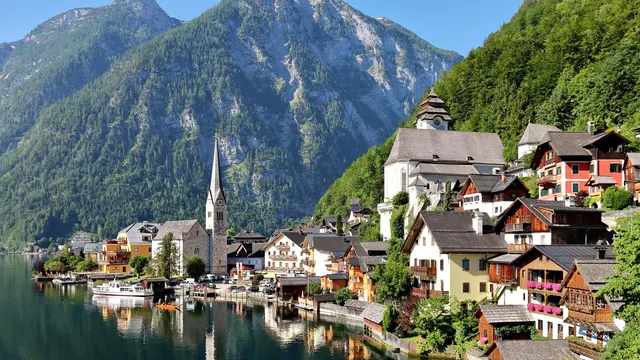
Austria is far stronger for sightseeing. Salzburg alone has the cathedral, the Residenz, Mozart's birthplace and the Mirabell and Hellbrunn gardens beneath its fortress. Innsbruck adds the Golden Roof and Ambras Castle, and Hallstatt and the Admont abbey library are worth the detours.
On the Swiss side the heritage is woven into the landscape: sgraffito houses in Guarda, Bellinzona's three castles and the Carolingian frescoes at Müstair. These are pleasant stops on a mountain trip, but there is no city of Salzburg's weight to anchor them.
Nightlife
Austrian après-ski is louder and more widespread. Ischgl, St Anton, Saalbach, Sölden and Mayrhofen fill their slopeside huts by late afternoon and keep the village bars going late all winter. Innsbruck's students keep some life in town even in summer.
Switzerland's going-out is concentrated in a few places. Verbier is the rowdiest and Zermatt has a cluster of bars by the pistes, while St Moritz and Gstaad offer a glossier and pricier evening in hotel bars. Out of season, most Swiss villages are asleep by eleven.
Nature & outdoors
These are two of the finest mountain regions anywhere, so the choice comes down to which landscape appeals. Austria offers the Hohe Tauern around the Grossglockner, the Krimml waterfalls and the long Tyrolean valleys, with Innsbruck putting high peaks right above a city. Carinthia's lakes add paddling and sailing.
Switzerland has the more famous summits and ice: the Eiger, Mönch and Jungfrau above Lauterbrunnen, the Matterhorn and the Aletsch, the longest glacier in the Alps. The Swiss National Park in the Engadine is also one of the easiest places to see ibex.
Day trips
Austria has a small lead, mostly because its outings include bigger names. From Salzburg you can reach Hallstatt, Bad Ischl, the Königssee and even Munich. From Innsbruck, Hall in Tirol, the Bavarian royal castles and Bolzano and Merano across the passes are all within reach.
The Swiss list is longer but quieter. From the Bernese Oberland you can visit arcaded Bern, Thun and Lucerne, and further west lie Gruyères, the Lavaux vineyards and Chillon. Trains make each one easy, even if few are famous in their own right.
Good for families
Many Austrian resorts are planned around children. Hotels with kids' clubs, playrooms and pools are a national speciality, and places such as Serfaus-Fiss-Ladis are set up for small skiers. Innsbruck's Alpine Zoo, the crystal world at Wattens and Hellbrunn's trick fountains fill a rest day, though when it pours, Austrian families mostly end up in the pool.
Switzerland works well for families without being designed for them. For a small child, cogwheel trains and lake steamers are a day out in themselves, and the car-free streets of Zermatt and Wengen are safe to wander. There is no zoo or theme park to fall back on, and the higher resorts need some care with very young children.
Getting around
Switzerland is the easier region to travel without a car. Main lines, narrow-gauge railways, postbuses, steamers and cable cars all run on connected timetables, and several resorts ban private cars altogether. Crossing between the big regions is slow, but nearly every village is reachable.
In Austria the trains through the Inn valley, Salzburg and the Arlberg work well, and guest cards cover local buses. Side valleys may see only a few buses a day, though, and linking lakes, towns and passes is much simpler with a hire car.
Shopping & style
Austria offers more to browse. Salzburg's Getreidegasse and Innsbruck's old town have real makers of dirndls, loden coats and felt hats. Add Tyrolean woodcarving, Wattens crystal and the Christmas markets, and there is plenty with local character.
Swiss shopping belongs mostly to the resorts. You will find luxury boutiques in St Moritz and Gstaad and watch and outdoor-gear shops in Zermatt and Interlaken. The best things to take home are dairy cheese, Valais wine and Brienz carvings.
Affordability
Austria is expensive, but Switzerland belongs in another bracket, among the costliest places in the world to visit. In Austria, farm stays, family guesthouses, smaller ski areas and half-board in Carinthia or quieter Tyrol keep a trip within reach.
In the Swiss Alps even a simple hut lunch costs a lot, and the mountain railways that make the region so easy to explore add up fast. Self-catering, supermarket picnics and travel passes help, as do Goms or the Ticino side. Still, no version of the trip comes out cheap.
Live music & performing arts
For music, Austria is the stronger destination by some distance. The Salzburg Festival and the opera on Bregenz's floating lake stage are among the great summer events in classical music. Salzburg also keeps a calendar outside the summer, with Mozart Week, the Easter festival and the Landestheater, and Innsbruck has its state theatre.
Switzerland's highlights are the Verbier Festival and the Menuhin Festival in Gstaad's churches, both excellent but limited to summer. With no resident opera or theatre in the mountains, the rest of the year comes down to brass bands and alphorns.
Wellness & relaxation
Both are excellent places to rest, and the difference is in the style. Austria's strength is everyday sauna culture, with large sauna areas in hotels in almost every valley. On top of that come Belle Époque Bad Gastein with its radon gallery inside the mountain and the outdoor pools of the Aqua Dome facing the Ötztal peaks.
Switzerland has the more striking individual baths, such as Leukerbad's open-air pools under sheer cliffs and the stone bath cut into the hillside at Vals. Its car-free villages make the quiet complete.
When should you go?
Pick your month. The climate figures are measured averages, not a forecast.
Austrian Alps in July
Swiss Alps in July
Daytime high, °C
Rainfall in the month, mm
Where the figures come from
Swiss Alps has no rain gauge within 25 km of the centre, so its rainfall comes from a gridded climate dataset read at the destination rather than from a gauge further away.
Swiss Alps's sunshine is measured 66 km from the centre, at Sion.
Temperature and rainfall are climate normals, averaged over the years shown. Austrian Alps: 1991-2020 normals, Innsbruck-Flughafen (4.1 km from centre). Swiss Alps: 2005-2020 (sunshine 1961-1990, rainfall 1991-2020) normals, Meiringen / Unterbach (19.5 km from centre).
Both regions follow the same Alpine pattern of snowy winters and warm, wet summers, but the Austrian figures, taken where most visitors stay, run a little warmer. July reaches about 26°C there against 24°C on the Swiss side, and Austria's late spring arrives sooner, with May near 21°C. That makes it good walking weather in town while the Swiss valleys are still cool. Summer is the rainy season in both, with afternoon storms common. Austria's wettest month is August at about 144mm, and the Carinthian lakes are at their warmest then for swimming.
The Swiss figures show more sunshine at the height of summer, about 270 hours in July, which suits long days on high trails. Winter there is wetter than in Austria, and much of that falls as snow on the ski areas. In both regions September and early October are settled, mild and drier, a good time for hiking and spas. From November to March the days are short and cold, so the season is for skiing rather than strolling.
Which traveller are you?
On a trip on a tight budget, the Austrian Alps let the money stretch to a full week. Lake days, valley walks and filling dinners stay within reach, while in the Swiss Alps every cable car and hut lunch eats into a short stay.
For a culture and arts trip, Austria gives the richer days. Mornings in Salzburg's baroque streets or Innsbruck's Habsburg palaces can end with opera or a concert. The Swiss side offers frescoes and castles between hikes, with little after dark.
On an outdoors trip both regions are superb, but the Swiss Alps suit walkers without a car. A day can begin on a train, climb by cable car to a trail under the Jungfrau and finish in a car-free village.
Before you go
| Measure | Austrian Alps | Swiss Alps |
|---|---|---|
| Official language | German, Austrian Sign Language | French, German, Italian, Romansh |
| Currency | Euro (EUR) | Swiss Franc (CHF) |
| Sockets | CF230 V, 50 Hz | CJ230 V, 50 Hz |
| Driving side | Right | Right |
| Time zone | UTC+1, UTC+2 in summer | UTC+1, UTC+2 in summer |
| Emergency number | 112 | 112 |
| Main airport | Innsbruck Airport (INN)40 non-stop destinations | Zürich Airport (ZRH)226 non-stop destinations |
| Public holidays this year | 16 days | 10 days |
Where else could you go?
Every comparison below shares a destination with this one, so you can follow Austrian Alps or Swiss Alps somewhere new.
- Bavariavs Austrian Alps
- Dolomitesvs Austrian Alps
- French Alpsvs Swiss Alps
- Lake Comovs Swiss Alps
- Black Forestvs Swiss Alps
- Lake Gardavs Austrian Alps