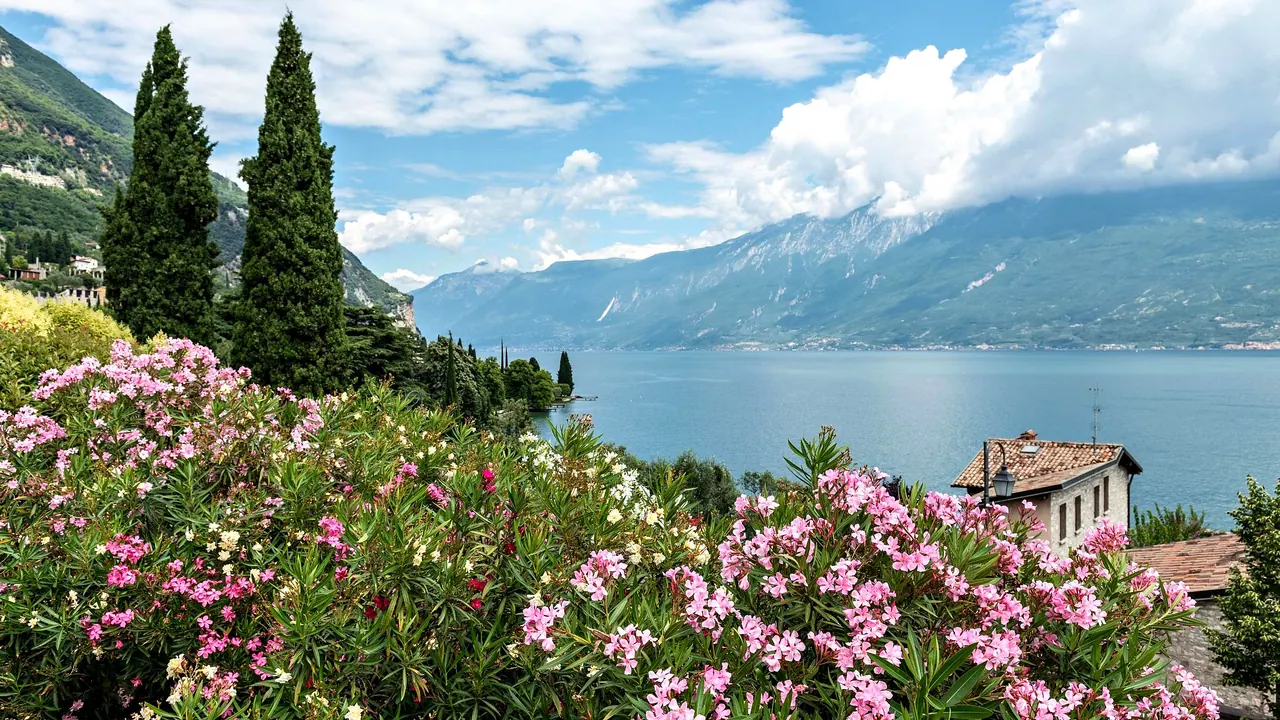
Photos: Lake Garda by Wolfgang Weiser, Pexels License.
Austrian Alps or Lake Garda?
Our verdict in twelve categories, each scored against the same fixed benchmark cities, and the climate month by month, so you can choose for your trip.
Choose Austrian Alps for
- live music and the arts
- nightlife
- getting around
The Austrian Alps suit travellers who want the mountains to be the whole point: skiing from December to April, summer walking between staffed huts in Tyrol or the Hohe Tauern, and evenings that can mean loud après-ski in St Anton or opera at the Salzburg Festival. Trains and Postbuses make a stay in one valley simple without a car. The spa towns and sauna hotels also give it a restful side that Garda only partly matches.
Choose Lake Garda for
- beaches
- day trips
- prices
Lake Garda is the warmer, sunnier choice for a summer spent on the water. It has lidos along the south and east shores, Gardaland for children, and a railway line that puts Verona and Venice within a day's reach. In exchange it gives up the Alps' ski slopes, festival stages and nights out, and offers Italian wine, lake swimming and outdoor sport around Riva and Arco. It works best for people happy to settle in one town and use the ferries.
Scoreboard
Twelve categories on one fixed scale from 0 to 100. The shaded stretch is the gap between the two.
Your match
Pick a travel style or drag the sliders, and both match scores follow your weighting.
Wins on live music and the arts and nightlife with your weighting.
Wins on beaches and day trips with your weighting.
What matters to you?
Category by category
What the scores mean for a trip.
Beaches & swimming
Both offer lake bathing from grass and pebble lidos rather than sand, and in both the season runs from June to early September. In the Austrian Alps the warmest water is in Carinthia, where Velden and Pörtschach on the Wörthersee plan their summers around the lidos. The Salzkammergut lakes are cooler, though, and the high lakes stay chilly.
Lake Garda makes swimming the centre of the stay. Its south and east shores, from Sirmione's rock shelves to the long lidos of Lazise, Bardolino and Desenzano, have more places to swim and a sunnier summer to enjoy them in. The cooler, windier north suits windsurfers better than sunbathers.
Food & drink
Neither is a place to go for a wide range of food, and the two are broadly level. The real difference is what is on the plate. The Alps serve hearty mountain food such as Kaiserschmarrn, Gröstl and Käsespätzle, which taste best on a hut terrace. Salzburg adds its cafés and cakes, and Kitzbühel and the Arlberg have serious fine dining.
Garda eats lighter and drinks better, with lake fish, risotto and its own olive oil, and Bardolino, Lugana and Amarone produced close by. Both have their traps. In Austria it is the near-identical menus of the big ski villages. At Garda it is the pizza and set menus on the busiest harbours, and the agriturismi in the hills are the better choice.
Culture & sights
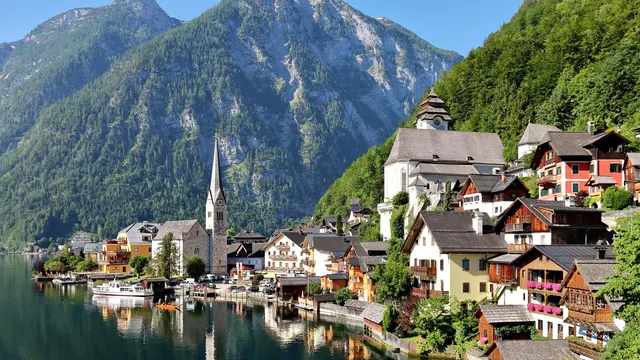
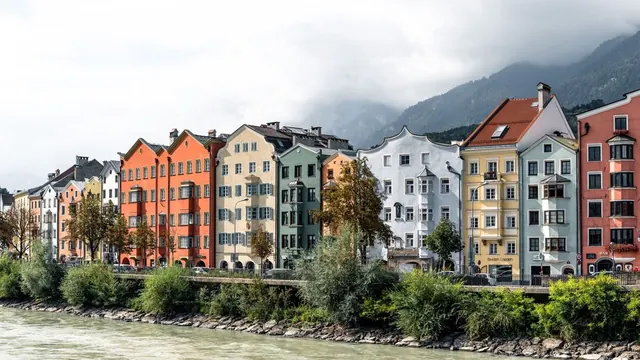
The Austrian Alps have far more to see. Salzburg alone, with its baroque old town, fortress, Residenz and Mozart's birthplace, outweighs anything on Garda's shores. Innsbruck's Hofburg and Hofkirche, Hallstatt's salt-mining heritage and the Admont abbey library add depth across the region.
Garda's sights make pleasant half-day outings: Sirmione's moated castle and Roman villa ruins, d'Annunzio's Vittoriale with a warship set into its hillside, and the castles at Malcesine and Riva. Its bigger cultural attractions are the cities beyond the lake.
Nightlife
In winter the Austrian Alps have some of the loudest après-ski anywhere. It starts in the slopeside huts and carries on in late-opening village clubs in Ischgl, St Anton and Saalbach, and Innsbruck's students keep a bar scene going all year. Outside the ski season, however, the resorts go quiet early.
On Garda an evening usually means an aperitivo, a long dinner and a stroll along the promenade. Desenzano is the one real exception, with lakefront bars and clubs nearby that fill on summer weekends.
Nature & outdoors
Both are excellent outdoor country, but the Austrian Alps work on a bigger scale. The glaciers and the Grossglockner in the Hohe Tauern, the high Tyrolean valleys and some of Europe's most extensive skiing give serious terrain in every season. Almost every valley has marked trails and staffed huts above it.
Garda's outdoor life is concentrated in the north. Arco's limestone walls, the cable car up Monte Baldo from Malcesine and the reliable wind at Torbole make it a superb base for climbing, mountain biking and windsurfing. It has no glaciers, though, and no ski areas on the Austrian scale.
Day trips
Garda's southern shore lies on the railway between Milan and Venice. Verona is under an hour away, Venice, Vicenza, Padua and Bergamo are all within easy reach, and Mantua is about an hour by road. Few lake bases have so many great cities nearby.
The Austrian Alps have good outings too: Hallstatt and the Salzkammergut from Salzburg, Berchtesgaden and Munich across the border, and Hall in Tirol and Rattenberg from Innsbruck. These are mostly lakes and small towns rather than major art cities.
Good for families
Both are strong choices for families, but in different ways. The Austrian Alps have children's ski schools, nursery slopes and purpose-built family hotels with pools and kids' clubs. In summer there are toboggan runs and play areas on the mountains, and Innsbruck's Alpine Zoo and the Hellbrunn trick fountains fill the rest days.
Garda's south-east shore centres on Gardaland, with more water parks and a safari park nearby, and large campsites and shallow lidos alongside them. The main drawbacks at Garda are summer heat and traffic. In the Alps they are wet days and steep paths.
Getting around
The Austrian Alps are easier to travel around. Trains run through the Inn valley and to Salzburg and the Gastein valley, Postbuses climb into the side valleys, and many resorts give guests a card for local transport. Within one valley, a car is optional.
At Garda, the railway only touches the south, at Peschiera and Desenzano. Ferries link the towns pleasantly but slowly, and the shore roads are narrow and congested in summer. The easier plan is to stay in one walkable town and use the boats.
Shopping & style
The Austrian Alps have more to shop for. Salzburg's Getreidegasse and Innsbruck's old town sell dirndls, loden coats and felt hats. There are also wood carvings from Tyrolean workshops, crystal from Wattens and the Christmas markets in December, and Kitzbühel and Lech have a few luxury boutiques.
Shopping at Garda mostly means weekly markets and things to eat and drink: olive oil, Lugana and Bardolino wine, and lemon products from Limone. Anyone who wants more makes the trip to Verona or Milan.
Affordability
Neither is cheap, but Garda is a little easier on the budget. In winter the Alps add lift passes, ski hire and lessons to the hotel bill, and Arlberg and Kitzbühel are among the most expensive addresses in the mountains. Quiet valleys, farm stays and summers in Carinthia cost less.
At Garda the cost lies in the lakefront hotels of Sirmione, Limone and Malcesine and in theme park visits for families. Campsites, agriturismi and villages set back from the water bring the cost down, and so does going in spring or autumn.
Live music & performing arts
For music and theatre the Alps are far ahead. In summer the Austrian Alps have the Salzburg Festival in July and August, opera on the floating stage at Bregenz, the Schubertiade and the festivals at Erl. Salzburg keeps a calendar running through the rest of the year with Mozart Week and concerts at the Mozarteum.
Garda has summer shows in the Vittoriale's amphitheatre and band concerts in the town squares. Its best musical evening is outside the region, at the opera in Verona's Roman arena.
Wellness & relaxation
Both have thermal springs, but the Austrian Alps make wellness a central part of the trip. Bad Gastein's radon springs and healing gallery, the Aqua Dome in the Ötztal, Bad Ischl, and hotel sauna worlds in almost every valley give more choice and a deeper tradition.
Garda's spa life centres on Sirmione's sulphurous springs and the open-air thermal park near Lazise, with hotel spas along the western Riviera. It is restful in spring and early autumn, but the August crowds in the southern towns work against a quiet stay.
When should you go?
Pick your month. The climate figures are measured averages, not a forecast.
Austrian Alps in July
Lake Garda in July
Daytime high, °C
Rainfall in the month, mm
Where the figures come from
Lake Garda's sunshine is measured 28 km from the centre, at Verona / Villafranca.
Temperature and rainfall are climate normals, averaged over the years shown. Austrian Alps: 1991-2020 normals, Innsbruck-Flughafen (4.1 km from centre). Lake Garda: 2005-2025 (sunshine 1991-2020, rainfall 1991-2020) normals, Verona / Rivoltella (1.6 km from centre).
The Austrian Alps have two distinct seasons. Winter belongs to the slopes, with daytime highs around 4°C in January and snow sport from about December to April. Summer brings good walking weather, around 26°C in July, but it is also the wettest time of year, with August rainfall reaching about 144mm. September is drier and still mild, which often makes it the better month for hiking. Swimming in the Carinthian lakes is mainly for July and August.
Lake Garda is warmer and brighter for most of the year. It reaches about 29°C in July and gets far more sunshine than the mountains, so the bathing season runs from June into early September, though high summer in the southern towns can feel heavy for sightseeing. Spring and autumn suit walking and climbing in the north, and November is the wettest month. Winter is milder than in the Alps but gives little reason to visit.
Which traveller are you?
On a beach and sun trip, Lake Garda is the better choice. The lake is warm in high summer, the season is sunnier, and lidos line the south and east shores from Sirmione to Lazise. The Carinthian lakes in the Alps are good for swimming too, but their summer is shorter and wetter.
For a culture and arts trip, the Austrian Alps lead. Salzburg's baroque old town, Innsbruck's Habsburg monuments and the stages of the Salzburg Festival offer far more than Garda's castles. Garda's answer lies beyond its shores, in Verona and Venice.
For skiers, the choice is the Austrian Alps. The Arlberg, Kitzbühel and Ski Amadé areas have some of Europe's most extensive pistes from December to April, along with children's ski schools and lively après-ski. Garda is a summer destination with little to offer in winter.
Before you go
| Measure | Austrian Alps | Lake Garda |
|---|---|---|
| Official language | German, Austrian Sign Language | Italian |
| Currency | Euro (EUR) | Euro (EUR) |
| Sockets | CF230 V, 50 Hz | CFL230 V, 50 Hz |
| Driving side | Right | Right |
| Time zone | UTC+1, UTC+2 in summer | UTC+1, UTC+2 in summer |
| Emergency number | 112 | 112 |
| Main airport | Innsbruck Airport (INN)40 non-stop destinations | Verona Villafranca Valerio Catullo Airport (VRN)96 non-stop destinations |
| Public holidays this year | 16 days | 13 days |
Where else could you go?
Every comparison below shares a destination with this one, so you can follow Austrian Alps or Lake Garda somewhere new.
- Bavariavs Austrian Alps
- Dolomitesvs Austrian Alps
- Lake Comovs Lake Garda
- Cinque Terrevs Lake Garda
- Dolomitesvs Lake Garda
- Tuscanyvs Lake Garda