Austrian Alps or Bavaria?
Our verdict in twelve categories, each scored against the same fixed benchmark cities, and the climate month by month, so you can choose for your trip.
Choose Austrian Alps for
- beaches
- nature and the outdoors
- nightlife
The Austrian Alps are the stronger choice when the mountains are the point of the trip. You get some of the biggest ski areas in Europe around the Arlberg and Kitzbühel, glacier valleys in Tyrol and the Hohe Tauern, warm Carinthian lakes in summer and loud après-ski in winter. It suits a stay in one valley with your days spent outside and evenings in a hotel spa.
Choose Bavaria for
- live music and the arts
- culture and sights
- food and drink
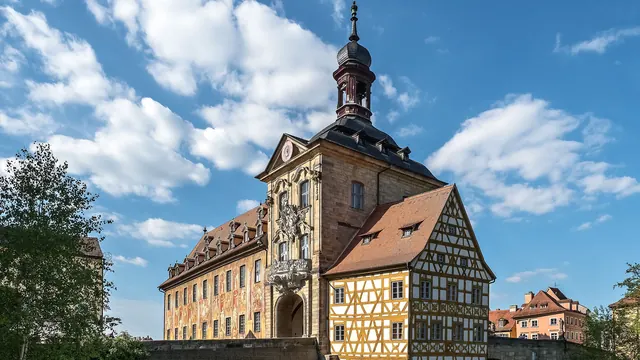
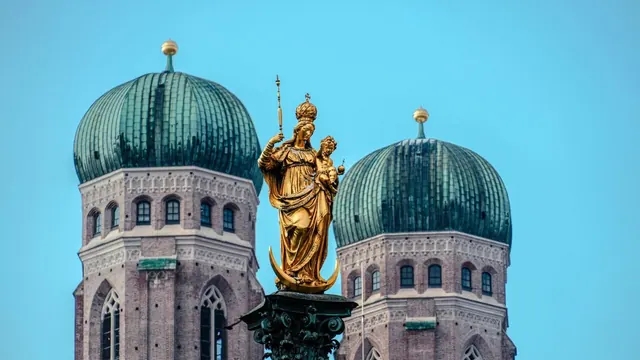
Travellers who want towns, galleries and concert halls as well as scenery will do better in Bavaria. Munich's museums, opera and orchestras, the intact old towns of Bamberg and Regensburg, and easy rail hops to Franconia, the lakes and Ludwig II's castles make it a better region for a varied trip of sights, beer gardens and day outings. The Alps are there too, but along its southern edge rather than all around you.
Scoreboard
Twelve categories on one fixed scale from 0 to 100. The shaded stretch is the gap between the two.
Your match
Pick a travel style or drag the sliders, and both match scores follow your weighting.
Too close to call, 2 points apart
Wins on beaches and nature and the outdoors with your weighting.
Wins on live music and the arts and culture and sights with your weighting.
What matters to you?
Category by category
What the scores mean for a trip.
Beaches & swimming
Neither has the sea, but the Austrian Alps offer the more convincing swimming summer. Carinthia's Wörthersee, Ossiacher See and Faaker See get warm enough for long days in the water, and resort towns there are built around lidos with diving boards and piers.
Bavaria's lakes south of Munich, such as the Starnberger See, Ammersee and Chiemsee, are lovely for a dip from a wooden jetty or a small pebble beach. They stay a little cooler, though, and one wet week can end the season. Bathing on the Isar's gravel banks in Munich is a city pleasure rather than a reason to come.
Food & drink
Both kitchens are hearty and fairly narrow, but Bavaria has more to explore. Munich's beer gardens and beer halls, Bamberg's smoked beer, the village breweries of Upper Franconia and the Silvaner wine taverns around Würzburg give the region a real drinking culture. Munich adds the Viktualienmarkt and a strong fine-dining scene.
The Austrian Alps are at their best on a mountain hut terrace, with Kaiserschmarrn or Käsespätzle after a hike. Salzburg's cafés and the top kitchens of the Arlberg and Kitzbühel are excellent at the top end. Day to day, though, menus in the ski villages repeat each other more than in Bavaria, where cities and wine country add variety.
Culture & sights
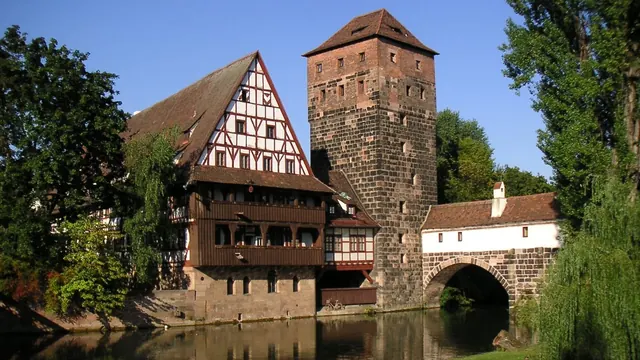
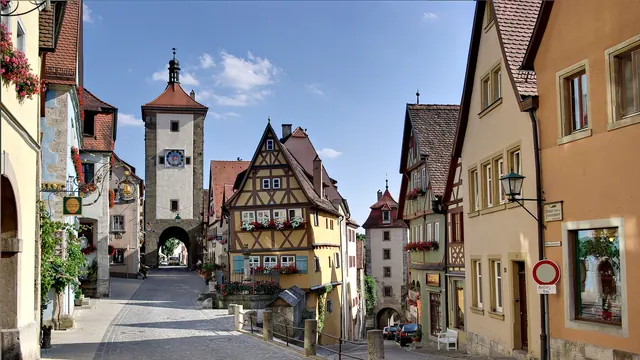
Bavaria has more to see. Munich's Alte Pinakothek, Lenbachhaus and Deutsches Museum are collections of international weight. Beyond them lie the walled towns of Nuremberg and Rothenburg, the UNESCO-listed old towns of Bamberg and Regensburg, Tiepolo's ceiling in Würzburg and Ludwig II's castles.
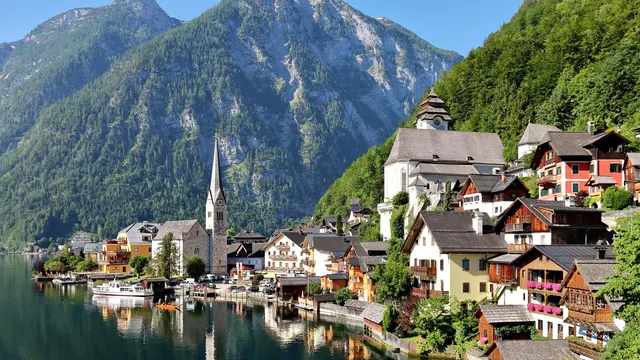
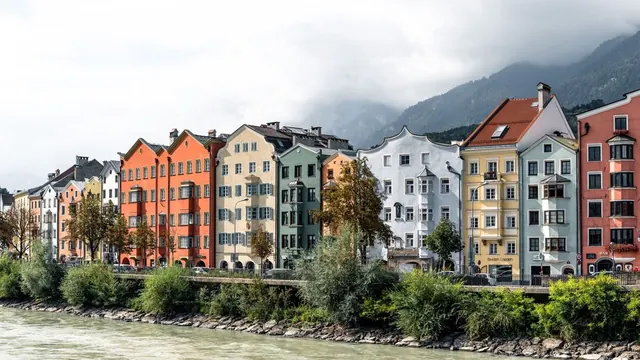
The Austrian Alps concentrate their heritage in Salzburg's baroque old town and fortress, Habsburg Innsbruck and the salt-mining landscape around Hallstatt, with the Admont abbey library and Hohenwerfen as rewarding detours. These are a handful of strong places rather than a whole map of them, though in both regions seeing the best means changing base.
Nightlife
The Austrian Alps win if a big night out is the point, but only in winter. Ischgl, St Anton, Saalbach and Mayrhofen run some of the rowdiest après-ski in the Alps, starting in the slopeside huts in the late afternoon and going on in village clubs into the night. Out of season, Innsbruck's student bars are about all that is left.
Bavaria's nights are steadier through the year and centre on Munich, with its cocktail bars in Glockenbachviertel, clubs and loud beer halls, plus student pubs in Bamberg and Regensburg. Oktoberfest is its one great blowout. For the rest of the year, evenings tend to end in a beer garden.
Nature & outdoors
Both have real Alps, but in the Austrian Alps the mountains fill the whole region rather than one edge of it. The Hohe Tauern with the Grossglockner and the Krimml falls, the glaciers at the head of the Ötztal and Stubaital, and some of Europe's largest ski areas give more height, more lifts and more hut-to-hut terrain. In Innsbruck the summits rise straight above the city.
Bavaria's high country is a strip along the border, running from the Zugspitze above Garmisch to the Watzmann and Königssee at Berchtesgaden, with the Allgäu in between. Further north it adds gentler landscapes that Austria's Alpine region lacks: the wild woods of the Bavarian Forest, the climbing crags of Franconian Switzerland and long cycle paths along the rivers.
Day trips
Bavaria is the easier region for day trips. From Munich, Augsburg, Nuremberg and Regensburg are short train rides away, and the lakes and Salzburg are close. Franconia works as a second base for Bamberg, the wine villages on the Main and the Romantic Road towns.
The Austrian Alps do well from their two cities. From Salzburg you can reach Hallstatt and the Salzkammergut, and from Innsbruck, Hall in Tirol and Rattenberg. Both also reach across the borders to Berchtesgaden, Bolzano or Merano. Passes and winding valleys make many of these trips longer, though, and from a resort village your options depend heavily on the valley you are in.
Good for families
Both are safe and easy with children, but they suit different kinds of family vacation. The Austrian Alps are built around the family hotel and the ski school. Serfaus-Fiss-Ladis and the Zillertal have nursery slopes and childcare, hotels have kids' clubs and pools, and in summer the lifts lead to adventure trails.
Bavaria works better for a mixed trip with outings. There is the children's section of the Deutsches Museum, Hellabrunn zoo, Nuremberg's toy museum and a day at Legoland, and nearly every beer garden has a playground. Rainy days are also easier to fill there than in an Alpine valley.
Getting around
A stay in the Austrian Alps usually means one valley. There, trains along the main valleys, Postbus lines into the side valleys and guest cards that cover local buses, and sometimes lifts, do the job. Moving between valleys is slower on winding roads, and Saturday changeover days in the ski season clog the routes into Tyrol.
Bavaria's network starts from Munich, where the U-Bahn, S-Bahn and trams serve a walkable centre. Regional trains run out to Nuremberg, Garmisch, Füssen, Berchtesgaden and the lakes. Its weak points are infrequent buses to lake shores and Franconian villages, frequent train delays and weekend jams towards the Alps, and in both regions a car makes changing base easier.
Shopping & style
Bavaria has the only real shopping city of the two. Munich's Maximilianstrasse has the luxury houses and the streets between Marienplatz and Karlsplatz have the department stores. Independent shops fill Glockenbach and Schwabing, and Nuremberg's toys, gingerbread and Christmas market give a second reason to shop.
The Austrian Alps offer craft rather than range: dirndls and loden coats on Salzburg's Getreidegasse, carved figures from Tyrolean workshops, Wattens crystal and a few luxury boutiques in Kitzbühel and Lech. Both regions sell traditional dress, so that alone does not decide anything.
Affordability
Neither is cheap, but Bavaria gives you a little more room to save. Munich is dear all year and very hard on the budget during Oktoberfest. Bamberg, Würzburg and the Bavarian Forest are moderate, though, the regional day ticket makes train travel cheap for groups, and beer gardens let you bring your own food.
In the Austrian Alps the big costs come in winter. Lift passes, hire and lessons pile on top of resort hotels, and the Arlberg and Kitzbühel are among the priciest addresses in the Alps. Summer in Carinthia, quieter valleys and half-board guesthouses bring the bill down.
Live music & performing arts
Bavaria has music all season, while the Austrian Alps have it mostly in summer. Munich's State Opera performs most nights in season, the Bavarian Radio Symphony Orchestra and the Munich Philharmonic are of international rank, and the Cuvilliés Theatre and the city's playhouses add drama. Bayreuth's Wagner festival is the great summer pilgrimage.
The Austrian side packs its strength into July and August, with the Salzburg Festival, opera on the floating stage at Bregenz, and the Schubertiade and Erl festivals. Outside those weeks, Salzburg's Mozart Week and the Mozarteum concerts carry most of the calendar, and the ski resorts offer little beyond après-ski bands.
Wellness & relaxation
The Austrian Alps put thermal water among high peaks, while Bavaria keeps to the classic German spa town. On the Austrian side that means Bad Gastein's radon springs and healing gallery inside the mountain, the Aqua Dome's outdoor pools facing the Ötztal summits, and Bad Ischl, where the Habsburg court spent its summers. Nearly every valley also has hotels with large sauna areas.
Bavaria's cure towns carry the Bad prefix. Bad Kissingen has its colonnades, Bad Reichenhall has its brine baths, and Bad Wörishofen is where Kneipp developed his water cure. Near Munich are the vast sauna complex at Erding and the Art Nouveau Müller'sches Volksbad. Saunas there are mostly nude and mixed.
When should you go?
Pick your month. The climate figures are measured averages, not a forecast.
Austrian Alps in July
Bavaria in July
Daytime high, °C
Rainfall in the month, mm
Temperature and rainfall are climate normals, averaged over the years shown. Austrian Alps: 1991-2020 normals, Innsbruck-Flughafen (4.1 km from centre). Bavaria: 1991-2020 normals, München (1.9 km from centre).
The two follow almost the same central European year. Winters are cold and grey from November to February. Spring warms slowly, and summer is pleasant for walking and lake swimming from June to early September. It peaks at about 26°C in July at the Austrian measuring point and a degree lower in Bavaria. Summer is also the wettest time in both, with heavy showers and storms. The Austrian rainfall peaks in August at around 144mm, while Bavaria's wettest month is June.
Sunshine is where they differ. Bavaria gets more sun in high summer, but the Austrian Alps are clearly brighter through winter, which helps a ski trip in the December to April season. September is the best compromise in both. It is drier than high summer and around 20°C, good for hiking and seeing towns, though it is late for swimming except in Carinthia's warmest lakes.
Which traveller are you?
For a beach and sun trip, the Austrian Alps win, in lake terms. Carinthia's Wörthersee and Millstätter See get warmer, with lidos and piers at Velden and Pörtschach. Bavaria's lakes stay cooler, and a cool, rainy spell can stop bathing altogether.
If the trip is about culture and the arts, pick Bavaria. Munich has the Pinakotheks, the Residenz, the State Opera and two leading orchestras, and Bamberg and Regensburg add intact medieval towns. The Austrian side rests mainly on Salzburg and its festival summer.
On an outdoors trip, choose the Austrian Alps. Tyrol's glacier valleys, the Hohe Tauern around the Grossglockner and the Arlberg's ski areas put serious terrain above almost every village, while Bavaria's high mountains are a strip along its southern border.
Before you go
| Measure | Austrian Alps | Bavaria |
|---|---|---|
| Official language | German, Austrian Sign Language | German |
| Currency | Euro (EUR) | Euro (EUR) |
| Sockets | CF230 V, 50 Hz | CF230 V, 50 Hz |
| Driving side | Right | Right |
| Time zone | UTC+1, UTC+2 in summer | UTC+1, UTC+2 in summer |
| Emergency number | 112 | 112 |
| Main airport | Innsbruck Airport (INN)40 non-stop destinations | Munich Airport (MUC)211 non-stop destinations |
| Public holidays this year | 16 days | 12 days |
By the numbers
| Measure | Austrian Alps | Bavaria |
|---|---|---|
| Population | - | 13,038,724 |
Where else could you go?
Every comparison below shares a destination with this one, so you can follow Austrian Alps or Bavaria somewhere new.
- Dolomitesvs Austrian Alps
- Dolomitesvs Bavaria
- Lake Gardavs Austrian Alps
- Lake Comovs Austrian Alps
- Swiss Alpsvs Austrian Alps
- Black Forestvs Bavaria