Austrian Alps or Dolomites?
Our verdict in twelve categories, each scored against the same fixed benchmark cities, and the climate month by month, so you can choose for your trip.
Choose Austrian Alps for
- nightlife
- live music and the arts
- beaches
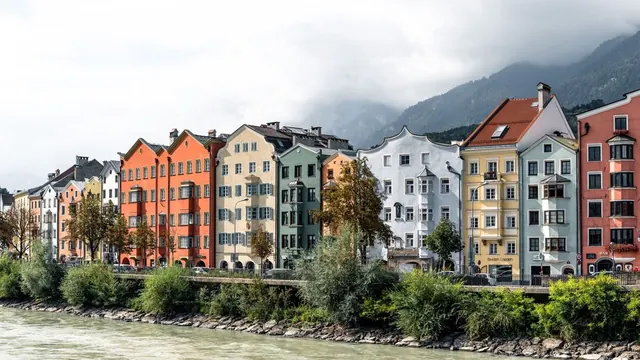
Choose the Austrian Alps for a trip that mixes mountains with towns and comforts. Salzburg's baroque centre and its summer festival, Innsbruck with peaks right above the rooftops, warm Carinthian lakes for swimming, the thermal spas of Bad Gastein and, in winter, the loudest après-ski in the Alps all sit within one region. Trains along the main valleys also make it easier to move between them without a car.
Choose Dolomites for
- food and drink
- nature and the outdoors
The Dolomites are for travellers who come mainly for the mountains and for what is on the table at the end of the day. The pale limestone towers, the Alpe di Siusi and the hut-to-hut routes are the reason to go. South Tyrolean and Italian cooking meet here, with Lagrein and Gewürztraminer from the slopes below Bolzano, so meals become part of the trip. Expect quiet evenings and few sights outside the valley towns, and plan on a car if you want to cross between valleys.
Scoreboard
Twelve categories on one fixed scale from 0 to 100. The shaded stretch is the gap between the two.
Your match
Pick a travel style or drag the sliders, and both match scores follow your weighting.
Wins on nightlife and live music and the arts with your weighting.
Wins on food and drink and nature and the outdoors with your weighting.
What matters to you?
Category by category
What the scores mean for a trip.
Beaches & swimming
Neither region has a sea, but the Austrian Alps can give you a real lake vacation. The Wörthersee, Millstätter See and the other Carinthian lakes warm to the mid-20s in high summer, and Velden and Pörtschach are built around lidos with piers and lawns. The Salzkammergut lakes add clear, cooler water below limestone peaks.
In the Dolomites, swimming is a sideline. Braies and Carezza are for photographs and rowing boats. The warm water is down at Lake Caldaro on the wine route or at Riva on Lake Garda, so swimmers should stay low, near Bolzano or Trento.
Food & drink
Both regions serve hearty mountain food on hut terraces, but the Dolomites have the more interesting table. South Tyrol serves canederli and schlutzkrapfen with a properly Italian espresso afterwards, and the Ladin valleys add dishes of their own. The vineyards south of Bolzano produce Lagrein and Schiava and hold the autumn Törggelen evenings, and Alta Badia has an unusual number of serious kitchens for its size.
The Austrian Alps eat well in a narrower range: Kaiserschmarrn, Gröstl and Käsespätzle after a day outdoors, Salzburg's cafés and cakes, and fine dining in the Arlberg and Kitzbühel. In the big ski villages, menus tend to repeat one another.
Culture & sights
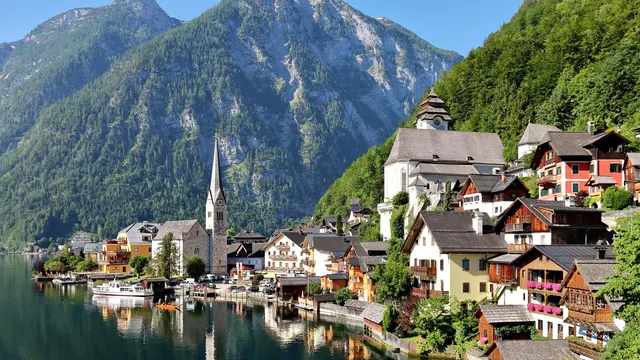
The Austrian Alps hold far more built heritage. Salzburg's baroque old town under the Hohensalzburg, Innsbruck's Hofburg and Hofkirche, and the salt-mining landscape around Hallstatt are each worth a day. The Admont abbey library and the Habsburg spa towns add more.
The Dolomites are on the UNESCO list for their rock, not their buildings. Ötzi and the arcades in Bolzano, Trento's Castello del Buonconsiglio, and Bressanone with Novacella Abbey make rewarding rainy-day visits, as do the First World War tunnels on the passes. Still, they sit in the shadow of the mountains rather than competing with them.
Nightlife
In winter the Austrian Alps offer a far bigger night out. In Ischgl, St Anton, Saalbach and Mayrhofen, the après-ski starts in the slopeside huts and carries on in village bars and clubs late into the night. Innsbruck's student bars keep some life going outside the ski season.
The Dolomites wind down early. Selva, Canazei and Cortina have drinks at the foot of the slopes, and Cortina has a dressier wine-bar crowd, but most evenings end after dinner. In summer the villages are silent by eleven.
Nature & outdoors
Both are Alpine landscapes of the first rank, and the difference lies in their character. The Austrian Alps are glacier country, with the Grossglockner and the Hohe Tauern, long valleys such as the Ötztal and Zillertal, and lakes for sailing and paddling. The skiing is spread across separate big areas such as the Arlberg and Ski Amadé.
The Dolomites are about pale rock towers rising out of green meadows: the Tre Cime, the Sassolungo and the ridge of Seceda. Via ferrata routes and the Alta Via trails let walkers onto the high rock. Dolomiti Superski links a dozen valleys into one ski area, with the Sella Ronda circuit at its centre.
Day trips
Salzburg and Innsbruck both sit close to a border, which gives the Austrian side the wider reach. From Salzburg, Berchtesgaden and the Königssee are just across in Bavaria and Munich is about an hour and a half by train. From Innsbruck, the royal castles at Füssen and even Bolzano and Merano are within a long morning's drive over the passes. Nearer to home there are Hallstatt, St Wolfgang and Bad Ischl in the Salzkammergut, and little Rattenberg and Hall in Tirol in the Inn valley.
The Dolomites' best outings run along the Adige valley from Bolzano. Merano, Bressanone and Trento are each under an hour away, and the wine route runs through Caldaro and Termeno. Verona is an easy train ride. From the high villages every trip starts with a slow pass road, so it pays to split the stay between a mountain village and a valley town.
Good for families
The Austrian Alps are the easier choice with children. Many hotels are built around them, with playrooms, pools and kids' clubs, and resorts such as Serfaus-Fiss-Ladis offer childcare as a matter of course. Innsbruck's Alpine Zoo, the trick fountains at Hellbrunn and the crystal world near Wattens fill rest days.
The Dolomites are excellent in summer, with the nearly flat paths of the Alpe di Siusi and the Armentara meadows and huts with farm animals. However, there are no zoos or theme parks, so a wet day means a pool or a drive to a museum in Bolzano.
Getting around
Austria's main valleys are served by trains: along the Inn through Innsbruck, from Salzburg to Gastein, and over the Arlberg. Postbus routes climb into the side valleys, and guest cards often cover the local buses. You only really need a car to combine lakes, towns and passes in one trip.
In the Dolomites the railway reaches the valley floors along the Adige and Puster valleys and up to Calalzo, but Cortina has no station and the high resorts depend on buses. Moving between valleys means hairpin passes that are crowded in summer, which is why most visitors hire a car.
Shopping & style
The Austrian side makes the slightly better shopping trip, and its two cities are the reason. Salzburg and Innsbruck are where you go to buy proper Alpine dress, a dirndl or a loden jacket made to last for years rather than worn once. Crystal from the works at Wattens and boxes of Mozartkugeln take care of the gifts, and Kitzbühel and Lech keep a handful of upmarket boutiques for their winter guests.
In the Dolomites, most of what you bring home is either carved or edible. Ortisei carries on Val Gardena's long woodcarving tradition with figures and cribs, and the rest of the bag is food: speck, mountain cheese, grappa and a bottle or two of South Tyrolean wine. Beyond Bolzano's arcades and Cortina's short main street, the choice soon runs out. December is the exception, when the Advent markets in Bolzano, Merano and Brunico hold their own against anything across the border.
Affordability
In the Austrian Alps the savings lie away from the famous names. Family-run guesthouses and farm stays in quieter valleys, smaller ski areas and summer stays on the Carinthian lakes all cost noticeably less, and guest cards often bundle local buses and some lifts. The Arlberg, Kitzbühel and Salzburg in festival season stay expensive.
The Dolomites are a little dearer overall, especially from late December to March and in July and August, when Cortina and Alta Badia rank among Italy's costliest resorts. Here the cheaper bases are the Trentino valleys of Fassa and Fiemme and the towns of Bolzano, Bressanone and Trento. Coming in June or September gets you the same mountains at lower room rates.
Live music & performing arts
For music, the Austrian Alps are in a different league. The Salzburg Festival, with Jedermann performed in front of the cathedral, the opera on Bregenz's floating stage on Lake Constance, the Schubertiade and the festivals at Erl make high summer a major classical season. Salzburg also keeps concerts going through the rest of the year.
The Dolomites offer pleasant occasions rather than reasons to travel. Bolzano and Trento have orchestral seasons, musicians play on meadows and hut terraces in Trentino in summer, and jazz concerts are held in castles and wineries.
Wellness & relaxation
The Austrian Alps have a public bathing culture that the Dolomites lack. Bad Gastein has radon springs and a healing gallery inside the mountain, Bad Hofgastein a large thermal bath and Bad Ischl a Habsburg past, while the Aqua Dome puts outdoor pools in front of the Ötztal peaks. On top of that, almost every valley has hotels with serious sauna areas.
In the Dolomites, wellness mostly means the hotel spa, which South Tyrol does with real care, and the old hay bath around Völs am Schlern. Merano's thermal baths are the main public option, so choose your hotel with the spa in mind.
When should you go?
Pick your month. The climate figures are measured averages, not a forecast.
Austrian Alps in July
Dolomites in July
Daytime high, °C
Rainfall in the month, mm
Temperature and rainfall are climate normals, averaged over the years shown. Austrian Alps: 1991-2020 normals, Innsbruck-Flughafen (4.1 km from centre). Dolomites: 1991-2020 normals, Dobbiaco (22.3 km from centre).
Around the Austrian valleys and towns where most visitors stay, July brings highs of about 26°C, and the Carinthian lakes are warm enough for swimming from June to early September. Summer is also the wettest season, with August the rainiest month at about 144mm, although sunshine peaks in July as well. In winter the valley days stay just above freezing. That is cold for long town walks but right for the ski season from December to April, and May, June and September are the most comfortable months for walking towns and trails.
The Dolomites are several degrees cooler all year, with midsummer highs of about 22°C where visitors stay and January days around 0°C. Summer here is for hiking rather than lazing by the water. Rain peaks in July, a little lighter than Austria's August, and winters are notably dry. June and September give mild walking weather in both regions, but for warm days and lake swimming the Austrian side is better in July and August.
Which traveller are you?
On a culture and arts trip, the Austrian Alps win clearly. Salzburg offers a baroque old town, Mozart's birthplace and, in July and August, one of classical music's great festivals. Innsbruck and Hallstatt add Habsburg and salt-mining heritage that the Dolomite valley towns cannot match.
For a relaxing and wellness trip, the Austrian Alps are the better choice because of their thermal towns: Bad Gastein, Bad Hofgastein, Bad Ischl and the Aqua Dome in the Ötztal. The Dolomites suit slow days too, but there rest depends on choosing a hotel with a good spa.
On a food and nightlife trip, the choice depends on which half matters more. The Dolomites feed you better, with South Tyrolean and Italian cooking and their own wine, but they go quiet after dinner. Austria's big ski villages are where winter evenings run late.
Before you go
| Measure | Austrian Alps | Dolomites |
|---|---|---|
| Official language | German, Austrian Sign Language | Italian |
| Currency | Euro (EUR) | Euro (EUR) |
| Sockets | CF230 V, 50 Hz | CFL230 V, 50 Hz |
| Driving side | Right | Right |
| Time zone | UTC+1, UTC+2 in summer | UTC+1, UTC+2 in summer |
| Emergency number | 112 | 112 |
| Main airport | Innsbruck Airport (INN)40 non-stop destinations | Venice Marco Polo Airport (VCE)103 non-stop destinations |
| Public holidays this year | 16 days | 13 days |
Where else could you go?
Every comparison below shares a destination with this one, so you can follow Austrian Alps or Dolomites somewhere new.
- Bavariavs Austrian Alps
- Lake Gardavs Dolomites
- Bavariavs Dolomites
- Lake Gardavs Austrian Alps
- Lake Comovs Austrian Alps
- Lake Comovs Dolomites