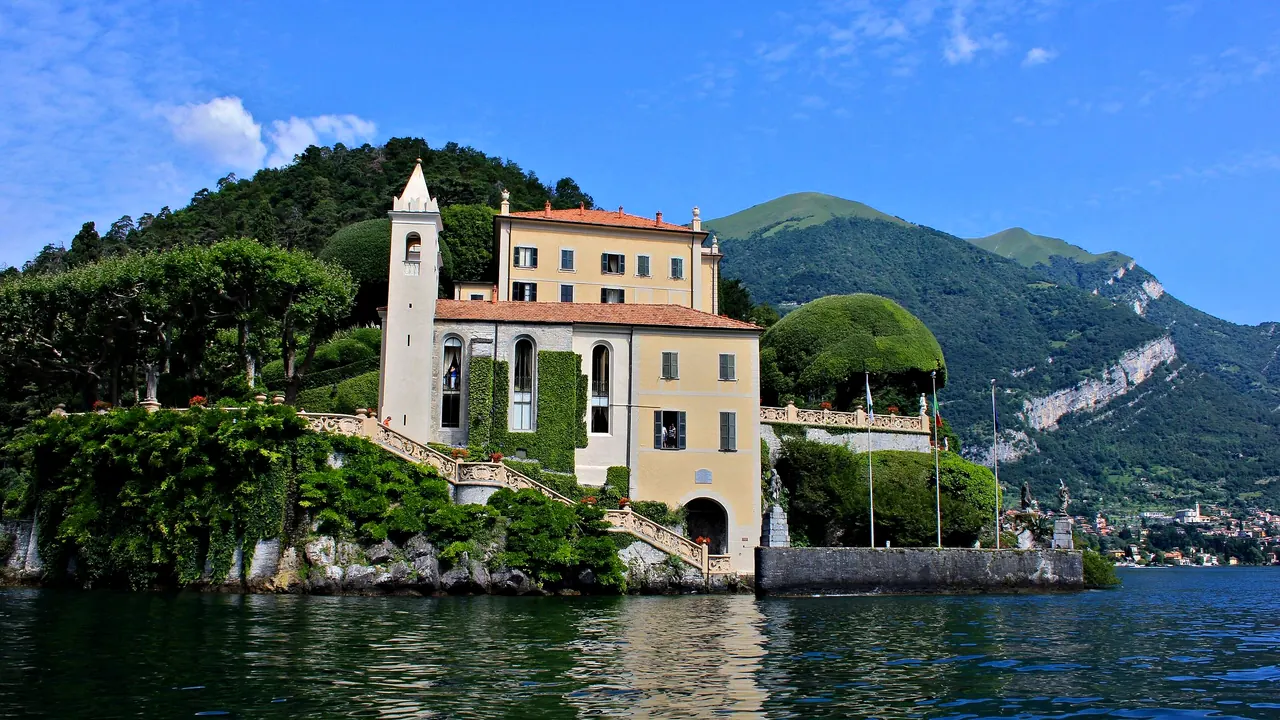
Photos: Lake Como by Navin75, CC BY-SA 2.0, cropped.
Dolomites or Lake Como?
Our verdict in twelve categories, each scored against the same fixed benchmark cities, and the climate month by month, so you can choose for your trip.
Choose Dolomites for
- families
- nature and the outdoors
- food and drink
Choose the Dolomites when the mountains themselves are the trip. That means walking from a lift station across high pasture, a week on a hut-to-hut route, clipping onto a via ferrata, or a winter on the linked ski circuits. They are also the better pick with children and for anyone who cares about lunch, with Alpine and Italian cooking side by side and hotel spas built for long afternoons. In return you give up warm-water swimming, and most evenings end early.
Choose Lake Como for
- beaches
- culture and sights
- day trips
Lake Como is the gentler, more polished choice. It suits couples and slow travellers who want to enjoy the mountains from a terrace or a ferry deck rather than from a summit. Its villa gardens, swims off a jetty and easy day trips to Milan, Bergamo and Lugano make for a richer few days of sightseeing. The walking is good, but it is a step below the Dolomites, and families will find little here that is made for children.
Scoreboard
Twelve categories on one fixed scale from 0 to 100. The shaded stretch is the gap between the two.
Your match
Pick a travel style or drag the sliders, and both match scores follow your weighting.
Wins on families and nature and the outdoors with your weighting.
Wins on beaches and culture and sights with your weighting.
What matters to you?
Category by category
What the scores mean for a trip.
Beaches & swimming
Neither place has sand, and in the Dolomites swimming takes some effort. The famous high lakes such as Braies and Carezza are for looking at. Real bathing means the lidos and lawns at Lake Caldaro on the wine route, or the drive to Riva on Lake Garda, so a visitor who wants a daily swim has to stay down in the valleys.
On Lake Como the water is right outside the door. There are lidos and stone jetties at Bellagio, Lenno and Menaggio, and longer shores on the upper lake around Gravedona and Domaso. The lake is still pebble and steep, with cold water a metre down, but a swim fits into an ordinary day rather than needing its own outing.
Food & drink
The Dolomites eat better and with more variety. There are South Tyrolean speck and canederli, Ladin dishes in Gardena and Badia, Trentino polenta and trout, and lunch on a hut terrace after a morning on the trail. Alta Badia also has a remarkable number of serious kitchens for such small villages, and the Lagrein and Gewürztraminer slopes south of Bolzano add autumn Törggelen evenings.
Lake Como's table is narrower: perch with risotto, missoltini, Valtellina cheeses and Nebbiolo. The best meals are up in the hill-village trattorias and crotti. Down on the waterfront, the terraces often charge for the view.
Culture & sights
On Lake Como, the sights and the lake are one experience. Villa Carlotta, Villa del Balbianello and Villa Melzi, with their gardens, are reached by boat between the old villages of Bellagio, Varenna and Tremezzo. Como adds a marble cathedral, Romanesque churches and Terragni's rationalist buildings from the 1930s.
The Dolomites keep their heritage in the valley towns. Ötzi lies in Bolzano, Trento has the frescoed rooms of the Buonconsiglio, and Bressanone has its cloister near Novacella Abbey. First World War tunnels run along the high passes. All of this makes good bad-weather outings, but few visitors build the trip around it.
Nightlife
Both places go quiet early, and the difference is in the form the evening takes. In the Dolomites it is winter après-ski at the foot of the slopes in Selva, Canazei and Cortina, which is over by early evening, while summer villages are asleep by eleven. Lake Como offers dinner and a drink by the water, with a few cocktail bars in Como town, and for a real night out you take the train to Milan.
Nature & outdoors
The Dolomites are in a class of their own for anyone who wants to be up in the mountains. From most villages a lift carries you straight into the high country, among the pale towers of the Sella and the Sassolungo, along the ridge of Seceda or out onto the Alpe di Siusi, the gentlest high pasture in the Alps. The Tre Cime and the Marmolada glacier crown the range. From June to October the great passes draw road cyclists as well as walkers, and in winter the Dolomiti Superski links a dozen valleys.
Lake Como's beauty is the meeting of mountain and water. Wooded slopes drop straight into a deep glacial lake, and most visitors take it in from the shore and the ferry. The Sentiero del Viandante and the Grigna summits give good walking in spring and autumn, and the afternoon breva wind makes the upper lake around Domaso and Colico a real spot for windsurfing and kitesurfing.
Day trips
The best Dolomite outings start from Bolzano. Merano, Bressanone, Trento and the wine villages are all within an hour, and Verona and Innsbruck are reachable by train or road. From a high village, though, every outing begins on a slow pass road.
Lake Como has more on its doorstep and easier ways to reach it. Milan, with the Duomo and the Last Supper, is about an hour by train, as is Bergamo's walled upper town, and Lugano is just across the border. On the lake itself, hopping by ferry between Bellagio, Varenna and Menaggio fills a day without any planning.
Good for families
Children are far better served in the Dolomites in summer. There are nearly flat walks on the Alpe di Siusi and the Armentara meadows, huts with playgrounds and animals, adventure parks and hotels built around family stays. In winter, gentle nursery slopes take over. The weak spot is rainy days, with no zoos or theme parks.
Lake Como welcomes children but does little for them. Boats, the funicular up to Brunate and gelato will fill a day. Bellagio and Varenna are all steps and narrow roads, though, and the flatter upper lake near Domaso and Colico, with its campsites, makes the easier base.
Getting around
In both places it is easy to get around one area and slow to cover the whole. The Dolomites rely on valley trains, buses over the passes and ski lifts that link entire valleys, but moving between valleys means hairpin roads, so most visitors hire a car. Lake Como runs on its ferries, which cross the central basin in minutes, and on trains up the eastern shore. There a car is more burden than help, with narrow shore roads and scarce parking.
Shopping & style
Neither is a shopping destination, and each has its own thing to take home. In the Dolomites it is carved wood from Val Gardena's workshops, speck, mountain cheese and wine, with the Advent markets of Bolzano, Merano and Brunico in December. On Lake Como it is silk, sold in Como town and at mill outlets, and for serious fashion Milan is only a train ride away.
Affordability
Both are expensive in season, so neither suits a tight budget, but the ways to save differ. In the Dolomites, you can base yourself in Val di Fassa, Val di Fiemme, Bolzano or Trento and come in June or September, though lift passes and guided climbs soon add up. On Lake Como, Como town, Lecco and the campsites of the upper lake cost less than the villa-lined central lake, and ferries and trains are reasonably priced.
Live music & performing arts
In the Dolomites the most memorable music is played outdoors in summer. Trentino's mountain festival puts musicians on alpine meadows and hut terraces, and a jazz festival tours castles, wineries and village squares. Bolzano and Trento keep orchestral seasons through the year, and Merano holds an autumn festival in its old spa halls.
Lake Como's best stage is indoors: Como's Teatro Sociale, an early nineteenth-century opera house with a proper season. In summer, concerts move into villa gardens and lakeside churches, and La Scala in Milan is close enough for an evening out.
Wellness & relaxation
The Dolomites have the edge for unwinding. South Tyrol's mountain hotels are built around saunas facing rock walls and heated outdoor pools, the hay bath tradition survives below the Alpe di Siusi, and Merano has public thermal baths in the town centre.
Lake Como's calm comes from its pace, with drifting days of gardens and ferries and quiet villages at night. The villa hotels near Cernobbio and Tremezzo have serious spas, but there are no thermal baths anywhere on the lake.
When should you go?
Pick your month. The climate figures are measured averages, not a forecast.
Dolomites in July
Lake Como in July
Daytime high, °C
Rainfall in the month, mm
Temperature and rainfall are climate normals, averaged over the years shown. Dolomites: 1991-2020 normals, Dobbiaco (22.3 km from centre). Lake Como: 1991-2020 normals, Lugano (22.8 km from centre).
In the Dolomite valleys where most visitors stay, July and August are the main walking months, with highs around 22°C. They are also the wettest months of the year, with rain peaking at 130mm in July, so June and September often give steadier days. Winter is cold, close to freezing in January, and also the driest part of the year, which is when the ski season runs.
Lake Como is several degrees warmer all year round. On the shore it reaches about 27°C in July and August, warm enough for swimming, and July is its sunniest month. It is also far wetter than the mountains, with heavy rain from April through November and May the wettest month, so spring and autumn plans need some flexible days. Its winters are mild enough for walking around the towns, though grey.
Which traveller are you?
On a family trip with children, the Dolomites are the better choice. Nearly flat meadow paths on the Alpe di Siusi, huts with playgrounds and farm animals, summer toboggan runs and family hotels make the days easy. On Lake Como, the stepped lanes and hotels aimed at couples make things harder.
For a beach and sun trip, Lake Como wins. Its summers are warmer, and the lidos and jetties at Bellagio, Lenno and Menaggio let you fit a swim between ferry rides. In the Dolomites the high lakes are too cold, so swimming means driving down to Lake Caldaro.
On a culture and arts trip, Lake Como suits better. Villa Carlotta, Balbianello and Melzi are reached by boat, Como has its cathedral and an opera house, and Milan's Last Supper is an hour away. In the Dolomites the sights mostly fill rainy days.
Before you go
| Measure | Dolomites | Lake Como |
|---|---|---|
| Official language | Italian | Italian |
| Currency | Euro (EUR) | Euro (EUR) |
| Sockets | CFL230 V, 50 Hz | CFL230 V, 50 Hz |
| Driving side | Right | Right |
| Time zone | UTC+1, UTC+2 in summer | UTC+1, UTC+2 in summer |
| Emergency number | 112 | 112 |
| Main airport | Venice Marco Polo Airport (VCE)103 non-stop destinations | Milan Malpensa International Airport (MXP)208 non-stop destinations |
| Public holidays this year | 13 days | 13 days |
Where else could you go?
Every comparison below shares a destination with this one, so you can follow Dolomites or Lake Como somewhere new.
- Austrian Alpsvs Dolomites
- Lake Gardavs Lake Como
- Swiss Alpsvs Lake Como
- Lake Gardavs Dolomites
- Bavariavs Dolomites
- French Alpsvs Lake Como