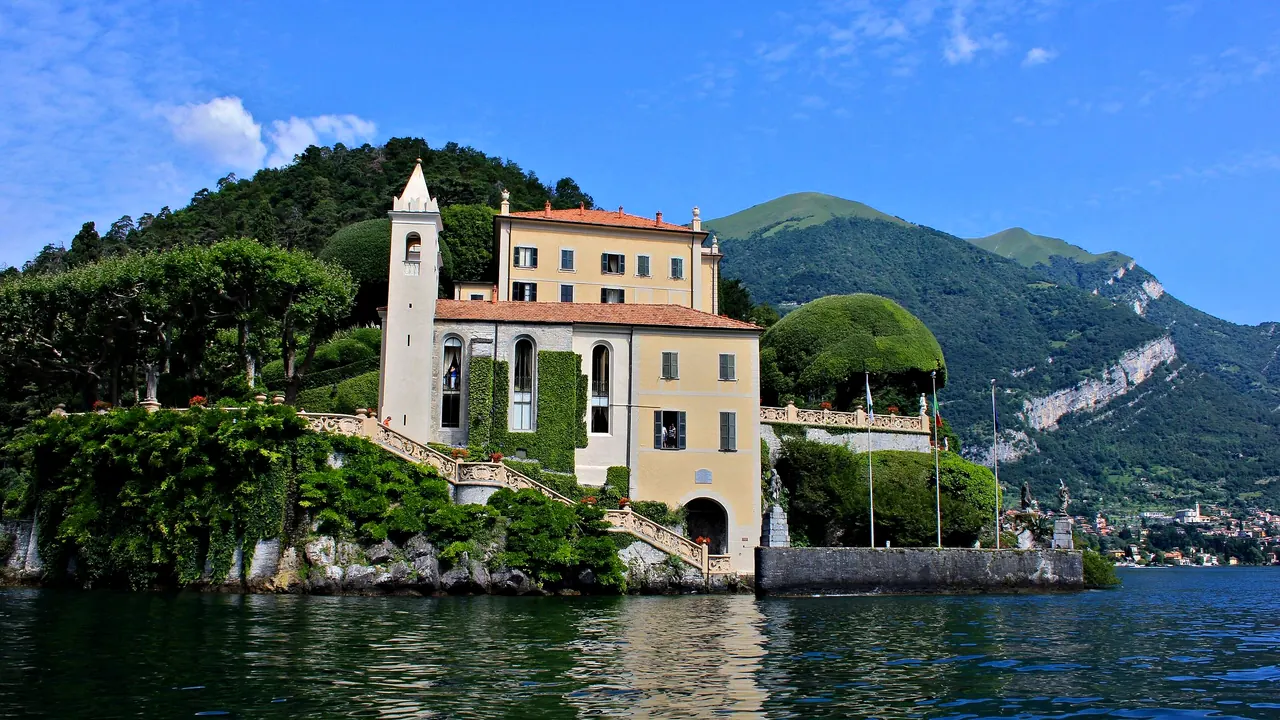
Photos: Lake Como by Navin75, CC BY-SA 2.0, cropped.
Lake Como or Swiss Alps?
Our verdict in twelve categories, each scored against the same fixed benchmark cities, and the climate month by month, so you can choose for your trip.
Choose Lake Como for
- prices
- culture and sights
- beaches
Lake Como suits a slower, more romantic trip built around villas, gardens and ferry hops between Bellagio, Varenna and Tremezzo, with Milan close enough for a day of art or an evening of opera. It is the better pick for couples who want mountain scenery to look at rather than climb, a swim off a jetty in summer, and a bill that is far from cheap but stays well below Swiss levels.
Choose Swiss Alps for
- wellness
- families
- getting around
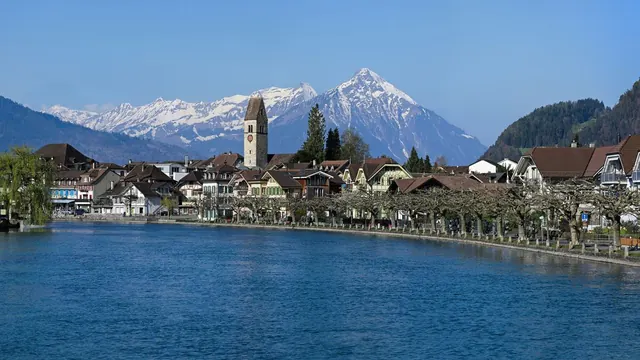
Pick the Swiss Alps when the mountains themselves are the point: hiking from cable-car stations, skiing at Zermatt or Verbier, glacier views above Lauterbrunnen. Trains and postbuses reach almost every village, car-free resorts make it much easier with children, and the thermal baths at Leukerbad and Vals turn a rest day into something worth having. The catch is the cost, which is among the highest anywhere.
Scoreboard
Twelve categories on one fixed scale from 0 to 100. The shaded stretch is the gap between the two.
Your match
Pick a travel style or drag the sliders, and both match scores follow your weighting.
Wins on prices and culture and sights with your weighting.
Wins on wellness and families with your weighting.
What matters to you?
Category by category
What the scores mean for a trip.
Beaches & swimming
Lake Como gives the better swimming, from lidos, pebble strips and stone jetties rather than sand. By high summer the water reaches about 24°C, and the lidos at Lenno, Bellagio and Menaggio fit easily between ferry rides, while the upper lake near Domaso has longer, more open shores.\n\nIn the Alps the lakes below the Jungfrau reach only about 20°C even in a warm August, so a dip is brisk, though the lidos are well kept and small mountain lakes such as the Caumasee are lovely. Swimmers who want water as warm as Como's have to go south to the Ticino lakes.
Food & drink
Both kitchens are regional and narrow, with no street food to speak of, so the difference is in kind. Lake Como cooks lake and valley food: perch in butter and sage on risotto, missoltini and polenta. It is best eaten in the crotti and trattorias of the hill villages rather than on the lakefront terraces.
The Alps are cheese country, with fondue, raclette and rösti served on hut terraces at the top of the lifts, and Zermatt and St Moritz add a layer of very expensive fine dining. For wine, Como has Valtellina Nebbiolo and the Alps have Petite Arvine and Cornalin from the Valais terraces.
Culture & sights
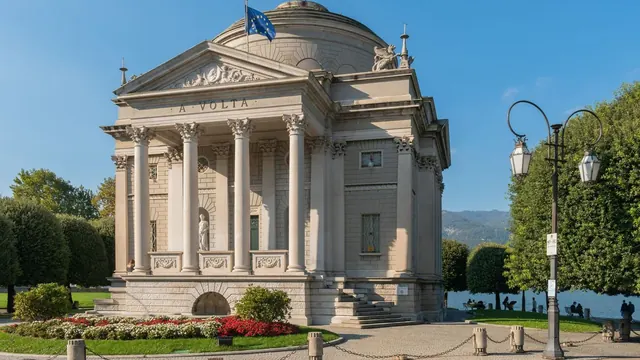
Lake Como offers more satisfying sightseeing: a circuit of villas and gardens reached by boat, from the sculpture and azaleas of Villa Carlotta to Villa del Balbianello on its wooded point, plus Como's marble cathedral and Terragni's Casa del Fascio. Neither place has a major museum, but here the sights sit close together.
Alpine heritage is spread through the valleys: sgraffito houses at Guarda, the twin castles at Sion, Carolingian frescoes at Müstair and the Bernina railway itself. It rewards visitors who are already there for the mountains, but it is not a reason to come.
Nightlife
Neither is a place for big nights out, but the Alps at least have them in season. Winter après-ski in Verbier and Zermatt runs from terraces beside the slopes into clubs open past midnight, and St Moritz has a glossier scene of hotel bars. Out of winter the resorts are asleep by eleven.
Lake Como's evenings mean dinner by the water and a drink, with a few wine and cocktail bars in Como town. Bellagio and Varenna empty once the last ferry has gone, and the real fallback is the train to Milan.
Nature & outdoors
Lake Como is a beautiful landscape, with mountains rising straight out of the water. Walkers have the Sentiero del Viandante and the Greenway, and windsurfers have the breva wind at Colico. Still, it is a lake framed by mountains, and most visitors see them from below.
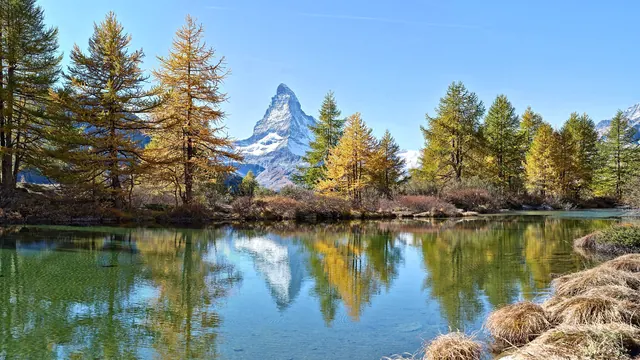
The Alps are the mountains themselves: the Eiger and Jungfrau above Lauterbrunnen, the Matterhorn, the Aletsch glacier and ibex in the Swiss National Park. Trails start at cable-car stations, so high country is easy to reach. Winter brings some of the world's best skiing, which Como cannot offer.
Day trips
Lake Como has the stronger day trips because Milan is about an hour away, with the Duomo, the Last Supper and La Scala. Bergamo's upper town and Lugano are just as close, and hopping between the central villages by ferry fills a day with no planning.
From the Bernese Oberland, the Alps offer Bern, Thun and Lucerne, with Gruyères and the Château de Chillon further west. These are pleasant towns rather than great cities, though there are plenty of them and each is easy to reach.
Good for families
The Alps work far better with children. Ski schools at Grindelwald and Saas-Fee, summer toboggan runs, adventure playgrounds by the lifts and cogwheel trains make the days easy, and in car-free Wengen or Zermatt children can wander freely. Altitude needs some care with the very young.
Lake Como is safe and welcoming but not built for children. Bellagio and Varenna have steep stepped lanes, the shore roads lack pavements and many hotels are aimed at couples. Boats, the Brunate funicular and a lido fill some days, and the flatter upper lake near Domaso is the easiest family base.
Getting around
You can manage without a car in both, but the Alps make it seamless. Trains, postbuses, lake steamers and cable cars run on connected timetables, and several resorts ban cars entirely. The limit is distance: crossing from the Oberland to the Engadine takes most of a day.
On Lake Como, the ferries across the central basin between Bellagio, Varenna and Menaggio work well, and trains run up the eastern shore. Outside that triangle travel slows down, and the narrow, tunnelled shore roads are best avoided in summer.
Shopping & style
Neither is a place to plan a trip around the shops, and what each does offer is quite different. Lake Como has a single craft with deep roots: Como has woven silk for centuries, so a scarf or tie bought from a mill shop or outlet near the town comes with a real local story, and the Silk Museum tells it. Around that, Como's old centre has Italian labels and independent shops, and Bellagio's stepped lanes add leather and silk boutiques. It is browsing in a town rather than shopping for gear, and Milan is there for anything more ambitious.
In the Alps, the shops follow the visitors. St Moritz and Gstaad have glossy jewellery and fashion aimed at their winter guests, while Zermatt and Interlaken have watchmakers and technical climbing and hiking kit that is hard to match at home. The most rewarding finds are regional rather than retail: a wheel of alpine cheese from the dairy, wine from the Valais and a carving from Brienz. Como is better for an easy wander through shops, the Alps for buying something specific.
Affordability
Lake Como is expensive in summer, above all at the villa hotels around Bellagio and Tremezzo, but there are ways round it. Como town and Lecco have ordinary hotels, Domaso and Gravedona have campsites, and ferries and trains are fairly priced.
The Alps cost a great deal more. Rooms, meals at mountain restaurants and above all the lifts and mountain railways add up fast, and self-catering and travel passes only soften the bill. On a fixed budget, Como goes noticeably further.
Live music & performing arts
The Alps' strength is their summer festivals. The Verbier Festival in July and the Menuhin Festival in the churches around Gstaad bring leading soloists to mountain villages for weeks. Outside summer there is little beyond brass bands and alphorn evenings.
Lake Como has a year-round venue in Como's Teatro Sociale, a fine early nineteenth-century opera house, and summer concerts in villas and churches, but the programme is thinner overall. Its consolation is that La Scala is an easy trip away in Milan.
Wellness & relaxation
For rest and recovery, the Alps go much further. Taking the waters is a living tradition here, from the open-air pools of Leukerbad under the cliffs to the stone bath at Vals and the old springs of Bad Ragaz and Scuol. Car-free villages and clean mountain air do the rest.
Lake Como relaxes you through its pace, with days spent between terrace, garden and ferry, and the villa hotels near Cernobbio have fine spas with pools above the water. It has no thermal baths or public bathing, though, so how restful the stay is depends on where you book.
When should you go?
Pick your month. The climate figures are measured averages, not a forecast.
Lake Como in July
Swiss Alps in July
Daytime high, °C
Rainfall in the month, mm
Where the figures come from
Swiss Alps has no rain gauge within 25 km of the centre, so its rainfall comes from a gridded climate dataset read at the destination rather than from a gauge further away.
Swiss Alps's sunshine is measured 66 km from the centre, at Sion.
Temperature and rainfall are climate normals, averaged over the years shown. Lake Como: 1991-2020 normals, Lugano (22.8 km from centre). Swiss Alps: 2005-2020 (sunshine 1961-1990, rainfall 1991-2020) normals, Meiringen / Unterbach (19.5 km from centre).
Lake Como is the warmer of the two all year, reaching about 27°C in July and August, warm enough for the lidos from late June to early September. It is also wet. From April to November rain comes often and heavily, peaking at around 178mm in May, so even summer has its showery days. Winter is drier but cool, fine for quiet walks in Como town, while late spring and September give the best mix of warmth and gardens.
Around the main Alpine bases it is cooler: about 24°C at the July peak and only a few degrees above freezing in January, which is snow and ski weather. July is the sunniest month in both places. The Alps take most of their rain in summer, but September turns drier, at about 84mm, and stays sunny, so with late June and July it is the best time for hiking while the high passes are open.
Which traveller are you?
On a culture and arts trip, Lake Como is the better choice. The villas and gardens, Como's cathedral and its rationalist buildings are all within a ferry or short train ride, and Milan's Last Supper and La Scala are an hour away. Alpine heritage is more scattered and modest.
On a family trip with children, the Swiss Alps win clearly. Ski schools, summer toboggan runs, playgrounds at the top of the lifts and car-free villages such as Wengen make the days easy. Lake Como's stepped lanes, narrow roads and hotels aimed at couples make it harder work.
For a relaxing and wellness trip, choose the Swiss Alps. Thermal villages such as Leukerbad, Vals and Scuol add proper bathing to the clean air and quiet nights of the car-free resorts. Lake Como offers a slow pace and hotel spas, but it has no thermal baths.
Before you go
| Measure | Lake Como | Swiss Alps |
|---|---|---|
| Official language | Italian | French, German, Italian, Romansh |
| Currency | Euro (EUR) | Swiss Franc (CHF) |
| Sockets | CFL230 V, 50 Hz | CJ230 V, 50 Hz |
| Driving side | Right | Right |
| Time zone | UTC+1, UTC+2 in summer | UTC+1, UTC+2 in summer |
| Emergency number | 112 | 112 |
| Main airport | Milan Malpensa International Airport (MXP)208 non-stop destinations | Zürich Airport (ZRH)226 non-stop destinations |
| Public holidays this year | 13 days | 10 days |
Where else could you go?
Every comparison below shares a destination with this one, so you can follow Lake Como or Swiss Alps somewhere new.
- French Alpsvs Swiss Alps
- Lake Gardavs Lake Como
- Black Forestvs Swiss Alps
- French Alpsvs Lake Como
- Cinque Terrevs Lake Como
- Austrian Alpsvs Lake Como