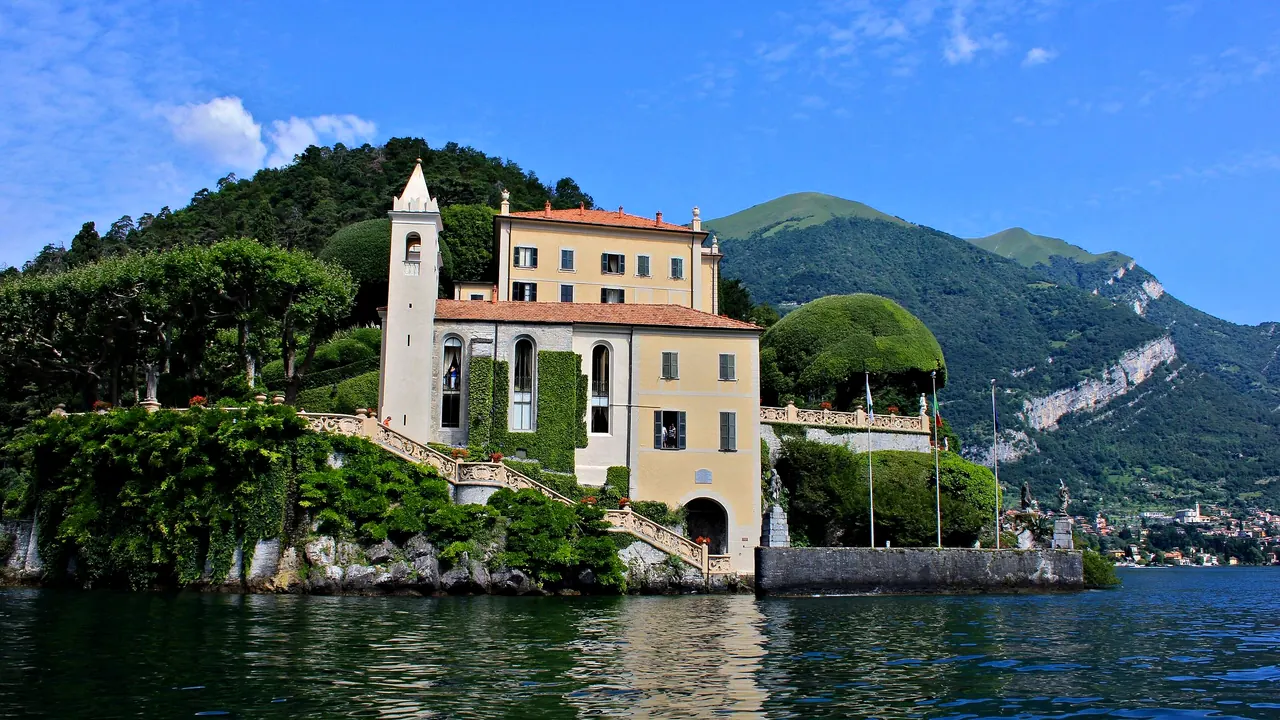
Photos: Lake Como by Navin75, CC BY-SA 2.0, cropped.
French Alps or Lake Como?
Our verdict in twelve categories, each scored against the same fixed benchmark cities, and the climate month by month, so you can choose for your trip.
Choose French Alps for
- nightlife
- families
- wellness
The French Alps suit travellers who want to be busy outdoors: skiers in winter, and walkers, climbers and cyclists in summer around Mont Blanc and the national parks. Families do well here too, with ski schools and car-free resorts. You also get proper après-ski evenings and old spa towns such as Aix-les-Bains and Évian for the days you want to rest. In return you face long transfers, a lot of driving between valleys, and a menu where melted cheese turns up at almost every meal.
Choose Lake Como for
- culture and sights
- day trips
- getting around
Lake Como is the better choice for a slower, more scenic stay. The days go on villa gardens, old lake villages and ferry hops between Bellagio, Varenna and Menaggio, and Milan, Bergamo and Lugano are close enough for an easy day out. It suits couples and anyone drawn to gardens and architecture more than to activity. Travellers who want nights out, or who have small children with them, will find the steep stepped villages and the waterfronts that empty in the evening limiting.
Scoreboard
Twelve categories on one fixed scale from 0 to 100. The shaded stretch is the gap between the two.
Your match
Pick a travel style or drag the sliders, and both match scores follow your weighting.
Wins on nightlife and families with your weighting.
Wins on culture and sights and day trips with your weighting.
What matters to you?
Category by category
What the scores mean for a trip.
Beaches & swimming
Swimming is about equal in the two places, and neither has the sea. Lake Annecy is the French Alps' best swimming lake, with grassy public beaches and wooden jetties at Sévrier, Talloires and Menthon-Saint-Bernard. There are also other lakes to choose from: the quieter Lac du Bourget, little Lac d'Aiguebelette, which is often the warmest, and the pebbly lidos on Lake Geneva.
On Lake Como you swim from lidos, pebble strips and stone jetties at Bellagio, Lenno and Menaggio, often between ferry rides. The water drops off steeply, so it suits confident swimmers more than toddlers. If you want longer, more open shore, go to the upper lake around Gravedona and Domaso.
Food & drink
The French Alps have the stronger food scene. Savoyard cooking centres on fondue, raclette and tartiflette, with Reblochon and Beaufort that you can buy straight from farms in the Aravis valleys. At the top end, the kitchens on Lake Annecy's shore, in Megève and in Courchevel are among the most decorated in France. Annecy's old-town markets are a pleasure to graze through.
Both regions serve lake perch. Lake Como fries it in butter and sage and serves it on risotto, and the best places to try it are hill-village trattorias and rustic crotti dug into the rock. The waterfront terraces lean towards generic food for day-trippers, and the range is narrower than in the Alps.
Culture & sights
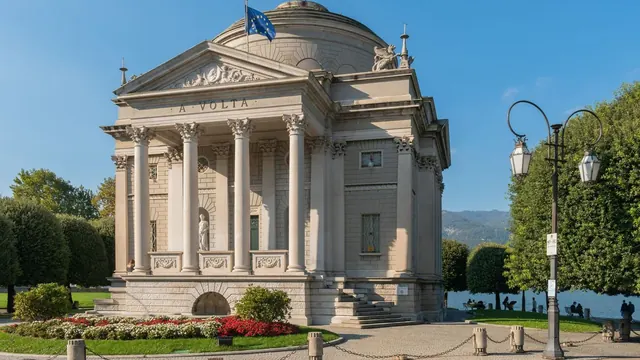
Lake Como is the stronger choice for sightseeing. Its lakeside villas and gardens, Villa Carlotta, Balbianello and Melzi among them, form a set of sights you reach by boat and can build several days around. Como town adds a marble cathedral, Romanesque churches and Terragni's 1930s rationalist buildings.
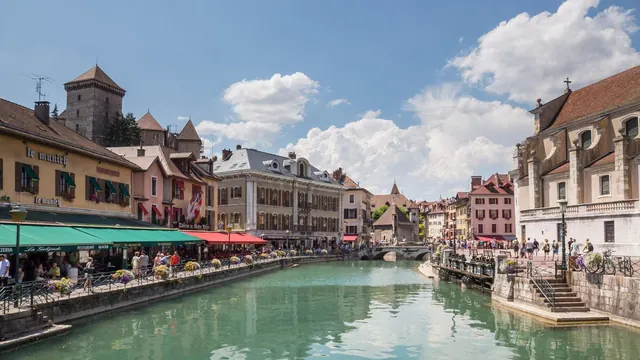
The French Alps have more scattered sights: Annecy's canals and island prison, the dukes' château in Chambéry, Briançon's Vauban walls and Baroque churches up the Tarentaise valleys. Grenoble's fine-arts museum is the one serious collection in either region. Still, most of these make half days between mountain outings rather than a reason to go.
Nightlife
The French Alps are far livelier at night, at least from December to April. People dance on tables at the mountain restaurants, then move on to bars and late clubs in Val Thorens, Val d'Isère and Méribel. In summer the action moves to Annecy's lakeside terraces and Grenoble's student bars.
Lake Como offers dinner by the water and a drink afterwards, with a few wine and cocktail bars in Como town. Bellagio and Varenna empty once the last ferry leaves, so a real night out means taking the train to Milan.
Nature & outdoors
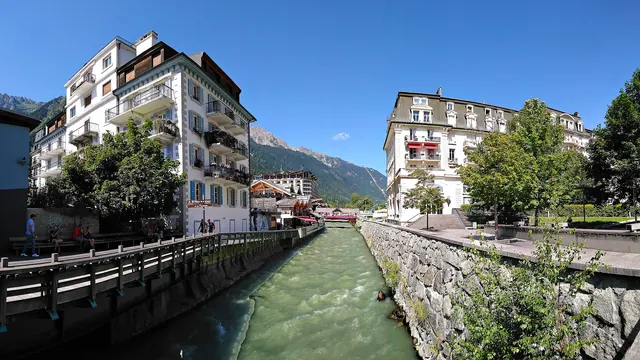
Both are mountain landscapes, but the French Alps are on another scale. You can ride the cable car from Chamonix to glaciers below Mont Blanc and walk the Tour du Mont Blanc. You can look for ibex in the Vanoise and Écrins, ski the huge linked areas of the Tarentaise, or cycle over the Galibier.
Lake Como is a landscape you mostly take in from the water and the terraces: wooded slopes rising straight out of a deep lake to peaks above 2,000m. There is good walking on the Sentiero del Viandante and the Grigna, and the afternoon breva wind makes Domaso and Colico a real windsurfing spot. There is no high mountaineering and no ski area to match the Alps.
Day trips
Lake Como is slightly better for day trips, and it hardly matters where you stay. Milan is an hour by train from Como or Varenna, and Bergamo's upper town and Swiss Lugano are just as close. On the lake itself, a ferry hop between the central villages fills a day with no planning.
In the French Alps it depends on your base. Annecy and the Lake Geneva shore are well placed for Geneva, a ferry to Lausanne, Yvoire and Lyon. Chamonix is about an hour through the tunnel from Aosta in Italy. From the deep Tarentaise valleys, though, much of the day goes on the road.
Good for families
The French Alps are much easier with children. Ski schools have snow gardens for the youngest, and in car-free resorts such as La Plagne and Les Arcs families can walk to the slopes. In summer there is the rack railway to the Mer de Glace, plus lift-served walks and Annecy's gentle lake beaches. Long transfer days and the cold do tire small children, though.
Lake Como is safe and welcoming, but there is little made for children beyond boat rides, the Brunate funicular and gelato. Steep stepped lanes in Bellagio and Varenna and shore roads without pavements make pushchairs hard work. The flatter upper lake, with its campsites, is the easiest family base.
Getting around
Both are about equally awkward to get around, but in different ways. In the French Alps the lifts make moving around a ski resort simple. Getting there is the hard part, with Saturday queues up the Tarentaise valley and snow chains on the approach roads. In summer a car is close to essential for reaching lakes, passes and trailheads in separate valleys.
On Lake Como it is the other way round. Ferries link the central villages in minutes and trains run up the eastern shore from Milan, so you are better off without a car. The narrow shore roads, summer traffic and scarce parking make driving the worst way to travel.
Shopping & style
The French Alps have a little more to shop for. Chamonix is one of Europe's best places to buy climbing and ski gear, Courchevel and Megève have luxury boutiques, and you can take home Beaufort, Génépi and Opinel knives from the Maurienne.
On Lake Como, silk is the thing to buy, as scarves and fabrics from Como's mills and factory outlets. Bellagio's lanes add leather and pricey boutiques. For wider choice, both regions send you over a border or to a big city: Geneva for the Alps and Milan for Como.
Affordability
Both are expensive, but the cheaper times fall in different seasons. In the French Alps winter costs the most, with lift passes, equipment hire, ski school and school-vacation chalets. Summer and low-season ski weeks are noticeably cheaper, and Grenoble and Chambéry have ordinary French prices, though Annecy in high summer does not.
On Lake Como summer is the expensive season, with villa hotels around Bellagio and Tremezzo and lakefront restaurants that charge for the view. Spring and autumn cost less, and so do bases in Como town, Lecco or the campsites of the upper lake. The ferries and trains are a fair price.
Live music & performing arts
Neither region is a reason to travel for the stage, and both send serious opera-goers to a nearby city. In the French Alps the year-round programme is in Grenoble, with its large arts centre and chamber orchestra. In summer there are chamber music gatherings at Évian and concerts in mountain churches.
Lake Como has its own historic opera house, the Teatro Sociale in Como town, with a real season, and summer concerts move into villas and gardens around the lake. For more, you go to La Scala in Milan.
Wellness & relaxation
The French Alps have a real spa tradition, and Lake Como does not. The Savoie has taken the waters since Roman times, in Belle Époque Aix-les-Bains, in Évian, and in the gorge baths of Saint-Gervais below Mont Blanc. Quieter cure towns like Brides-les-Bains make the treatment the whole point of the stay.
Lake Como has no thermal baths at all. Its rest comes from the slow pace of terraces, gardens and ferries, and from spas in the grand villa hotels near Cernobbio and Tremezzo, some with pools floating on the lake. The smaller villages away from Bellagio are the calmest places to stay.
When should you go?
Pick your month. The climate figures are measured averages, not a forecast.
French Alps in July
Lake Como in July
Daytime high, °C
Rainfall in the month, mm
Where the figures come from
French Alps's temperatures are measured 35 km from the centre, at Bourg-St-Maurice.
French Alps's station stands 179 m below the place it is measured for, so that place is likely a little cooler than the figures say.
French Alps has no rain gauge within 25 km of the centre, so its rainfall comes from a gridded climate dataset read at the destination rather than from a gauge further away.
Temperature and rainfall are climate normals, averaged over the years shown. French Alps: 1999-2020 (rainfall 1991-2020) normals, Bourg-St-Maurice (35.1 km from centre). Lake Como: 1991-2020 normals, Lugano (22.8 km from centre).
Both are summer lake destinations with highs of about 27°C in July, and both have swimming weather only from late June to early September. In the French Alps, figures taken in the lake and valley towns show rain spread across the whole year. It is heaviest in early winter, up to 169mm in December, and on the high ground that is the snow the ski season depends on. Spring and autumn are cool and damp. Summer is the time for walking, and the mountains are the place to go when the valley floors feel hot.
Lake Como's year runs the other way. Winter is fairly dry at around 61mm a month but cold, and from April the rain builds to a peak of about 178mm in May. It then stays high through summer and autumn, falling mostly as heavy showers between sunny spells, and July is the sunniest month. Late spring and September are the most comfortable months for walking the villages and hill paths, though you should pack for rain.
Which traveller are you?
On a family trip with children, choose the French Alps. Its ski schools are built around children, and resorts like Avoriaz and Flaine let you walk from the apartment to the slope. In summer there are marmots, alpine farms and Annecy's shallow beaches. Lake Como's stepped lanes and couples' hotels make it harder with children.
For a culture and arts trip, Lake Como is the better choice. Its aristocratic villas and gardens, from Villa Carlotta to Balbianello, are a set of sights worth planning around. Como has its cathedral and Teatro Sociale, and Milan's Last Supper and La Scala are an hour away.
On a food and nightlife trip, the French Alps come out well ahead, especially in winter. Savoyard cheese dishes and some of France's most decorated mountain kitchens lead into loud après-ski at Val Thorens or Val d'Isère. On Lake Como, evenings end with a drink on a terrace.
Before you go
| Measure | French Alps | Lake Como |
|---|---|---|
| Official language | French | Italian |
| Currency | Euro (EUR) | Euro (EUR) |
| Sockets | CE230 V, 50 Hz | CFL230 V, 50 Hz |
| Driving side | Right | Right |
| Time zone | UTC+1, UTC+2 in summer | UTC+1, UTC+2 in summer |
| Emergency number | 112 | 112 |
| Main airport | Geneva International Airport (GVA)150 non-stop destinations | Milan Malpensa International Airport (MXP)208 non-stop destinations |
| Public holidays this year | 11 days | 13 days |
Where else could you go?
Every comparison below shares a destination with this one, so you can follow French Alps or Lake Como somewhere new.
- Swiss Alpsvs French Alps
- Lake Gardavs Lake Como
- Swiss Alpsvs Lake Como
- Cinque Terrevs Lake Como
- Austrian Alpsvs Lake Como
- Dolomitesvs Lake Como