Italy
Como
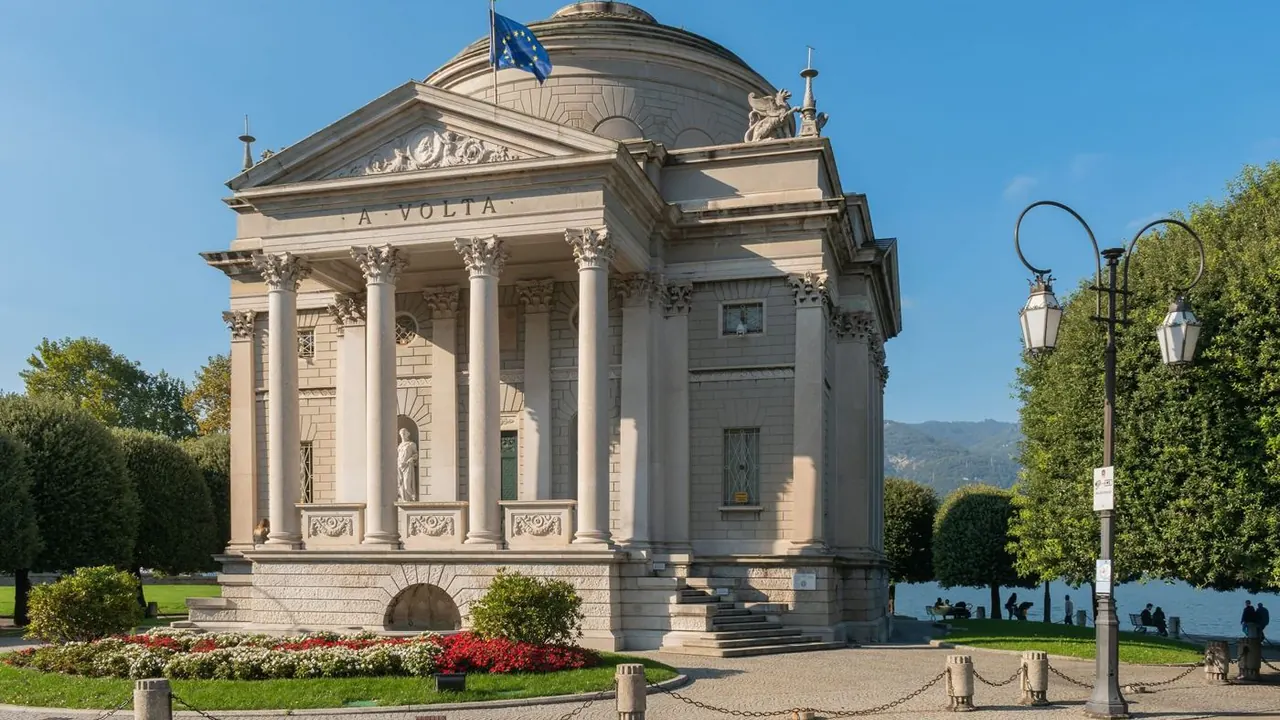
Tempio Voltiano on the lakeshore
- Day trips87
- Nature & outdoors82
- Getting around66
Photo: Krzysztof Golik, CC BY-SA 4.0, cropped
Match
49
Every category weighted equally
- Beach & sun47
- Culture & arts50
- Food & nightlife44
- Family trip52
- Outdoors58
- Relax & unwind50
- Shopping & style47
- On a budget47
Como in twelve categories
Our verdict on each, scored 0 to 100 against the same fixed benchmark cities, so a score means the same thing on every page.
Beaches & swimming. Scores 36 out of 100.
Food & drink. Scores 45 out of 100.
Culture & sights. Scores 52 out of 100.
Nightlife. Scores 22 out of 100.
Nature & outdoors. Scores 82 out of 100.
Day trips. Scores 87 out of 100.
Good for families. Scores 47 out of 100.
Getting around. Scores 66 out of 100.
Shopping & style. Scores 42 out of 100.
Affordability. Scores 30 out of 100.
Live music & performing arts. Scores 34 out of 100.
Wellness & relaxation. Scores 44 out of 100.
Como category by category
Beaches & swimming
36Lake Como is a lake for a dip rather than a beach vacation. In high summer the surface water reaches about 23°C, and swimming happens at lidos with lawns, decks and pontoons, the best-known being the one beside Villa Olmo on the western shore of the city. Further up the lake, villages such as Cernobbio, Moltrasio and the Tremezzina have small pebble strands and jetties where locals swim, often reached by ferry.
The season is short, from about June to early September, and the water at the busy southern tip of the city is less inviting than it is further north. Sand is scarce, and the shore is mostly stone walls and gardens. A swim is a welcome part of a summer stay, not its point.
Food & drink
45Eating in Como means Lombard mountain-and-lake cooking: risotto with perch fillets, missoltini (sun-dried shad), polenta with game or cheese from the valleys, and lake fish fried or marinated. The old town inside the walls has trattorias and wine bars, and the early-evening aperitivo with small plates is a reliable ritual on the squares around the cathedral and San Fedele.
The range is that of a provincial city of under 100,000 people. Lakefront terraces often charge for the view rather than the cooking, and there is little street food or international variety. The best meals are often in family-run places up the lake or in the hills above it.
Culture & sights
52Como's walled old town is small but well kept, and its sights have real quality. The marble cathedral blends late Gothic and Renaissance, with a Baroque dome on top. The Romanesque churches of San Fedele and Sant'Abbondio show the Lombard masons the region was once famous for. Just behind the cathedral stands Giuseppe Terragni's Casa del Fascio, a landmark of 1930s Italian Rationalist architecture that draws architects from around the world.
Along the shore are the neoclassical Villa Olmo and the Tempio Voltiano, a museum dedicated to Alessandro Volta, the city's most famous son. There is also a silk museum recalling the trade that made Como rich. Most visitors see it all in a day.
Nightlife
22Evenings in Como revolve around the aperitivo and a long dinner. After that the old town has a handful of wine and cocktail bars around Piazza Duomo and Piazza San Fedele, and summer nights bring people out to stroll the lakefront. Little stays open late, and there is no real club scene. Young locals who want a big night take the train to Milan.
Nature & outdoors
82This is Como's great strength. The city sits at the southern tip of a long, narrow glacial lake framed by steep wooded mountains. The funicular, running since 1894, climbs from the lakefront to the village of Brunate in minutes, and from there trails lead along the ridge to the Volta lighthouse and beyond. The Via dei Monti Lariani crosses the slopes above the western shore, Monte Bisbino gives wide views towards the Alps, and the Greenway del Lago follows old paths between villages.
On the water there is kayaking, sailing and stand-up paddling, and seaplanes take off from the city shore. Road cyclists ride the climbs of the Triangolo Lariano up to the Madonna del Ghisallo chapel. Spring and autumn are the best seasons for walking, with summer often hazy and humid.
Day trips
87Few bases offer so much within easy reach. Ferries and hydrofoils run up the lake to Bellagio on its promontory, to Varenna, and to Tremezzo, where Villa Carlotta's gardens and the terraced Villa del Balbianello are the lake's classic visits. Cernobbio and Moltrasio are closer still.
Over land, Milan is about forty minutes by train, which puts the Last Supper, the Duomo and La Scala within a half-day. Lugano and its Swiss lakefront are about half an hour away, and Bergamo's walled upper town about an hour and a quarter. Stresa and the Borromean Islands on Lake Maggiore, Lecco, Monza's royal villa and the Certosa di Pavia complete a long and varied list.
Good for families
47Como is calm and safe, and children usually enjoy the boat rides, the funicular up to Brunate and paddling at a summer lido. The lakeside gardens of Villa Olmo and the long promenade are good for a stroll with a pushchair. Beyond that there is little made for children: no zoo or aquarium of note and no theme park within easy reach, while the villa visits and churches are aimed at adults. It works best as a slow family stay mixed with outdoor days.
Getting around
66The old town and lakefront are flat, compact and easy on foot, with the funicular adding the hills above. Two stations link the city to Milan, and the Swiss line runs north to Lugano. Getting around the lake is slower. Ferries are scenic and reach every village, but the slow boats take a long time to go far up the lake. Buses and cars share narrow shore roads that clog in summer, and parking in the centre is hard. A car helps only for the mountain villages.
Shopping & style
42Como has been Europe's silk capital for centuries, and silk is what to buy here. Scarves, ties and fabric come from specialist shops in the old town and from factory outlets on the edge of the city, where the big mills supply the fashion houses. Via Vittorio Emanuele II and the lanes around it have a short run of Italian clothing and shoe boutiques. A weekend market near the walls sells crafts and antiques. For serious fashion shopping, people go to Milan.
Affordability
30Como is an expensive place to stay. The lake draws an international luxury crowd, and in summer lakeside hotels and villa rentals cost far more than in most Italian cities. Lakefront restaurants charge for the setting. Rooms in the town centre or back from the water are more reasonable, trattorias in the old town and the hills give fairer value, and trains and ferries are cheap. Spring and autumn are noticeably kinder than July and August.
Live music & performing arts
34The city's stage is the Teatro Sociale, a neoclassical opera house from the early nineteenth century with tiers of boxes behind a columned portico, close to the cathedral. Its season mixes opera, often in productions shared with other Lombard houses, with orchestral concerts, ballet and spoken theatre. In summer, performances move to the open-air Arena beside the theatre, which makes for a pleasant warm-evening outing.
Summer also brings chamber concerts in Romanesque churches and in lakeside villas, where the setting adds as much as the music. Outside these, live music is thin: there are few jazz or band venues, and the calendar stays quiet on many nights. It is a respectable provincial programme rather than a reason to come, and visitors who want more go to La Scala and the concert halls of Milan, a short train ride away.
Wellness & relaxation
44Como has no thermal springs or bathing tradition. Wellness here means the spas of the grand lakeside villa hotels and a handful of day spas in town. What it offers instead is a restorative setting: still water, gardens running down to the shore, slow ferry rides and quiet villages where evenings end early. Spring and autumn, when the crowds thin, suit a slow stay best, while the lakefront in midsummer can feel busy.
When should you go?
Pick a month to see what it is like. The climate figures are measured averages, not a forecast.
Como in July
Daytime high, °C
Rainfall in the month, mm
The whole year
Shaded against this city’s own year: the deepest cell is its best month for that figure and the palest its weakest.
Temperature and rainfall are climate normals, averaged over the years shown. Como: 1991-2020 normals, Lugano (23 km from centre).
Before you go
| Measure | Como |
|---|---|
| Official language | Italian |
| Currency | Euro (EUR) |
| Sockets | CFL230 V, 50 Hz |
| Driving side | Right |
| Time zone | UTC+1, UTC+2 in summer |
| Emergency number | 112 |
| Elevation | 201 m |
| Main airport | Milan Malpensa International Airport (MXP)34 km from centre208 non-stop destinations |
| Public holidays this year | 13 days |
By the numbers
| Measure | Como |
|---|---|
| City population | 83,184 |
| People per km² | 2,242 |
| Museums within 10 km | 11 |
| UNESCO World Heritage sites within 50 km | 8 |
Compare Como with
Every comparison with a written verdict behind it.
- Amalfi
- Annecy
- Antibes
- Avignon
- Baden-Baden
- Bern
- Bled
- Bologna
- Cannes
- Catania
- Dijon
- Florence
- Frankfurt
- Geneva
- Genoa
- Heidelberg
- Innsbruck
- Interlaken
- La Spezia
- Ljubljana
- Lucerne
- Lyon
- Marseille
- Milan
- Monaco
- Montpellier
- Munich
- Naples
- Nice
- Nuremberg
- Palermo
- Pisa
- Portofino
- Positano
- Rome
- Rovinj
- Saint-Tropez
- Salerno
- Salzburg
- Siena
- Sorrento
- Strasbourg
- Stuttgart
- Turin
- Venice
- Verona
- Zurich