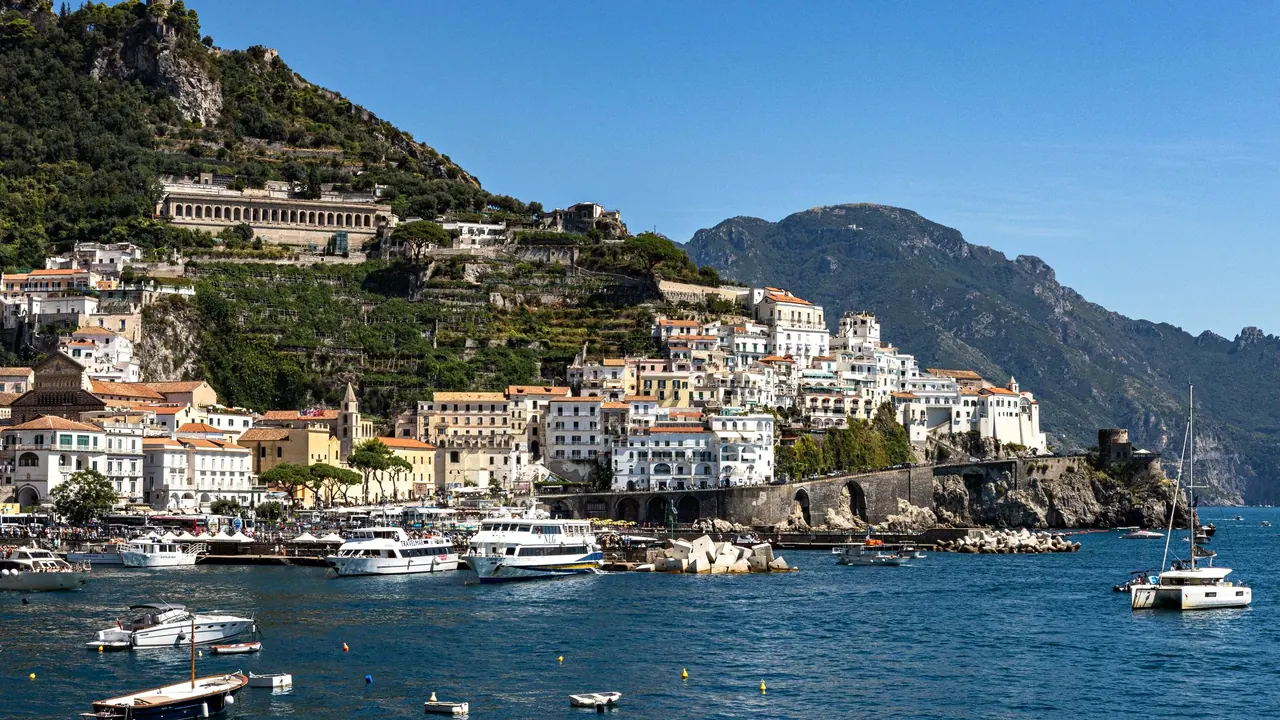
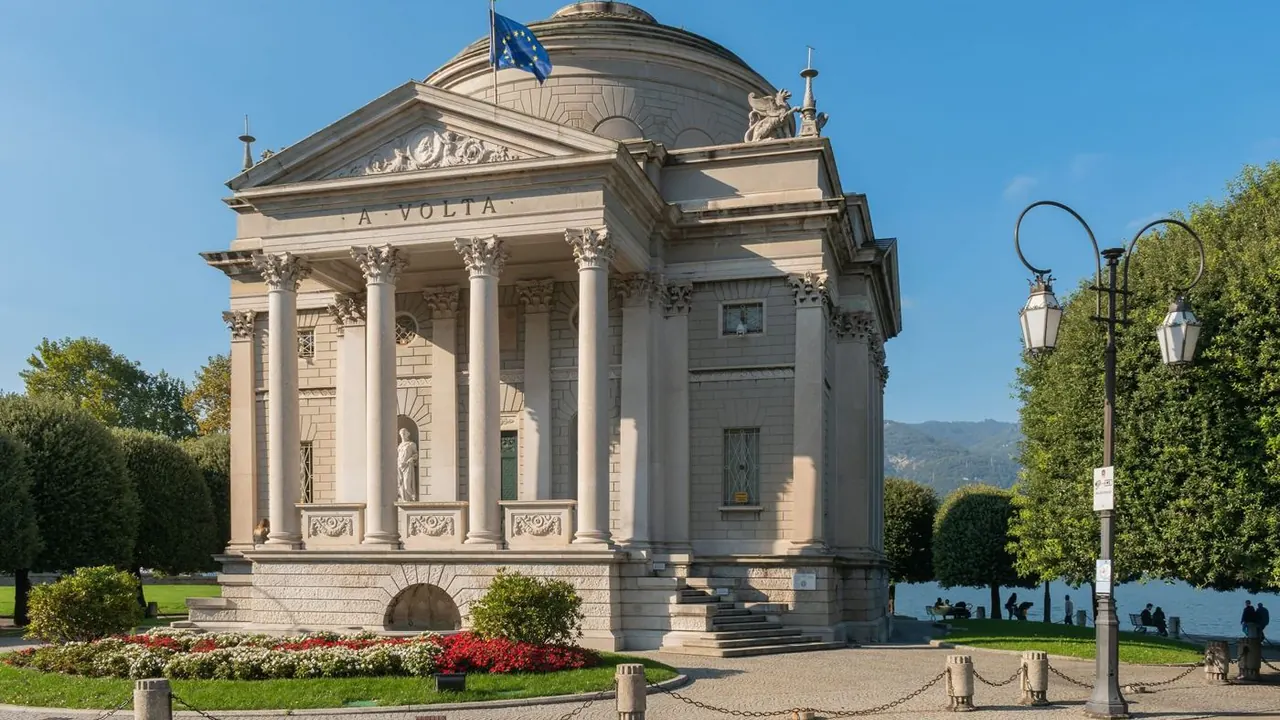
Photos: Amalfi by Oleksandra Zelena, Pexels License; Como by Krzysztof Golik, CC BY-SA 4.0, cropped.
Amalfi or Como?
Our verdict in twelve categories, each scored against the same fixed benchmark cities, and the climate month by month, so you can choose for your trip.
Choose Amalfi for
- beaches
- food and drink
- day trips
Amalfi suits travellers who want the sea at the heart of the trip. You can swim off the pebbles from May into October, take boats to coves and grottoes, and walk the cliff paths above, including the Path of the Gods. It works best for fit adults and couples who are happy to pay heavily for the view, and who don't mind quiet evenings or harder logistics in return for one of Europe's most dramatic coastlines.
Choose Como for
- families
- getting around
- culture and sights
Como is the easier and broader base. The old town is flat, trains run to Milan and Lugano, and lake ferries reach every village, so getting about takes little effort. There is also more to see, from the cathedral and the Romanesque churches to Terragni's Rationalist landmark and an opera house. Families and first-time visitors to northern Italy will find it the better fit, as will anyone who wants culture alongside the mountain walks. Swimming here is a summer extra rather than the point.
Scoreboard
Twelve categories on one fixed scale from 0 to 100. The shaded stretch is the gap between the two.
Your match
Pick a travel style or drag the sliders, and both match scores follow your weighting.
Wins on beaches and food and drink with your weighting.
Wins on families and getting around with your weighting.
What matters to you?
Category by category
What the scores mean for a trip.
Beaches & swimming
Amalfi is a real seaside town and Como is not. Marina Grande lies right below the Duomo, the clear, warm sea is swimmable from May into October, and boats take you to coves and grottoes the road never reaches. The beaches are pebble, though, and in summer they are packed with rows of loungers.
In Como you swim in the lake, from lido lawns and pontoons such as the one beside Villa Olmo, or from small stony strands up the lake at Moltrasio and the Tremezzina. The water is cooler, the season runs only from June to early September, and the busy city end is the least inviting place to swim.
Food & drink
Neither town is a dining destination, and in both the best meals are found away from the main square. Amalfi cooks from the sea and its terraces: scialatielli with clams, anchovies, colatura from Cetara, and lemon in everything from delizia cakes to the limoncello after dinner.
Como's cooking is Lombard, drawing on the lake and the mountains, with perch risotto, sun-dried missoltini, and polenta with game or valley cheese. Its strength is the early-evening aperitivo with small plates on the squares by the cathedral and San Fedele. In both places, the terraces with the best views are usually the ones to skip.
Culture & sights
Como has more to see, and more variety. The cathedral, the Lombard Romanesque of San Fedele and Sant'Abbondio, Terragni's Casa del Fascio, the Volta museum and the silk museum span several centuries and fill a full day.
Amalfi's heritage comes almost entirely from its days as a maritime republic: the striped Duomo with its bronze doors from Constantinople, the Cloister of Paradise, the old Arsenale and the paper museum up the valley. It is striking but compact, and most visitors are back on the coast after half a day.
Nightlife
Amalfi winds down soon after dinner, while Como keeps a little more going, though neither suits a big night out. In Amalfi the evening ends with a gelato or a drink on the piazza, a few bars stay open later in summer, and the town falls quiet once the last buses and ferries have gone. Anything more means a trip to Salerno or Naples.
Como's aperitivo hour fills the squares, a handful of wine and cocktail bars around Piazza Duomo and San Fedele carry on afterwards, and summer nights bring people out along the lakefront. For clubs, Milan is a short train ride away.
Nature & outdoors
Both are superb for landscape, in very different settings. At Amalfi the mountains drop straight into the sea. There are lemon terraces, the waterfalls of the Valle delle Ferriere, mule stairways up to Ravello, the Path of the Gods high above Positano, and kayaks to sea caves such as the Emerald Grotto.
Como has a glacial lake instead of the sea, framed by wooded mountains. The funicular climbs to Brunate, the Via dei Monti Lariani crosses the slopes, and Monte Bisbino looks towards the Alps. The lake adds sailing and paddleboarding, and road cyclists come for the climb to the Madonna del Ghisallo. In both places, spring and autumn are the best seasons for walking.
Day trips
Both make outstanding bases. The difference lies in what you can reach. From Amalfi it is the coast and the ancient world: Ravello, Positano and Capri by bus or boat, Paestum's Greek temples, and Pompeii and Herculaneum in a long day. Ferries run mainly in the warmer months, though, and the coast road crawls in summer.
From Como you get lakes, cities and a second country. Boats run to the villas at Bellagio, Varenna and Tremezzo, trains to Milan and the Last Supper, and Lugano is just across the Swiss border, with Bergamo's upper town further afield. Because so much is on the railway, these trips are easier to make at any time of year.
Good for families
Como is much the easier choice with children. The lakeside promenade and Villa Olmo's gardens suit a pushchair, and the funicular, the ferries and the summer lidos give children something to look forward to, even without a zoo or theme park.
In Amalfi, the stairways defeat pushchairs, the pebble beach is crammed, and the cliff-road buses can make children carsick. It suits older children who are confident swimmers and will enjoy boat trips and sea caves, rather than families with toddlers.
Getting around
Como is simpler to get around and to get in and out of. The old town and lakefront are flat, and two stations connect the city to Milan and to the line north to Lugano. The slow boats up the lake take time, however, and the shore roads clog in summer.
Amalfi is walkable but steep, with steps almost everywhere, and it depends on buses and seasonal ferries along a single cliff road. In high summer, full buses drive past waiting queues and traffic crawls. Away from the seafront it is hard going for anyone with limited mobility.
Shopping & style
Como gives you a better reason to shop: silk. Scarves, ties and fabric are sold in old-town shops and at factory outlets of the mills that supply the fashion houses. There is also a short run of clothing boutiques along Via Vittorio Emanuele II, and Milan is close by.
Amalfi is one main street of limoncello, lemon soaps and ceramics, with much the same stock in shop after shop. The finds worth buying are the handmade cotton paper from the valley, majolica, linen and made-to-measure sandals.
Affordability
Neither is cheap, but Amalfi is harder on the wallet. Sea-view rooms cost about as much as in Europe's dearest capitals, and beach loungers and boat hire add up quickly. The local buses are the only real bargain.
Como is expensive by Italian standards too, but staying in town or back from the water, eating in old-town trattorias and using the cheap trains and ferries keep a stay more manageable. In both places, spring and autumn bring the cost down.
Live music & performing arts
Como has a proper stage in the early nineteenth-century Teatro Sociale. Its season covers opera, ballet, concerts and theatre, performances move to an open-air Arena in summer, and La Scala is a short train ride away.
Amalfi has no theatre or concert hall of its own. Its moment comes in summer up in Ravello, where the festival's concerts on the Villa Rufolo terrace above the sea are worth planning an evening around. Otherwise there are church concerts and the band music of the Sant'Andrea processions.
Wellness & relaxation
Como is the more restful of the two, though in both places calm comes from the setting, as neither has thermal baths. Amalfi's spas sit in the luxury cliff hotels and mostly serve their own guests, and in July and August the centre is crowded and noisy. Its quiet is found in the hill hamlets, in swims from the rocks and in May and October.
Como adds a few day spas in town to the villa hotel spas, and its pace is slower all round: still water, gardens running down to the shore, unhurried ferry rides and villages where evenings end early.
When should you go?
Pick your month. The climate figures are measured averages, not a forecast.
Amalfi in July
Como in July
Daytime high, °C
Rainfall in the month, mm
Where the figures come from
Amalfi's temperatures are measured 65 km from the centre, at Grazzanise.
Amalfi has no rain gauge within 25 km of the centre, so its rainfall comes from a gridded climate dataset read at the city rather than from a gauge further away.
Temperature and rainfall are climate normals, averaged over the years shown. Amalfi: 1991-2020 normals, Grazzanise (64.7 km from centre). Como: 1991-2020 normals, Lugano (23 km from centre).
Amalfi has a long, dry summer. The sea is swimmable from May into October and warmest in August at about 26°C, and July and August are the sunniest months. Highs of 31°C in high summer make the exposed trails and endless stairways heavy going, though. June and September are the best months for combining swims with walks, and May and October suit walkers best. The rain returns in autumn and is heaviest in November, and winter is mild but wet and grey.
Como is cooler, cloudier and much wetter through the warm half of the year. Rain is heavy from April to November and peaks at about 178mm in May, and June and September are almost as wet, so there is no dry window for a summer stay. Late spring and September are still the best months for walking the old town and the hills, but that is for the mild temperatures rather than dry weather, so pack for showers. July and August are the warmest months, with highs near 27°C, and they bring the most sunshine and the peak of the lake swimming season. Winter is the driest time but cold. All year round, Amalfi is warmer and sunnier than Como, and its good weather lasts well into October.
Which traveller are you?
For a beach and sun trip, Amalfi is the clear pick. Its clear Tyrrhenian water is swimmable from May into October, with Atrani and the coves at Santa Croce and Duoglio close by. Como offers only lido dips in a short summer season.
On a family trip with children, Como works far better. Its flat promenade suits a pushchair, the funicular and ferries keep children entertained, and the lidos have lawns. Amalfi's steep stairways, crowded pebbles and winding cliff buses are hard going with small children.
For a culture and arts trip, choose Como. Its cathedral, Romanesque churches, Casa del Fascio and the opera season at the Teatro Sociale give it more depth, and the Last Supper and La Scala in Milan are a short train ride away. Amalfi's heritage fills half a day.
Before you go
| Measure | Amalfi | Como |
|---|---|---|
| Official language | Italian | Italian |
| Currency | Euro (EUR) | Euro (EUR) |
| Sockets | CFL230 V, 50 Hz | CFL230 V, 50 Hz |
| Driving side | Right | Right |
| Time zone | UTC+1, UTC+2 in summer | UTC+1, UTC+2 in summer |
| Emergency number | 112 | 112 |
| Elevation | 6 m | 201 m |
| Main airport | Naples International Airport (NAP)38 km from centre131 non-stop destinations | Milan Malpensa International Airport (MXP)34 km from centre208 non-stop destinations |
| Public holidays this year | 13 days | 13 days |
By the numbers
| Measure | Amalfi | Como |
|---|---|---|
| City population | 4,729 | 83,184 |
| People per km² | 830 | 2,242 |
| Museums within 10 km | 8 | 11 |
| UNESCO World Heritage sites within 50 km | 5 | 8 |
| Swim season, months above 21 °C | 5 months | - |
Where else could you go?
Every comparison below shares a destination with this one, so you can follow Amalfi or Como somewhere new.