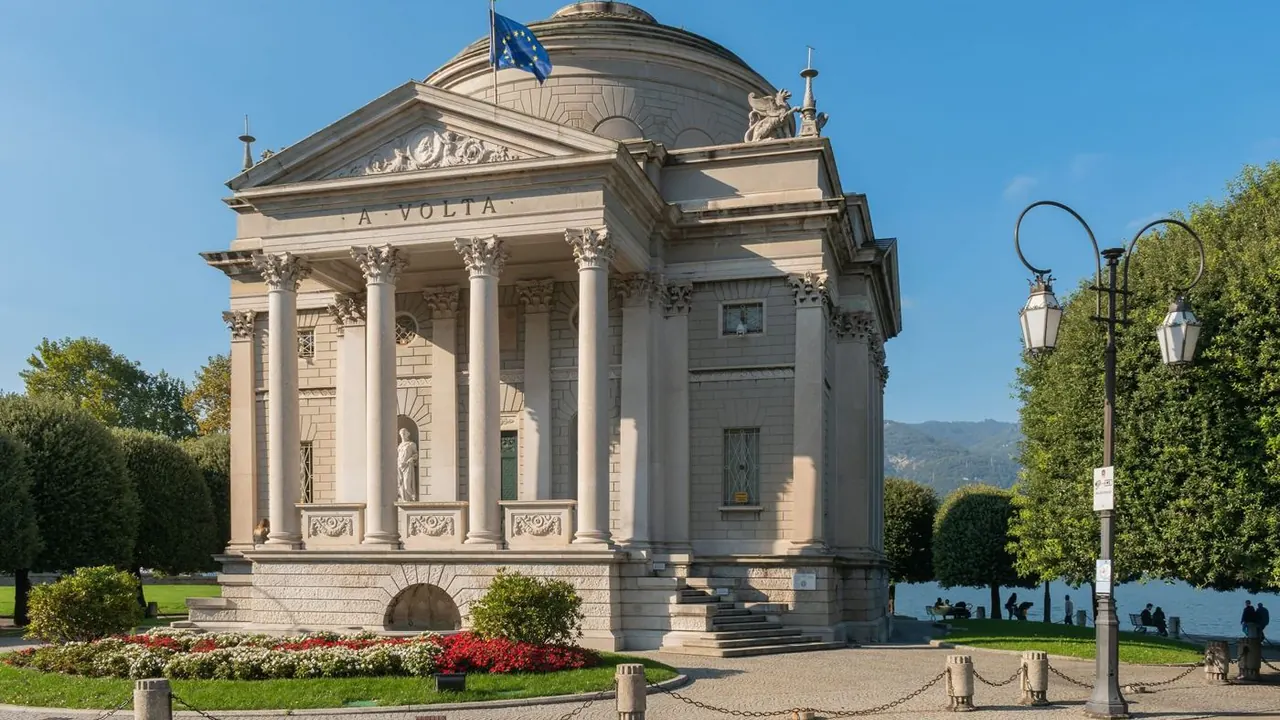
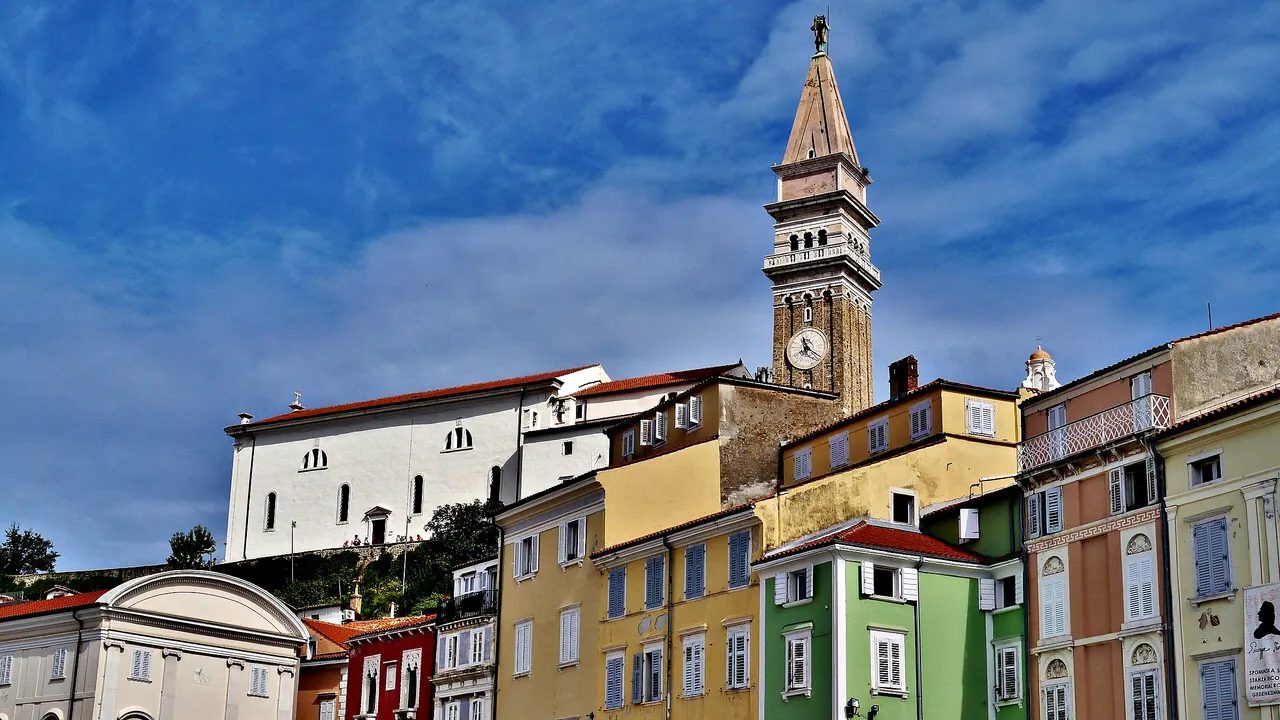
Photos: Como by Krzysztof Golik, CC BY-SA 4.0, cropped; Piran by Zairon, CC BY-SA 4.0, cropped.
Como or Piran?
Our verdict in twelve categories, each scored against the same fixed benchmark cities, and the climate month by month, so you can choose for your trip.
Choose Como for
- nature and the outdoors
- shopping
- live music and the arts
Como suits travellers who want mountains, water and big-name sights within reach of one base. The funicular puts ridge walks a few minutes above the lakefront, and ferries run to Bellagio and the villa gardens of Tremezzo. Milan, Lugano and Bergamo are easy by train. The old town adds Romanesque churches, a marble cathedral and a Rationalist landmark, and silk is a good buy. Expect to pay more, and treat a swim as a pleasant extra.
Choose Piran for
- beaches
- wellness
- prices
If you want the sea, Piran is the better pick. It is a car-free Venetian peninsula where you climb down a ladder into the clear, warm Adriatic. The days are slower, there are salt-pan thalasso treatments next door, and it costs less than the lake. It also works as a gentle base for Trieste and the hill towns of Croatian Istria, although for those you will want a car.
Scoreboard
Twelve categories on one fixed scale from 0 to 100. The shaded stretch is the gap between the two.
Your match
Pick a travel style or drag the sliders, and both match scores follow your weighting.
Wins on nature and the outdoors and shopping with your weighting.
Wins on beaches and wellness with your weighting.
What matters to you?
Category by category
What the scores mean for a trip.
Beaches & swimming
Neither town has a real sandy beach, but Piran is the better place to swim. You get into clear open sea from the ledges around the Punta headland, and the water stays warm well into September. When you want sand and sunbeds, Portoroz is a short walk or shuttle ride away, and the cliffs at Strunjan offer a quieter shore.
Swimming in Como happens at lidos with lawns and pontoons, such as the one beside Villa Olmo, or at the pebbly jetties of Moltrasio and the Tremezzina, often reached by ferry. The water at the city end of the lake is the least appealing, so here a swim is a summer bonus rather than the reason to come.
Food & drink
The two eat about equally well, and both are best for simple local cooking rather than variety. Como's table comes from the lake and the mountains: risotto with perch, sun-dried missoltini and polenta with game. There is also a proper aperitivo ritual on the squares around the cathedral.
In Piran the cooking turns to the sea. Konobas serve grilled fish and scampi buzara, with Istrian olive oil, truffles, Malvazija and Refosk from the hills behind. In both places, lakefront or harbour terraces charge for the view, and the best meals are found out of town, in the hills above Como or inland in Istria.
Culture & sights
Como offers more to see. It has a marble cathedral where Gothic meets Renaissance, the Romanesque churches of San Fedele and Sant'Abbondio, and Terragni's Casa del Fascio, which architects travel specifically to visit. The Tempio Voltiano and the silk museum add the story of Volta and of the trade that made the city rich.
In Piran, the town itself is the sight. It is a tight knot of Venetian Gothic houses around Tartini Square, with St George's campanile and the old walls above the red roofs. Its museums are small, so you go to wander rather than to tick off sights. Each town fills about a day.
Nightlife
Both towns go to bed early, so the difference lies in where you find the late hours. In Como, the evening is aperitivo, a long dinner and a few wine and cocktail bars around Piazza Duomo, and anyone wanting a big night takes the train to Milan. In Piran, you watch the sunset with a glass on the Punta, but Portoroz is only minutes away, with beach bars, a casino and some clubs in summer.
Nature & outdoors
Here Como is far ahead. Steep wooded mountains drop into a long glacial lake, and the funicular from the lakefront to Brunate opens up ridge walks to the Volta lighthouse. The Via dei Monti Lariani and Monte Bisbino give views towards the Alps, while sailors, paddlers and road cyclists heading for Ghisallo all have serious terrain.
Piran's landscape is gentler and lies close to sea level. The Strunjan cliffs have a path along the top, the Secovlje salt pans are full of wading birds, and the Parenzana cycle route runs through olive groves. Within about an hour you can reach the walking country and caves of the Karst, but there is no high ground nearby.
Day trips
Both towns make excellent bases, but Como's excursions are easier and more famous. Ferries and hydrofoils reach Bellagio, Varenna, Villa Carlotta and Villa del Balbianello. By train, Milan's Last Supper and Duomo are about forty minutes away, and Lugano, Bergamo and Lake Maggiore are also within reach.
From Piran you can visit three countries: Trieste's Habsburg squares, Rovinj and the hill towns of Motovun and Groznjan in Istria, Predjama Castle and Ljubljana. A summer boat also crosses to Venice. Without a railway, though, most of these trips are best done by car.
Good for families
Both are calm, safe places for a few gentle days with children, and Piran is a little easier. Its old town has no cars, the sea is warm and calm, the harbour aquarium is a good size for small children, and Portoroz has a shallow sandy beach. Beware the steep lanes and the concrete ledges you swim from.
Como appeals to children through its transport: the funicular to Brunate, the ferries and the summer lido. The Villa Olmo gardens and the promenade work well with a pushchair, but the villa visits are for adults, and older children may soon get bored in either town.
Getting around
Como is on the railway and Piran is not, and that shapes every trip beyond the centre. From Como, trains run to Milan and north along the Swiss line to Lugano, and ferries reach every village on the lake. The slow boats take a long time to go far up the lake, though, and the shore roads clog in summer, so the flat old town and the lakefront are easiest on foot.
Piran's car-free peninsula takes about a quarter of an hour to cross on foot, and a shuttle bus links it to the garage at the edge of town and to Portoroz. To go further you depend on slow regional buses, so for Istria and the Karst you will probably want a hire car.
Shopping & style
Como gives you something worth shopping for. Its centuries of silk-making mean scarves, ties and fabric from old-town specialists and from outlets at the mills that supply the fashion houses. Via Vittorio Emanuele II adds Italian shoe and clothing boutiques, and Milan is close.
Piran's best buys are things to eat: salt flower from the Secovlje pans, olive oil and coastal wine. Beyond those, there are a few galleries and harbour souvenir stalls.
Affordability
Piran costs noticeably less. Rooms in the old town carry a premium in July and August, but staying in Portoroz or outside high season, eating in konobas and drinking local wine keeps costs at a fair level, and the swimming and walking are free.
Como attracts an international luxury crowd, so summer lakeside hotels and villa rentals are expensive. To keep costs down, stay back from the water, eat in old-town or hillside trattorias, travel by train and ferry, and come in spring or autumn.
Live music & performing arts
Como has a real season, Piran mostly summer concerts. The Teatro Sociale is a nineteenth-century opera house with tiers of boxes that stages opera, ballet, orchestral concerts and plays, moving to its open-air Arena in summer. There are also chamber concerts in Romanesque churches and lakeside villas, and La Scala is a short train ride away.
Piran's music honours its native violinist Tartini, with summer concerts in churches, the monastery cloister and on the main square. The small Tartini Theatre hosts the odd recital, and outside summer there is little to attend.
Wellness & relaxation
For treatments, Piran wins easily. Neighbouring Portoroz grew up as a spa resort with seawater pools and brine baths, you can lie in salt mud at the outdoor thalasso spa among the Secovlje lagoons, and Strunjan has a seawater health resort.
Como has no bathing tradition, so wellness means spas in the grand villa hotels. What relaxes you there is the setting: still water, gardens running down to the shore and slow ferry rides, best enjoyed outside the busy midsummer weeks.
When should you go?
Pick your month. The climate figures are measured averages, not a forecast.
Como in July
Piran in July
Daytime high, °C
Rainfall in the month, mm
Temperature and rainfall are climate normals, averaged over the years shown. Como: 1991-2020 normals, Lugano (23 km from centre). Piran: 2005-2020 (sunshine 1991-2020, rainfall 1991-2020) normals, Portoroz (1.2 km from centre).
Como's summer is warm rather than hot, peaking around 27°C in July and August, which suits lake swims and evenings on the promenade. The catch is rain. From April to November it is wet month after month, heaviest in May at about 178mm, and the summer air can be humid. For the trails, March and September bring mild, fairly sunny days, though from spring onwards showers are likely in any month. Winter is cool, about 7°C in January, but it is Como's driest season and a little sunnier than Piran's.
Piran is hotter and brighter, reaching about 30°C in July with more summer sunshine than Como. The sea is warm enough for long swims from June to September and reaches about 25°C at its peak, which makes Piran the clear choice for a beach summer. Its rain comes later, building from September through November, so May, June and early September are the best months for exploring the lanes on foot. In winter Piran is a couple of degrees milder than Como, with similar rainfall but greyer skies.
Which traveller are you?
On a beach and sun trip, choose Piran. You swim in the open Adriatic from rocks and platforms below the walls, the summers are sunnier and hotter, and Portoroz and Strunjan add sand or quiet coves. Como offers lake lidos and a shorter swimming season.
For an outdoors trip, Como is clearly stronger. Steep wooded mountains rise straight from the water, there are ridge trails from Brunate and long paths above the western shore, and the road climbs to Ghisallo are famous among cyclists. Piran's cliffs, salt pans and cycle routes are gentler.
On a relaxing and wellness trip, Piran has the edge. Portoroz has a long spa tradition built on seawater and salt mud, and there is an outdoor thalasso spa among the lagoons. In Como, relaxing mostly means the setting itself and the spas of the expensive villa hotels.
Before you go
| Measure | Como | Piran |
|---|---|---|
| Official language | Italian | Slovene |
| Currency | Euro (EUR) | Euro (EUR) |
| Sockets | CFL230 V, 50 Hz | CF230 V, 50 Hz |
| Driving side | Right | Right |
| Time zone | UTC+1, UTC+2 in summer | UTC+1, UTC+2 in summer |
| Emergency number | 112 | 112 |
| Elevation | 201 m | 7 m |
| Main airport | Milan Malpensa International Airport (MXP)34 km from centre208 non-stop destinations | Trieste Airport (TRS)34 km from centre32 non-stop destinations |
| Public holidays this year | 13 days | 21 days |
By the numbers
| Measure | Como | Piran |
|---|---|---|
| City population | 83,184 | 3,787 |
| People per km² | 2,242 | 85 |
| Museums within 10 km | 11 | 5 |
| UNESCO World Heritage sites within 50 km | 8 | 4 |
| Swim season, months above 21 °C | - | 4 months |
Where else could you go?
Every comparison below shares a destination with this one, so you can follow Como or Piran somewhere new.