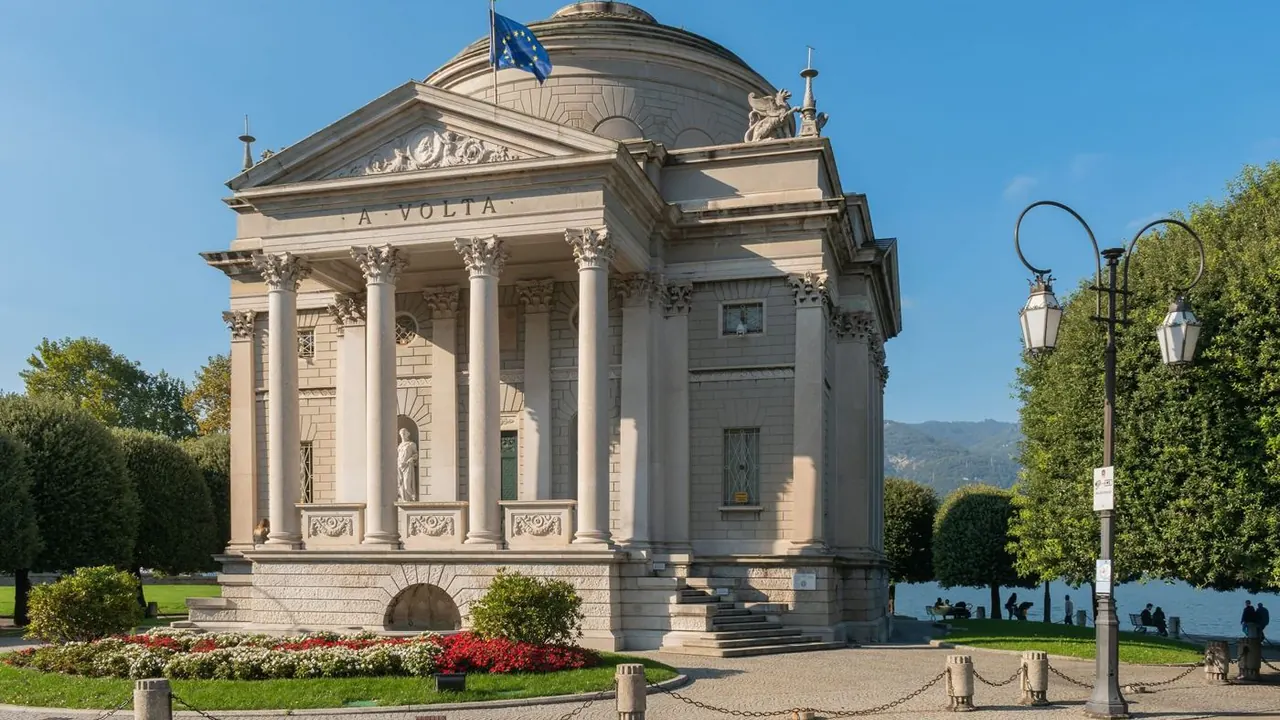
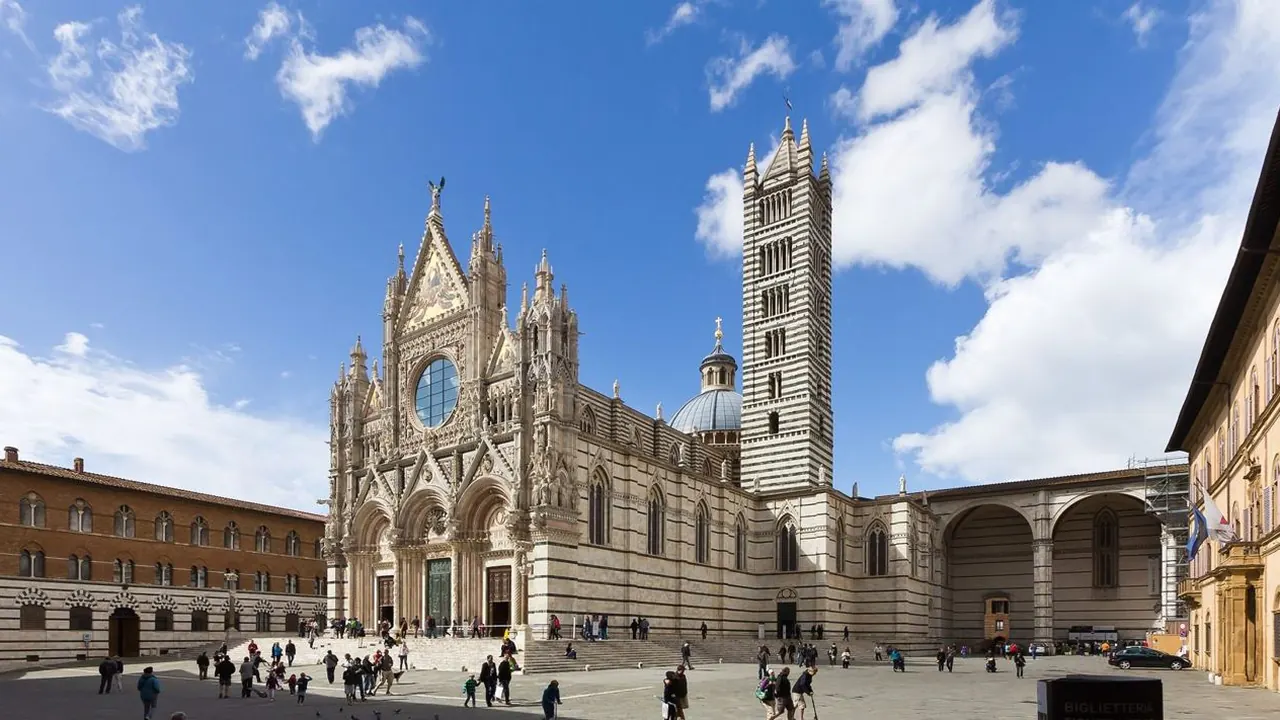
Photos: Como by Krzysztof Golik, CC BY-SA 4.0, cropped; Siena by Raimond Spekking, CC BY-SA 4.0, cropped.
Como or Siena?
Our verdict in twelve categories, each scored against the same fixed benchmark cities, and the climate month by month, so you can choose for your trip.
Choose Como for
- beaches
- nature and the outdoors
- families
Como suits travellers who want water and mountains around them. The funicular to Brunate, ridge walks with views towards the Alps, kayaks and ferries up the lake to Bellagio and the villa gardens at Tremezzo set the pace, and Milan is close enough for an afternoon. It is also the easier of the two with young children and the place to buy silk. It costs more, and the town's own sights take only a day.
Choose Siena for
- culture and sights
- food and drink
- prices
Pick Siena if the trip is about art, history and the table. Its whole medieval centre is a sight in itself, from the Campo and Lorenzetti's frescoes to the Duomo and Duccio's Maestà. Pici and Tuscan wines are poured in the osterie, and thermal pools and hill towns lie within an easy drive. It is a little kinder on the budget. The trade-offs are steep streets, no water to swim in nearby and a hot midsummer.
Scoreboard
Twelve categories on one fixed scale from 0 to 100. The shaded stretch is the gap between the two.
Your match
Pick a travel style or drag the sliders, and both match scores follow your weighting.
Too close to call, 2 points apart
Wins on beaches and nature and the outdoors with your weighting.
Wins on culture and sights and food and drink with your weighting.
What matters to you?
Category by category
What the scores mean for a trip.
Beaches & swimming
Neither city is a beach destination, but Como at least has water at its door. In summer people swim at lidos with lawns and pontoons, the one by Villa Olmo being closest to town, and from the small pebble jetties at Cernobbio, Moltrasio and the Tremezzina, often reached by ferry.
Siena has nothing like that. A swim means a hotel or agriturismo pool, or a full day out to the Maremma sand around Castiglione della Pescaia, well over an hour's drive away. The Tuscan coast does give you real sandy beaches and warmer water, while Como gives you a quick cool dip between other plans.
Food & drink
Siena eats and drinks better. Its cooking has more depth: hand-rolled pici, ribollita, cinta senese pork, and a baking tradition of panforte and ricciarelli. In town you can drink Chianti Classico, Brunello and Vino Nobile by the glass. It is at its best in the family osterie on the side streets of the contrade.
Como cooks Lombard lake-and-mountain food, such as perch risotto, missoltini and polenta, and its aperitivo on the squares by the cathedral is a pleasant ritual. The choice is narrower, though, and lakefront terraces trade on the view, so the best meals often mean heading up the lake or into the hills. Neither city offers much beyond its own regional food.
Culture & sights
Siena is by far the richer place for sightseeing. Its whole medieval centre is UNESCO-listed. The Campo, the Palazzo Pubblico with Lorenzetti's Good and Bad Government frescoes, the Duomo with its inlaid floor and Piccolomini Library, Duccio's Maestà and Santa Maria della Scala fill two or three days.
Como has fewer sights, but they are of real quality: the marble cathedral, the Romanesque San Fedele and Sant'Abbondio, the Volta museum, the silk museum and Terragni's Casa del Fascio, which matters most to anyone interested in modern architecture. A day covers them, which leaves the rest of the stay for the lake.
Nightlife
Both are early-to-bed towns, so the difference is in character. In Como the evening means aperitivo, dinner and a few wine and cocktail bars around Piazza Duomo, with a stroll on the lakefront in summer. For anything bigger, Milan is a train ride away.
Siena has university students and a few pubs to go with its wine on the Campo. In the days around the Palio, the contrade dinners keep the streets full until late, and Como has nothing like that.
Nature & outdoors
Como has the more dramatic outdoors. Steep wooded mountains rise straight from the lake, and the funicular takes you to the ridge trails above Brunate in minutes. The Via dei Monti Lariani, Monte Bisbino and the Greenway del Lago give walks with Alpine views, and the water adds kayaking, sailing and paddling.
Siena's landscape is gentler and more open: the clay hills of the Crete Senesi and the Val d'Orcia, best seen by bike on the strade bianche that start at the edge of town. Cyclists do well in both, with the Ghisallo climb above Como, but walkers who want height and water will prefer the lake.
Day trips
Both are outstanding bases, and Siena has the slightly deeper list. San Gimignano, Monteriggioni, the Chianti villages, Volterra, Pienza, Montalcino, Montepulciano and abbeys such as Sant'Antimo and San Galgano are all close, and Florence is about an hour and a quarter away by bus. Most of the hill towns, though, are far easier with a car.
Como's outings are easier without one. Ferries go to Bellagio, Varenna and the villas at Tremezzo, and trains reach Milan in about forty minutes and Lugano in half an hour, with Bergamo and Lake Maggiore further out.
Good for families
Como is the easier choice with children. Boat rides, the funicular, paddling at a summer lido and the flat promenade by Villa Olmo make simple outings, and a pushchair copes well.
Siena is safe and largely free of cars, and older children enjoy climbing the Torre del Mangia and watching the contrada drummers. The steep lanes are hard going with little ones, though, and families often stay at a farmhouse with a pool instead. Neither city has zoos or attractions built for children.
Getting around
Both centres are easy to walk, but Como's is flat. Siena sits on three ridges, with steep climbs, stepped lanes and a chain of escalators up from the station. Como also has the better rail links, with two stations serving Milan and the Swiss line north to Lugano, while Siena relies on buses to reach Florence.
Beyond the centre, each has its frustration. In Como it is the slow boats and the shore roads that clog in summer. In Siena it is the hill towns and wineries, which really need a hire car.
Shopping & style
Como has one thing worth shopping for in its own right: silk. You can buy scarves, ties and fabric from old-town specialists and from mill outlets on the edge of the city. There is also a short run of boutiques on Via Vittorio Emanuele II, and Milan is close by for serious fashion.
Siena's shopping is more about what you take home to eat or display: panforte, pecorino, wine, hand-painted majolica and contrada scarves. Clothing and leather shops line Banchi di Sopra, and a large weekly market fills the area by the Fortezza Medicea.
Affordability
Siena is the cheaper stay, though neither is a bargain. Osteria lunches give good value, and an agriturismo outside the walls cuts costs, although rooms climb around the Palio and museum tickets add up.
Como's lake draws a luxury crowd, so lakeside hotels and villas cost a good deal more in summer. Sleeping back from the water, eating in old-town trattorias and travelling in spring or autumn narrows the gap, and trains and ferries are cheap.
Live music & performing arts
Neither city has a big programme, but their strengths differ. Como's is opera and theatre at the Teatro Sociale, which moves to the open-air Arena in summer, along with chamber concerts in lakeside villas, and La Scala is a short train ride away.
Siena relies on its music schools, with the Accademia Chigiana's summer concerts and masterclasses and the Siena Jazz school. In winter the Rinnovati and Rozzi theatres stage drama, and for opera you go to Florence.
Wellness & relaxation
Siena is the better choice for anyone who wants to soak in hot water. Rapolano Terme is about half an hour away, and the hot pools of Bagno Vignoni, Bagni San Filippo and Petriolo lie further south, so they combine well with a rural spa or farmhouse stay.
Como has no thermal water. Wellness there means the spas of the grand villa hotels and the calm of the lake itself, with slow ferries, gardens and quiet villages. It soothes rather than treats, and the lakefront is busy in midsummer.
When should you go?
Pick your month. The climate figures are measured averages, not a forecast.
Como in July
Siena in July
Daytime high, °C
Rainfall in the month, mm
Where the figures come from
Siena's temperatures are measured 45 km from the centre, at Arezzo.
Siena has no rain gauge within 25 km of the centre, so its rainfall comes from a gridded climate dataset read at the city rather than from a gauge further away.
Temperature and rainfall are climate normals, averaged over the years shown. Como: 1991-2020 normals, Lugano (23 km from centre). Siena: 2006-2017 (rainfall 1991-2020) normals, Arezzo (45 km from centre).
Como is at its best from June to September, when highs in the mid-twenties make lido swimming pleasant and the streets comfortable, and July brings the most sunshine of the year. The catch is rain. From April to November the lake gets far more than Siena, often over 130mm a month, so walking days in spring and autumn need a flexible plan. Winters are cold and grey, with January highs around 7°C.
Siena runs warmer and drier. July and August reach about 31°C, which makes afternoons on its steep streets hard work, although these are also its driest months. May, June, September and early October suit both the town and the countryside best. November is the wettest month, and winter stays mild but damp. In midsummer Como is the cooler of the two, while in spring and autumn Siena is the drier.
Which traveller are you?
For a culture and arts trip, Siena is the clear pick. Its UNESCO-listed medieval centre, Lorenzetti's frescoes, the Duomo and the Sienese school in the Pinacoteca fill several days, while Como's fine cathedral and Rationalist landmark are seen in one.
On an outdoors trip, choose Como. Mountain trails start where the funicular stops at Brunate, the lake has kayaking, sailing and paddling, and ferries link walks between villages. Siena's rolling hills reward cyclists but lack Como's height and water.
For a relaxing and wellness trip, Siena has the edge. The warm thermal pools at Rapolano, Bagno Vignoni and Bagni San Filippo go well with a farmhouse stay in the hills. Como's calm comes from the lake and hotel spas, with no hot springs.
Before you go
| Measure | Como | Siena |
|---|---|---|
| Official language | Italian | Italian |
| Currency | Euro (EUR) | Euro (EUR) |
| Sockets | CFL230 V, 50 Hz | CFL230 V, 50 Hz |
| Driving side | Right | Right |
| Time zone | UTC+1, UTC+2 in summer | UTC+1, UTC+2 in summer |
| Emergency number | 112 | 112 |
| Elevation | 201 m | 322 m |
| Main airport | Milan Malpensa International Airport (MXP)34 km from centre208 non-stop destinations | Florence Airport, Peretola (FLR)55 km from centre46 non-stop destinations |
| Public holidays this year | 13 days | 13 days |
By the numbers
| Measure | Como | Siena |
|---|---|---|
| City population | 83,184 | 52,812 |
| People per km² | 2,242 | 446 |
| Museums within 10 km | 11 | 30 |
| UNESCO World Heritage sites within 50 km | 8 | 5 |
Where else could you go?
Every comparison below shares a destination with this one, so you can follow Como or Siena somewhere new.