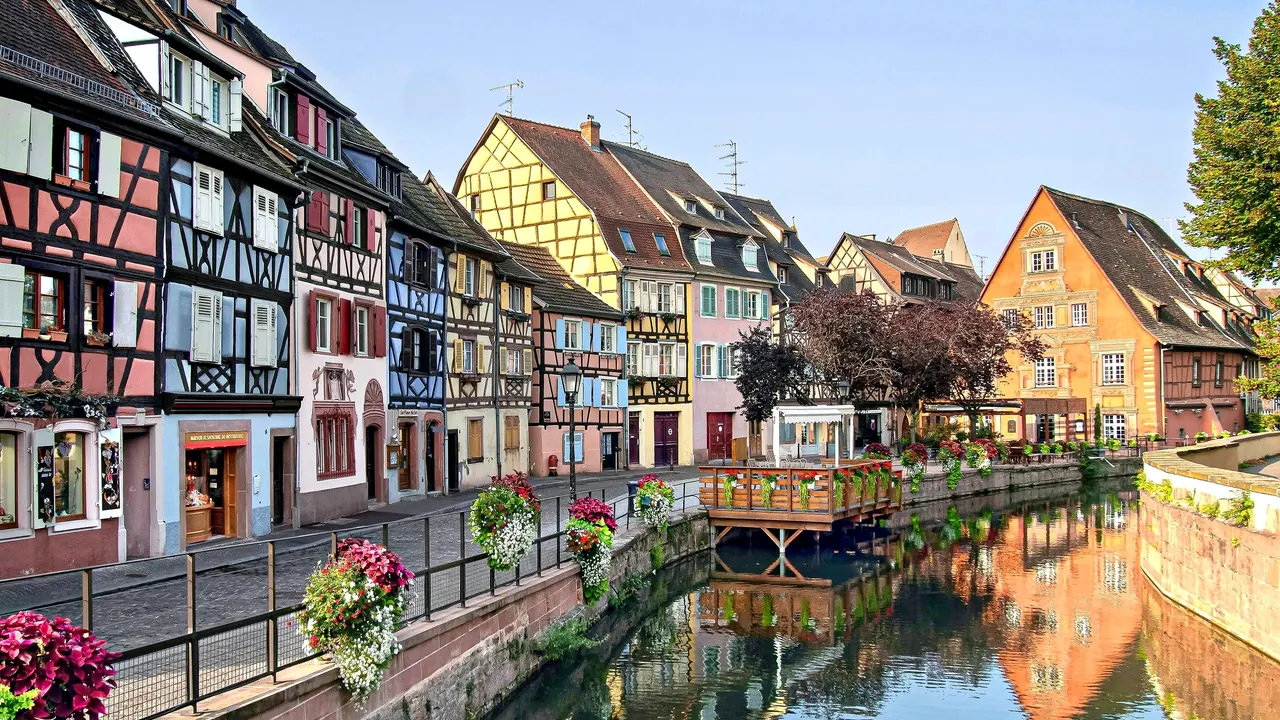
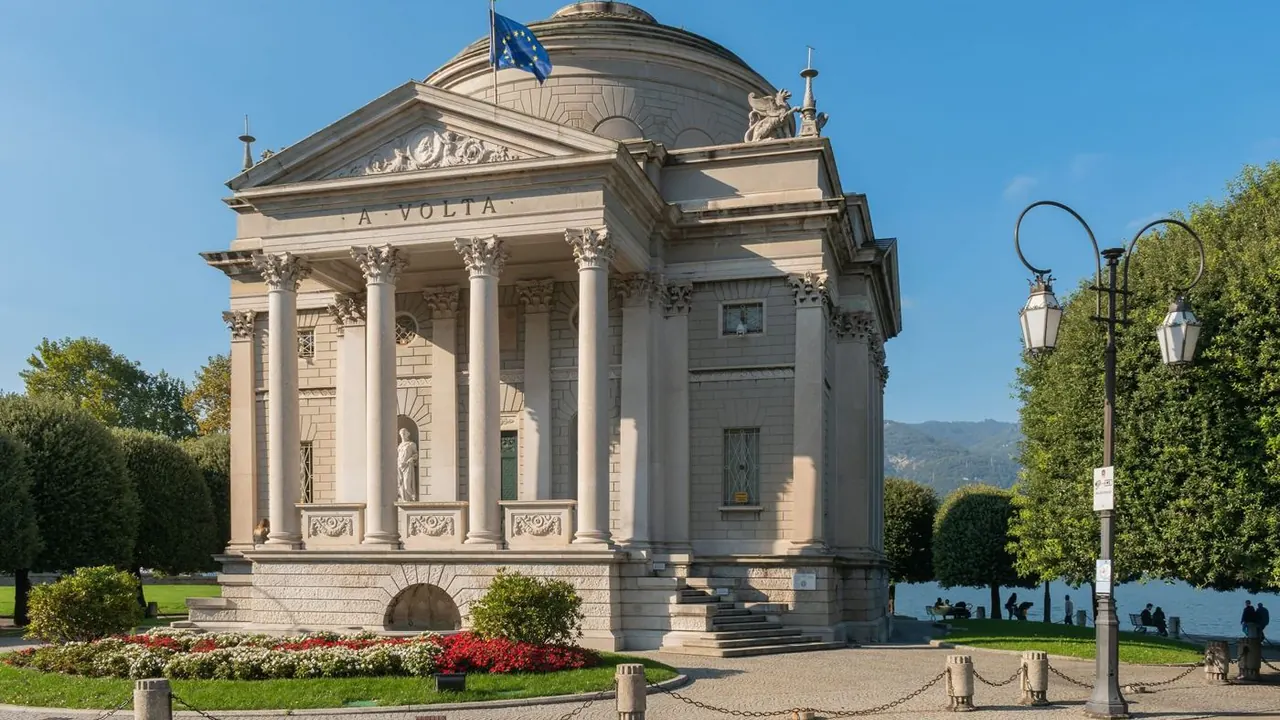
Photos: Colmar by Rolf Kranz, CC BY-SA 4.0, cropped; Como by Krzysztof Golik, CC BY-SA 4.0, cropped.
Colmar or Como?
Our verdict in twelve categories, each scored against the same fixed benchmark cities, and the climate month by month, so you can choose for your trip.
Choose Colmar for
- food and drink
- families
- prices
Colmar is for the traveller who wants a painted half-timbered town, the Isenheim Altarpiece and a glass of Riesling in a wood-panelled winstub, all within a short walk. It suits families too, with storks, boat rides and animal parks near the wine villages, and it is the gentler choice for the wallet. Bring or hire a car or a bike and it becomes a base for Strasbourg, the Route des Vins and the Vosges ridges.
Choose Como for
- beaches
- nature and the outdoors
- wellness
Pick Como if water and mountains matter more than old streets. The lake gives you summer swims at lidos, ferries to Bellagio and the villa gardens, a funicular to ridge trails, and Milan and Lugano close by on the train. It costs more and its food and sights are thinner than Colmar's, but for a scenic, slow-paced stay with grand hotel spas and real walking, it has the better setting.
Scoreboard
Twelve categories on one fixed scale from 0 to 100. The shaded stretch is the gap between the two.
Your match
Pick a travel style or drag the sliders, and both match scores follow your weighting.
Too close to call, 1 point apart
Wins on food and drink and families with your weighting.
Wins on beaches and nature and the outdoors with your weighting.
What matters to you?
Category by category
What the scores mean for a trip.
Beaches & swimming
Neither place is for a beach vacation, but only Como lets you swim outdoors in any real way. From June to early September there are lidos with lawns and pontoons, Villa Olmo's being the best known, and small pebble strands up the lake at Moltrasio or the Tremezzina, reached by ferry.
Colmar is deep inland on the Alsace plain, so swimming means a municipal pool or a drive to a small Vosges lake. If a summer dip is part of the plan, Como is the only real choice.
Food & drink
Colmar eats and drinks better. Alsatian cooking is hearty and distinctive: choucroute, baeckeoffe, tarte flambée and munster cheese, served in winstubs and washed down with Riesling, Gewurztraminer or Pinot Gris from the slopes just outside town. Cellar tastings in the villages and a handful of ambitious restaurants on the wine route add depth.
Como's Lombard lake cooking, risotto with perch, missoltini and polenta, is good but narrower, and the lakefront terraces often charge for the view. Its strength is the early-evening aperitivo around the cathedral, and the best meals are up the lake rather than in town.
Culture & sights
Colmar has more to see. Its old town survives as a whole late-medieval and Renaissance townscape, from the Maison Pfister to the canals of Petite Venise, and the Unterlinden Museum's Isenheim Altarpiece alone justifies the trip.
Como's walled centre is smaller and its highlights are more specialised: the marble cathedral, Romanesque Sant'Abbondio, Terragni's Rationalist Casa del Fascio and the Volta temple. It is a day's sightseeing against Colmar's two, and better suited to architecture enthusiasts than to lovers of painting.
Nightlife
Both are early-night towns with no club scene, so the difference lies in how the evening goes. Colmar's centres on a long dinner and Alsace wine in a few wine bars and brasseries, with Strasbourg the escape for a real night out. Como's follows the Italian pattern of aperitivo on the squares, a few cocktail bars and a stroll along the lakefront on summer nights, with Milan close by for anything bigger.
Nature & outdoors
Como has the more dramatic outdoors right at the door. The funicular lifts you from the lakefront to the ridge trails above Brunate, the Via dei Monti Lariani and Monte Bisbino open views to the Alps, and the lake itself is there for kayaking, sailing and paddling.
Colmar's landscape is gentler and takes more effort to reach: marked paths through the vineyards, then the rounded, forested Vosges and the Route des Crêtes past the Grand Ballon. It is excellent cycling country and comes into its own at harvest time, but you will want a car.
Day trips
Both make outstanding bases, but the trips feel different. From Colmar they are about villages and borders: Eguisheim, Riquewihr and Kaysersberg a few kilometres apart, Haut-Koenigsbourg on its ridge, Strasbourg by train, and Basel and Freiburg across the frontiers. The villages are best reached by car or bike.
From Como, the lake is the road. Ferries run to Bellagio, Varenna and the villa gardens of Tremezzo, while the train puts the Last Supper in Milan, Lugano and Bergamo's upper town within easy reach without a car.
Good for families
Colmar is the better family base. Children enjoy the boat rides through Petite Venise, the storks on the rooftops and the December children's market, and nearby are the Hunawihr stork park, the Kintzheim macaques and eagle show, the Mulhouse train and car museums and Europa-Park.
Como is calm and pleasant with a pushchair, and the funicular, ferries and a summer lido go down well. Beyond those it offers little aimed at kids, so it works best for a slow stay with older children who like the outdoors.
Getting around
In town the two are much alike: both centres are flat and small enough that you will rarely need a ticket. Colmar's rail station is only a stroll from the painted streets, while Como adds a vertical dimension, with the funicular lifting you from the lakefront up to Brunate in minutes.
The difference shows once you leave the centre. Around Colmar, public transport thins out as soon as you are off the rail line along the plain, so a visit to the vineyards or the Vosges works best with your own wheels, and the quiet, level lanes suit a bicycle as well as a car. Around Como the boats let you go without a car altogether, but at the pace of the water, so a run to the far end of the lake can take up much of the day. The lakeside roads are cramped and slow in high season, which makes driving more trouble than it is worth except for the hill villages.
Shopping & style
Neither is a fashion destination, but each has a speciality worth buying. In Colmar that means wine straight from the producers, Soufflenheim pottery, kougelhopf moulds and printed table linen, with the Christmas markets the peak of the year. Como's is silk: scarves, ties and fabric from old-town specialists and the mill outlets that supply the fashion houses, plus a short run of Italian boutiques and Milan close by for more.
Affordability
Colmar is clearly kinder on the budget. Meals, regional wine and village tastings are reasonable, and the main pressure is on rooms in summer and during the Christmas markets, which a bed in a nearby village eases.
Como draws an international luxury crowd, and lakeside hotels, villa rentals and waterfront restaurants are expensive, especially in July and August. Staying back from the water, eating in old-town trattorias and travelling by train and ferry help, and spring and autumn cost noticeably less.
Live music & performing arts
Como has a slight edge in the evenings. The neoclassical Teatro Sociale runs opera, ballet and concerts, moves outdoors to its Arena in summer, and lakeside villas and Romanesque churches host chamber music. La Scala is a short train ride away.
Colmar's small Italian-style theatre has a modest season and visits from the Opéra national du Rhin, but the town comes alive mainly for its July classical festival, its autumn jazz and the wine fair concerts. Outside those weeks you go to Strasbourg or Basel.
Wellness & relaxation
Neither has a thermal or bathing tradition, but Como does relaxation better. Its grand villa hotels have proper spas, and the setting itself is restful: still water, gardens running down to the shore and slow ferry rides to quiet villages.
Colmar's spas are mostly hotel facilities, and its calm comes from canal-side evenings and unhurried walks through the vines once the day-trippers leave. It is pleasant for a quiet few days rather than a spa break.
When should you go?
Pick your month. The climate figures are measured averages, not a forecast.
Colmar in July
Como in July
Daytime high, °C
Rainfall in the month, mm
Temperature and rainfall are climate normals, averaged over the years shown. Colmar: 1991-2020 normals, Ihringen (21.1 km from centre). Como: 1991-2020 normals, Lugano (23 km from centre).
The two run at almost the same temperatures through the year, with highs around 27°C in July and August and cold winters. Where they differ is rain and winter light. Colmar lies in one of the drier corners of France. Its winters and early springs are dry but dull, with little sun, and May is the wettest month at about 87mm. June to August are sunny and warm enough for long walks through the vines without being oppressive. September and October, with the harvest, are a fine time to come before November turns cold and grey.
Como is far wetter from April to November. Rain peaks in May at around 178mm and stays heavy through summer and autumn. June to early September is warm enough for a lake swim, though midsummer can be humid, so spring and early autumn are better for walking. Winter is cold but much brighter than in Alsace, with about 124 hours of sunshine in January against Colmar's 63, so a visit to the lake in the cold months feels far less gloomy.
Which traveller are you?
On a family trip with children, Colmar is the easier pick. The town is flat and safe, and a short drive brings the monkey park, the eagle show, the stork and otter park and Europa-Park. Como has boat rides and a funicular but little else made for kids.
For an outdoors trip, Como wins. You can take the funicular to Brunate and the ridge trails, walk the Greenway between villages, kayak or sail on the lake and ride up the Ghisallo climbs. Colmar's vineyards and the Vosges are lovely but more spread out.
On a trip on a tight budget, Colmar goes further. Set lunches, regional wine and free village tastings keep costs moderate if you sleep outside the old town. Como's lakeside hotels and view-priced terraces cost far more, especially in July and August.
Before you go
| Measure | Colmar | Como |
|---|---|---|
| Official language | French | Italian |
| Currency | Euro (EUR) | Euro (EUR) |
| Sockets | CE230 V, 50 Hz | CFL230 V, 50 Hz |
| Driving side | Right | Right |
| Time zone | UTC+1, UTC+2 in summer | UTC+1, UTC+2 in summer |
| Emergency number | 112 | 112 |
| Elevation | 185 m | 201 m |
| Main airport | EuroAirport Basel–Mulhouse–Freiburg (BSL)55 km from centre112 non-stop destinations | Milan Malpensa International Airport (MXP)34 km from centre208 non-stop destinations |
| Public holidays this year | 11 days | 13 days |
By the numbers
| Measure | Colmar | Como |
|---|---|---|
| City population | 66,970 | 83,184 |
| People per km² | 1,006 | 2,242 |
| Museums within 10 km | 9 | 11 |
| UNESCO World Heritage sites within 50 km | 3 | 8 |
Where else could you go?
Every comparison below shares a destination with this one, so you can follow Colmar or Como somewhere new.