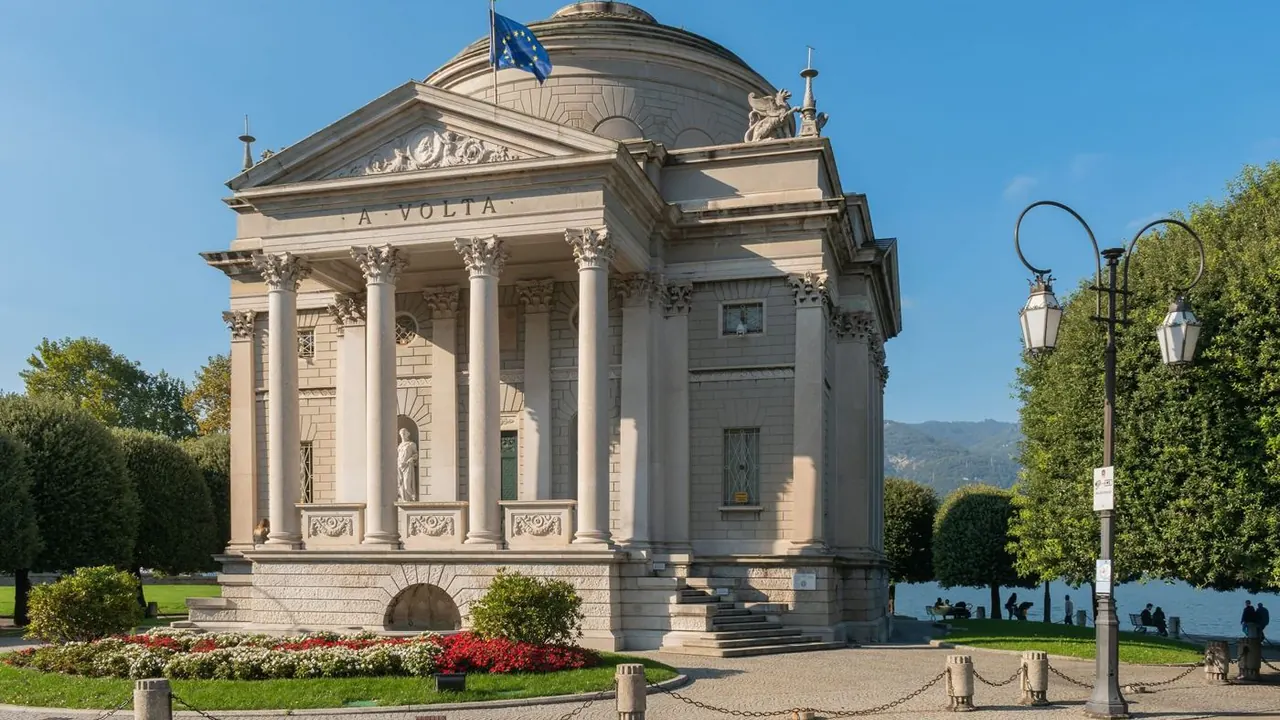
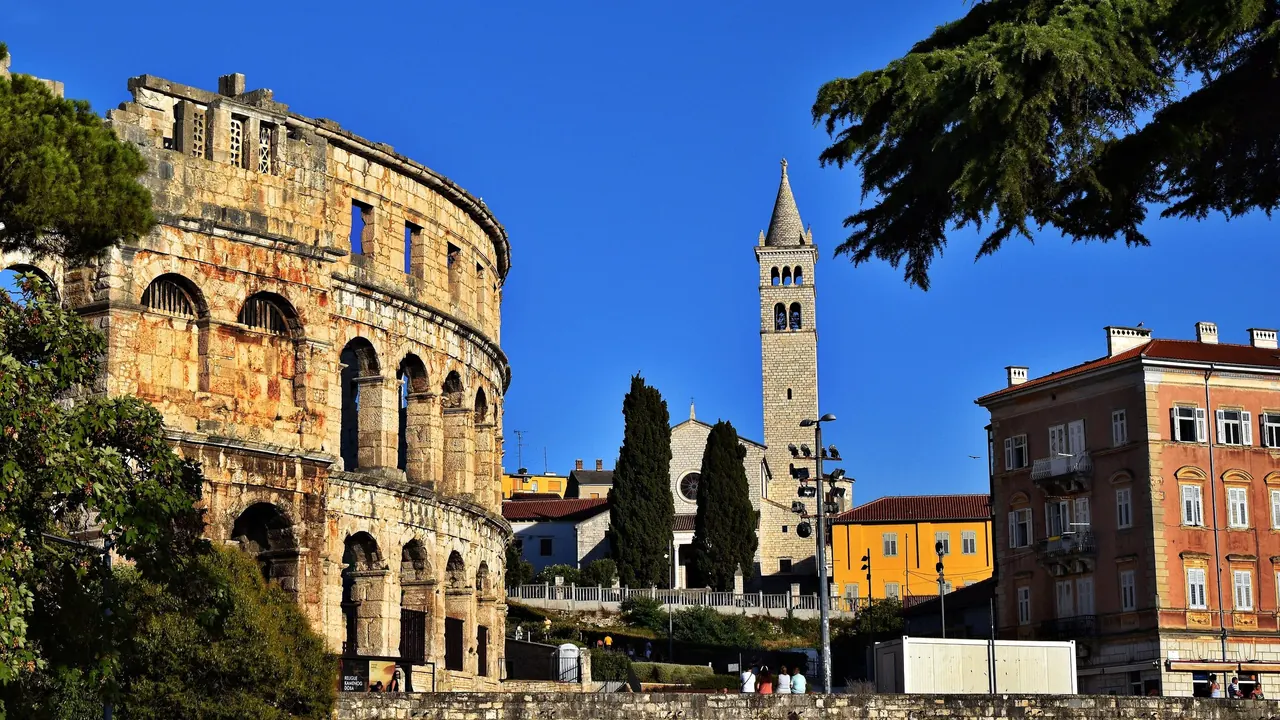
Photos: Como by Krzysztof Golik, CC BY-SA 4.0, cropped; Pula by Miroslav.vajdic, CC BY-SA 4.0, cropped.
Como or Pula?
Our verdict in twelve categories, each scored against the same fixed benchmark cities, and the climate month by month, so you can choose for your trip.
Choose Como for
- nature and the outdoors
- getting around
- wellness
Como suits travellers who want scenery, walking and easy excursions more than the sea. The mountains rise straight from the lakefront, ferries take you to Bellagio and the villa gardens, and Milan and Lugano are close by train, so the lake works well for a week of varied days without a car. It costs more, but in return you get a refined, quiet base with silk shops and spa hotels.
Choose Pula for
- beaches
- prices
- nightlife
Pula is the better pick if swimming is the point of the trip. The clear Adriatic, the wild coves of Kamenjak and the shallow bays at Medulin give it a real beach summer, and the Roman Arena, Istrian truffle cooking and lower prices make for a fuller, warmer and cheaper stay. Hire a car, though, because most of the coast and the hill towns are hard to reach without one.
Scoreboard
Twelve categories on one fixed scale from 0 to 100. The shaded stretch is the gap between the two.
Your match
Pick a travel style or drag the sliders, and both match scores follow your weighting.
Wins on nature and the outdoors and getting around with your weighting.
Wins on beaches and prices with your weighting.
What matters to you?
Category by category
What the scores mean for a trip.
Beaches & swimming
Swimming in Como is a summer bonus. You go to lidos with lawns and pontoons, such as the one by Villa Olmo, or to pebble jetties up the lake at Moltrasio and the Tremezzina. The water at the city end is not especially inviting.
Pula is a real seaside base. There is no sandy beach, and you will want water shoes, but the clear water, pine-shaded rocks around Verudela and Stoja and the wild coves of Kamenjak give you a proper swimming summer. Families can head for the gentler bays at Medulin.
Food & drink
Pula eats a little better, thanks to Istria's distinctive kitchen of truffle pasta, scampi buzara, pršut and estate olive oil, with Malvazija and Teran to drink. The market hall shows what is in season. Como offers Lombard lake cooking, such as perch risotto, missoltini and polenta, along with a good aperitivo on the squares around the cathedral. Its choice is that of a small provincial town.
In both places the best meals are found away from the famous sights. In Como that means trattorias in the hills, and in Pula the family taverns of the hinterland villages.
Culture & sights
For sightseeing, Pula offers more, mainly because Como has nothing to match its Roman remains. Como's walled old town still fills a rewarding day. There is the marble cathedral under its Baroque dome, the Romanesque churches of San Fedele and Sant'Abbondio, and Terragni's Casa del Fascio, which architects travel from abroad to see. The Volta temple and the silk museum on the shore complete the visit.
In Pula, the Arena still stands to its full three storeys above the harbour. Around it, the Temple of Augustus on the Forum, the Arch of the Sergii and the mosaics tucked into backstreets let you walk through a Roman town. The Venetian fortress and the Austro-Hungarian naval forts add later chapters, and together they are enough for a second day.
Nightlife
Neither is a place for a night out, but Pula has a little more life in summer. Drinks on the Forum lead on to beach bars on Verudela and around Medulin, and a few small clubs fill up at weekends. Como's evening ends after the aperitivo, dinner and a stroll along the lakefront, and anyone wanting to dance takes the train to Milan.
Nature & outdoors
Como is the more dramatic place outdoors. Steep wooded mountains rise directly from a glacial lake, and the old funicular to Brunate puts ridge paths, the Volta lighthouse and the Via dei Monti Lariani within minutes of town. Cyclists ride the Triangolo Lariano, and the water is busy with sailing and paddleboards.
Pula's landscape is low, stony and Mediterranean. The highlights are Cape Kamenjak's car-free cliffs, dinosaur footprints and islets, along with sea kayaking and wreck diving. For real hiking you have to drive to the Učka range.
Day trips
Both make good bases, but Como's list is longer and easier to reach. Ferries go to Bellagio, Varenna and the gardens of Villa Carlotta and Balbianello, while trains bring the Last Supper in Milan, the lakefront at Lugano and Bergamo's upper town within easy range.
From Pula you can tour Istria: Rovinj on its peninsula, the mosaics of the Euphrasian Basilica at Poreč, the hill towns of Motovun and Hum, and the Brijuni islands by boat. Most of these need a car, because buses are sparse.
Good for families
Pula is the easier choice with children. It has shallow bays at Medulin and Premantura, an aquarium inside an old fort, and the Arena's underground passages to explore, with a dinosaur park and a water park within an hour. Como gives children boat rides, the funicular and a paddle at the lido. Beyond those it offers little made for them, and most of its villas and churches are aimed at adults.
Getting around
You can manage Como entirely on foot, by train and by boat. The flat old town and lakefront are easy to walk, the funicular lifts you to the hills, and trains reach Milan and Lugano quickly. Ferries call at every village on the lake, though the slow boats take their time. In summer the narrow shore roads clog, so a car is more trouble than help.
Pula's centre is just as compact, with the Arena, the Forum and the harbour minutes apart on foot, and city buses run out to Verudela. Beyond that, the slow railway and sparse regional buses mean you need a car or scooter for Kamenjak, the hill towns and the wider coast.
Shopping & style
Como has something genuinely its own to buy: silk. You will find scarves, ties and fabric in old-town specialists and at mill outlets on the city's edge, plus a short run of Italian boutiques on Via Vittorio Emanuele II. In Pula, the things worth taking home are olive oil, truffle products, wine and honey from the market hall and from producers in the countryside.
Affordability
Pula is the cheaper of the two. Private apartments and simple konobas keep a stay reasonable, though rooms in July and August approach Western European levels, and car hire and boat trips soon add up.
Como attracts an international luxury crowd, and lakeside hotels, villa rentals and waterfront restaurants are expensive. Staying back from the water, eating in old-town trattorias and travelling by the cheap trains and ferries all help, and spring and autumn are kinder on the budget.
Live music & performing arts
The two are about level, but the experience is different. Como has a real opera house in the neoclassical Teatro Sociale, with opera, ballet and concerts, an open-air summer stage beside it, and chamber music in churches and lakeside villas. La Scala is a short train ride away.
Pula's big moment is a summer concert or film screening inside the Roman Arena. The rest of the year there is mostly drama in Croatian at the Istrian National Theatre.
Wellness & relaxation
Como is the better place to unwind, although neither city has thermal baths or a bathing culture to build a stay around. What makes the difference is the landscape. A lake held between mountains has a stillness the open coast can't match, and a typical Como day is restful in itself: a boat to a villa garden, lunch in a lakeside village, an early night. If you want treatments too, the grand hotels on the shore have spas of their own, and the quieter months either side of summer suit this kind of stay best.
Pula's kind of rest is simpler and centres on the sea. The calm comes from a morning swim, an unhurried coffee in the old town and a walk under the pines by the water. For pampering you go to the resort hotels on the peninsulas south of town, which are add-ons rather than part of the place. So where Como works as a retreat, Pula is better for a lazy beach week, ideally outside July and August.
When should you go?
Pick your month. The climate figures are measured averages, not a forecast.
Como in July
Pula in July
Daytime high, °C
Rainfall in the month, mm
Where the figures come from
Pula's temperatures are measured 87 km from the centre, at Trieste.
Pula has no rain gauge within 25 km of the centre, so its rainfall comes from a gridded climate dataset read at the city rather than from a gauge further away.
Temperature and rainfall are climate normals, averaged over the years shown. Como: 1991-2020 normals, Lugano (23 km from centre). Pula: 1991-2020 normals, Trieste (87 km from centre).
Pula has the more dependable summer. From June to September it is hot and mostly dry, and the sea is warmest in August at about 25°C, so swimming is easy for well over three months. Como reaches about 27°C in July but is wet right through the warm half of the year, with May the wettest month at around 178mm. Showers and haze come with the heat, so a lake stay in summer means some grey afternoons.
For walking, both cities are best in spring and early autumn, when days sit in the high teens and low twenties. Pula's dry spell ends in autumn, and November is its wettest month at about 107mm. Como's winters are colder and greyer, though its driest months are December to March. In midwinter neither place has much to offer, but Pula stays slightly milder.
Which traveller are you?
For a beach and sun trip, Pula is the clear choice. It has a long, dry swimming season, very clear water off rocks and pebble coves, and the protected headland at Kamenjak. Como's lake offers a refreshing dip at a lido, not days on the shore.
For an outdoors trip, choose Como. The funicular takes you straight up to ridge trails above the lake, Monte Bisbino looks out towards the Alps, and road cyclists come for the Ghisallo climb. Pula's walking is gentler and its real mountains are further away.
On a trip with a tight budget, Pula goes further. Private apartments and simple konobas keep costs down, particularly outside midsummer. Como draws a luxury crowd, and its lakefront hotels and restaurants charge heavily for the view.
Before you go
| Measure | Como | Pula |
|---|---|---|
| Official language | Italian | Croatian |
| Currency | Euro (EUR) | Euro (EUR) |
| Sockets | CFL230 V, 50 Hz | CF230 V, 50 Hz |
| Driving side | Right | Right |
| Time zone | UTC+1, UTC+2 in summer | UTC+1, UTC+2 in summer |
| Emergency number | 112 | 112 |
| Elevation | 201 m | 5 m |
| Main airport | Milan Malpensa International Airport (MXP)34 km from centre208 non-stop destinations | Pula Airport (PUY)7 km from centre34 non-stop destinations |
| Public holidays this year | 13 days | 14 days |
By the numbers
| Measure | Como | Pula |
|---|---|---|
| City population | 83,184 | 52,220 |
| People per km² | 2,242 | 971 |
| Museums within 10 km | 11 | 4 |
| UNESCO World Heritage sites within 50 km | 8 | 1 |
| Swim season, months above 21 °C | - | 4 months |
Where else could you go?
Every comparison below shares a destination with this one, so you can follow Como or Pula somewhere new.