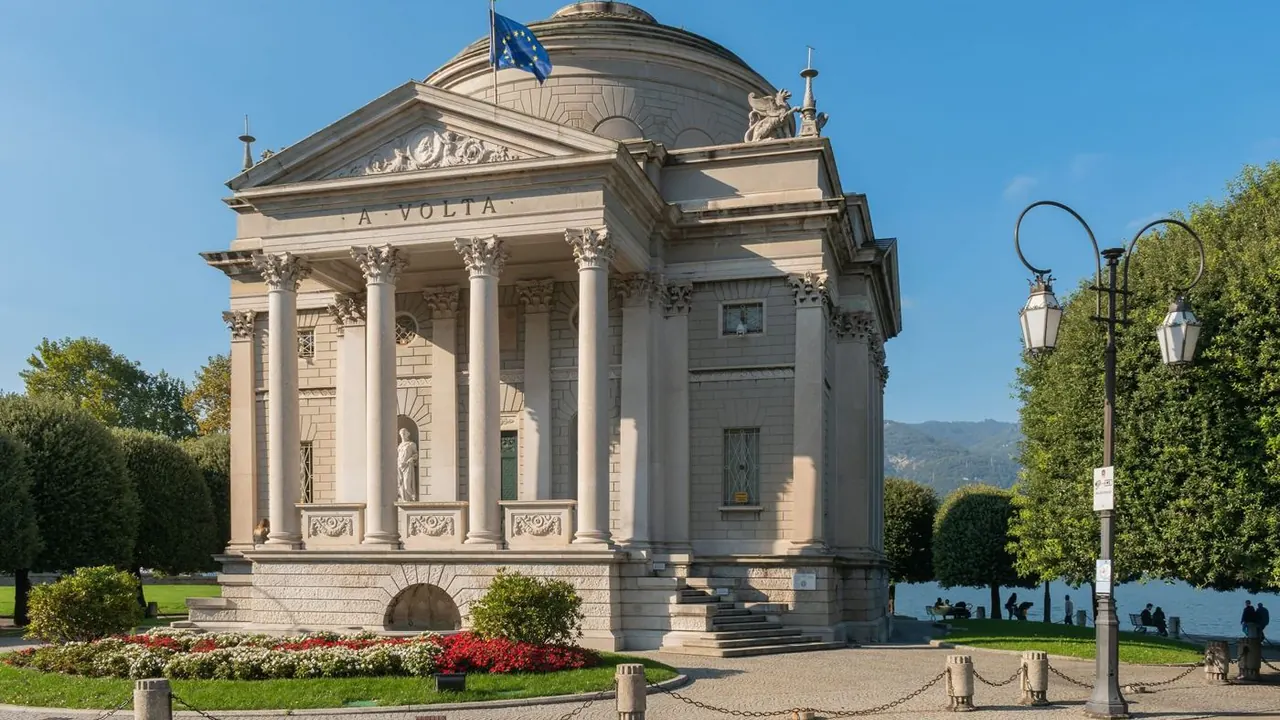
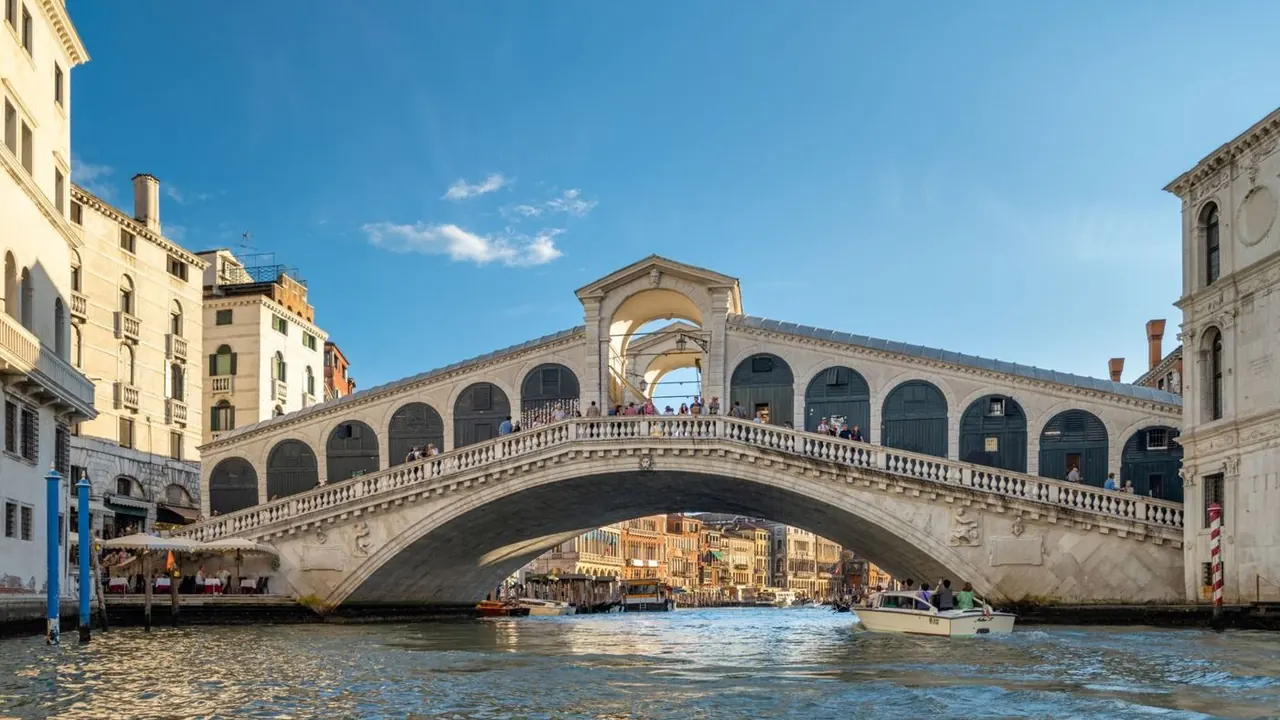
Photos: Como by Krzysztof Golik, CC BY-SA 4.0, cropped; Venice by David Vives, Pexels License.
Como or Venice?
Our verdict in twelve categories, each scored against the same fixed benchmark cities, and the climate month by month, so you can choose for your trip.
Choose Como for
- nature and the outdoors
- prices
- wellness
Como suits travellers who want mountains and water as much as streets and squares: walkers, cyclists, and people happy to spend an afternoon on a ferry deck and an evening over a long dinner. The funicular to Brunate, the ridge paths and the villa gardens up the lake make it a base for active, unhurried days. When you want a big city's sights, Milan is a short train ride away. It is also a little easier on the wallet, as long as you stay back from the shore.
Choose Venice for
- culture and sights
- live music and the arts
- beaches
For art, architecture and history, Venice is in another league. Its palaces, churches and painting collections run far deeper than anything on Lake Como, La Fenice gives your evenings some weight, and the bacari make eating out a pleasure in itself. Expect high costs, crowds on the main routes and very little green space or hill country. For anyone who travels to see great buildings and paintings, few places compare.
Scoreboard
Twelve categories on one fixed scale from 0 to 100. The shaded stretch is the gap between the two.
Your match
Pick a travel style or drag the sliders, and both match scores follow your weighting.
Wins on nature and the outdoors and prices with your weighting.
Wins on culture and sights and live music and the arts with your weighting.
What matters to you?
Category by category
What the scores mean for a trip.
Beaches & swimming
Neither is a beach destination, but Venice has the better option. The Lido offers kilometres of fine sand on the open Adriatic, shallow and gentle enough for small children. Quieter Pellestrina and the big Jesolo strip are within reach too.
Como offers lake swimming instead: lawns and pontoons at the lido by Villa Olmo, and pebbly spots with jetties in villages such as Moltrasio, reached by ferry. The water is cooler and the season shorter, so think of it as a refreshing dip on a summer afternoon rather than a day on the sand.
Food & drink
Venice offers the more rewarding eating, mostly because of its bacari. There, cicchetti and a small glass of wine at the counter turn a meal into grazing, and the Rialto market supplies lagoon dishes such as cuttlefish-ink risotto and soft-shell crab. The trap is the long run of tourist menus around San Marco.
Como's food is heartier and the choice narrower: perch risotto, missoltini, and polenta with cheese from the valleys. Aperitivo near the cathedral is a pleasure, but the range is that of a small provincial city, and the best meals are usually up the lake rather than in town.
Culture & sights
This is where the two differ most. Venice is a whole city of palaces and churches standing on water, from the Basilica and the Doge's Palace to the palazzi of the Grand Canal. The Accademia, the Frari, San Rocco and the Guggenheim hold art of the first rank, and several days of sightseeing pass quickly.
Como is small but not slight. It has a fine marble cathedral, the Romanesque Sant'Abbondio, the Volta museum and Terragni's Casa del Fascio, which architects come from abroad to see. It makes a rewarding day of sightseeing, not the reason for a whole trip.
Nightlife
Both cities wind down early, and in both the evening peaks at aperitivo time. Venice keeps a little more going after dinner, mainly in Campo Santa Margherita, where students spill out of the bars. Its silent canals also make a midnight walk memorable.
Como has a few wine and cocktail bars around Piazza Duomo and San Fedele, plus a summer stroll along the lakefront. Anyone in either city who wants to dance until late has to travel: from Como that means the train to Milan, from Venice the mainland or Jesolo's beach clubs.
Nature & outdoors
Como is the place for the outdoors. Steep wooded mountains rise straight from the water, the funicular lifts walkers to Brunate and the ridge paths, and Monte Bisbino looks out towards the Alps. Cyclists, kayakers and sailors are all well served.
Venice's nature is the lagoon. Herons, egrets and flamingos feed in the marshes around Torcello and Sant'Erasmo, which are best explored by kayak or rowing boat, and you can ride flat routes along the Pellestrina sea walls. It is peaceful but gentle, and real mountains are more than two hours away.
Day trips
Both are excellent bases, and the difference lies in the kind of outing. From Como the lake itself is the excursion, with ferries to Bellagio, Varenna and the gardens of Villa Carlotta and Balbianello. Quick trains run to Milan, Lugano and Bergamo, so Switzerland is as easy a day out as Lombardy.
Venice looks instead to the art cities of the Veneto: Padua's Scrovegni Chapel, Verona's arena, Palladio's Vicenza and the villas along the Brenta. Murano, Burano and Torcello make a lagoon day without boarding a train at all.
Good for families
Neither city is built around children, and both work best as a slow stay. Como is easier in practical terms: the promenade is flat, the gardens at Villa Olmo suit a pushchair, and the funicular and ferries are ready-made adventures.
Venice has more novelty. Boats replace buses, Murano has glass-blowing, the natural history museum has dinosaurs, and the Lido has sand. But the stepped bridges and summer crowds wear parents down, so it suits older children better than toddlers.
Getting around
The two are about as easy as each other, but in opposite ways. Como's centre is small and level, so a visitor who arrives by train can cover the old town and the waterfront on foot, take the funicular up into the hills, and reach Milan or Lugano without ever needing a car. The trouble starts when you head for the lake villages. The ferry is the pleasant way to get there, but a trip to the far north of the lake uses up much of the day, and driving the shore road in high summer means queues and nowhere to park.
Venice is the reverse. Once you step out at Santa Lucia or Piazzale Roma there is no traffic at all, and most of what you came to see is within a long walk, although getting lost in the alleys comes with it. For anyone with a heavy suitcase, a pushchair or a wheelchair, Venice is the harder of the two, because every canal crossing means climbing steps. On the busiest routes the water bus is rarely much quicker than walking.
Shopping & style
Venice gives you more to buy and more variety. Workshops in Dorsoduro, Castello and on Murano make glass, Burano lace, papier-mâché masks, marbled paper and furlane slippers, and the big fashion names gather near San Marco. The skill is steering clear of the imported fakes on the main routes.
Como's shopping comes down to one thing done very well: silk, in scarves, ties and fabric from town shops and mill outlets. Beyond a short run of boutiques and a weekend market, serious fashion shoppers go to Milan.
Affordability
Neither is cheap, but Como gives you more ways to keep costs down. The high prices are mostly on the water, in summer rooms and villas along the shore and in restaurant tables with a lake view. If you sleep in the town centre or eat in the hills, prices come closer to those elsewhere in Italy. The trains and lake boats cost little, so getting about adds almost nothing, and spring or autumn bring prices down again.
Venice costs more at almost every turn. A room in the historic centre is dearer than in most European cities, not only Italian ones. The vaporetto is an expensive way to get about, and many churches and museums charge for entry, so a day of sightseeing costs far more than it would at Como. You can save by eating cicchetti at a bacaro counter or staying in Mestre, but then you cross the lagoon bridge every morning. Summer and carnival push prices up further, and only late autumn and winter bring much relief.
Live music & performing arts
Venice has much the stronger stage. La Fenice, where Verdi and Rossini premiered works, runs a full season alongside the Malibran, the Goldoni stages drama, and the Biennale adds contemporary festivals. On top of that, Vivaldi concerts in churches and scuole fill most evenings.
Como's Teatro Sociale is a handsome neoclassical house with a respectable mix of opera, concerts and ballet. In summer there are open-air performances in its Arena and chamber music in lakeside villas. It makes a pleasant night out, but serious opera lovers take the train to La Scala.
Wellness & relaxation
Neither city has a bathing tradition of its own, so in both the pampering comes from hotel spas and the real tonic is the setting. At Como the calm comes from still water, gardens and villages up the lake where evenings end early. In Venice it comes from the absence of traffic, felt most in Castello, Cannaregio and Giudecca, and Venice also has the edge for proper thermal bathing, with Abano Terme's Roman-era pools about an hour away.
When should you go?
Pick your month. The climate figures are measured averages, not a forecast.
Como in July
Venice in July
Daytime high, °C
Rainfall in the month, mm
Where the figures come from
Venice has no rain gauge within 25 km of the centre, so its rainfall comes from a gridded climate dataset read at the city rather than from a gauge further away.
Venice's sunshine is measured 26 km from the centre, at Treviso / S. Angelo.
Temperature and rainfall are climate normals, averaged over the years shown. Como: 1991-2020 normals, Lugano (23 km from centre). Venice: 1991-2020 normals, Venezia / Tessera (6.7 km from centre).
Como is cold in winter but fairly dry. From April the rain arrives in earnest, peaking at around 178mm in May, and it stays heavy through the summer and all of autumn, so expect showers on any trip outside midwinter. June to August reach about 27°C, warm enough for a lido swim. Spring and early autumn are the best walking months, as long as you pack for the rain.
Venice is warmer and much drier. July and August climb to about 28°C, which makes the alleys hot and sticky for sightseeing. The Adriatic off the Lido reaches 26°C at its warmest and is pleasant for bathing from June to September. Venice's rain stays moderate all year, highest in September at around 78mm, and high summer is noticeably sunnier than at Como. May, June, September and early October are the comfortable months for walking. Winter in both cities is chilly and often grey.
Which traveller are you?
On a culture and arts trip, Venice is the clear pick. Titian in the Frari, Tintoretto at San Rocco, the Accademia, the Biennale and opera at La Fenice can fill a week. Como's cathedral, Romanesque churches and Terragni's Rationalist landmark fill a single day.
For an outdoors trip, Como wins easily. You can walk from Brunate along the ridge or across the slopes on the Via dei Monti Lariani, paddle or sail on the lake, or cycle up to Ghisallo. Venice offers flat lagoon kayaking and not much else.
On a trip with a tight budget, Como is the safer choice, though neither city is cheap. Sleeping in town rather than on the shore and eating in the hills keeps costs sensible. Venice is among Italy's priciest places to stay and to get around.
Before you go
| Measure | Como | Venice |
|---|---|---|
| Official language | Italian | Italian |
| Currency | Euro (EUR) | Euro (EUR) |
| Sockets | CFL230 V, 50 Hz | CFL230 V, 50 Hz |
| Driving side | Right | Right |
| Time zone | UTC+1, UTC+2 in summer | UTC+1, UTC+2 in summer |
| Emergency number | 112 | 112 |
| Elevation | 201 m | 2 m |
| Main airport | Milan Malpensa International Airport (MXP)34 km from centre208 non-stop destinations | Venice Marco Polo Airport (VCE)7 km from centre103 non-stop destinations |
| Public holidays this year | 13 days | 13 days |
By the numbers
| Measure | Como | Venice |
|---|---|---|
| City population | 83,184 | 250,369 |
| People per km² | 2,242 | 602 |
| Museums within 10 km | 11 | 52 |
| UNESCO World Heritage sites within 50 km | 8 | 5 |
| Swim season, months above 21 °C | - | 4 months |
Where else could you go?
Every comparison below shares a destination with this one, so you can follow Como or Venice somewhere new.