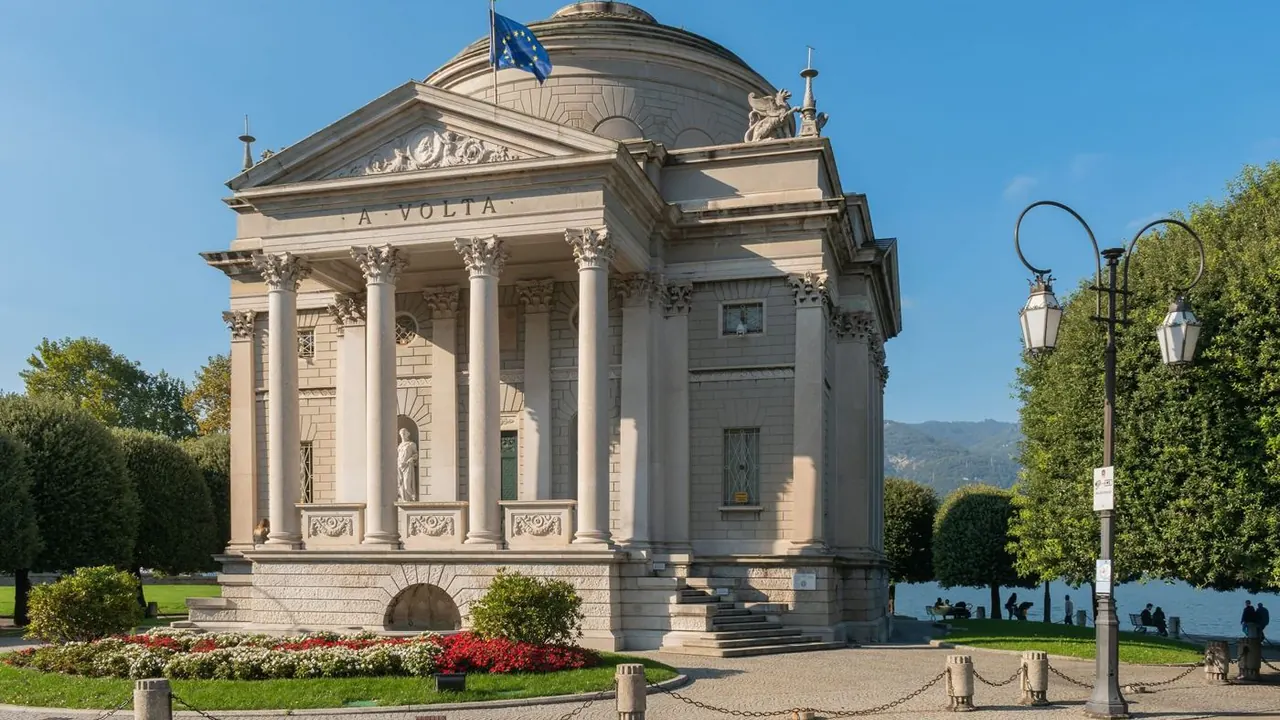
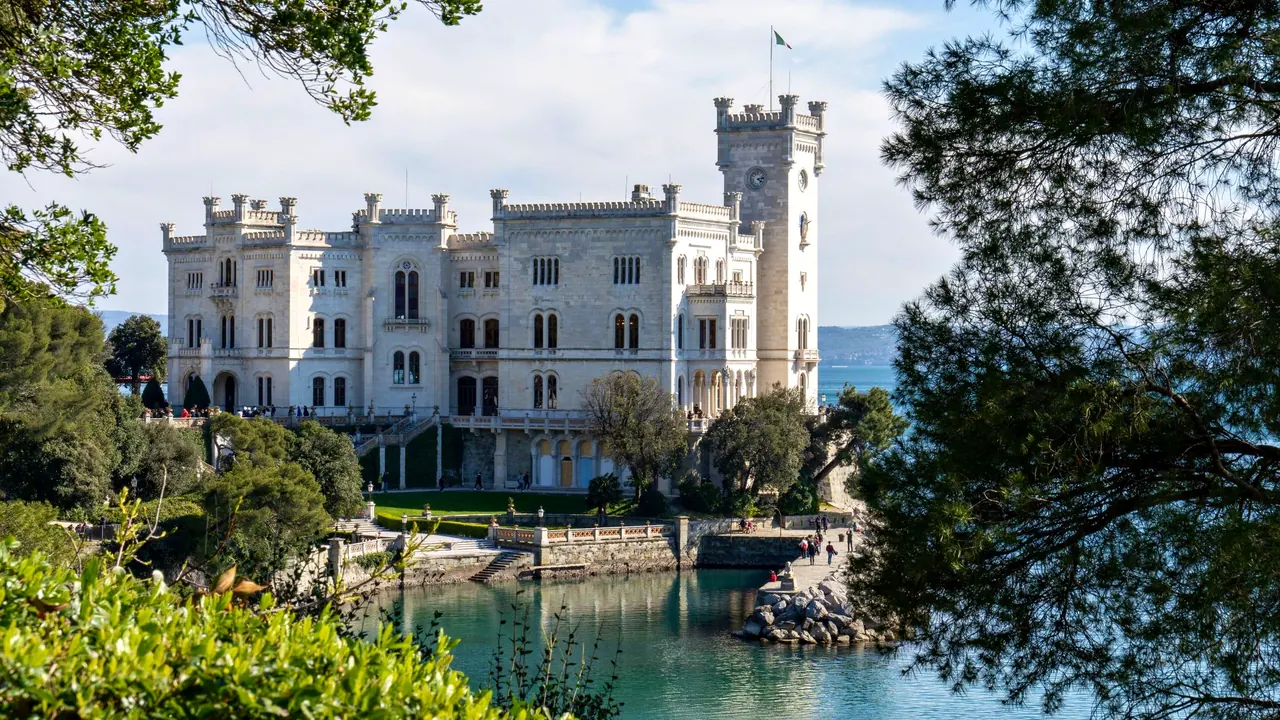
Photos: Como by Krzysztof Golik, CC BY-SA 4.0, cropped; Trieste by Tibor Szabo, Pexels License.
Como or Trieste?
Our verdict in twelve categories, each scored against the same fixed benchmark cities, and the climate month by month, so you can choose for your trip.
Choose Como for
- nature and the outdoors
- day trips
- shopping
Como suits travellers who want scenery and movement above all. The steep wooded mountains start at the lakefront, the funicular and ridge paths begin in town, and ferries reach Bellagio, Varenna and the great villa gardens. Milan and Lugano are close enough for an easy day out. It works best for walkers, cyclists and anyone who plans to spend most days out of town, and who can live with lake prices and quiet evenings.
Choose Trieste for
- beaches
- prices
- live music and the arts
Pick Trieste if you would rather settle into a city than use it as a base. Its Habsburg centre gives you more to see, the Adriatic is there for a swim most summer days, and the buffets, coffee houses and Karst wine farms give it a food culture all its own. It also has a proper opera house and costs noticeably less. Swimming off rocks is the trade-off, as there is little sand.
Scoreboard
Twelve categories on one fixed scale from 0 to 100. The shaded stretch is the gap between the two.
Your match
Pick a travel style or drag the sliders, and both match scores follow your weighting.
Wins on nature and the outdoors and day trips with your weighting.
Wins on beaches and prices with your weighting.
What matters to you?
Category by category
What the scores mean for a trip.
Beaches & swimming
Como's swimming is a lake affair. People use lidos with lawns and pontoons, like the one by Villa Olmo, or the village jetties at Cernobbio and Moltrasio, reached by ferry. The water at the city's own crowded tip is the least appealing, and the season is short.
Trieste is the better place to swim. It has real sea, clear and warm through the summer, reached by a short bus ride to Barcola's stepped platforms or further out to the coves below Sistiana and Duino. Piran's shore is close too. Neither city has much sand, so in both you get in from steps, ladders or pebbles.
Food & drink
Como cooks from the lake and the valleys: perch risotto, sun-dried missoltini, polenta with game. The aperitivo on the squares by the cathedral is the pleasant daily habit. Choice in town is limited, though, and the waterfront terraces charge for the view, so the best meals tend to be up the lake.
Trieste has the more distinctive table. You can stand at a buffet counter over boiled pork with horseradish, order jota and fried sardoni, and drink coffee in a local language of 'nero' and 'capo in b'. Above the city, the farmhouse osmize on the Karst pour Vitovska and Terrano. Neither is a fine-dining city, but Trieste's everyday eating is worth travelling for.
Culture & sights
Como's sights are few but good. They include the marble cathedral, the Romanesque San Fedele and Sant'Abbondio, Terragni's Rationalist Casa del Fascio for anyone interested in architecture, and the Volta temple and silk museum on the shore. A single day covers it.
Trieste has more to fill your days. There is the vast sea-facing Piazza Unità, the canal-side grid of the Borgo Teresiano with San Spiridione, and the cathedral, castle and Roman theatre on San Giusto. Further out are Miramare Castle, the large synagogue and the sobering Risiera di San Sabba. Its mix of empire, borderland and literature gives you two or three days of sightseeing rather than one.
Nightlife
Both cities are made for an aperitivo and a long dinner rather than a late night. Como is the quieter of the two. After a few bars around Piazza Duomo and San Fedele and a lakefront stroll it winds down, and young locals catch the train to Milan.
Trieste has a little more life. University students keep some wine bars and pubs busy in Cavana and the old town, and in summer the kiosks along Barcola stay open into warm nights by the sea. There are few clubs in either.
Nature & outdoors
Como has the more striking outdoors. The funicular lifts you from the lakefront to Brunate for ridge walks to the Volta lighthouse, and the Via dei Monti Lariani and Monte Bisbino open views towards the Alps. Cyclists climb to the Madonna del Ghisallo, and kayaks, sailing boats and seaplanes share the water.
Trieste's nature is limestone and sea. You can walk the Strada Napoleonica above the gulf, take the Rilke Path along the Duino cliffs, scramble in the Val Rosandra gorge, visit the Grotta Gigante and the Škocjan Caves, or snorkel in the Miramare marine reserve. It is varied and very close to town, but it lacks Como's mountain walls rising straight out of the water.
Day trips
Como's day trips are closer and more famous. Ferries and hydrofoils reach Bellagio, Varenna, Villa Carlotta and Villa del Balbianello. Milan's Last Supper and Duomo are about forty minutes away by train, Lugano is closer still, and Bergamo and Lake Maggiore round out a list that rarely needs a car.
Trieste offers more variety across borders. Aquileia's mosaics, star-shaped Palmanova and Cividale are in Friuli, while Piran, Ljubljana and Postojna are in Slovenia. Venice is a long but manageable day by train. The distances are greater, though, and Croatian Istria realistically needs a car.
Good for families
Como gives children the funicular, the lake boats and a paddle at a summer lido. Beyond that it offers little for them, with no aquarium or zoo, and villa and church visits are aimed at adults.
Trieste has a few more things for children. There is a small aquarium on the waterfront, a hands-on science centre, the huge Grotta Gigante and the gardens of Miramare. Older children will get the most from it, as swimming is off rocks and the hills behind the centre are steep and stepped, which is hard going with a pushchair.
Getting around
Both have flat, walkable centres, so the difference is in how you get further. In Como the lake shapes everything. Trains to Milan and Lugano are quick, but the ferries are slow for distant villages, and the shore roads clog in summer.
In Trieste the hills behind the waterfront are the hurdle. It is a long climb on steps to San Giusto, but a dense bus network covers the coast to Miramare and the Karst plateau, and passenger boats cross to Muggia.
Shopping & style
Neither is a shopping destination, but each has one thing worth buying. In Como it is silk: scarves and ties from old-town specialists and from the mill outlets that supply the fashion houses, with Milan's boutiques a train ride away.
Trieste's best buys are edible: coffee from local roasters, Karst wine and honey, and presnitz. Its antique and second-hand shops in the old town lanes make for the more interesting browsing.
Affordability
Como is the expensive choice. The lake draws an international luxury crowd, so villa rentals and waterfront hotels cost a lot in summer, and lakefront tables charge for the setting. Staying back from the water and going in spring or autumn helps.
Trieste is noticeably easier on the wallet. A buffet lunch or a coffee at the bar costs little, rooms are reasonable most of the year, and swimming at Barcola and walking the Karst are free. Smarter hotels and seafood restaurants still charge ordinary city prices.
Live music & performing arts
Como's Teatro Sociale is a handsome opera house. Its season is partly shared with other Lombard houses, and summer brings open-air shows in the Arena next to it and chamber music in churches and villas. Most other nights are quiet, and serious music lovers head to La Scala in Milan.
Trieste offers a fuller programme at home. The waterfront Teatro Verdi runs a proper opera and ballet season, the city keeps up a Habsburg taste for operetta that is rare in Italy, and the Politeama Rossetti and a Slovenian-language theatre add drama. Live bands are scarce in both cities.
Wellness & relaxation
Neither has thermal baths. In both, spa treatments come from hotel spas and a few day spas. The calm is the real attraction, and it takes a different form in each. In Como it is the lake itself: still water, villa gardens, slow ferries and villages that go quiet early, best enjoyed outside the busy midsummer weeks.
Trieste's quiet is urban. You sit for long hours in old coffee houses with a newspaper and walk the Molo Audace pier as the sun sets over the gulf, in a city whose older population keeps an unhurried pace.
When should you go?
Pick your month. The climate figures are measured averages, not a forecast.
Como in July
Trieste in July
Daytime high, °C
Rainfall in the month, mm
Temperature and rainfall are climate normals, averaged over the years shown. Como: 1991-2020 normals, Lugano (23 km from centre). Trieste: 1991-2020 normals, Trieste (1.6 km from centre).
Como is a summer and shoulder-season place, but a wet one. June to August is warm enough for a lake swim, with highs around 27°C, yet from April to November the rain stays heavy, peaking near 178mm in May. Winter is drier and has fair sunshine for the season, but it is cold. For walking, late spring and early autumn are the most comfortable times, while midsummer can feel close and hazy.
Trieste runs a little warmer all year and has a sunnier, drier summer. July reaches about 29°C, which can feel hot in the streets, and the sea warms to 25°C in July and August, so June to September is a real swimming season. Rain builds in autumn, reaching about 125mm in November, and winter is mild but can be cut by the Bora. For a summer trip with time in the water, Trieste is the more reliable choice.
Which traveller are you?
On a beach and sun trip, Trieste is the clear choice. It has a sunnier summer, a warm, clear Adriatic for months, and Barcola's seafront and the Sistiana coves for swimming. Como offers only a short lido season on the lake.
For an outdoors trip, Como wins. Mountains rise straight from the water, there are ridge trails from Brunate, the Via dei Monti Lariani, cycling climbs to the Ghisallo and paddling on the lake. Trieste's Karst walks and caves are good, but less dramatic.
On a trip on a tight budget, Trieste goes much further. Buffet lunches, bar coffee, cheap buses and free swims at Barcola keep costs down. Como's lake hotels and view-priced terraces make it one of northern Italy's dearer stays.
Before you go
| Measure | Como | Trieste |
|---|---|---|
| Official language | Italian | Italian |
| Currency | Euro (EUR) | Euro (EUR) |
| Sockets | CFL230 V, 50 Hz | CFL230 V, 50 Hz |
| Driving side | Right | Right |
| Time zone | UTC+1, UTC+2 in summer | UTC+1, UTC+2 in summer |
| Emergency number | 112 | 112 |
| Elevation | 201 m | 2 m |
| Main airport | Milan Malpensa International Airport (MXP)34 km from centre208 non-stop destinations | Trieste Airport (TRS)31 km from centre32 non-stop destinations |
| Public holidays this year | 13 days | 13 days |
By the numbers
| Measure | Como | Trieste |
|---|---|---|
| City population | 83,184 | 198,417 |
| People per km² | 2,242 | 2,332 |
| Museums within 10 km | 11 | 33 |
| UNESCO World Heritage sites within 50 km | 8 | 5 |
| Swim season, months above 21 °C | - | 4 months |
Where else could you go?
Every comparison below shares a destination with this one, so you can follow Como or Trieste somewhere new.