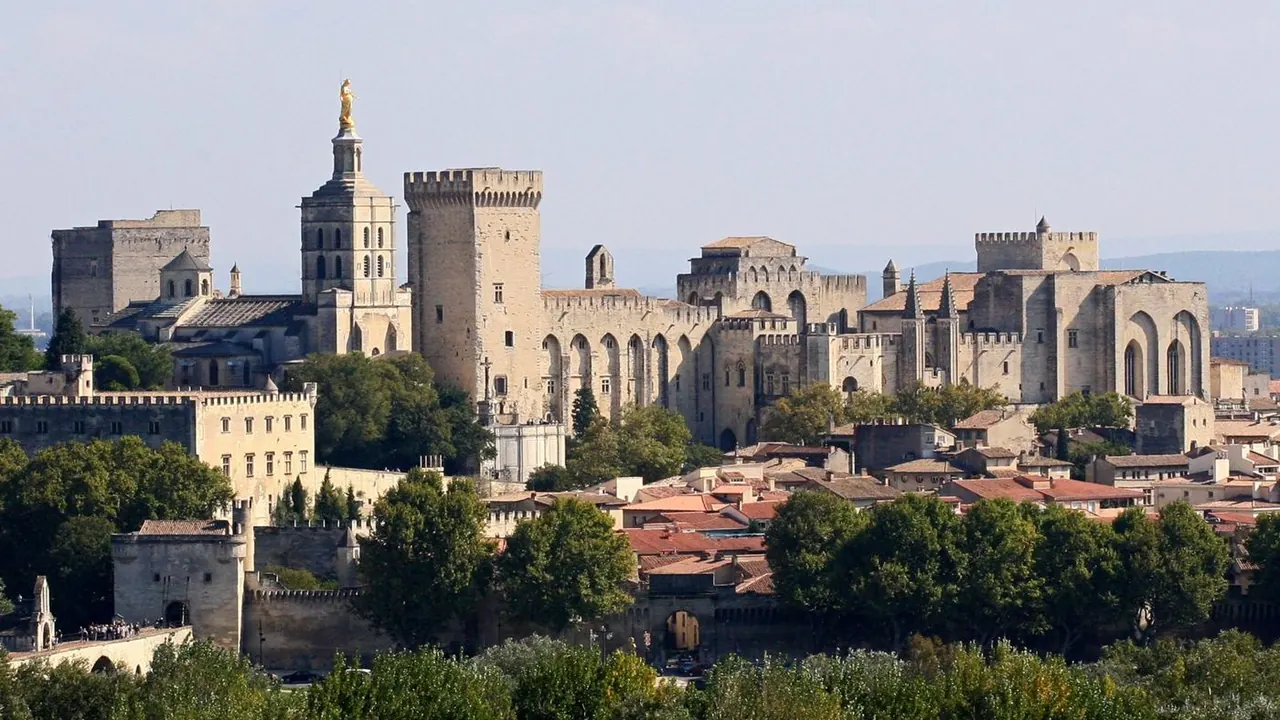
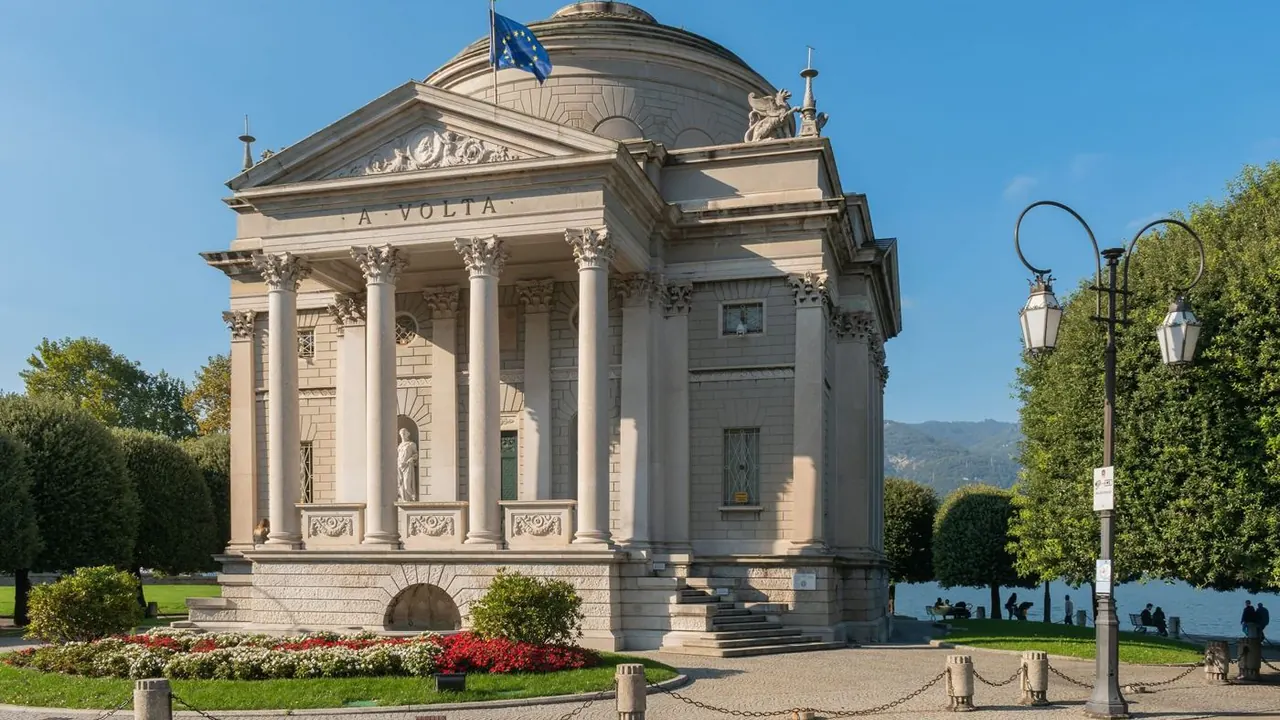
Photos: Avignon by BlueBreezeWiki, CC BY-SA 3.0, cropped; Como by Krzysztof Golik, CC BY-SA 4.0, cropped.
Avignon or Como?
Our verdict in twelve categories, each scored against the same fixed benchmark cities, and the climate month by month, so you can choose for your trip.
Choose Avignon for
- live music and the arts
- culture and sights
- prices
Avignon suits the traveller who wants history, theatre and wine in the same trip. The papal palace and the ramparts make the town itself worth seeing. In July it becomes a theatre town like few others, and the Roman monuments of Nîmes, Arles and Orange are close by. It is also the cheaper of the two, and its dry, sunny summers will please anyone who likes the heat.
Choose Como for
- beaches
- nature and the outdoors
- wellness
Como is the pick for anyone who would rather have landscape than monuments. The lake and the mountains around it offer walking, ferry rides and water sports straight from town, and the villa gardens of Bellagio and Tremezzo make for slow, restful days. It costs more and its evenings end earlier, but the setting does most of the work, and Milan and Lugano are close at hand for a change of pace.
Scoreboard
Twelve categories on one fixed scale from 0 to 100. The shaded stretch is the gap between the two.
Your match
Pick a travel style or drag the sliders, and both match scores follow your weighting.
Wins on live music and the arts and culture and sights with your weighting.
Wins on beaches and nature and the outdoors with your weighting.
What matters to you?
Category by category
What the scores mean for a trip.
Beaches & swimming
Neither city is a beach destination, but in Como you can at least swim from town. Between June and early September its lidos, such as the one beside Villa Olmo, and the pebble jetties at Cernobbio and Moltrasio give you a pleasant lake dip.
In Avignon the Rhône is no place to swim, so cooling off means the Gardon's green pools below the Pont du Gard, about half an hour's drive away, or a day out to the wild Camargue sands at Saintes-Maries-de-la-Mer. On most days the hotel pool is what you will actually use.
Food & drink
Avignon eats better. Its Provençal cooking draws on the market gardens and orchards of the plain, and Les Halles on Place Pie shows it at its best. Châteauneuf-du-Pape and Côtes du Rhône wines poured by the glass give the town a wine culture Como cannot match.
Como's Lombard cooking of perch risotto, missoltini and polenta is good but offers less choice, and the aperitivo on the squares around the cathedral is its most reliable pleasure. In both places the best meals are away from the view: in the side streets in Avignon, and up the lake or in the hills in Como.
Culture & sights
Avignon carries far more historical weight. The Palais des Papes, the largest Gothic palace in Europe, anchors a UNESCO-listed group of buildings with the cathedral and the broken bridge. Nearly 4km of ramparts enclose cardinals' mansions and museums of Italian primitives, fine art and contemporary work.
Como has fewer sights, but they are distinctive: a marble cathedral, the Romanesque stonework of Sant'Abbondio, Terragni's Rationalist Casa del Fascio and the Volta museum. Como fills a day, while Avignon needs two.
Nightlife
Both towns go to bed early, but Avignon has a little more going on after dinner. There are terraces on Place Pie, student bars near the university and, in July, festival crowds that keep the old town awake until the small hours. In Como an evening means an aperitivo, a long dinner and a stroll along the lakefront, with a few cocktail bars around Piazza Duomo. For clubs, people from Avignon go to Marseille or Montpellier, and people from Como go to Milan.
Nature & outdoors
Como has the outdoors right on its doorstep. The funicular reaches Brunate in minutes, trails run along the ridge and above the western shore, and you can kayak, sail and paddle on the lake itself.
Avignon's countryside is superb but further out. Mont Ventoux, the Luberon's ochre trails, the Alpilles and the Camargue's flamingos all need a drive, and only the flat cycling on the Île de la Barthelasse is close at hand. Spring and autumn are the best seasons in both: in Avignon because of the summer heat and the mistral, in Como because summer turns hazy and humid.
Day trips
Both are excellent bases, and the difference lies in what you go out for. From Avignon it is Roman antiquity: the arenas of Nîmes and Arles, the theatre at Orange and the Pont du Gard. Then there are the wine villages and the Luberon hill villages, which really need a car.
From Como it is boats and big cities. Ferries run up the lake to Bellagio, Varenna and the villa gardens of Tremezzo, Milan is forty minutes away by train, and Lugano is just over the Swiss border. None of Como's classic outings needs a car.
Good for families
Neither town is built for children, and both work best as calm, walkable stays with the big days spent outside town. In Avignon that means the tablet tour of the papal palace and dancing on the bridge from the song, then a drive to the Pont du Gard or the Camargue. In Como the boat rides, the funicular and a summer lido are all reachable without a car, and the flat lakefront is easier with a pushchair than Avignon's cobbles.
Getting around
Both centres are compact and easy on foot, and you will rarely need local buses in either. The difference lies beyond the centre. Avignon has quick trains to Arles, Nîmes and Marseille but leaves the hill villages to a hire car. Como relies on slow but scenic ferries around the lake, and its summer traffic and scarce parking make a car more trouble than it is worth.
Shopping & style
Avignon's shopping is Provençal and largely edible: printed cottons, lavender and olive wood in the lanes around Rue des Marchands, then tapenade, calissons and wine from Les Halles or the producers. Antiques hunters make the short trip to L'Isle-sur-la-Sorgue.
Como's speciality is silk, sold as scarves, ties and fabric in old-town shops and in the outlets of the mills that supply the fashion houses. For anything beyond that, both towns send you elsewhere, and from Como that means the boutiques of Milan.
Affordability
Avignon is easier on the budget. Fair set lunches, good-value wine from local producers and an old town that costs nothing to explore keep a stay reasonable. The exception is July, when rooms inside the walls during the festival are steep.
Como draws a luxury crowd, and its lakeside hotels, villa rentals and terraces with a view are priced to match. The savings come from staying back from the water and eating in trattorias in the old town. Its cheap trains and ferries help, whereas exploring Avignon's countryside usually means paying for a hire car.
Live music & performing arts
The gap is wide here. In July Avignon hosts the Festival d'Avignon, founded in 1947, with productions in the Cour d'honneur of the papal palace, while the Off fringe fills every cellar and courtyard in town. The rest of the year, the Opéra Grand Avignon, the small theatres and a jazz club keep up a regular programme.
Como's stage is the Teatro Sociale, which moves to its open-air Arena in summer, and there are chamber concerts in churches and lakeside villas. It is a pleasant provincial calendar, and for anything more people take the train to La Scala in Milan.
Wellness & relaxation
Neither town has a bathing tradition, so what matters is where you find the calm. In Avignon, people who come to unwind usually stay outside the walls, in a farmhouse with a pool among the vineyards and lavender. The town has shaded squares and long lunches, but July's festival crowds and days of mistral are anything but soothing.
In Como the quiet starts at the water's edge in town. An evening by the lake, an unhurried boat ride to a sleepy village and the spa of a grand villa hotel are all close by, so it is the more restful stay without leaving your base. The lakefront is busier in midsummer, and spring and autumn suit a slow stay best.
When should you go?
Pick your month. The climate figures are measured averages, not a forecast.
Avignon in July
Como in July
Daytime high, °C
Rainfall in the month, mm
Where the figures come from
Avignon has no rain gauge within 25 km of the centre, so its rainfall comes from a gridded climate dataset read at the city rather than from a gauge further away.
Avignon's sunshine is measured 65 km from the centre, at Marseille / Marignane.
Temperature and rainfall are climate normals, averaged over the years shown. Avignon: 2005-2020 (sunshine 1991-2020, rainfall 1991-2020) normals, Avignon / Morières-lès-Avignon (8.6 km from centre). Como: 1991-2020 normals, Lugano (23 km from centre).
Avignon is warm and sunny, with a dry summer. July and August peak at about 31°C with little rain. That is fine for a pool or a swim in the Gardon, but hard going for sightseeing in the afternoon. The rain comes in autumn, and October is the wettest month at about 109mm. May, June and the end of September into October are the most comfortable months for walking the streets. Winters are cool rather than cold, with plenty of clear days.
Como is a few degrees cooler all year and peaks near 27°C in July and August, which makes summer walking easier. It is far wetter, though. From April to November every month brings more rain than Avignon gets in its wettest month, May is the dampest, and there is clearly less sunshine. The lake is warm enough for a swim only from June to early September. Winter there is colder and greyer, with January highs around 7°C.
Which traveller are you?
On a culture and arts trip, Avignon is the stronger choice. The papal palace, the ramparts and the Petit Palais give it more depth than Como's cathedral and villas, and the July festival leaves Como's modest stage far behind.
For an outdoors trip, Como suits better. Avignon's Mont Ventoux and Luberon are grand, but each outing starts with a drive. In Como the funicular, the ridge trails and the lake are all reachable on foot from your hotel. Spring and autumn suit both.
On a trip on a tight budget, Avignon goes further outside July, and much of a stay there, from the ramparts to the Rocher des Doms, costs nothing. In Como, saving money means sleeping back from the water, which is what most visitors come for.
Before you go
| Measure | Avignon | Como |
|---|---|---|
| Official language | French | Italian |
| Currency | Euro (EUR) | Euro (EUR) |
| Sockets | CE230 V, 50 Hz | CFL230 V, 50 Hz |
| Driving side | Right | Right |
| Time zone | UTC+1, UTC+2 in summer | UTC+1, UTC+2 in summer |
| Emergency number | 112 | 112 |
| Elevation | 10 m | 201 m |
| Main airport | Marseille Provence Airport (MRS)65 km from centre126 non-stop destinations | Milan Malpensa International Airport (MXP)34 km from centre208 non-stop destinations |
| Public holidays this year | 11 days | 13 days |
By the numbers
| Measure | Avignon | Como |
|---|---|---|
| City population | 92,188 | 83,184 |
| People per km² | 1,420 | 2,242 |
| Museums within 10 km | 11 | 11 |
| UNESCO World Heritage sites within 50 km | 6 | 8 |
Where else could you go?
Every comparison below shares a destination with this one, so you can follow Avignon or Como somewhere new.