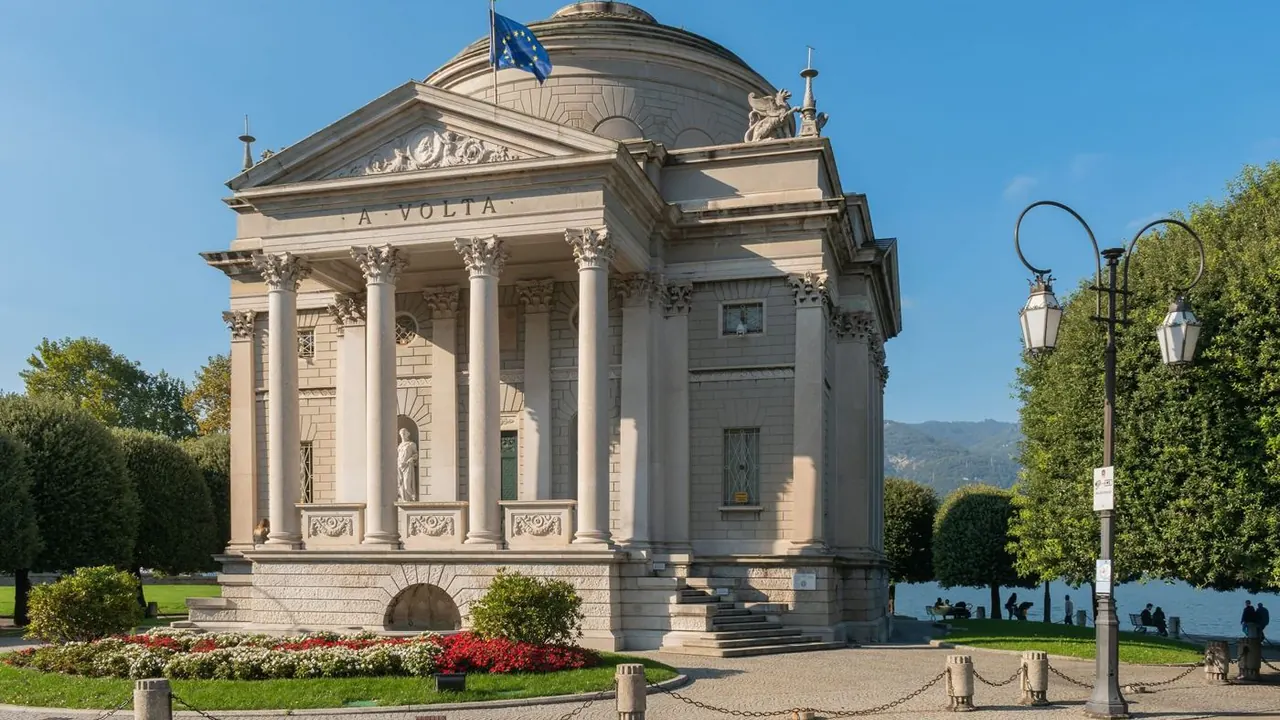
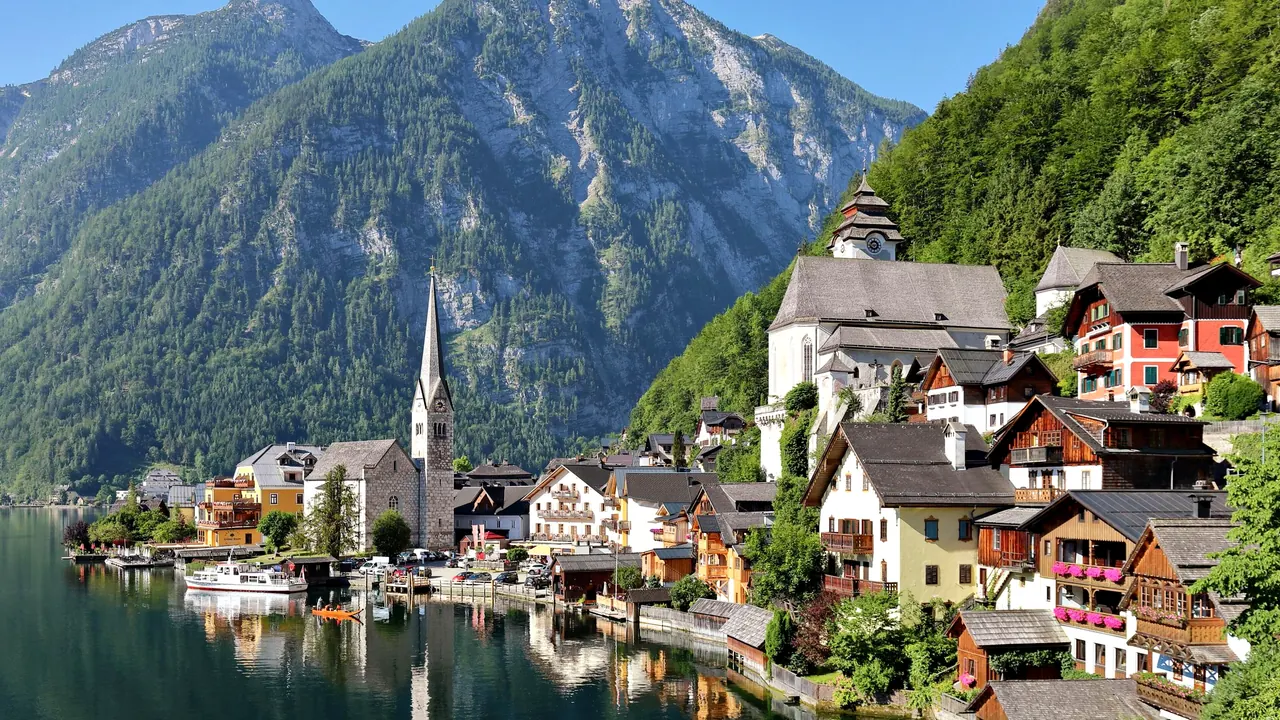
Photos: Como by Krzysztof Golik, CC BY-SA 4.0, cropped; Hallstatt by C.Stadler/Bwag, CC BY-SA 4.0, cropped.
Como or Hallstatt?
Our verdict in twelve categories, each scored against the same fixed benchmark cities, and the climate month by month, so you can choose for your trip.
Choose Como for
- shopping
- live music and the arts
- food and drink
Como suits travellers who want a lake setting with a real town attached. It has a walled old town with a marble cathedral and Romanesque churches, trattorias and aperitivo squares, and a railway that brings Milan and Lugano within easy reach. It is the better base for a varied week of ferries, villa gardens and city excursions, with a drink or a night at the opera along the way.
Choose Hallstatt for
- nature and the outdoors
- wellness
Hallstatt is for people who come for the mountains. The Dachstein rises straight from the village, with cable cars, ice caves, glacier valleys and the walk to the Gosausee, and the evenings go completely quiet once the day visitors leave. Choose it for hiking and scenery, and be ready for simple food, few shops, and either a car or careful work with timetables to see the wider Salzkammergut.
Scoreboard
Twelve categories on one fixed scale from 0 to 100. The shaded stretch is the gap between the two.
Your match
Pick a travel style or drag the sliders, and both match scores follow your weighting.
Wins on shopping and live music and the arts with your weighting.
Wins on nature and the outdoors and wellness with your weighting.
What matters to you?
Category by category
What the scores mean for a trip.
Beaches & swimming
Neither is a beach destination, but Como is the more comfortable place for a summer swim. Its lake warms to around 23°C, and the lido beside Villa Olmo has lawns and decks. Pebble strands and jetties in Cernobbio and Moltrasio are a ferry ride away.
Hallstätter See is deep, fed by mountain water and colder, around 20°C at best. It has a small jetty at the village and a larger lido at Obertraun. It is a bracing dip after a hike rather than an afternoon on the shore.
Food & drink
Como eats like a provincial Lombard city: perch risotto, sun-dried shad, polenta with game, and a dependable aperitivo ritual in the old town. The best meals are often in family-run places up the lake. The range is limited, but you have a real choice of trattorias and wine bars.
Hallstatt has a few guesthouse dining rooms serving schnitzel, goulash and dumplings, plus smoked or pan-fried char from the lake. Kitchens can close early, and for anything more people go to Bad Ischl and its patisseries.
Culture & sights
Como has more to see in town, and a wider mix of it. The marble cathedral layers Gothic, Renaissance and Baroque, San Fedele and Sant'Abbondio show fine Lombard Romanesque stonework, and Terragni's Casa del Fascio draws architecture lovers from abroad. Along the shore are the neoclassical Villa Olmo and the Tempio Voltiano, devoted to Volta, and a silk museum tells how the trade made the city rich.
In Hallstatt the village is itself the main sight, a UNESCO landscape of painted houses on a ledge between lake and cliff. Its depth is prehistoric: seven thousand years of salt mining, told in the mine and in Museum Hallstatt, plus the painted skulls of the Beinhaus. Either place fills about a day. Como offers more separate sights and styles, from Romanesque churches to 1930s Rationalism, while Hallstatt tells one long story very well.
Nightlife
Como at least has an evening. After the aperitivo and a long dinner there are a handful of wine and cocktail bars around Piazza Duomo and San Fedele, and on summer nights people walk the lakefront. There are no clubs, and locals who want a late night go to Milan.
Hallstatt has nothing like that. After dinner the only plan is a glass of wine on a terrace and a walk by the dark water, which is exactly what some overnight guests come for.
Nature & outdoors
Both sit in glacial troughs under steep slopes, but Hallstatt's mountains are higher and wilder. Cable cars climb the Dachstein massif to the Five Fingers platform and the giant ice caves. There are also glacier valleys, via ferratas, ski touring in winter and the classic walk to the Gosausee.
Como's outdoors is gentler, with more to do on the water. The funicular climbs to Brunate for ridge paths to the Volta lighthouse, the Greenway links the lake villages, and there is sailing, paddling and road cycling up to the Madonna del Ghisallo. It suits walkers and cyclists more than mountaineers.
Day trips
Como is one of the great bases in northern Italy. Ferries reach Bellagio, Varenna and the villas of Tremezzo, and trains bring Milan's Last Supper and Duomo within about forty minutes, with Lugano and Bergamo also close.
Hallstatt's outings are quieter Salzkammergut lake towns: the Habsburg Kaiservilla at Bad Ischl, St Wolfgang's altarpiece and Gmunden's lake castle. Salzburg is the big prize but a long day, and without a car every trip needs planning.
Good for families
Both are calm, scenic places with a few treats for children and little built for them. In Como the appeal is easy outings: the Brunate funicular, ferry rides, and the flat promenade and Villa Olmo gardens with a pushchair.
Hallstatt's highlights feel more like an adventure, with miners' slides and an underground lake in the salt mine and ice caves for older children. But its steep, crowded lane is hard going with a pushchair, so families often stay in Obertraun instead.
Getting around
Como's flat old town and lakefront are easy on foot, and two stations connect it to Milan, with a line north to Lugano. The weak point is the lake itself, where ferries are slow and the shore roads clog in summer.
Hallstatt is tiny and mostly car-free, though steep and full of steps. Getting there means a boat from the station on the far shore, and buses to Obertraun, Gosau and Bad Ischl are sparse outside summer, so a car is far more useful here.
Shopping & style
Como gives shoppers a real reason to browse. Its centuries of silk are sold as scarves, ties and fabric in old-town shops and mill outlets, and there are boutiques along Via Vittorio Emanuele II and a weekend crafts and antiques market. Hallstatt's main lane is souvenir shops, and the one thing worth carrying home is salt from the mine, in grinders and bath mixes, alongside carved wood and schnapps.
Affordability
Both are expensive, and for similar reasons: few lakeside rooms, an international crowd and restaurants that charge for the view. Where they differ is how you get round it. In Como, rooms in town or back from the water, old-town trattorias, cheap trains and ferries, and a spring or autumn visit all bring the cost down.
In Hallstatt the saving comes from sleeping elsewhere, in Obertraun, Bad Goisern or Bad Ischl, and visiting for the day. Even then, the salt mine, funicular and cable car add up.
Live music & performing arts
Como has a proper stage in the Teatro Sociale, an early nineteenth-century opera house near the cathedral. It puts on opera, concerts, ballet and theatre, moving to the open-air Arena in summer, and there is chamber music in churches and villas. La Scala in Milan is a short train ride away.
Hallstatt has only the brass band on feast days and the odd church concert. The serious options are Salzburg's season and Bad Ischl's summer operetta, both a journey away.
Wellness & relaxation
Neither has thermal springs on the doorstep, and in both, rest comes mainly from still water and quiet evenings. Como relies on the spas of its grand villa hotels and a slow rhythm of gardens and ferry rides, best in spring and autumn.
Hallstatt is closer to a real bathing tradition. Bad Ischl's salt-brine baths and thermal complex are half an hour away, and Bad Aussee and Bad Goisern have their own. In the village itself, calm belongs to the early mornings and evenings, because the middle of the day belongs to the tour groups.
When should you go?
Pick your month. The climate figures are measured averages, not a forecast.
Como in July
Hallstatt in July
Daytime high, °C
Rainfall in the month, mm
Where the figures come from
Hallstatt's temperatures are measured 56 km from the centre, at Salzburg.
Hallstatt has no rain gauge within 25 km of the centre, so its rainfall comes from a gridded climate dataset read at the city rather than from a gauge further away.
Temperature and rainfall are climate normals, averaged over the years shown. Como: 1991-2020 normals, Lugano (23 km from centre). Hallstatt: 1991-2020 normals, Salzburg (55.5 km from centre).
Both are summer places with wet summers. Como is a couple of degrees warmer, peaking around 27°C in July and August against Hallstatt's 25°C, and it gets clearly more sunshine through the summer. That makes it the safer bet for a lido swim from June to early September. Its rain arrives in April and stays heavy through November, so walks in spring and autumn come with showers, although highs in the high teens are comfortable for the old town and the hills.
Hallstatt's wettest stretch is high summer itself, with about 178mm in July, when cloud and mist can sit on the lake. Late spring and September are good hiking months there. Winter is properly cold, around 3°C in January, which suits the snow on the Krippenstein better than wandering the lanes. Como's winters are milder and drier, though grey and short on sun.
Which traveller are you?
On an outdoors trip, Hallstatt has the edge. Mountain country starts at the edge of the village, with the Krippenstein cable car, the Dachstein ice caves, hut-to-hut routes and via ferratas in summer, and freeride terrain in winter. Como's ridge walks and lake paddling are lovely but gentler.
For a food and nightlife trip, Como is the clear choice. Perch risotto, polenta, lake fish, aperitivo on the cathedral squares and a few wine and cocktail bars easily beat Hallstatt's guesthouse schnitzel and silent evenings. Milan is a short train ride away.
For a short city break, Como works far better. The flat, walkable old town, the cathedral, Terragni's Rationalist landmark and the silk shops fill a weekend, and trains from Milan take about forty minutes. Hallstatt is a one-lane village that is harder to reach and better suited to slow mountain days.
Before you go
| Measure | Como | Hallstatt |
|---|---|---|
| Official language | Italian | German, Austrian Sign Language |
| Currency | Euro (EUR) | Euro (EUR) |
| Sockets | CFL230 V, 50 Hz | CF230 V, 50 Hz |
| Driving side | Right | Right |
| Time zone | UTC+1, UTC+2 in summer | UTC+1, UTC+2 in summer |
| Emergency number | 112 | 112 |
| Elevation | 201 m | 511 m |
| Main airport | Milan Malpensa International Airport (MXP)34 km from centre208 non-stop destinations | Salzburg Airport (SZG)55 km from centre64 non-stop destinations |
| Public holidays this year | 13 days | 16 days |
By the numbers
| Measure | Como | Hallstatt |
|---|---|---|
| City population | 83,184 | 741 |
| People per km² | 2,242 | 12 |
| Museums within 10 km | 11 | 3 |
| UNESCO World Heritage sites within 50 km | 8 | 2 |
Where else could you go?
Every comparison below shares a destination with this one, so you can follow Como or Hallstatt somewhere new.