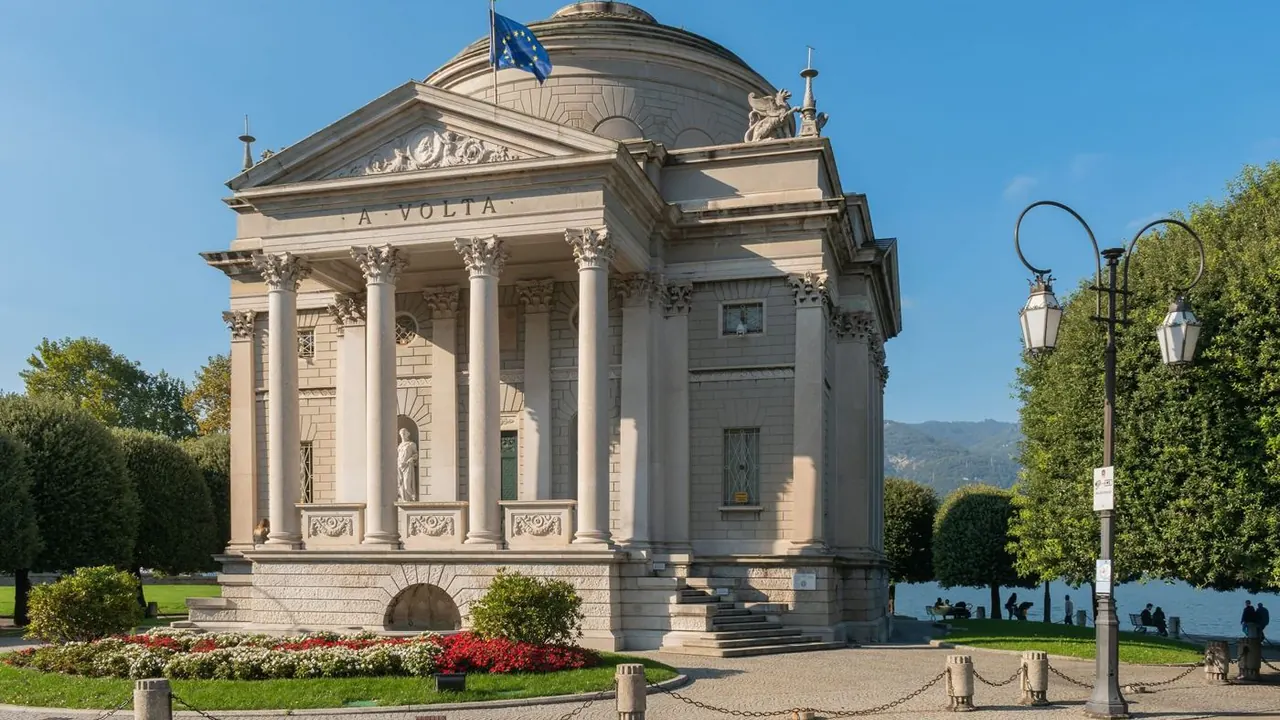
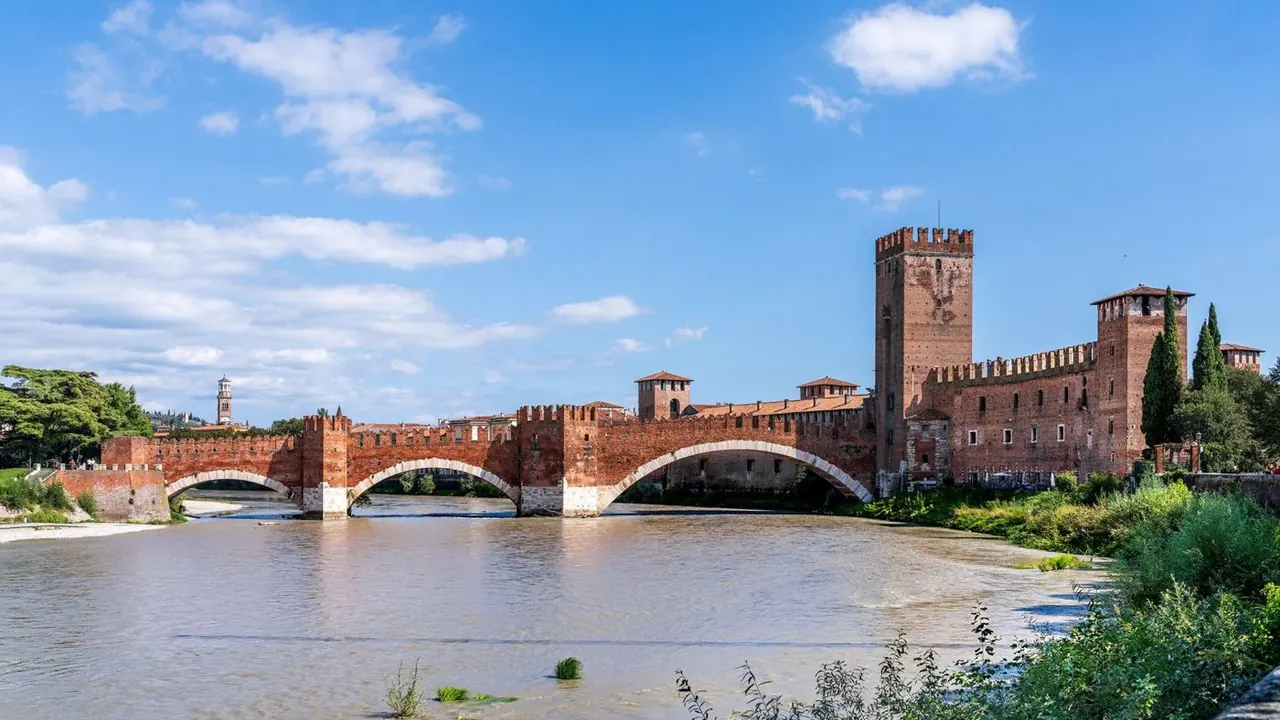
Photos: Como by Krzysztof Golik, CC BY-SA 4.0, cropped; Verona by NorbertNagel, CC BY-SA 4.0, cropped.
Como or Verona?
Our verdict in twelve categories, each scored against the same fixed benchmark cities, and the climate month by month, so you can choose for your trip.
Choose Como for
- nature and the outdoors
Como is for travellers who want the landscape to be the trip. The town sits where a steep, wooded glacial lake begins, and the days go on ferries to Bellagio and the villa gardens, on the funicular up to Brunate and on ridge paths high above the water. Walkers, cyclists and couples after a slow, scenic stay will get more from it, provided they accept a short list of sights, quiet evenings and high prices.
Choose Verona for
- live music and the arts
- culture and sights
- food and drink
Verona suits people who want a city with real depth. Its Roman Arena, Romanesque San Zeno and the Scaliger squares fill two or three days on their own, summer brings opera under the stars, and the cooking and the Valpolicella and Amarone wines are a clear step up. Families do better here too, with Gardaland and a safari zoo nearby, and it is the better base for anyone who wants Venice and Padua within a train ride.
Scoreboard
Twelve categories on one fixed scale from 0 to 100. The shaded stretch is the gap between the two.
Your match
Pick a travel style or drag the sliders, and both match scores follow your weighting.
Wins on nature and the outdoors with your weighting.
Wins on live music and the arts and culture and sights with your weighting.
What matters to you?
Category by category
What the scores mean for a trip.
Beaches & swimming
Neither city is a beach destination, but Verona gives the better swimming even though you have to travel for it. About half an hour away on Lake Garda's southern shore you find clear, calm water, lidos with sunbeds, and Sirmione's flat limestone shelves, where you can lie in the sun between swims.
Como's swimming is closer but more limited. There is the lido by Villa Olmo, and up the lake there are small pebble strands and jetties at Moltrasio or the Tremezzina, reached by ferry. The water at the city end is not very inviting, and the shore is mostly walls and gardens.
Food & drink
Verona eats and drinks noticeably better. Its osterie around Piazza delle Erbe and in Veronetta serve Amarone risotto, bigoli with duck and bollito with peppery pearà, and the vineyards of Valpolicella, Soave and Bardolino are a short drive away, so a glass at a wine counter is one of the city's real pleasures.
Como's lake cooking has its own character, with perch risotto, sun-dried missoltini and polenta from the valleys. But the town itself has a narrow choice, the lakefront terraces charge for the view, and the best meals are often in family places up the lake or in the hills.
Culture & sights
Verona is in another league here. Its UNESCO-listed centre layers a Roman amphitheatre, a Roman theatre, the medieval squares of the della Scala lords and San Zeno, one of Italy's finest Romanesque churches, with Scarpa's Castelvecchio museum on top. That is two or three unhurried days of sightseeing.
Como's sights are fewer but well chosen. There is the marble cathedral, the Lombard Romanesque of Sant'Abbondio, and Terragni's Casa del Fascio, which draws architecture lovers. Most visitors see them in a day.
Nightlife
Neither is a late-night town, but Verona keeps going longer. After the aperitivo in Piazza delle Erbe, the student bars and pubs of Veronetta stay busy, and on summer opera nights the Arena crowd brings the centre back to life around midnight.
Como's evenings usually end after dinner and a few cocktail bars near the cathedral, with a walk along the lakefront in summer. Anyone wanting clubs goes to Milan.
Nature & outdoors
Como has the more dramatic outdoors, right on its doorstep. A funicular from 1894 lifts you from the lakefront to Brunate's ridge trails, Monte Bisbino looks towards the Alps, and you can kayak, sail or paddleboard from the city shore. Road cyclists come for the climbs of the Triangolo Lariano.
Verona's countryside is gentler: vineyard walks and bike rides in Valpolicella, and the long Adige cycle route north. The big scenery is around an hour away, at Monte Baldo above Lake Garda and on the Lessinia plateau.
Day trips
Both are excellent bases, but the trips are of different kinds. From Como, most outings are by boat: Bellagio, Varenna, and the gardens of Villa Carlotta and Balbianello. Milan and Swiss Lugano are each well under an hour away by train.
From Verona, the trips are mostly to art cities by rail. Venice, Palladio's Vicenza, Giotto's chapel in Padua and Gonzaga Mantua are all easy, and Sirmione and the Valpolicella and Soave cellars are closer still.
Good for families
For children, Como's fun is mostly in getting about: a boat out onto the lake, the little railway climbing the hillside to Brunate, an afternoon splashing at the Villa Olmo lido. Beyond those, the days turn to villa gardens and churches that hold little for a child, so it works for an unhurried stay where the lake and the open air are the entertainment.
Verona has far more to fill a family week, though most of it sits around Lake Garda, about half an hour out. Gardaland, Italy's biggest theme park, can take a whole day, the water parks along the southern shore take another, and at Parco Natura Viva you drive among the animals in the safari section. Back in town, a Roman amphitheatre where gladiators once fought is an easy sell to a ten-year-old. In July and August, plan the outings for the morning, because the afternoons are hot, and allow for a car or transfers, since few of these parks are easy to reach by public transport.
Getting around
Both centres are flat and easy to walk, so the difference is in how you get further out. In Como, the old town connects to the hills by funicular and to the villages by ferry. The ferries are beautiful but slow up the lake, and the narrow shore roads jam in summer.
Verona's traffic-free centre within the loop of the Adige is just as easy on foot, and the train takes the place of the boat, with fast lines to Venice, Milan and Peschiera on Lake Garda. In both, a car is needed only for the hill villages.
Shopping & style
Verona has the broader shopping, with Italian labels along marble-paved Via Mazzini and smaller boutiques and jewellers on Corso Porta Borsari. The best things to take home are Amarone and pandoro.
Como's offer is narrower but more distinctive. Silk scarves and ties come from shops in the old town and from mill outlets on the edge of the city. For fashion, people from both cities go to Milan.
Affordability
Como is the harder place to make a budget last, and most of the gap is in where you sleep. In summer, a room with a lake view is among the dearest in Italy, because the villa hotels along the shore set the price for everyone else. A room in the old town or a few streets back from the water costs much less, especially if you eat in the hills rather than on the lakefront and come in spring or autumn. The trains and ferries are cheap.
A mid-range budget goes further in Verona. Rooms inside the river loop are still dear for a city this size, and they climb steeply when the Arena opera season or a large fair fills the town. But a bed near Porta Nuova station or across the Adige in Veronetta is an easy walk from the sights. Everything else costs little. A glass of Valpolicella at a wine counter comes with a snack, the student osterie charge fair prices, and since you can walk the whole centre, getting around costs almost nothing.
Live music & performing arts
Verona has one of Europe's great summer stages: grand productions of Verdi and Puccini in the Roman Arena, sung to thousands on the stone tiers by candlelight. In winter the Teatro Filarmonico takes over, and in summer the Roman theatre hosts Shakespeare and jazz.
Como's Teatro Sociale is a handsome neoclassical opera house with a summer open-air Arena alongside, and there are chamber concerts in its churches and lakeside villas. On many nights the calendar is quiet, and keen music lovers take the train to La Scala.
Wellness & relaxation
Both are calm places to slow down, but in different ways. Como's wellness lies in the setting and in the spas of its grand villa hotels: still water, gardens running down to the shore and slow ferry rides.
Verona has actual thermal water nearby. There are Sirmione's sulphur pools facing Lake Garda, a spring-fed lake in a villa garden near Lazise, and springs at Caldiero that have been used since Roman times, plus the quiet terraces of the Giardino Giusti in town.
When should you go?
Pick your month. The climate figures are measured averages, not a forecast.
Como in July
Verona in July
Daytime high, °C
Rainfall in the month, mm
Temperature and rainfall are climate normals, averaged over the years shown. Como: 1991-2020 normals, Lugano (23 km from centre). Verona: 1991-2020 normals, Verona / Villafranca (11.6 km from centre).
Both cities have cold, grey winters from December to February, with January highs of about 7°C, so the useful year runs from April to October. Como is the cooler and much wetter of the two. Its summer peaks near 27°C, and from April to November the mountains around the lake bring frequent showers and storms, with about 170mm in the wettest months. Verona gets hotter, close to 30°C in July and August, and it is drier and sunnier all through the summer. Its wettest month is September, with 85mm.
For a swim in the lakes, both are at their best from late June to early September. In Como, late spring and September are the best times for walking, but bring a rain jacket. Verona is at its best in May and June, when it is warm and fairly dry. September is just as pleasant for walking but brings more rain. In high summer the midday heat pushes sightseeing into the mornings and evenings, which suits a night at the Arena.
Which traveller are you?
On an outdoors trip, Como is the clear choice. Trails start from the funicular at Brunate, the Via dei Monti Lariani runs along the slopes, you can paddle or sail from the city shore, and the climb to Ghisallo is a classic ride. Verona's best walking is mostly an hour away.
On a culture and arts trip, Verona gives you far more. The Arena, the Roman theatre, San Zeno and Castelvecchio fill several days, and in summer there is grand opera in the amphitheatre. Como's cathedral, Terragni's Casa del Fascio and the Volta temple take about a day.
On a family trip with children, Verona is easier. Gardaland, the water parks on Lake Garda and the drive-through safari at Parco Natura Viva are all about half an hour away. Como has boat rides, the funicular and a lido, but almost nothing built for children.
Before you go
| Measure | Como | Verona |
|---|---|---|
| Official language | Italian | Italian |
| Currency | Euro (EUR) | Euro (EUR) |
| Sockets | CFL230 V, 50 Hz | CFL230 V, 50 Hz |
| Driving side | Right | Right |
| Time zone | UTC+1, UTC+2 in summer | UTC+1, UTC+2 in summer |
| Emergency number | 112 | 112 |
| Elevation | 201 m | 59 m |
| Main airport | Milan Malpensa International Airport (MXP)34 km from centre208 non-stop destinations | Verona Villafranca Valerio Catullo Airport (VRN)10 km from centre96 non-stop destinations |
| Public holidays this year | 13 days | 13 days |
By the numbers
| Measure | Como | Verona |
|---|---|---|
| City population | 83,184 | 255,588 |
| People per km² | 2,242 | 1,285 |
| Museums within 10 km | 11 | 18 |
| UNESCO World Heritage sites within 50 km | 8 | 5 |
Where else could you go?
Every comparison below shares a destination with this one, so you can follow Como or Verona somewhere new.