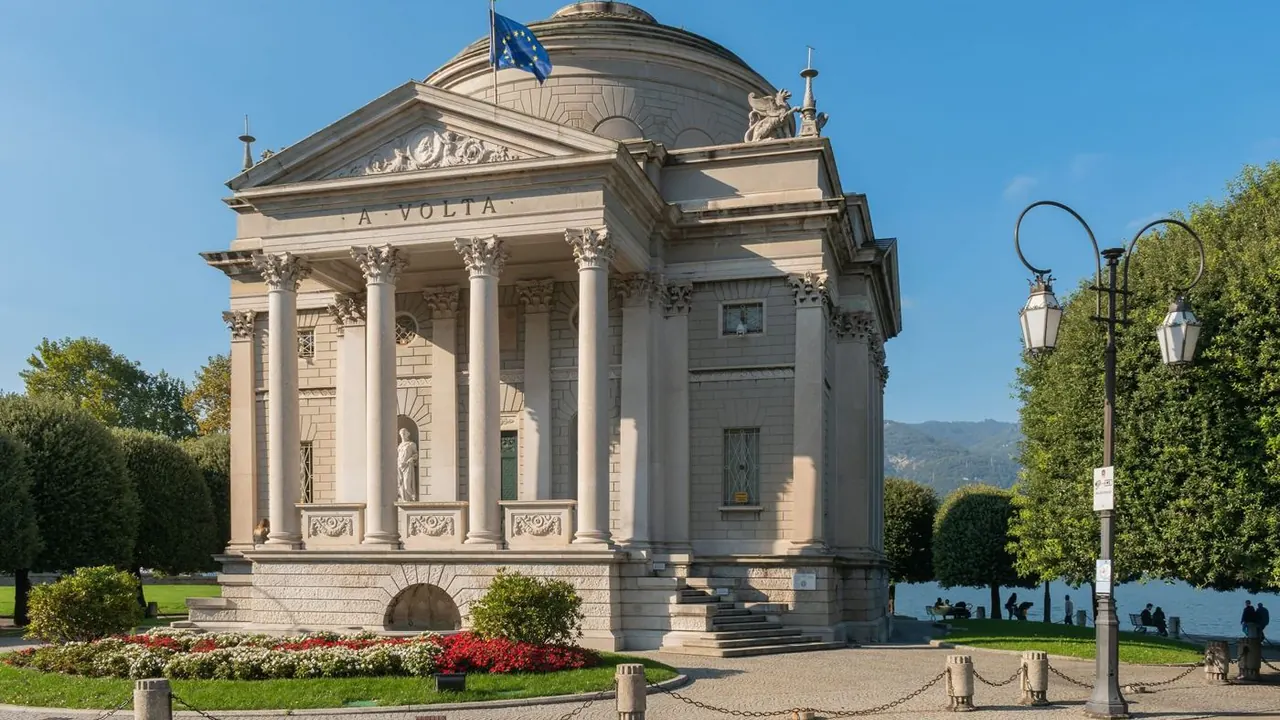
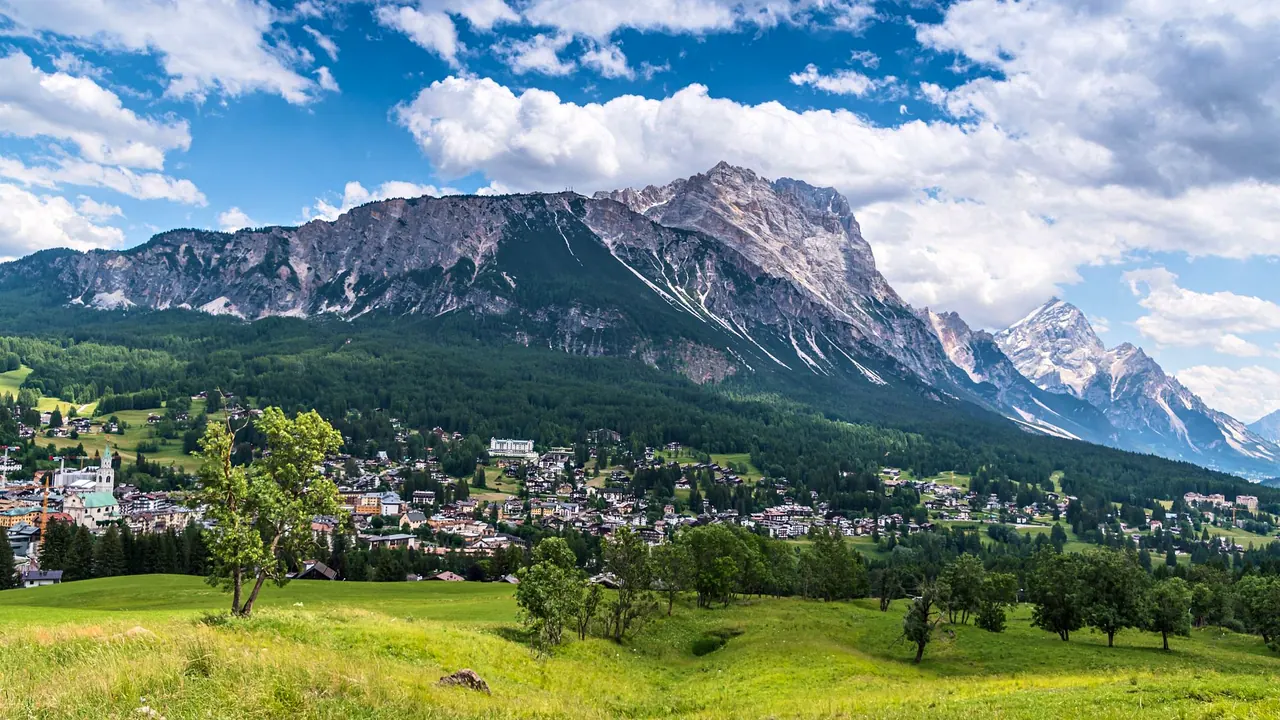
Photos: Como by Krzysztof Golik, CC BY-SA 4.0, cropped; Cortina d'Ampezzo by Andreas Neubauer, Pexels License.
Como or Cortina d'Ampezzo?
Our verdict in twelve categories, each scored against the same fixed benchmark cities, and the climate month by month, so you can choose for your trip.
Choose Como for
- day trips
- culture and sights
- beaches
Como suits a traveller who wants a lake, a town and a rail network all in one stay. Its walled centre holds a fine cathedral and Romanesque churches. Ferries carry you to Bellagio and the villa gardens, and Milan and Lugano are close enough for an easy day out. It is the better pick for a varied, unhurried trip that mixes sights, a summer swim and gentle walks on the slopes above the water.
Choose Cortina d'Ampezzo for
- nature and the outdoors
- families
- wellness
Pick Cortina d'Ampezzo if the mountains themselves are the point. The Dolomites rise straight from the town and lifts take you onto the peaks. In winter the valley is part of one of the largest ski areas in the Alps, and in summer it has hut-to-hut trails and via ferrata routes. Expect fewer sights, a car or limited buses for getting about, and an even bigger bill than at the lake.
Scoreboard
Twelve categories on one fixed scale from 0 to 100. The shaded stretch is the gap between the two.
Your match
Pick a travel style or drag the sliders, and both match scores follow your weighting.
Wins on day trips and culture and sights with your weighting.
Wins on nature and the outdoors and families with your weighting.
What matters to you?
Category by category
What the scores mean for a trip.
Beaches & swimming
Neither is a beach destination, but Como at least gives you a proper summer swim. The lidos around Villa Olmo have lawns and pontoons, and the lake warms to swimming temperature by midsummer. Ferries also reach the pebbly jetties at Moltrasio and the Tremezzina.
In Cortina, alpine lakes such as Ghedina and Pianozes are for walking round, because snowmelt keeps them cold all summer. In practice, swimming there means a hotel pool.
Food & drink
Both cities serve mountain cooking with a regional accent, and neither offers much variety. In Como the menu leans on the lake: perch risotto, missoltini and fried lake fish, with an aperitivo on the squares by the cathedral before dinner.
Cortina cooks Ampezzan food with a Venetian touch, such as casunziei with poppy seeds and speck and barley soup. Its best meals are on rifugio terraces high among the peaks. Dining in the valley is smarter and dearer, while Como's family trattorias up the lake feel more homely.
Culture & sights
Como has much more to see. In a day you can cover the cathedral, the Romanesque stonework of San Fedele and Sant'Abbondio, Terragni's Rationalist Casa del Fascio, the Volta museum and the silk museum.
Cortina's centre is pleasant rather than absorbing. It has the basilica and its bell tower, painted houses, the 1956 Olympic ice stadium and three small museums, the best of them the Rimoldi art collection. Its most moving history is up on the mountains, in the First World War tunnels on Lagazuoi and the Cinque Torri.
Nightlife
Both towns go quiet early, so neither suits a big night out. Como's evenings are aperitivo, dinner and a few wine bars around Piazza Duomo, and Milan's clubs are a train ride away if you want more. Cortina's version is après-ski and the evening stroll along the Corso Italia. A couple of bars and clubs stay open late only in the peak winter weeks.
Nature & outdoors
Both are superb outdoor bases, but Cortina is in a different league. The Dolomite peaks ring the town and lifts reach them directly. You can ski the Dolomiti Superski area, walk the Alta Via 1, climb, paraglide or follow some of the oldest via ferrata routes in the Alps.
Como's landscape is gentler: wooded slopes above a long lake. You can take the funicular to Brunate and walk the ridge path to the Volta lighthouse, cycle up to Madonna del Ghisallo, or paddle and sail on the water. It is lovely walking country, but it lacks the high-mountain drama and the winter sports season.
Day trips
Como is one of the best bases in northern Italy for day trips. Boats run to Bellagio, Varenna and the gardens of Villa Carlotta and Villa del Balbianello, and Milan is a short train ride away. Lugano, Bergamo and Lake Maggiore each make an easy day out.
Most outings from Cortina head further into the mountains. The South Tyrol towns of San Candido, Dobbiaco and Brunico are close. Bolzano, where the archaeology museum holds the Iceman, is a longer drive, and Venice is a long day by coach.
Good for families
Both towns are calm and safe, and neither has a zoo, aquarium or amusement park, so the difference lies in the outdoor days. Como has boat trips, the funicular and a summer lido, and the promenade is easy with a pushchair. Cortina suits families who ski or hike. It has ski schools, beginner slopes at Socrepes, public skating and meadow walks to mountain huts, though wet days and the costs are harder to absorb there.
Getting around
Como is far easier to reach and to move around. Trains run to Milan and Lugano, and the old town is flat and walkable. Ferries reach every lake village, if slowly, so you can manage without a car.
Cortina has had no railway since 1964, so you arrive by coach from Venice or after a long drive. The centre is walkable and ski buses work well in winter. Buses to the passes and the Tre Cime are limited, though, and many visitors hire a car.
Shopping & style
Neither is a serious shopping destination, and the two sell very different things. In Como the thing to buy is silk: scarves and ties from old-town specialists and mill outlets, plus a modest run of boutiques on Via Vittorio Emanuele II. Cortina's Corso Italia is pure resort luxury, with furriers, jewellers and ski wear. Its anchor is the Cooperativa di Cortina store, and there are shops for local wood carving and filigree.
Affordability
Neither is a cheap stay, but Como leaves a careful traveller far more room to save. Most of its extra cost comes with the waterfront. Move a few streets into the old town or up the slope, eat in a trattoria rather than on a lakeside terrace, and the bill drops noticeably. The trains and ferries that take you to the villages and to Milan stay inexpensive all year, and only July and August push rates to their highest.
In Cortina the high prices are spread across the whole valley rather than tied to a view, so swapping streets saves you little. The realistic budget option is to stay outside the valley altogether, which in turn means a car. Skiers also pay for lift passes and equipment hire on top of the room. The town has two expensive peaks, the winter ski weeks and August, against Como's single summer one. The best savings come from timing and altitude: June and late September, and a hut lunch that costs less than the setting suggests.
Live music & performing arts
Como has a real stage in the Teatro Sociale. Its season brings opera, ballet, concerts and theatre, with performances moving to the open-air Arena beside it in summer, and there is chamber music in churches and villas. La Scala is a train ride away.
Cortina has no theatre and no regular venue. Live music depends on summer festivals in churches and halls and the odd concert around Christmas and New Year.
Wellness & relaxation
Neither has thermal springs, so wellness means hotel spas and the setting itself. Como's calm comes from the water: a still lake, villa gardens, slow ferries and village evenings that end early, best in spring and autumn. Cortina has Alpine-style hotel spas with saunas and hay baths, clear mountain air and long afternoons on hut terraces, and it is at its calmest in June and September.
When should you go?
Pick your month. The climate figures are measured averages, not a forecast.
Como in July
Cortina d'Ampezzo in July
Daytime high, °C
Rainfall in the month, mm
Temperature and rainfall are climate normals, averaged over the years shown. Como: 1991-2020 normals, Lugano (23 km from centre). Cortina d'Ampezzo: 1991-2020 normals, Dobbiaco (22.5 km from centre).
Como is warm from late spring into September, with highs of about 27°C in July and August. That is enough for a lake swim at the lidos from June to early September. It is also a wet place for much of the year. From May to November most months bring around 170mm of rain, though high summer still has the most sunshine. Spring and autumn are the most comfortable for walking the streets and the hills. Winters are cool and drier, and fine for sightseeing if you don't mind short days.
Cortina is colder at every point in the year. Midwinter highs hover around 0°C, which is what keeps the ski season going. Summer tops out at about 22°C, pleasant for hiking but never beach weather. Rain peaks in July at around 130mm, so June and September are often the best months for the trails.
Which traveller are you?
On an outdoors trip, Cortina d'Ampezzo is the stronger choice. Lifts climb straight from town into the Dolomites, and the Tre Cime and Lago di Misurina are close. You can ski the Dolomiti Superski area in winter and walk the Alta Via 1 or climb via ferrata routes in summer.
For a culture and arts trip, Como gives you far more. Its marble cathedral, Romanesque churches and Terragni's Casa del Fascio sit within a compact walled town, and the Teatro Sociale stages opera. Milan's Last Supper and La Scala are a short train ride away.
For a short city break, Como is the easier choice. Trains from Milan arrive in about forty minutes, and the flat old town and lakefront are easy to walk. A ferry to Bellagio or the funicular to Brunate fills a second day without a car.
Before you go
| Measure | Como | Cortina d'Ampezzo |
|---|---|---|
| Official language | Italian | Italian |
| Currency | Euro (EUR) | Euro (EUR) |
| Sockets | CFL230 V, 50 Hz | CFL230 V, 50 Hz |
| Driving side | Right | Right |
| Time zone | UTC+1, UTC+2 in summer | UTC+1, UTC+2 in summer |
| Emergency number | 112 | 112 |
| Elevation | 201 m | 1,224 m |
| Main airport | Milan Malpensa International Airport (MXP)34 km from centre208 non-stop destinations | Venice Marco Polo Airport (VCE)116 km from centre103 non-stop destinations |
| Public holidays this year | 13 days | 13 days |
By the numbers
| Measure | Como | Cortina d'Ampezzo |
|---|---|---|
| City population | 83,184 | 5,546 |
| People per km² | 2,242 | 22 |
| Museums within 10 km | 11 | 3 |
| UNESCO World Heritage sites within 50 km | 8 | 1 |
Where else could you go?
Every comparison below shares a destination with this one, so you can follow Como or Cortina d'Ampezzo somewhere new.
- Milanvs Como
- Innsbruckvs Cortina d'Ampezzo
- Venicevs Cortina d'Ampezzo
- Interlakenvs Como
- Turinvs Como
- Lucernevs Como