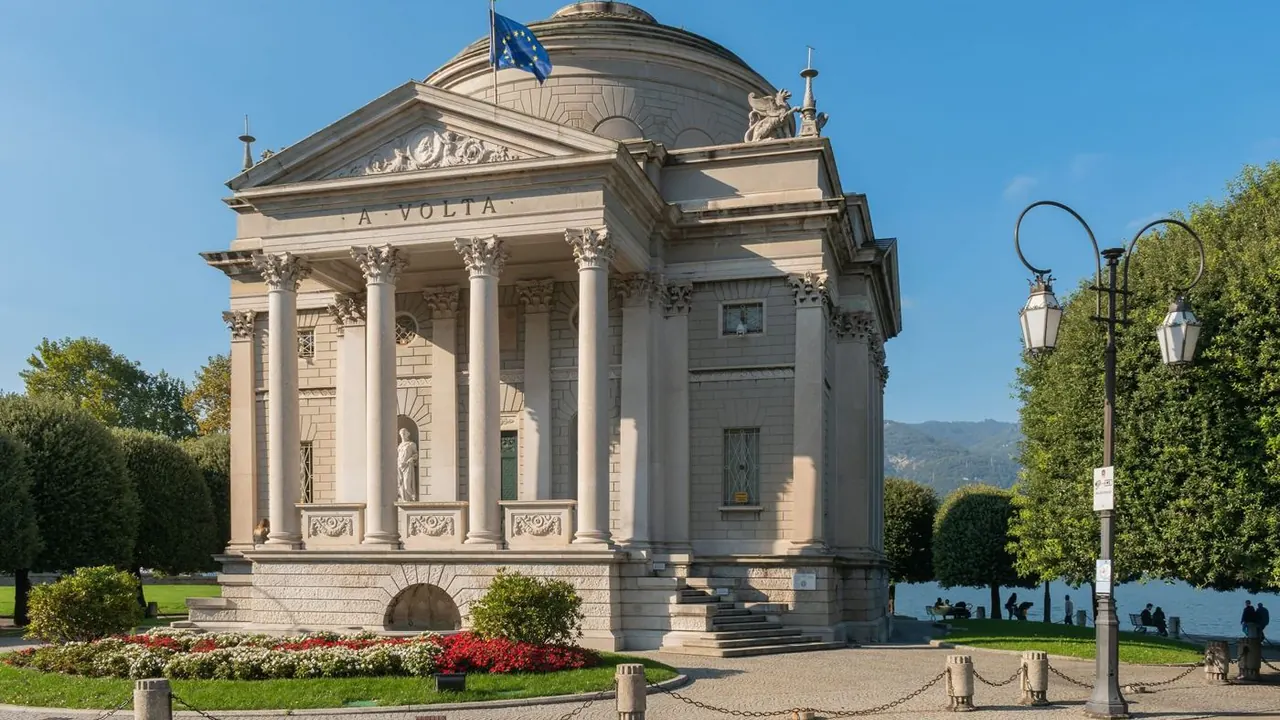
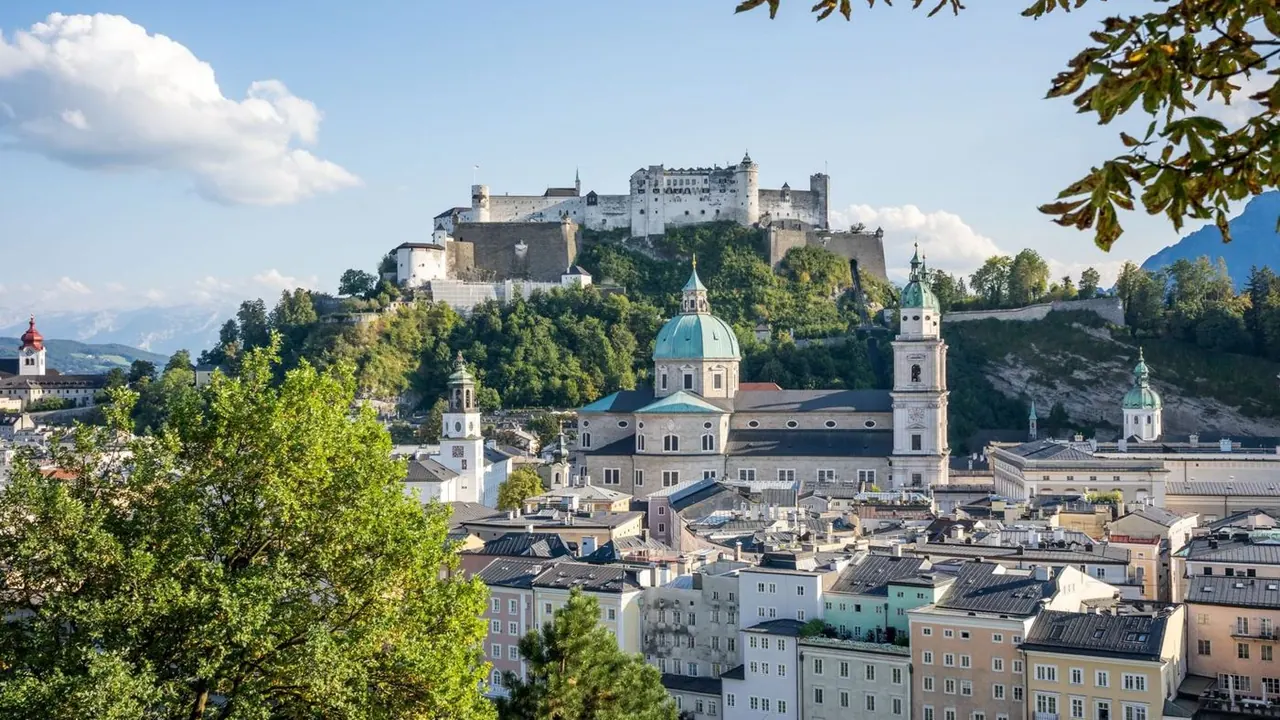
Photos: Como by Krzysztof Golik, CC BY-SA 4.0, cropped; Salzburg by Leonhard Niederwimmer, Pexels License.
Como or Salzburg?
Our verdict in twelve categories, each scored against the same fixed benchmark cities, and the climate month by month, so you can choose for your trip.
Choose Como for
- day trips
- beaches
Como suits travellers who want water and mountains on the doorstep and plenty of places to roam. The boats up the lake to Bellagio and the villa gardens of Tremezzo, and the quick trains to Milan and Lugano, make it a natural base for moving around. Summers are a little warmer and sunnier, a lido swim is a short walk from the old town, and evenings end with an aperitivo on the cathedral squares. Treat it as a place to roam from rather than a city to study.
Choose Salzburg for
- live music and the arts
- culture and sights
- families
If the city itself is the point, Salzburg is the better pick. Its Baroque old town, the fortress on the cliff and the Mozart houses give you several days of sightseeing, against Como's single day. Its music, from the summer festival to the concerts in the Mozarteum, is in another league. It is also easier with children, has a real spa tradition within easy reach in Bad Reichenhall and the Gastein valley, and has proper alpine walking from its edge.
Scoreboard
Twelve categories on one fixed scale from 0 to 100. The shaded stretch is the gap between the two.
Your match
Pick a travel style or drag the sliders, and both match scores follow your weighting.
Wins on day trips and beaches with your weighting.
Wins on live music and the arts and culture and sights with your weighting.
What matters to you?
Category by category
What the scores mean for a trip.
Beaches & swimming
Neither city is for a beach vacation. The swimming season is the same short June to early September in both, and you get in from lawns, jetties and pebbles, not sand. The difference is distance. Como's lido beside Villa Olmo is on the city's own shore, and ferries reach the swimming jetties at Moltrasio and the Tremezzina.
Salzburg's river is too cold and fast to swim in, so a swim means the trip out to Fuschlsee, Wolfgangsee or Mondsee. The water there is clearer, though, than at the busy southern tip of Lake Como.
Food & drink
Both kitchens are hearty and regional, and in both the tourist centre is the weakest place to eat. Como cooks from the lake and the valleys: perch risotto, sun-dried missoltini and polenta, with an aperitivo and small plates on the squares by the cathedral and San Fedele as the evening ritual.
Salzburg puts schnitzel, Kasnocken and the peaked Salzburger Nockerl on the table. Its real strengths are coffee and cake in the old coffee houses and beer from wooden barrels in the monastery brewery garden in Mülln. In both cities, the inns and family places up in the hills beat the lakefront terraces and the old-town lanes.
Culture & sights
Salzburg has much more to see. Its UNESCO-listed old town puts the cathedral, the Residenz, Mirabell and both Mozart houses a short walk apart, with Hohensalzburg on the cliff above. St Peter's catacombs, the Museum der Moderne on the Mönchsberg and Hellbrunn fill a second and third day.
Como's sights are fewer but good. There is the marble cathedral, the Romanesque San Fedele and Sant'Abbondio, Terragni's Casa del Fascio for anyone interested in architecture, and the Volta and silk museums. It all fits into one day, which leaves the rest of the stay for the lake.
Nightlife
Both cities go quiet early, and in both the big night out means a train, to Milan from Como and to Munich from Salzburg. What differs is the drink. A Como evening is aperitivo, a long dinner, a wine or cocktail bar on Piazza Duomo and a stroll on the lakefront. Salzburg's best evenings are in beer halls with long tables and litre mugs, and the student pubs along Rudolfskai stay open later at weekends during term.
Nature & outdoors
Both have superb scenery straight from the centre, but it differs in kind. Como's is a lake landscape. The funicular climbs to Brunate for ridge paths to the Volta lighthouse, the Greenway del Lago links villages along the shore, there is kayaking and sailing on the water, and road cyclists take on the climb to Madonna del Ghisallo.
Salzburg's is properly alpine. The Untersberg cable car lifts you to limestone ridges at about 1,800m, the Gaisberg is used for paragliding, and Berchtesgaden and the Königssee are half an hour away. In winter the ski areas of the Salzburger Land are about an hour's drive, which gives Salzburg a snow season the lake does not offer.
Day trips
Como has the stronger list, and much of it needs no car. Boats run to Bellagio, Varenna, Villa Carlotta and Balbianello. Trains put the Last Supper and La Scala in Milan, the Lugano lakefront and Bergamo's upper town within easy reach, and Lake Maggiore's Borromean Islands are possible too.
Salzburg's excursions are good as well. Hallstatt, the salt mines of Hallein and Berchtesgaden, the clifftop fortress at Werfen and Munich by train make a varied set. Several of the lake villages, though, are awkward to reach without a car, and few trips match Como's mix of lake villas and major art cities.
Good for families
Salzburg is the easier choice with children. Hellbrunn's trick fountains, the zoo beside them, the hands-on Haus der Natur, the marionette theatre and the fortress funicular fill a couple of days. The salt mines, with their miners' slides and underground boat rides, make a memorable outing, though the cobbles are hard going with a pushchair.
Como has smoother ground, with a flat promenade and the Villa Olmo gardens. It also has the Brunate funicular, ferry rides and summer paddling, but very little built for children. It suits a slow outdoor family stay rather than a busy one.
Getting around
Como's old town and lakefront are flat and compact, so they are easy on foot, and its two stations put Milan and Lugano a quick train ride away. Getting around the lake is the slow part. The ferries take a long time to reach the villages further up, and buses and cars crawl along the narrow shore roads in summer.
Salzburg is the easier city to get around overall. The old town, the fortress, Mirabell and the Mozart houses are all within about fifteen minutes' walk of each other and much of the centre is car-free, though the lanes are cobbled and some are steep. A dense trolleybus network reaches Hellbrunn and the Untersberg cable car, and the flat riverside paths suit a bike. In both cities a car is only worth having for the outlying villages.
Shopping & style
Each city has one thing worth buying, and Salzburg has slightly more around it. Its speciality is Tracht: dirndls, loden jackets and leather made to measure in old-town workshops. It also has the guild signs of Getreidegasse, the farmers' market by the Andräkirche and the long-established Advent market on Domplatz.
Como's speciality is silk, with scarves and ties from old-town shops and outlets at the mills that supply the fashion houses. Beyond that there is a short run of boutiques on Via Vittorio Emanuele II and a weekend antiques market. For serious fashion, Milan is close.
Affordability
Both are expensive, and in neither does the setting come cheap. Como's prices peak in July and August, when lakeside hotels and villa rentals soar, so spring and autumn are noticeably kinder. Salzburg stays costly all year and tightens further during the summer festival and the Advent markets.
The ways to save are similar: sleep back from the water or across the river, and eat in the trattorias and inns of the hills and outer districts. Salzburg's city card cuts sightseeing costs, while in Como cheap trains and ferries keep day trips affordable.
Live music & performing arts
This is the widest gap between the two. Salzburg's music is a reason to go in itself. The Salzburg Festival fills the Grosses Festspielhaus and the Felsenreitschule, carved into the cliff, Jedermann is played in front of the cathedral, and Mozart Week and the Easter Festival add two more seasons. Between them, the Mozarteum, the Landestheater and the Marionette Theatre keep the programme going.
Como has the handsome Teatro Sociale with its open-air summer Arena, plus chamber concerts in Romanesque churches and lakeside villas. It is a respectable programme, but for more than that, visitors take the train to La Scala.
Wellness & relaxation
Neither has thermal springs of its own, but Salzburg has a bathing culture close by. In town there is the Paracelsus Bad with its saunas, Bad Reichenhall's brine spa is about twenty minutes away, and the Gastein valley has radon springs and Belle Époque spa hotels.
Como relies on its setting: still water, gardens running down to the shore and slow ferry rides, with spa treatments mostly in the grand villa hotels. It is deeply restful in spring and autumn, but the lakefront gets busy in midsummer.
When should you go?
Pick your month. The climate figures are measured averages, not a forecast.
Como in July
Salzburg in July
Daytime high, °C
Rainfall in the month, mm
Temperature and rainfall are climate normals, averaged over the years shown. Como: 1991-2020 normals, Lugano (23 km from centre). Salzburg: 1991-2020 normals, Salzburg (3.4 km from centre).
Como is the warmer of the two all year, with highs of 27°C in July and August and noticeably more sunshine. June to early September is the lido season. The catch is rain: from April to November almost every month is wet, peaking at 178mm in May, and autumn brings no dry spell. The driest stretch is December to March, which is cool but fine for walking the old town, though short on light.
Salzburg is a couple of degrees cooler in summer, at about 25°C, and much colder in winter, around 3°C in January, when snow often reaches the town. Its rain is concentrated in June to August, so summer lake days come with showers. Spring and especially October, at about 90mm, are drier than in Como, which makes autumn the better time for walking the ridges around Salzburg.
Which traveller are you?
For a culture and arts trip, choose Salzburg. The UNESCO-listed Baroque old town, the Hohensalzburg fortress and the Mozart houses fill two or three days, and the festivals, the Mozarteum and the Landestheater give it a music life that Como's Teatro Sociale cannot match.
On a family trip with children, Salzburg makes things easier. Hellbrunn's trick fountains, the zoo, Haus der Natur, the marionette theatre and the salt-mine slides keep children busy. In Como, the funicular, the ferries and a lido are about all there is for them.
On a beach and sun trip, Como has the edge, though neither is a real beach destination. You can swim at the lido beside Villa Olmo without leaving town, and summers are warmer and sunnier. In Salzburg the lakes are half an hour or more away.
Before you go
| Measure | Como | Salzburg |
|---|---|---|
| Official language | Italian | German, Austrian Sign Language |
| Currency | Euro (EUR) | Euro (EUR) |
| Sockets | CFL230 V, 50 Hz | CF230 V, 50 Hz |
| Driving side | Right | Right |
| Time zone | UTC+1, UTC+2 in summer | UTC+1, UTC+2 in summer |
| Emergency number | 112 | 112 |
| Elevation | 201 m | 424 m |
| Main airport | Milan Malpensa International Airport (MXP)34 km from centre208 non-stop destinations | Salzburg Airport (SZG)3 km from centre64 non-stop destinations |
| Public holidays this year | 13 days | 16 days |
By the numbers
| Measure | Como | Salzburg |
|---|---|---|
| City population | 83,184 | 155,021 |
| People per km² | 2,242 | 2,360 |
| Museums within 10 km | 11 | 38 |
| UNESCO World Heritage sites within 50 km | 8 | 3 |
Where else could you go?
Every comparison below shares a destination with this one, so you can follow Como or Salzburg somewhere new.