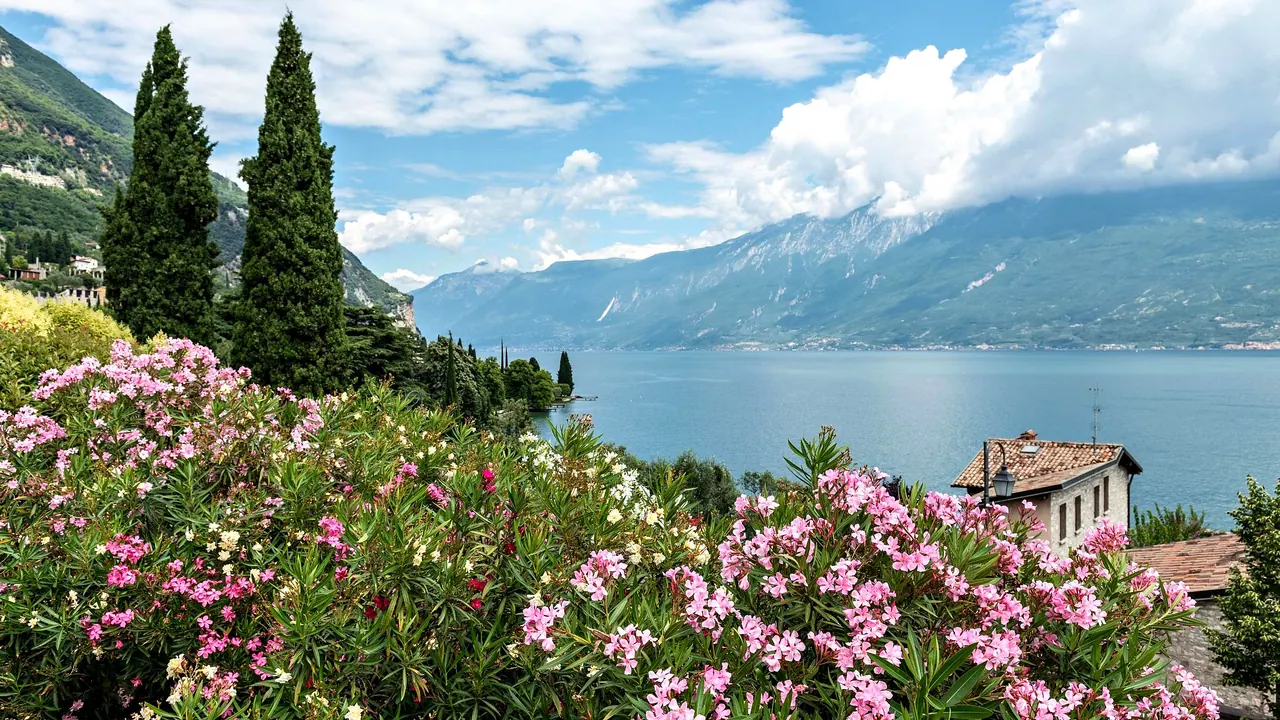
Photos: Lake Garda by Wolfgang Weiser, Pexels License.
Lake Garda or Tuscany?
Our verdict in twelve categories, each scored against the same fixed benchmark cities, and the climate month by month, so you can choose for your trip.
Choose Lake Garda for
- families
- nature and the outdoors
- prices
Lake Garda suits travellers who want to be outdoors and on the water rather than in galleries. The fjord-like north around Riva, Torbole and Arco is a serious base for climbing, mountain biking and windsurfing, while the south-east shore is built for families, with Gardaland, lidos and campsites with pools. Add easy trains to Verona and Venice from the southern towns, and it makes a relaxed summer base for active people and those with children.
Choose Tuscany for
- culture and sights
- shopping
- food and drink
Anyone travelling for art, food and wine will find Tuscany much the richer choice. Florence, Siena, Pisa and a long chain of hill towns hold more Renaissance and medieval heritage than a single trip can cover, and the cooking and cellars of Chianti, Montalcino and Montepulciano are a reason to come in themselves. It also has the stronger craft shopping, the better hot springs and a sandy coast, though most of these need a car and more planning than a stay by the lake.
Scoreboard
Twelve categories on one fixed scale from 0 to 100. The shaded stretch is the gap between the two.
Your match
Pick a travel style or drag the sliders, and both match scores follow your weighting.
Wins on families and nature and the outdoors with your weighting.
Wins on culture and sights and shopping with your weighting.
What matters to you?
Category by category
What the scores mean for a trip.
Beaches & swimming
Tuscany has the better coast, and it is a sea coast with sand: Elba's clear bays at Fetovaia and Cavoli, the pine-backed strands of the Maremma, and the long rows of umbrellas on Versilia. The catch is that it lies a long drive from Florence and the hill towns.
Garda's swimming is lake bathing from pebble shores, rock shelves and jetties, with lawns and loungers behind. At Sirmione, Lazise or the Valtenesi bays it sits right beside where you sleep, which counts for a lot, but there is no surf and little sand.
Food & drink
Tuscany eats and drinks considerably better. Its food tradition is one of Italy's best known, from Florentine T-bone and pappardelle with boar to lampredotto at the market stalls of San Lorenzo, and wine country such as Chianti, Montalcino and Montepulciano makes estate lunches and cellar visits a large part of the trip.
Garda has solid lakeside cooking and good wine of its own, with lake fish, Bardolino, Lugana and Amarone close by. The best of it is in the agriturismi above the shore, though, because the busy harbour fronts lean on pizza and tourist menus.
Culture & sights
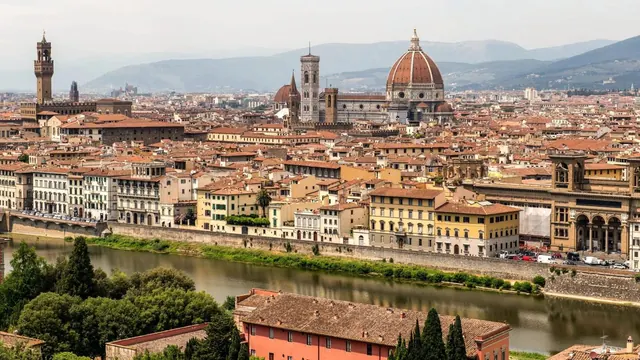
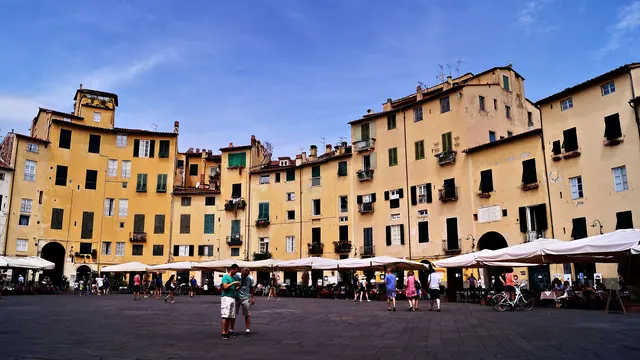
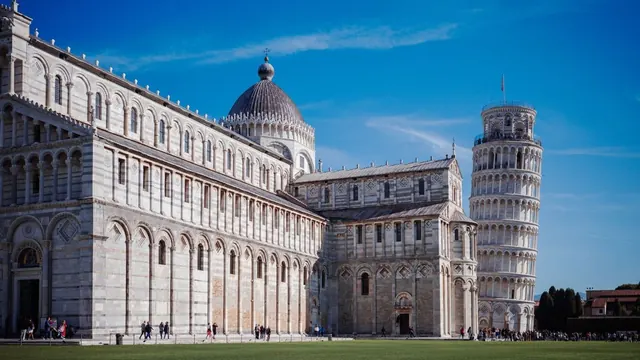
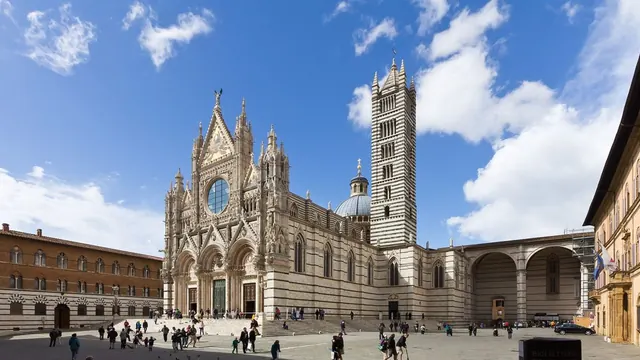
The gap here is very wide. Tuscany is the cradle of the Renaissance, with the Uffizi, the David, Brunelleschi's dome, Siena's cathedral and Pisa's marble square, and towns like Lucca, Arezzo and Cortona that would be highlights anywhere else.
Garda offers a pleasant round of castles at Sirmione, Malcesine and Riva, the Roman Grotte di Catullo and d'Annunzio's strange Vittoriale. That is enough for a few rewarding afternoons, and for anything weightier visitors take the train to Verona.
Nightlife
Neither is a party destination, but Tuscany offers more after dinner. Florence has student crowds on the steps of Santo Spirito and wine bars in Oltrarno, and in summer the Versilia beach clubs and dance halls run until dawn.
At Garda, evenings are an aperitivo and a promenade stroll. Desenzano, with its lakefront bars and nearby clubs on summer weekends, is the only real exception.
Nature & outdoors
For scenery that brings mountains and water together, Garda comes out ahead. The soft south of moraine hills and vineyards narrows into a fjord in the north, where the slopes rise straight out of the lake, so a morning on high ground and an afternoon on the water fit easily into one day. Spring and autumn suit the trails and cliffs, while summer belongs to the lake.
Tuscany's best-known landscape is worked land: the cypress lanes of Chianti, the clay Crete Senesi and the Val d'Orcia, green in spring and gold by early summer, best seen at walking or cycling pace. Its wilder country lies at the edges, in the Apuan Alps above the Carrara quarries, the beech forests of the Casentino and the pine woods of the Maremma, and each of those is a separate trip rather than part of one base.
Day trips
Both are outstanding bases, and Tuscany has the most of all. Siena, Lucca, Pisa, San Gimignano and the Montalcino and Pienza loop are within easy reach, and Bologna, Umbria and the Cinque Terre lie just beyond the border.
Garda's strength is the railway along its southern shore. From Peschiera or Desenzano, Verona is under an hour away, Venice is a fast train ride, and Vicenza, Padua, Mantua and Bergamo are all easy days out.
Good for families
Children are better served by the lake, mostly because days stay close to the water and need little driving. Teenagers have the northern shore, where they can bike, climb or take a first windsurfing lesson, while younger ones are happy with a gelato on the harbour front. The drawbacks are pebbles underfoot, so water shoes help, and summer roads that clog between the towns.
Tuscany takes more planning: a farmhouse with a pool and animals, then a few days on the sandy, shallow beaches of Versilia, the Maremma or Elba's sheltered bays, which are kinder to small swimmers than Garda's shingle. Its outings made for children are fewer and spread across the region, such as the Pinocchio park at Collodi, the climb up Pisa's leaning tower and a bike ride along Lucca's walls, so each one is a separate drive rather than part of a cluster on one shore. The hard part is Florence, where the galleries and July heat above 30°C wear young children out quickly.
Getting around
Tuscany is easier to get around, at least along its main rail line, where Florence, Pisa, Lucca, Arezzo and Viareggio connect well without a car. The hill country, the Maremma and the islands are a different matter and need a car or a ferry.
At Garda only Peschiera and Desenzano have trains. Boats link the towns slowly, and the shore roads are narrow and jammed in summer, so the lake works best if you stay put and travel by water.
Shopping & style
Tuscany is far better for shopping, and craft is the reason. Florence has leather workshops around Santa Croce, goldsmiths on the Ponte Vecchio, marbled paper in Oltrarno and the luxury street of Via de' Tornabuoni, while Volterra alabaster and Pietrasanta marble add regional specialities.
Garda's offer is the weekly market and what you can carry home from it: olive oil, Lugana and Bardolino wine, lemon products from Limone and climbing gear in Arco.
Affordability
Both are pricey in summer, with little to separate them on cost. What differs is where the savings are. At Garda, the many campsites, camping villages and hill agriturismi undercut the lakefront hotels, although theme parks and ferries add up for families.
In Tuscany, central Florence and Forte dei Marmi are the expensive end and car hire is an extra cost. Trattoria meals, cellar-door wine and towns such as Lucca, Arezzo or the Maremma help balance the bill.
Live music & performing arts
Tuscany has a real musical life of its own. There is the Maggio Musicale Fiorentino with its opera house and orchestra, Puccini recitals in Lucca all year with his operas staged outdoors at Torre del Lago in summer, and the Accademia Chigiana's concerts in Siena.
Garda has summer shows at the Vittoriale's amphitheatre and band concerts in the squares. Its best evening of music is borrowed from outside the region: opera in Verona's arena, under an hour from the southern shore.
Wellness & relaxation
Both sit on hot springs, but Tuscany has more of them and they are more varied. It has the grand old spa town of Montecatini, the free terraced pools at Saturnia, the steaming medieval square of Bagno Vignoni and the white pools of Bagni San Filippo, and a farmhouse stay in the Val d'Orcia is restful in itself.
Garda's thermal waters are concentrated at Sirmione, with pools looking over the lake, and in the open-air villa park near Lazise. Pair them with a hotel spa on the western Riviera and it makes a good, compact spa trip, best taken outside August.
When should you go?
Pick your month. The climate figures are measured averages, not a forecast.
Lake Garda in July
Tuscany in July
Daytime high, °C
Rainfall in the month, mm
Where the figures come from
Lake Garda's sunshine is measured 28 km from the centre, at Verona / Villafranca.
Tuscany has no rain gauge within 25 km of the centre, so its rainfall comes from a gridded climate dataset read at the destination rather than from a gauge further away.
Tuscany's sunshine is measured 71 km from the centre, at Pisa / S. Giusto.
Temperature and rainfall are climate normals, averaged over the years shown. Lake Garda: 2005-2025 (sunshine 1991-2020, rainfall 1991-2020) normals, Verona / Rivoltella (1.6 km from centre). Tuscany: 1995-2020 (sunshine 1991-2020, rainfall 1991-2020) normals, Firenze / Peretola (5.6 km from centre).
Both are summer destinations with cool, grey winters, but Tuscany runs hotter and drier in high summer. Around Lake Garda, June to August is warm and reliable for lake bathing, peaking near 29°C in July, though summer still brings regular thundery rain and May is one of the wetter months. Spring and early autumn are the comfortable time for hiking and climbing in the north, and November is the wettest month at about 121mm.
Where most visitors stay in Tuscany, July and August climb to around 33°C, which makes long days walking Florence or Siena hard work, though it is ideal on the coast. Summer is also the driest stretch, with only about 37mm of rain in July. May, June and September are the best months for touring towns and countryside, and the rain arrives in earnest from October, a little earlier than at the lake.
Which traveller are you?
On a family trip with children, Lake Garda is the easier choice. Gardaland, the water parks and Parco Natura Viva are all close together on the south-east shore, and grassy lidos, ferry rides and resort campsites keep young children happy without long drives.
For a culture and arts trip, Tuscany is far ahead. Florence's Uffizi, the Accademia and Brunelleschi's dome, Siena's Campo and the hill towns of San Gimignano, Pienza and Volterra outweigh Garda's castles and Roman villa, which fill half-days rather than a whole week.
On an outdoors trip, Lake Garda has the edge. Riva, Torbole and Arco give you limestone climbing, via ferrate, mountain-bike trails and reliable wind for sailing in one compact base, with Monte Baldo's ridges reached by cable car from Malcesine.
Before you go
| Measure | Lake Garda | Tuscany |
|---|---|---|
| Official language | Italian | Italian |
| Currency | Euro (EUR) | Euro (EUR) |
| Sockets | CFL230 V, 50 Hz | CFL230 V, 50 Hz |
| Driving side | Right | Right |
| Time zone | UTC+1, UTC+2 in summer | UTC+1, UTC+2 in summer |
| Emergency number | 112 | 112 |
| Main airport | Verona Villafranca Valerio Catullo Airport (VRN)96 non-stop destinations | Florence Airport, Peretola (FLR)46 non-stop destinations |
| Public holidays this year | 13 days | 13 days |
By the numbers
| Measure | Lake Garda | Tuscany |
|---|---|---|
| Population | - | 3,729,641 |
Where else could you go?
Every comparison below shares a destination with this one, so you can follow Lake Garda or Tuscany somewhere new.
- Lake Comovs Lake Garda
- Umbriavs Tuscany
- Cinque Terrevs Tuscany
- Cinque Terrevs Lake Garda
- Dolomitesvs Lake Garda
- Austrian Alpsvs Lake Garda