Italy
Florence
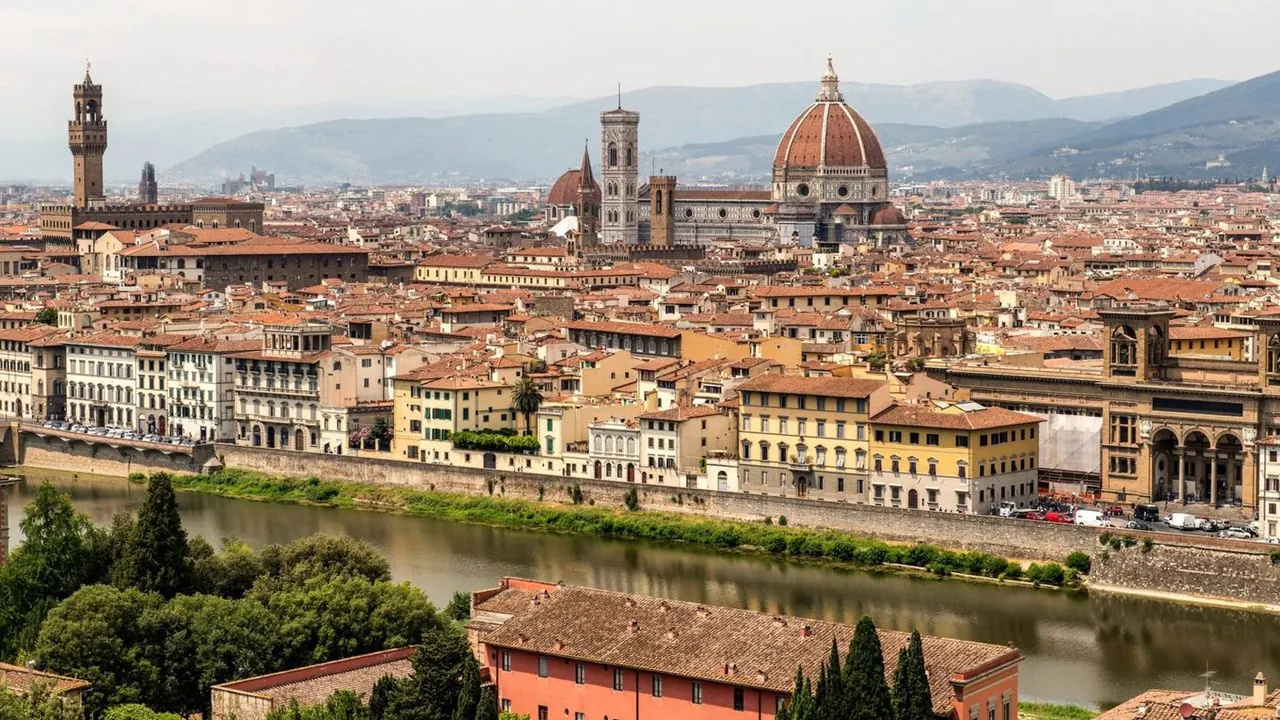
Florence and the Arno
- Day trips98
- Culture & sights94
- Getting around78
Photo: Wolfgang Weiser, Pexels License
Match
59
Every category weighted equally
- Beach & sun51
- Culture & arts69
- Food & nightlife62
- Family trip57
- Outdoors61
- Relax & unwind55
- Shopping & style64
- On a budget56
Florence in twelve categories
Our verdict on each, scored 0 to 100 against the same fixed benchmark cities, so a score means the same thing on every page.
Beaches & swimming. Scores 14 out of 100.
Food & drink. Scores 74 out of 100.
Culture & sights. Scores 94 out of 100.
Nightlife. Scores 42 out of 100.
Nature & outdoors. Scores 58 out of 100.
Day trips. Scores 98 out of 100.
Good for families. Scores 45 out of 100.
Getting around. Scores 78 out of 100.
Shopping & style. Scores 72 out of 100.
Affordability. Scores 35 out of 100.
Live music & performing arts. Scores 58 out of 100.
Wellness & relaxation. Scores 42 out of 100.
Florence category by category
Beaches & swimming
14Florence is an inland city in the Arno valley, and swimming plays no part in a normal stay. The nearest sea is the Tyrrhenian coast of the Versilia around Viareggio, roughly an hour and a half by train, where long sandy beaches are lined with rows of rented loungers and umbrellas. The water is warm in summer, around 24°C, but this is a full day's outing, not something you fit into an afternoon.
In the hot months most visitors who want to cool off rely on a hotel pool or one of the public outdoor pools on the edge of the city. If the sea matters to you, Florence works best as one leg of a longer trip with a few nights on the coast.
Food & drink
74Florentine cooking is plain and confident: bistecca alla fiorentina served thick and rare, ribollita and pappa al pomodoro made from yesterday's bread, crostini with chicken liver, and beans dressed in green Tuscan olive oil. Some of the best eating is street food. Lampredotto, tripe simmered and stuffed into a roll, is sold from carts and kiosks, and the Mercato Centrale at San Lorenzo and the smaller, more local Sant'Ambrogio market are the places to see what the city really eats.
Wine is the other half of the story. Chianti Classico vineyards start just south of the city, and wine bars pour Tuscan reds by the glass. Gelato is taken seriously here. The streets around the Duomo and Piazza della Signoria are full of set tourist menus, so the better meals tend to be in family trattorie in the Oltrarno, around Santo Spirito and near Sant'Ambrogio. There is a fine-dining tier too, though most visitors come for the trattoria.
Culture & sights
94Florence is where the Renaissance took shape, and its compact centre still holds the work. Brunelleschi's dome rises over the Duomo, next to Giotto's bell tower and the Baptistery with its bronze doors. The Uffizi has Botticelli, Leonardo and Raphael in one long run of galleries. Michelangelo's David stands in the Accademia, and the Bargello holds the best Renaissance sculpture anywhere. Across the river, the Pitti Palace has room after room of paintings and opens onto the Boboli Gardens.
The smaller sights are just as rewarding: the Fra Angelico frescoes in the monks' cells at San Marco, the Medici Chapels, the Brancacci Chapel, Santa Croce with its tombs, and Palazzo Vecchio on Piazza della Signoria. You can see the highlights in a few days, but there is enough to fill a week. Book the big museums ahead and expect queues in summer.
Nightlife
42Evenings in Florence start with aperitivo and usually end at a wine bar. The liveliest scene is in the Oltrarno, where people spill out of the bars around Piazza Santo Spirito with drinks in hand on warm nights, and around Sant'Ambrogio, which draws more locals. The city has a large student population, many of them studying abroad, so there is a cluster of loud pubs near the centre aimed at them.
In summer, outdoor bars set up along the Arno and in the parks. The club scene is small, though, and most visitors find the night winds down well before it would in a big capital. Come for long dinners and a late glass of wine, not for dancing until dawn.
Nature & outdoors
58Florence lies in a bowl of hills, and the countryside begins almost at the edge of town. A bus climbs to Fiesole for walks along olive terraces with views back over the dome. San Miniato and Piazzale Michelangelo give a closer view, and the paths of Monte Morello and Monte Ceceri lie just to the north. South of the city the Chianti hills are classic cycling and walking country, with cypress-lined lanes, vineyards and woods.
Further out are the Apennines. The beech and fir forests of the Casentino national park, with its old hermitages, are about an hour and a half away, and the marble peaks of the Apuan Alps are a little further. It is gentle, cultivated landscape more than wild country. Spring and autumn are the best seasons, since summer afternoons are often too hot for long walks.
Day trips
98Few cities have this many first-rank places so close. Siena, with its shell-shaped Piazza del Campo and striped cathedral, is about an hour and a quarter by bus. Pisa is about an hour by train, and walled Lucca, where you can cycle along the ramparts, takes a little longer. San Gimignano's towers, hilltop Volterra and Monteriggioni are easy by car or tour, and the Chianti wine country starts just south of the city, with villages like Greve and Radda among the vineyards.
Bologna is under forty minutes by high-speed train, a whole other city of arcades and food. Arezzo, Cortona and the Val d'Orcia towns of Pienza and Montepulciano reach further south. Trains cover the main towns well, while a car makes the hill villages and wineries much easier to visit. You could fill a week of day trips without repeating yourself.
Good for families
45Italians make children welcome, and the centre is small enough to cover on foot. Still, Florence is a city of paintings and churches, and its main attractions are made for adults. The best ways in for children are hands-on: climbing the dome or Giotto's bell tower, the family tours of Palazzo Vecchio with its secret passages, the instruments and globes at the Museo Galileo, and running around the Boboli Gardens. Gelato helps a lot.
On the other hand, the pavements are narrow, the crowds in summer are heavy, July and August are very hot, and there is no zoo, aquarium or theme park nearby worth mentioning. The Pinocchio park at Collodi, about an hour away, is the classic family outing. With young children, spring or autumn and a slow pace work best.
Getting around
78Florence is a walking city. The Duomo, the Uffizi, Ponte Vecchio, the Accademia and the Pitti Palace are all within about twenty minutes of each other on foot, so most visitors barely use transport. The flip side is the narrow pavements, crowds on the main streets in summer and stone paving that is hard on tired feet.
There is no metro. Trams connect the main station with the airport and the suburbs, and small buses fill in the rest, including the climb to Fiesole and Piazzale Michelangelo. Santa Maria Novella station is right in the centre and is the base for day trips by rail. A car is a burden in the city itself, since the historic centre is a restricted traffic zone, but it is useful for the hill towns of the countryside.
Shopping & style
72Florence is a craft city first. Leather is everywhere, from the stalls of the San Lorenzo market to small workshops that make bags, gloves and shoes. Some of the work is excellent and some is mass-produced, so it pays to look closely. Marbled paper and bound notebooks, goldsmiths and jewellers on the Ponte Vecchio, and the artisan workshops of the Oltrarno, where furniture restorers, gilders and framers still work, give a sense of how long these trades have lasted.
Florence is also home to several of Italy's great fashion houses, and Via de' Tornabuoni is a short, elegant luxury street. The flea market at Sant'Ambrogio and the antique dealers of Via Maggio add to it. Beyond this, though, there is not a huge range of mainstream or independent fashion, and the streets near the Duomo have plenty of souvenir shops.
Affordability
35Florence is an expensive city for its size. Hotel rooms in the historic centre cost a lot, especially from spring through autumn, and the main museums and the Duomo climb all charge real admission fees that add up quickly over a few days. Restaurants near the big sights charge for their location.
Everyday costs can be kept down. Lampredotto and panini from street stalls, lunch at market counters and simple trattoria meals are fairly priced, house wine is cheap, and you can walk almost everywhere, so you will barely spend on transport. Staying across the river or near the station and visiting in winter make the biggest difference.
Live music & performing arts
58Florence has a serious classical tradition. Opera was more or less born here around 1600. The Teatro del Maggio Musicale Fiorentino has its own orchestra and puts on opera, concerts and ballet through the season, and the Maggio Musicale festival in spring is one of the oldest music festivals in Europe. The Teatro della Pergola, a beautiful eighteenth-century house, stages theatre, though almost always in Italian.
Most visitors meet the music scene through chamber concerts and short opera programmes in churches and palaces, which are pleasant but staged for tourists. Summer adds outdoor concerts and festivals. Jazz and the live music scene are small, and outside the opera and classical season there is not much to see in an evening.
Wellness & relaxation
42The city itself offers little in the way of spas. There is no bathing tradition within the walls, and spa options come down to hotel spas and a few day spas. The crowded centre in high season is not restful either, although early mornings, the Boboli and Bardini gardens and a slow evening on the Oltrarno side do bring some calm.
The real bathing culture lies outside Florence. Montecatini Terme, a grand old spa town of drinking halls and thermal establishments, is under an hour by train, and the outdoor sulphur pools of southern Tuscany, such as Bagno Vignoni and Saturnia, can be reached on a longer day out or an overnight stay in the countryside. A few nights on a hill-country farm stay are the classic way to slow down.
When should you go?
Pick a month to see what it is like. The climate figures are measured averages, not a forecast.
Florence in July
Daytime high, °C
Rainfall in the month, mm
The whole year
Shaded against this city’s own year: the deepest cell is its best month for that figure and the palest its weakest.
Where the figures come from
Florence has no rain gauge within 25 km of the centre, so its rainfall comes from a gridded climate dataset read at the city rather than from a gauge further away.
Florence's sunshine is measured 71 km from the centre, at Pisa / S. Giusto.
Temperature and rainfall are climate normals, averaged over the years shown. Florence: 1995-2020 (sunshine 1991-2020, rainfall 1991-2020) normals, Firenze / Peretola (5.6 km from centre).
Before you go
| Measure | Florence |
|---|---|
| Official language | Italian |
| Currency | Euro (EUR) |
| Sockets | CFL230 V, 50 Hz |
| Driving side | Right |
| Time zone | UTC+1, UTC+2 in summer |
| Emergency number | 112 |
| Elevation | 50 m |
| Main airport | Florence Airport, Peretola (FLR)6 km from centre46 non-stop destinations |
| Public holidays this year | 13 days |
By the numbers
| Measure | Florence |
|---|---|
| City population | 360,930 |
| People per km² | 3,528 |
| Museums within 10 km | 141 |
| UNESCO World Heritage sites within 50 km | 4 |
Compare Florence with
Every comparison with a written verdict behind it.