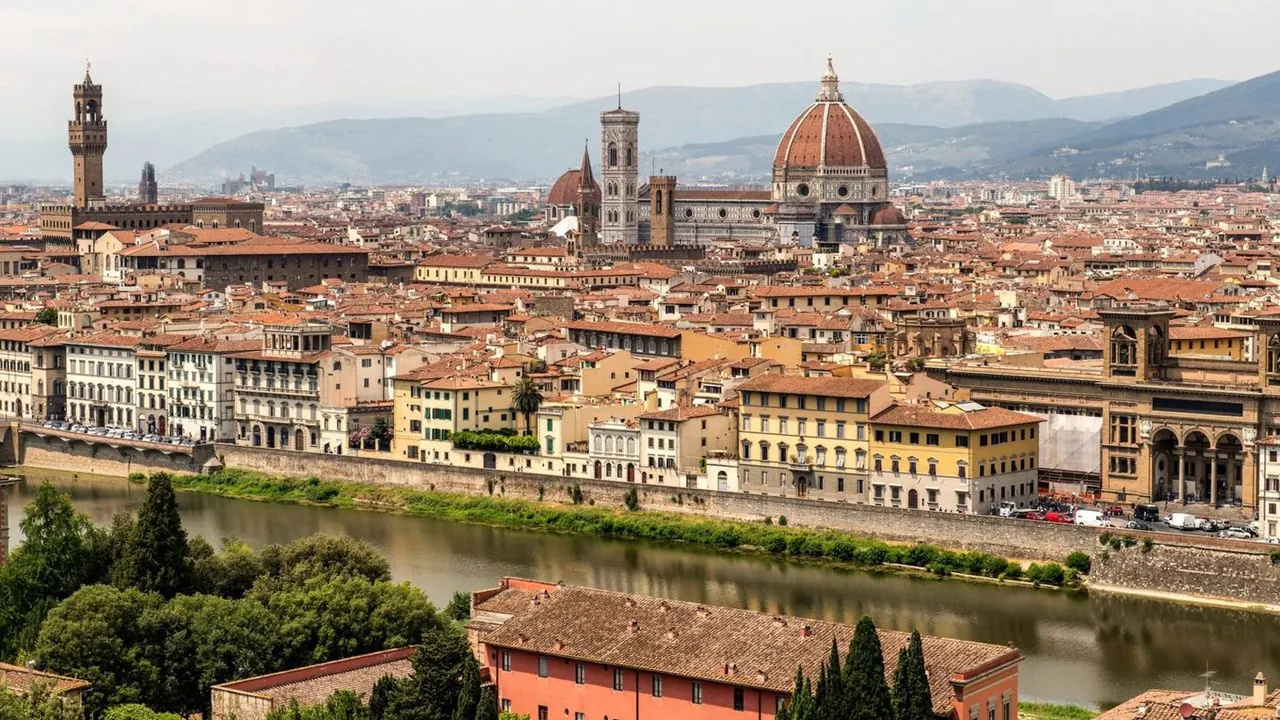
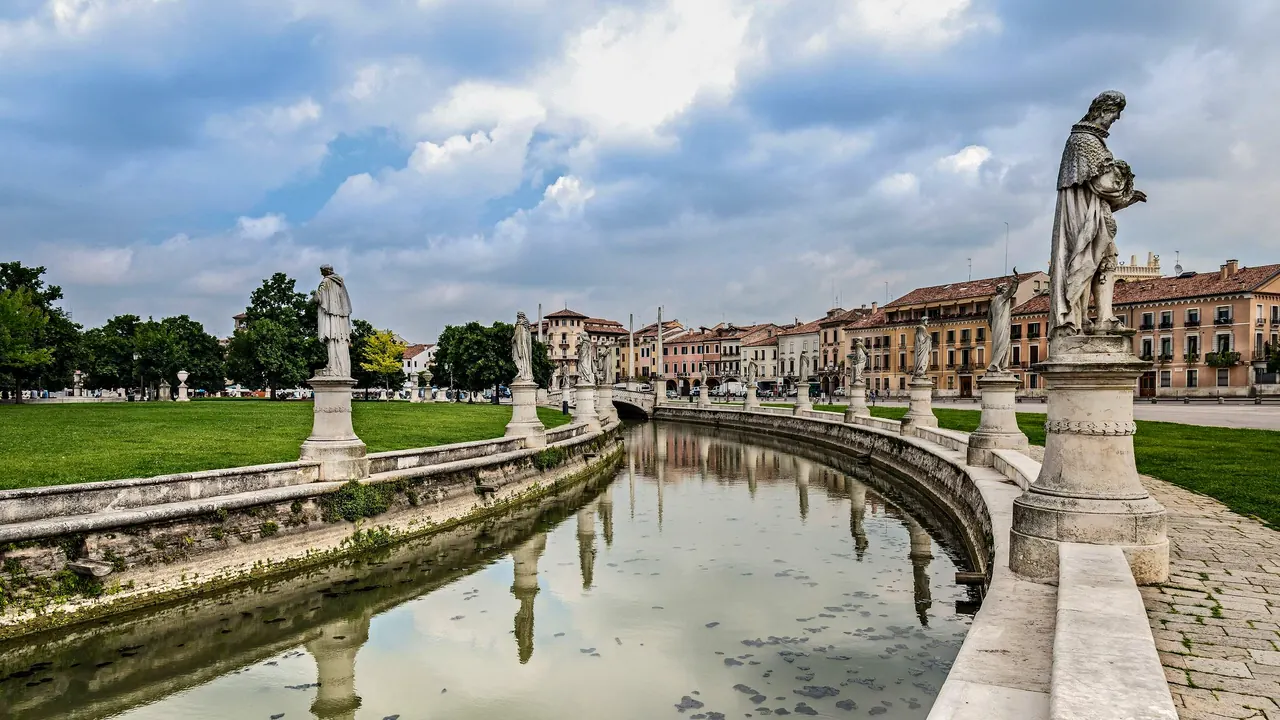
Photos: Florence by Wolfgang Weiser, Pexels License; Padua by Didier Descouens, CC BY-SA 4.0, cropped.
Florence or Padua?
Our verdict in twelve categories, each scored against the same fixed benchmark cities, and the climate month by month, so you can choose for your trip.
Choose Florence for
- shopping
- culture and sights
- live music and the arts
Florence suits travellers who want the Renaissance at full strength: the Uffizi, the Accademia, the Bargello and Brunelleschi's dome, all in one walkable centre. It also has Tuscan cooking, craft shopping in leather and paper, and an opera house with its own orchestra. It is the natural choice for a first trip to Italy built around art, as long as you accept a dearer, more crowded stay.
Choose Padua for
- wellness
- prices
- beaches
Pick Padua if you'd rather sleep somewhere calmer and cheaper and spend your days elsewhere. Venice is under half an hour by train, with Vicenza and Verona close behind. Giotto's Scrovegni frescoes and the Basilica of Saint Anthony give the city a strong core of its own. The thermal pools of Abano and Montegrotto, just outside town, make it the better base for a slower trip with time to soak.
Scoreboard
Twelve categories on one fixed scale from 0 to 100. The shaded stretch is the gap between the two.
Your match
Pick a travel style or drag the sliders, and both match scores follow your weighting.
Too close to call, 2 points apart
Wins on shopping and culture and sights with your weighting.
Wins on wellness and prices with your weighting.
What matters to you?
Category by category
What the scores mean for a trip.
Beaches & swimming
Neither city is a beach destination, but Padua is the more practical base for a day at the sea. Sottomarina and the Lido of Venice are about an hour away. The Adriatic there is shallow and calm, which suits small children, even if the long flat rows of umbrellas are nothing to look at.
From Florence, the Versilia coast around Viareggio is about an hour and a half by train and takes a whole day. Most visitors settle for a hotel or public pool instead. If the sea matters to you, plan a few nights on the coast rather than relying on Florence.
Food & drink
Florence has the stronger table. Bistecca alla fiorentina, ribollita and lampredotto from street carts are all part of it. So are the Mercato Centrale and the Sant'Ambrogio market, Chianti reds from vineyards just south of town, and the trattorie of the Oltrarno. Together they give more range and more memorable meals, as long as you avoid the set menus around the Duomo.
Padua eats Venetian home cooking: bigoli with duck sauce, baccalà and risotto with spring peas. Its best moments are the morning markets in Piazza delle Erbe and Piazza della Frutta and the evening spritz. The cooking is good and honest, but the range is narrower and there is little fine dining.
Culture & sights
Florence offers the Renaissance across an entire city. Its architecture, painting and sculpture fill churches, palaces and galleries that sit a short walk apart, from Botticelli in the Uffizi to Donatello and Michelangelo in the Bargello. Once the big names are done, there is still Fra Angelico in the friars' cells at San Marco, the Medici Chapels, the tombs at Santa Croce and the Pitti Palace with the Boboli behind it. Even after a week you will not have run out.
Padua's great art comes from about a century earlier and is more concentrated. Giotto's Scrovegni frescoes lead a group of early fourteenth-century cycles in the Eremitani, the Baptistery and the Oratory of Saint George. Add the Basilica of Saint Anthony, the frescoed hall of the Palazzo della Ragione, the university's anatomical theatre and a botanical garden laid out in 1545, and you have a couple of well-filled days rather than a week. It shows how the Renaissance began, while Florence shows it in full.
Nightlife
In both cities, nights out mean the aperitivo and the wine bar, and there are few clubs. What differs is the setting and the crowd. In Florence the liveliest spot is Piazza Santo Spirito in the Oltrarno. Summer brings outdoor bars along the Arno, and there are loud student pubs near the centre.
Padua's evenings happen in its main squares, Piazza delle Erbe and Piazza dei Signori, where students and locals stand around with spritz glasses. The city is liveliest on weekday nights during term and goes quiet in high summer, just when Florence's riverside bars are busiest.
Nature & outdoors
Both offer gentle, cultivated country close at hand rather than wild landscape. Florence sits in a bowl of hills, so walks start at Fiesole and San Miniato. The Chianti lanes are fine for cycling, and the Casentino forests and Apuan Alps lie further out.
Padua's surroundings are flatter. There are level towpaths along the Brenta, the volcanic Euganean Hills about 15km away and the lagoon for birdwatching. For real mountain walking, the Asiago plateau and Monte Grappa are within reach by car. Florence gives you hill views from the edge of town, while Padua gives you easier cycling.
Day trips
Both cities are exceptional bases, so the real choice is which region you want to explore. From Florence it is Tuscany: Siena, Pisa, Lucca, San Gimignano and the Chianti and Val d'Orcia hill towns. Many of these are much easier with a car.
From Padua it is the Veneto, almost all reachable by fast train. Venice is under half an hour away and Vicenza a quarter of an hour, with Verona, Treviso and Ferrara not far behind. Bologna is within easy reach of both. Padua is the easier base by rail, while Florence has the richer hill-town country.
Good for families
Neither city is built for children, since both centres are mostly frescoes and churches. Florence has the more engaging sights for kids, such as climbing the dome, the secret passages of Palazzo Vecchio and the globes at the Museo Galileo. But its summer heat, crowds and narrow pavements are hard work.
Padua is flat, calmer and largely pedestrianised, and Prato della Valle is a good place for children to run about. Its family outings are also more varied: Gardaland and Lake Garda, or the shallow Adriatic. Florence's main equivalent is the Pinocchio park at Collodi.
Getting around
Both are walking cities without a metro, and the main sights are within about twenty minutes of each other on foot. Florence's stone paving, narrow pavements and summer crowds make it the more tiring of the two. Padua is flat, its arcades give shelter from sun and rain, and cycling is a normal way to get about.
Each has a central station that makes day trips by rail easy. In both, a car only earns its keep in the countryside, especially among Tuscany's hill villages.
Shopping & style
Florence is a real shopping destination for craft. There is leather from workshops and the San Lorenzo stalls, marbled paper, goldsmiths on the Ponte Vecchio, and gilders and framers in the Oltrarno. The fashion-house boutiques are on Via de' Tornabuoni. Look closely at the leather, as some of it is mass-produced.
Padua is pleasant for browsing under its arcades, with Italian fashion and shoe shops, university bookshops and a monthly antiques market on Prato della Valle. Its best buys are food, such as cheeses and Euganean wine from the delicatessens under the Palazzo della Ragione.
Affordability
Padua is the cheaper stay, and that is much of its appeal. Moderately priced hotels make it a sensible base for the region, many visitors sleep there and spend their days in Venice, and a standing spritz with market food costs little. Rooms do get dearer around the big trade fairs and graduation season.
Florence is expensive for its size. Central hotels are pricey from spring to autumn, and museum entry fees add up over a few days. Street food, market lunches and house wine help, and so does staying across the river or near the station, or coming in winter.
Live music & performing arts
Florence has the deeper classical life. Opera was more or less born here, and the Teatro del Maggio Musicale Fiorentino stages opera, concerts and ballet with its own orchestra. Its spring festival is one of Europe's oldest, though many visitors only see the church concerts staged for tourists.
Padua's programme is smaller: theatre and some opera at the Teatro Verdi, a chamber orchestra season in the frescoed Sala dei Giganti, and small student venues. For major opera, people from Padua take the train to the Fenice in Venice or to Verona's summer Arena.
Wellness & relaxation
This is Padua's biggest advantage. Abano and Montegrotto Terme, about 12km away, form one of Europe's largest thermal districts, where the local mud has been used for treatments since Roman times. Many spa hotels accept day visitors, so a soak fits easily after a morning of sightseeing.
In Florence itself there are only hotel spas and a few day spas. For thermal bathing you need a day out, either to Montecatini Terme, under an hour by train, or to the outdoor pools at Bagno Vignoni and Saturnia. The crowded centre is also less restful than Padua's unhurried pace.
When should you go?
Pick your month. The climate figures are measured averages, not a forecast.
Florence in July
Padua in July
Daytime high, °C
Rainfall in the month, mm
Where the figures come from
Florence has no rain gauge within 25 km of the centre, so its rainfall comes from a gridded climate dataset read at the city rather than from a gauge further away.
Florence's sunshine is measured 71 km from the centre, at Pisa / S. Giusto.
Padua's temperatures are measured 35 km from the centre, at Treviso / Istrana.
Padua has no rain gauge within 25 km of the centre, so its rainfall comes from a gridded climate dataset read at the city rather than from a gauge further away.
Padua's sunshine is measured 36 km from the centre, at Treviso / S. Angelo.
Temperature and rainfall are climate normals, averaged over the years shown. Florence: 1995-2020 (sunshine 1991-2020, rainfall 1991-2020) normals, Firenze / Peretola (5.6 km from centre). Padua: 1991-2020 normals, Treviso / Istrana (35.4 km from centre).
Both cities are at their best in spring and early autumn, roughly April to early June and September to October, when the days are warm enough for long walks without wearing you out. Florence runs hotter in high summer. August afternoons near 33°C make stone streets and museum queues hard going. Padua's summer is slightly cooler but humid, and it gets more rain through the warm months. Florence is also the sunnier of the two all year round.
The wet seasons and winters differ too. Florence saves most of its rain for autumn, peaking at about 124mm in November. Padua's rainfall is spread more evenly through the year. Padua's winter is colder, with January highs around 8°C and fog over the plain, while Florence's winter days are a little milder. Only Padua has the sea within easy reach. The Adriatic warms to about 25°C in July and August, and that is the window for a beach day.
Which traveller are you?
On a culture and arts trip, Florence is the clear pick. The Uffizi, the Accademia, the Bargello, the Pitti Palace and the Brancacci Chapel can fill a week. Its opera house and the spring Maggio Musicale add evenings that Padua's smaller programme cannot match.
For a relaxing and wellness trip, Padua wins easily. Abano and Montegrotto Terme, about 12km out, are among Europe's largest thermal districts and have pools open to day visitors. Its slow provincial pace suits a restful stay better than Florence's crowded centre.
On a trip on a tight budget, Padua goes further. Its hotels are moderately priced and well placed for trains to Venice, Verona and Vicenza, and a standing spritz with market food costs little. In Florence, central rooms and museum fees add up quickly.
Before you go
| Measure | Florence | Padua |
|---|---|---|
| Official language | Italian | Italian |
| Currency | Euro (EUR) | Euro (EUR) |
| Sockets | CFL230 V, 50 Hz | CFL230 V, 50 Hz |
| Driving side | Right | Right |
| Time zone | UTC+1, UTC+2 in summer | UTC+1, UTC+2 in summer |
| Emergency number | 112 | 112 |
| Elevation | 50 m | 12 m |
| Main airport | Florence Airport, Peretola (FLR)6 km from centre46 non-stop destinations | Venice Marco Polo Airport (VCE)39 km from centre103 non-stop destinations |
| Public holidays this year | 13 days | 13 days |
By the numbers
| Measure | Florence | Padua |
|---|---|---|
| City population | 360,930 | 206,496 |
| People per km² | 3,528 | 2,220 |
| Museums within 10 km | 141 | 29 |
| UNESCO World Heritage sites within 50 km | 6 | 5 |
| Swim season, months above 21 °C | - | 4 months |
Where else could you go?
Every comparison below shares a destination with this one, so you can follow Florence or Padua somewhere new.