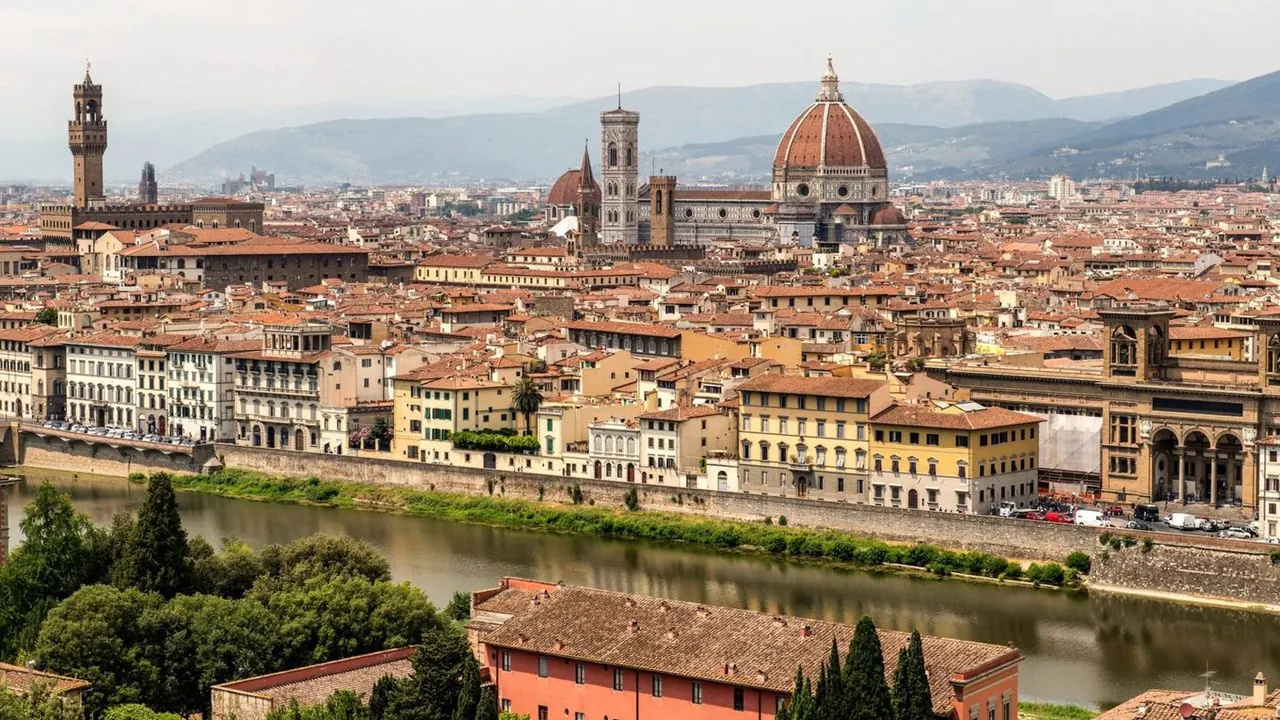
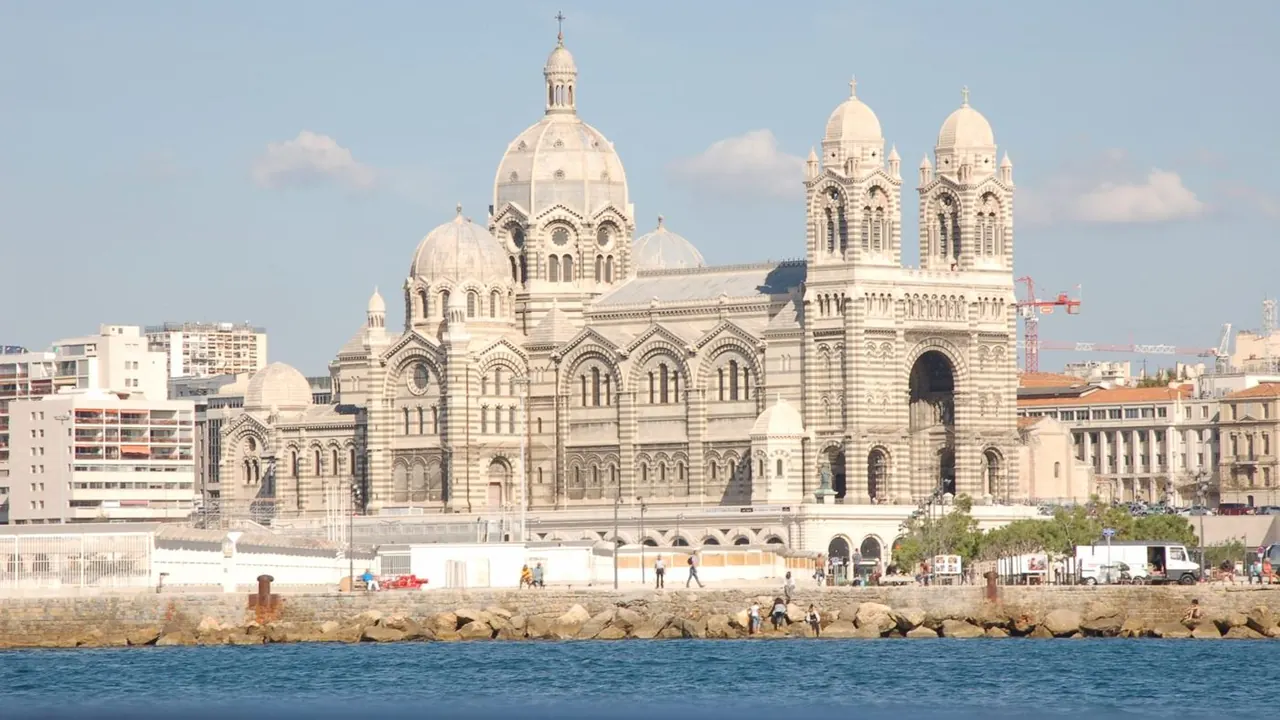
Photos: Florence by Wolfgang Weiser, Pexels License; Marseille by Charlotte Noblet, CC BY-SA 3.0, cropped.
Florence or Marseille?
Our verdict in twelve categories, each scored against the same fixed benchmark cities, and the climate month by month, so you can choose for your trip.
Choose Florence for
- culture and sights
- shopping
- getting around
Florence is for the traveller who puts art and architecture at the centre of the trip. Brunelleschi's dome, the Uffizi, the Accademia and the Bargello are all a short walk apart, and Siena, Lucca and the Chianti vineyards are easy days out. It suits a slow pace of museums in the morning and trattoria lunches, and it is also the better town for leather, paper and craft workshops.
Choose Marseille for
- beaches
- nature and the outdoors
- nightlife
Choose Marseille for a summer trip that mixes a real city with the sea. You can swim off the Corniche before breakfast, walk into the Calanques national park without leaving the city limits, and finish the day on a terrace in Cours Julien, and it costs a little less than Florence. It is rougher and more spread out, but it gives you far more water and open country.
Scoreboard
Twelve categories on one fixed scale from 0 to 100. The shaded stretch is the gap between the two.
Your match
Pick a travel style or drag the sliders, and both match scores follow your weighting.
Too close to call, 1 point apart
Wins on culture and sights and shopping with your weighting.
Wins on beaches and nature and the outdoors with your weighting.
What matters to you?
Category by category
What the scores mean for a trip.
Beaches & swimming
For swimming, Florence has almost nothing to offer. It lies inland on the Arno, and the sandy Versilia beaches near Viareggio are about an hour and a half away by train. That makes the sea a full day out, so on hot afternoons most visitors make do with a hotel pool or a public pool.
In Marseille the sea is part of everyday life. There is the broad Prado seafront with lawns behind it, the little Plage des Catalans and the rocky inlet of the Vallon des Auffes. The turquoise water of the Calanques and the coves on the Frioul islands are a half-day trip by boat or on foot. The mistral can chill the water suddenly, but you can swim here all summer.
Food & drink
Florence has the edge, and its cooking is closely tied to Tuscany: thick bistecca, bread soups such as ribollita, lampredotto from street carts, and Chianti poured by the glass from vineyards just south of the city. The Mercato Centrale and Sant'Ambrogio show what locals buy, and the better trattorie are in the Oltrarno.
Marseille eats more widely. Bouillabaisse in the small harbours of the Corniche is the big meal of a trip, and day to day you will find chickpea panisses, wood-fired pizza and North African and Armenian food from Noailles. There is rosé from Cassis and Bandol to go with it. Both cities have tired set menus around their main sights, at the Duomo in Florence and the Vieux-Port in Marseille.
Culture & sights
Here Florence is far ahead. The Renaissance is packed into a few streets: the Duomo and Baptistery, the Uffizi, David at the Accademia, the sculpture in the Bargello and the Pitti Palace across the river. Below that first rank are the Brancacci Chapel, Santa Croce and Palazzo Vecchio, so a week is easy to fill, although the big museums need booking.
Marseille's history goes back further, to its founding by Greek sailors, but the sights are spread across a working city. The main ones are Notre-Dame de la Garde, the forts and the MuCEM at the Vieux-Port, the Vieille Charité in Le Panier, the crypts of Saint-Victor and Le Corbusier's Cité Radieuse. They are rewarding, but you will not find a dense centre of masterpieces like Florence's.
Nightlife
Marseille stays out later and makes more noise. Graffiti-covered bars and small music venues around Cours Julien and La Plaine fill up late, and there are electronic nights in old warehouses and summer parties on rooftops and by the sea. Some central streets feel uneasy in the small hours, which is why many locals take a taxi home.
Florence is built around aperitivo and wine bars. The liveliest evenings are on Piazza Santo Spirito and around Sant'Ambrogio, and in summer there are bars along the Arno. There is little clubbing, and the night ends early.
Nature & outdoors
Marseille has a national park inside its city limits. The Calanques massif gives you white limestone ridges, the inlets of Sormiou, Sugiton and En-Vau, cliffs for climbing and clear water for kayaking and diving. Sainte-Victoire and the beech woods of the Sainte-Baume are within an hour by road. In summer, though, high fire risk can close the massif to walkers.
The country around Florence is gentler and farmed. You can walk the olive terraces at Fiesole, cycle the cypress-lined lanes of Chianti, or go further to the Casentino forests and the Apuan Alps. It is lovely, but it is not wild in the way the Calanques are.
Day trips
Both cities are excellent bases, but Florence has more major towns close by. Siena, Pisa and Lucca are all reachable by bus or train, San Gimignano and Volterra are easy by car, and Bologna is a short high-speed train ride away. You could spend a week on day trips and still have the Val d'Orcia towns left over.
From Marseille you can explore Provence: Aix and Cassis are very close, while Arles, Avignon, Nîmes and the Pont du Gard make longer days out. A car makes the Luberon villages and Les Baux easier to reach. The range is wide, but the great towns are spread a little further apart than they are around Florence.
Good for families
Neither city is easy with children, but the days look different. In Florence the hands-on sights work best: climbing the dome, the secret passages of Palazzo Vecchio, the globes at the Museo Galileo and running around the Boboli Gardens, with the Pinocchio park at Collodi as a day out.
In Marseille the days revolve around water. There are the Prado beaches with their gentle water, the lake and lawns of Parc Borély, and boat trips to the Château d'If. Steep, busy streets make a buggy hard work, and neither city has a zoo, aquarium or theme park worth the trip.
Getting around
Florence is much easier to get around. The main sights are no more than twenty minutes apart on foot, and Santa Maria Novella station sits in the centre for rail day trips. There is no metro, and you will hardly miss it, although the narrow pavements are crowded in summer.
Marseille has a metro, trams and little ferries across the Vieux-Port and out to the beaches. Even so, the city sprawls over hills and bays. Buses to the Calanques trailheads get stuck in traffic, and some coves are still a long walk from the last stop.
Shopping & style
Florence is the stronger shopping city, and most of what it sells is made by hand. You will find leather workshops and the San Lorenzo stalls, marbled paper, goldsmiths on the Ponte Vecchio, gilders and framers in the Oltrarno, and the fashion houses on Via de' Tornabuoni. You need to tell real workmanship from mass-produced stock, but there is plenty worth looking for.
In Marseille the good buys are local and cheap: green cubes of Marseille soap, painted santon figures from Le Panier, and fabrics and teas in Noailles. Beyond these, the chain stores of Rue de Rome and the shopping centre at La Joliette do not take long to see.
Affordability
Marseille is the cheaper of the two, but not by a great deal. Public transport costs little, walking in the Calanques is free, several museums charge little to get in, and North African snacks and pizza keep lunch cheap. Prices near the port and the beaches go up in July and August.
In Florence the costs come from central hotels and from admission charges, which mount up across the Uffizi, the Accademia and the Duomo climb. Lampredotto, market counters and house wine are good value, and walking everywhere saves on transport. Staying across the river or visiting in winter helps most.
Live music & performing arts
The two cities offer roughly the same amount, but in different styles. Florence's strength is its classical heritage: opera was more or less born here, and there is the Teatro del Maggio, the spring Maggio Musicale festival and the eighteenth-century Pergola. Most visitors, though, end up at concerts in churches staged for tourists.
Marseille is more contemporary and more popular in taste. It has an art deco opera house, the Criée theatre in the old fish market and the mixed programme at the Friche la Belle de Mai. On top of that come the city's roots in French hip-hop and the Fiesta des Suds world-music festival.
Wellness & relaxation
Neither city is restful in itself, and the calm lies outside both. From Florence it is easier to reach proper thermal bathing: Montecatini Terme is under an hour by train, and the hot springs at Bagno Vignoni and Saturnia make a longer trip, as does a stay on a hill farm.
Marseille has a few local hammams and hotel spas, but nothing with a tradition behind it. Its quieter moments are long lunches by a Corniche harbour, and many people who want rest stay in Cassis and visit the city for the day.
When should you go?
Pick your month. The climate figures are measured averages, not a forecast.
Florence in July
Marseille in July
Daytime high, °C
Rainfall in the month, mm
Where the figures come from
Florence has no rain gauge within 25 km of the centre, so its rainfall comes from a gridded climate dataset read at the city rather than from a gauge further away.
Florence's sunshine is measured 71 km from the centre, at Pisa / S. Giusto.
Temperature and rainfall are climate normals, averaged over the years shown. Florence: 1995-2020 (sunshine 1991-2020, rainfall 1991-2020) normals, Firenze / Peretola (5.6 km from centre). Marseille: 1991-2020 normals, Marseille / Marignane (20.6 km from centre).
The two cities have similar temperatures, but Marseille is drier and sunnier in every month. Florence sits in a hollow in the hills and holds the heat. July and August reach 33°C, which makes long walks between museums hard work, so late April, May and the second half of September are the best times. Autumn brings the heaviest rain, with November close to 124mm, and winter is cool and grey but quiet for sightseeing.
Marseille is warm enough for the beach from June to September. The sea reaches about 22°C in August and stays almost that warm into September, and July is very dry, with only 11mm of rain. Spring and autumn are the best seasons for walking in the Calanques, before and after the summer heat. Winter here is a little milder than in Florence and much brighter, so it works better for a city trip out of season.
Which traveller are you?
For a culture and arts trip, Florence is the clear choice. The Uffizi, Michelangelo's David, the Fra Angelico cells at San Marco and the Medici Chapels can fill a week, and all of it sits inside a compact centre you can walk.
On a beach and sun trip, Marseille wins easily. You can swim in the city itself at the Prado beaches and the coves of the Corniche, and boats run to the Calanques and the Frioul islands. In Florence the nearest sea is a full day's outing.
For an outdoors trip, pick Marseille. The Calanques give you coastal walking, sport climbing, sea kayaking and diving right on the city's edge, with Sainte-Victoire close by. Florence has gentler country: olive terraces, Chianti lanes and Apennine forests.
Before you go
| Measure | Florence | Marseille |
|---|---|---|
| Official language | Italian | French |
| Currency | Euro (EUR) | Euro (EUR) |
| Sockets | CFL230 V, 50 Hz | CE230 V, 50 Hz |
| Driving side | Right | Right |
| Time zone | UTC+1, UTC+2 in summer | UTC+1, UTC+2 in summer |
| Emergency number | 112 | 112 |
| Elevation | 50 m | 0 m |
| Main airport | Florence Airport, Peretola (FLR)6 km from centre46 non-stop destinations | Marseille Provence Airport (MRS)21 km from centre126 non-stop destinations |
| Public holidays this year | 13 days | 11 days |
By the numbers
| Measure | Florence | Marseille |
|---|---|---|
| City population | 360,930 | 886,040 |
| People per km² | 3,528 | 3,683 |
| Museums within 10 km | 141 | 27 |
| UNESCO World Heritage sites within 50 km | 4 | 1 |
| Swim season, months above 21 °C | - | 2 months |
Where else could you go?
Every comparison below shares a destination with this one, so you can follow Florence or Marseille somewhere new.