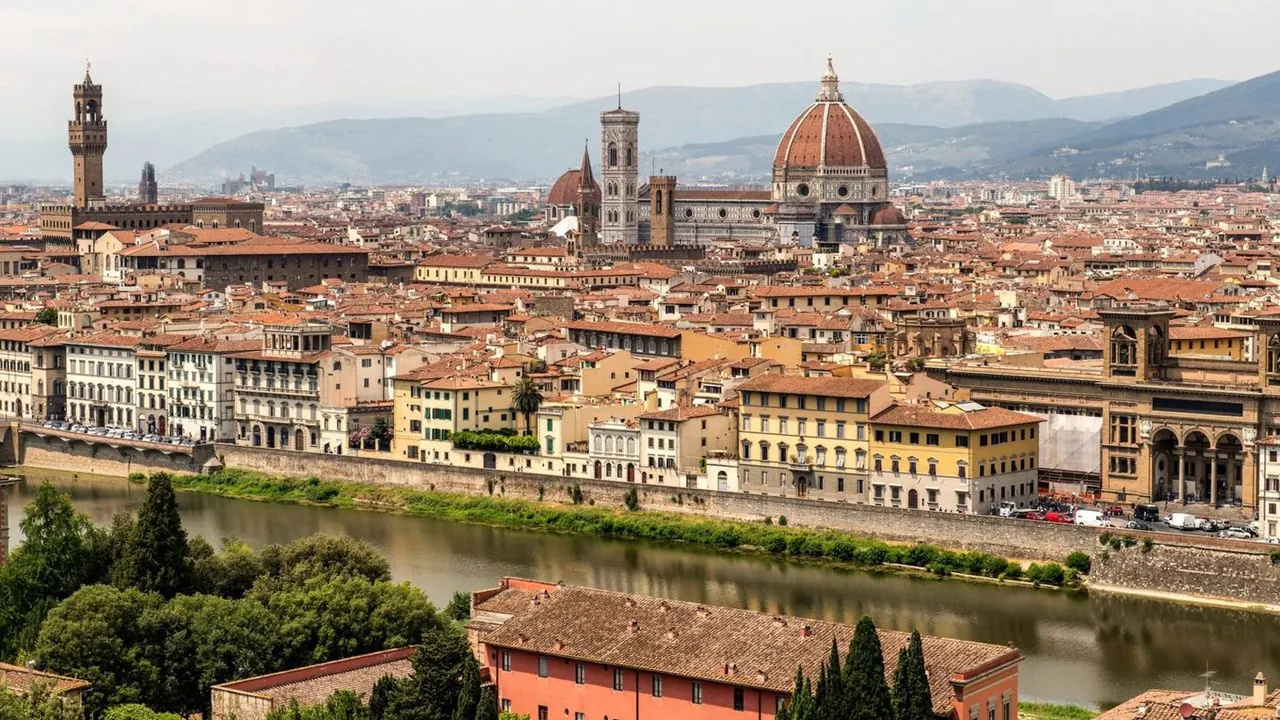
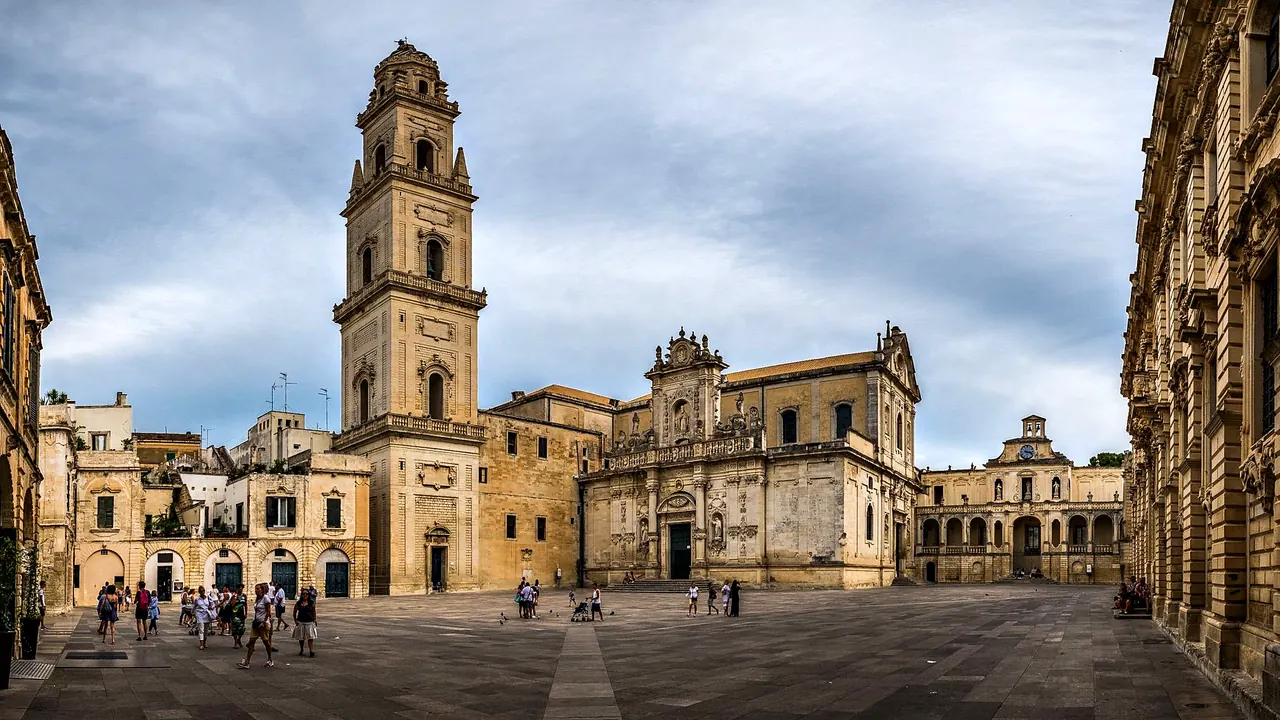
Photos: Florence by Wolfgang Weiser, Pexels License; Lecce by Giuseppe Milo, CC BY 3.0, cropped.
Florence or Lecce?
Our verdict in twelve categories, each scored against the same fixed benchmark cities, and the climate month by month, so you can choose for your trip.
Choose Florence for
- shopping
- getting around
- day trips
Florence is the choice for a trip built around art and history. The Renaissance is packed into a centre you can walk from end to end, with the Uffizi, the Accademia and the Duomo minutes apart, and Siena, Pisa, Lucca and the Chianti hills are easy to reach by train or bus. Shoppers after leather and fine craftwork are better served here too, as long as they accept the higher costs and the summer crowds.
Choose Lecce for
- beaches
- prices
- families
Travellers who want the sea in their days and a lovely old town in their evenings will be happier in Lecce. Its Baroque streets are a pleasure to wander, but the real pull is the Salento coast, with sandy Ionian beaches and Adriatic coves within an easy drive. It costs less than Florence for most of the year, though you will want a car to make the most of it.
Scoreboard
Twelve categories on one fixed scale from 0 to 100. The shaded stretch is the gap between the two.
Your match
Pick a travel style or drag the sliders, and both match scores follow your weighting.
Wins on shopping and getting around with your weighting.
Wins on beaches and prices with your weighting.
What matters to you?
Category by category
What the scores mean for a trip.
Beaches & swimming
This is the widest gap between the two. Florence sits in the Arno valley with no swimming to speak of. The long, lounger-lined sands of the Versilia are about an hour and a half away by train, so a swim in the sea means giving up a whole day.
Lecce is inland too, but the Salento coast is close enough to shape the whole stay. The cliffs and pale coves of Torre dell'Orso on the Adriatic are about half an hour away, and the shallow, very clear water of Porto Cesareo is on the Ionian side. You will need a car or the summer buses, and August brings crowds.
Food & drink
Both cities cook simply and well, but Florence offers more range. You get bistecca, ribollita, lampredotto from the carts, two working food markets, Chianti on the doorstep and a fine-dining tier as well, provided you steer clear of the set menus near the Duomo.
Lecce's cooking is more particular. Breakfast is a pasticciotto with iced almond coffee, dinner might be ciceri e tria or orecchiette with turnip tops, and the wine is Negroamaro. Eating well costs less there, but beyond Apulian dishes there is little choice.
Culture & sights
For art, Florence is in a different league. The Uffizi, David in the Accademia, the Bargello and the Pitti Palace hold some of the most important Renaissance work anywhere. Smaller places such as the Brancacci Chapel and the frescoed cells of San Marco would fill a long visit by themselves.
In Lecce the townscape itself is the attraction: honey-coloured Baroque facades, Santa Croce, the enclosed Piazza del Duomo at dusk and half a Roman amphitheatre below the main square. Its museums are modest, so this is a city to wander rather than study.
Nightlife
Neither city is a place for dancing until dawn, and evenings follow a similar pattern: aperitivo, then wine bars, with students keeping things going.
In Florence the crowd gathers on Piazza Santo Spirito, at student pubs near the centre and at summer bars along the Arno. Lecce stays quieter in town, in small cocktail bars in the old lanes, but in summer the late scene moves to beach clubs and open-air discos around Gallipoli, which means a drive.
Nature & outdoors
Both offer gentle rather than wild country, but of opposite kinds. Florence has hills: olive terraces at Fiesole, lanes in the Chianti for walking and cycling, and further out the Casentino forests and the marble peaks of the Apuan Alps.
Around Lecce the land is a flat olive plain, so the outdoors means the coast. There are clifftop paths towards Otranto, boat trips into sea caves, birdwatching in the Le Cesine wetlands and good snorkelling and diving. In both places, summer is too hot for long walks.
Day trips
Florence is one of the finest day-trip bases in Europe. Siena, Pisa, Lucca and Bologna are all around an hour or less by train or bus, and San Gimignano, Volterra and the Chianti villages add more than a week of outings.
Lecce has good outings of its own, among them the cathedral mosaic at Otranto, Gallipoli's island old town and the trulli of Alberobello. The distances are longer, though, and most of these trips depend on a car.
Good for families
Neither city is built around children, and neither has a zoo, aquarium or theme park worth the trip. Florence keeps them busy with the climb up the dome, the secret passages of Palazzo Vecchio and the Boboli Gardens, though its narrow, crowded pavements are tiring with a pushchair.
Lecce's traffic-free old town and family evenings on the piazzas feel more relaxed. The shallow, sandy beaches near Porto Cesareo also give small children a kind of day out that Florence cannot offer.
Getting around
Florence is the easier base without a car. The main sights are within about twenty minutes' walk of each other, Santa Maria Novella station is right in the centre, and trains run easily to Pisa, Lucca and Bologna.
Lecce's old town is just as walkable and flatter, but beyond it things get harder. Local railways across the Salento are slow and infrequent and the beach buses run only in summer, so most visitors hire a car.
Shopping & style
Florence is a real shopping destination. Leather workshops, the goldsmiths on the Ponte Vecchio, marbled paper, the artisans of the Oltrarno and the luxury houses on Via de' Tornabuoni give it real depth, though some of the leather is mass-produced, so look closely before you buy.
In Lecce, shopping is a pleasant sideline. Look for cartapesta saints from the old-town workshops, carved limestone, Grottaglie ceramics and olive oil to take home. Beyond a few shops on the main streets there is little fashion.
Affordability
In Florence, most of the money goes on staying close to the sights and getting into them. A few days of the big galleries and the dome climb make tickets a real part of the budget, and restaurants on the main squares charge for the view. Street food and house wine stay reasonable and you will hardly pay for transport. The biggest savings come from a winter visit or a room near the station or in the Oltrarno.
Lecce asks less of you from day to day, because wandering its old town costs nothing and eating out is modest. Here the spending moves to the coast. A hire car, and beach-club loungers in high summer, are what push the bill up, so May, June and September are when your money goes furthest.
Live music & performing arts
Florence has the stronger stage. Opera was more or less born here, the Teatro del Maggio Musicale Fiorentino runs a full season of opera, concerts and ballet, and its spring festival is among the oldest in Europe. Many visitors, though, only meet the city's music through concerts in churches staged for tourists.
Lecce's two theatres put on a modest season. Its real musical tradition is pizzica, the tambourine dance played at village festivals all summer and at the Notte della Taranta in Melpignano in August. Outside summer there is little on.
Wellness & relaxation
What separates the two is where the calm comes from. Florence's centre is crowded in high season, so rest usually means leaving it: Montecatini Terme, a grand old spa town, is under an hour by train, the open-air sulphur pools at Saturnia and Bagno Vignoni lie further south, and a few nights on a farm in the hills are the classic way to slow down. In town, the Boboli and Bardini gardens early in the day are the quiet corners.
In Lecce the slower pace is part of everyday life, with shops shut through the long afternoon rest and evenings spent sitting on the piazzas. Taking the waters there happens by the sea: Santa Cesarea Terme has sulphur pools in grottoes on the cliffs, and some of the old fortified masserie on the plain have become quiet retreats with spas.
When should you go?
Pick your month. The climate figures are measured averages, not a forecast.
Florence in July
Lecce in July
Daytime high, °C
Rainfall in the month, mm
Where the figures come from
Florence has no rain gauge within 25 km of the centre, so its rainfall comes from a gridded climate dataset read at the city rather than from a gauge further away.
Florence's sunshine is measured 71 km from the centre, at Pisa / S. Giusto.
Lecce's temperatures are measured 38 km from the centre, at Brindisi.
Lecce has no rain gauge within 25 km of the centre, so its rainfall comes from a gridded climate dataset read at the city rather than from a gauge further away.
Temperature and rainfall are climate normals, averaged over the years shown. Florence: 1995-2020 (sunshine 1991-2020, rainfall 1991-2020) normals, Firenze / Peretola (5.6 km from centre). Lecce: 1991-2020 (sunshine 1981-2010) normals, Brindisi (38 km from centre).
Florence has the harder summer. July and August reach about 33°C in the Arno valley, which makes long afternoons of walking between museums tiring, so May, June, September and early October are the comfortable months for sightseeing. Autumn is wet, with rain building through October to around 124mm in November, and winter is cool and often grey.
Lecce's summer air is a little milder and much drier, with almost no rain from June to August and more sunshine than Florence in every month of the year. The sea makes the real difference: it is warm enough to swim from June, reaches about 26°C in August and stays pleasant into October. Spring and autumn suit walking the old town best, and its winters are slightly milder than Florence's, with most of the rain falling between October and January.
Which traveller are you?
On a beach and sun trip, Lecce is the obvious pick. The sandy shallows of Porto Cesareo and the coves of Torre dell'Orso are a short drive away, whereas from Florence the nearest sea, on the Versilia coast, takes a full day's outing.
For a culture and arts trip, Florence wins clearly. The Uffizi, the Bargello, the Accademia and San Marco can fill a week on foot, with opera to end the evening, while Lecce's Baroque streets are best enjoyed in a couple of days.
On a trip on a tight budget, your money goes further in Lecce. Pastries, osterie and local wine cost little, and bed and breakfasts in old palazzi are fairly priced outside August. In Florence, central hotels and museum admissions add up fast.
Before you go
| Measure | Florence | Lecce |
|---|---|---|
| Official language | Italian | Italian |
| Currency | Euro (EUR) | Euro (EUR) |
| Sockets | CFL230 V, 50 Hz | CFL230 V, 50 Hz |
| Driving side | Right | Right |
| Time zone | UTC+1, UTC+2 in summer | UTC+1, UTC+2 in summer |
| Emergency number | 112 | 112 |
| Elevation | 50 m | 49 m |
| Main airport | Florence Airport, Peretola (FLR)6 km from centre46 non-stop destinations | Brindisi Airport (BDS)39 km from centre49 non-stop destinations |
| Public holidays this year | 13 days | 13 days |
By the numbers
| Measure | Florence | Lecce |
|---|---|---|
| City population | 360,930 | 94,783 |
| People per km² | 3,528 | 393 |
| Museums within 10 km | 141 | 11 |
| UNESCO World Heritage sites within 50 km | 6 | 0 |
| Swim season, months above 21 °C | - | 4 months |
Where else could you go?
Every comparison below shares a destination with this one, so you can follow Florence or Lecce somewhere new.