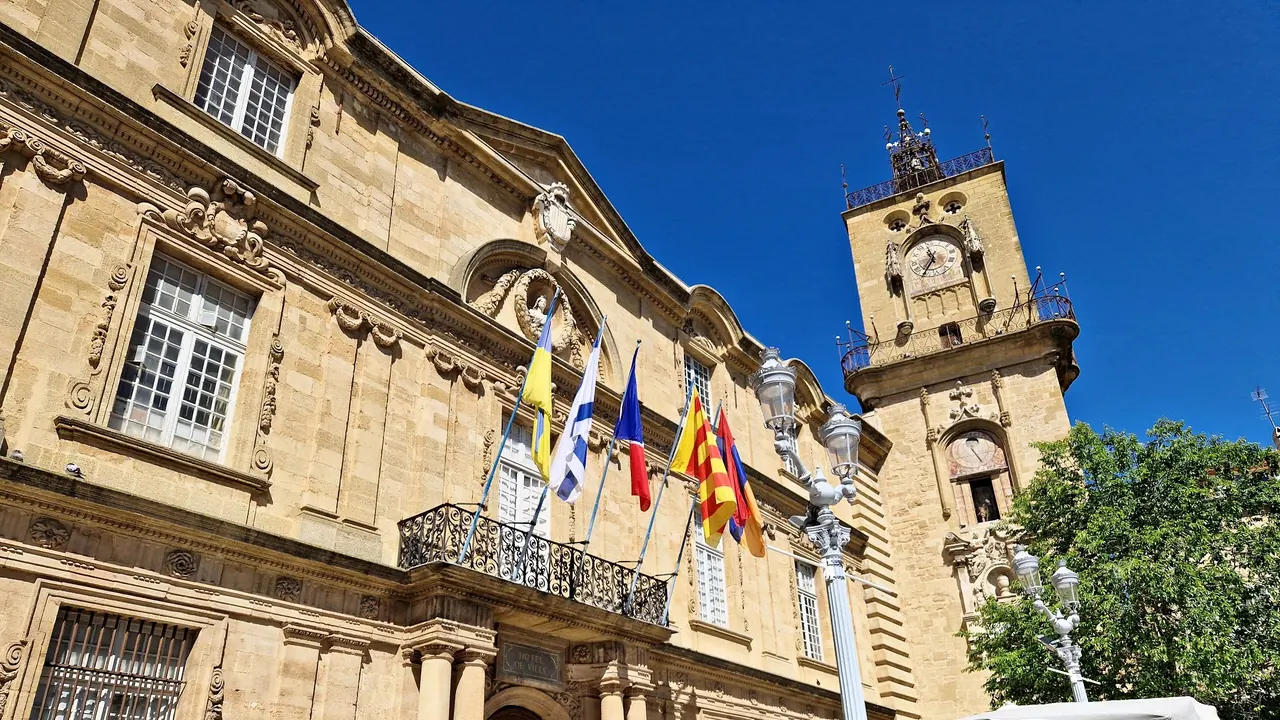
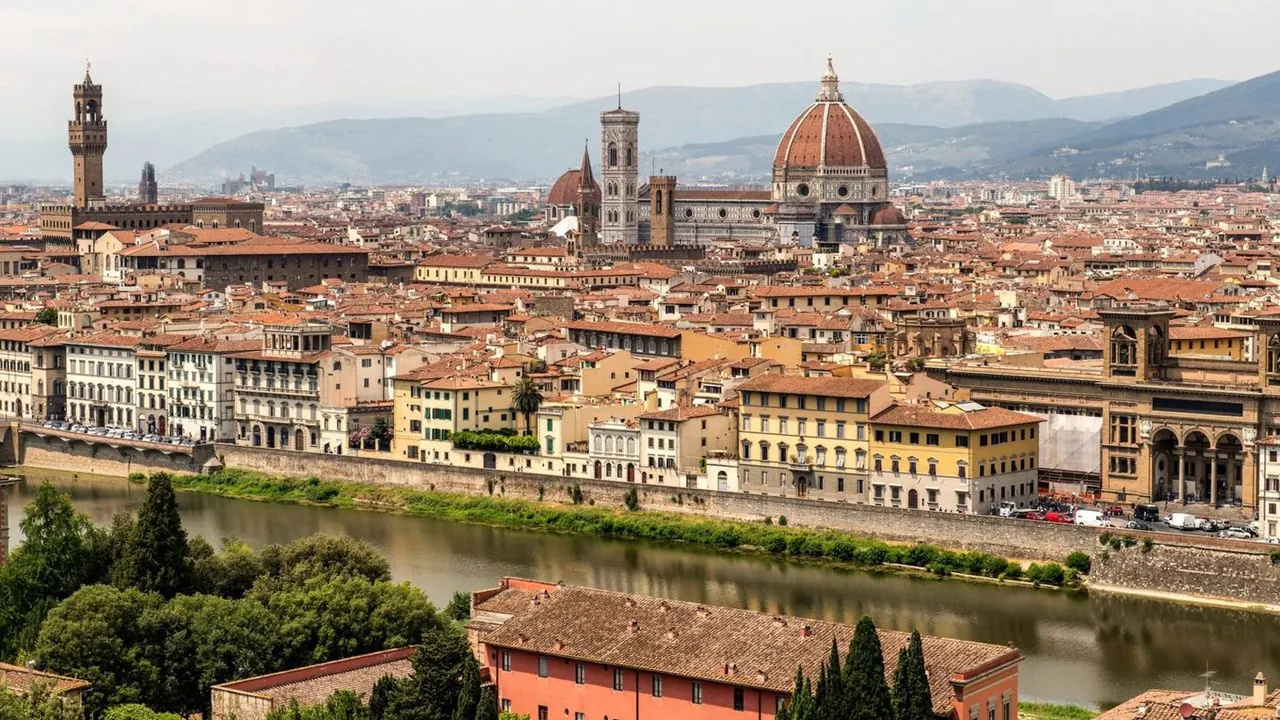
Photos: Aix-en-Provence by Hanay, CC BY-SA 4.0, cropped; Florence by Wolfgang Weiser, Pexels License.
Aix-en-Provence or Florence?
Our verdict in twelve categories, each scored against the same fixed benchmark cities, and the climate month by month, so you can choose for your trip.
Choose Aix-en-Provence for
- beaches
- nature and the outdoors
- wellness
Aix-en-Provence suits travellers who want a handsome, slow-paced base for exploring Provence more than a long list of sights. The town itself gives you two or three days of fountains, Cezanne and market lunches. The bigger reward lies outside it: Sainte-Victoire, the Calanques and the Luberon for walking and cycling, and the coast near enough for a swim. It works best with a car, and for anyone who would rather sit on a calm terrace than queue for a museum.
Choose Florence for
- culture and sights
- shopping
- getting around
Florence is the stronger choice for art, food and craft, and for travelling without a car. Its compact centre holds one of the world's great collections of Renaissance painting, sculpture and architecture. Its trattorie and markets give it the deeper table, and Siena, Pisa, Lucca and Bologna are all easy to reach by train or bus. The price is heavier crowds and hotter streets in summer.
Scoreboard
Twelve categories on one fixed scale from 0 to 100. The shaded stretch is the gap between the two.
Your match
Pick a travel style or drag the sliders, and both match scores follow your weighting.
Wins on beaches and nature and the outdoors with your weighting.
Wins on culture and sights and shopping with your weighting.
What matters to you?
Category by category
What the scores mean for a trip.
Beaches & swimming
Neither is a beach destination, but from Aix the water is much easier to reach. The coves of the Cote Bleue, Cassis and the calanques are all within about an hour by car, so a swim makes a realistic half-day out. The beaches are small, pebbly or rocky, though, and crowded in August.
From Florence the sea takes a full day. The sandy Versilia coast, lined with rented loungers, is about an hour and a half away by train. Most visitors settle for a hotel pool or one of the city's outdoor pools instead.
Food & drink
Aix eats well in the Provencal way. There are morning markets on Place Richelme, long lunches of daube, tians and grilled fish with rosé from the Coteaux d'Aix, and calissons from old confiseries. Beyond French and Mediterranean cooking, though, the choice is narrow.
Florence has the deeper table. Bistecca, ribollita and lampredotto from street carts, two real food markets at San Lorenzo and Sant'Ambrogio, Chianti vineyards just south of the city and serious gelato make eating a reason to go. The best meals are in the trattorie of the Oltrarno, not at the set menus near the Duomo.
Culture & sights
Aix is a town to admire as you stroll rather than to work through. You get the plane trees of the Cours Mirabeau, the honey-coloured mansions of the Mazarin quarter, fountains on almost every square, Cezanne's studio at Les Lauves and the Musee Granet. It makes a gentle two or three days.
Florence is on another scale entirely. The Uffizi, the Accademia's David, the Bargello, Brunelleschi's dome and the Pitti Palace are among the great collections and buildings of Europe. Smaller sights such as the Fra Angelico cells at San Marco, the Brancacci Chapel and the Medici Chapels are just as rewarding, and the city as a whole can fill a week. Book the big museums ahead.
Nightlife
Both are places for a drink outdoors rather than a big night out, and both wind down early. Evenings in Aix centre on the student bars of Place des Cardeurs and the lanes behind the town hall, and they go quieter in term breaks. For real clubbing, people go to Marseille.
Florence starts with aperitivo and moves on to wine bars. Crowds spill into Piazza Santo Spirito, locals gather around Sant'Ambrogio, and in summer bars open along the Arno. Its edge is a little more choice and a livelier summer outdoors, not dancing.
Nature & outdoors
Aix has the more dramatic country close by. Montagne Sainte-Victoire rises just east of town, and the white cliffs and turquoise inlets of the Calanques are within an hour. The Verdon gorge, the Luberon and the Alpilles add canyon hiking, kayaking and cycling, though in midsummer the massifs often close on high fire-risk days.
Florence's surroundings are gentler and more cultivated. There are olive terraces at Fiesole and the cypress lanes of Chianti, with the Casentino forests and the Apuan Alps further out. It is lovely walking and cycling country, but less wild.
Day trips
Both are superb bases, but Florence has more within reach. Aix has Marseille half an hour away, Avignon by TGV, and Arles, Nimes and the Pont du Gard for Roman heritage. The Luberon villages of Gordes and Roussillon are close too, but they really need a car.
From Florence, Siena, Pisa, Lucca and Bologna are all easy by bus or train. San Gimignano, Volterra and the Val d'Orcia towns add more beyond them, enough for a week of outings without repeating yourself, and much of it without a car.
Good for families
Neither is built for children. In both, the main sights are aimed at adults and summer afternoons are very hot. Aix's pedestrian centre and fountains suit short outings, but families there tend to rely on a pool and drive out to the zoo at La Barben or to the coast.
Florence has more inside the city to win children over, such as climbing the dome, the secret passages of Palazzo Vecchio and the Museo Galileo. Narrow pavements and summer crowds make it harder going, though, and the Pinocchio park at Collodi is its one classic day out.
Getting around
Once you leave the old town, the two part ways. Aix's centre is small and mostly pedestrian, with electric shuttles in the narrow lanes. Beyond it, though, the TGV station sits out on the plateau and needs a shuttle bus, and the Provencal countryside is thinly served. Most visitors hire a car and then struggle to park near the centre.
Florence keeps the whole trip simpler. The Duomo, the Uffizi, Ponte Vecchio and the Pitti Palace are all within about twenty minutes of each other on foot, and Santa Maria Novella station is right in the centre. Trams run to the airport. A car is a burden inside the restricted historic zone and only pays off for the hill towns.
Shopping & style
Aix makes for pleasant browsing. There are fashion and shoe boutiques around Rue d'Italie, a produce market every morning and a flower market on market days, plus santons, olive-wood ware and Marseille soap to take home. It has no luxury street or department store.
Florence is a real shopping city, built on craft. It has leather workshops and the San Lorenzo stalls, goldsmiths on the Ponte Vecchio, gilders and restorers in the Oltrarno, and fashion houses on Via de' Tornabuoni. The leather needs a careful eye, though, because some of it is mass-produced.
Affordability
Neither is cheap, and the money goes in different directions. In Aix most of it goes on where you sleep. Central hotels are few, much of what there is is boutique hotels and country houses, and July is especially dear. A hire car for the countryside adds more, while market picnics and back-street lunch menus help.
In Florence, rooms in the historic centre are just as dear from spring to autumn, and on top of that the museums and the Duomo climb all charge admission, which adds up over a few days. Lampredotto, market counters and walking everywhere keep daily spending down, and a winter visit or a room across the river saves the most.
Live music & performing arts
Each has one great musical moment and a smaller year around it. In Aix it comes in July, when the opera festival fills the courtyard of the Archbishop's Palace. The rest of the year rests on the Grand Theatre de Provence and Ballet Preljocaj, which gives Aix the stronger contemporary dance.
Florence, where opera was more or less born, has the Teatro del Maggio Musicale Fiorentino with its own orchestra, plus the Maggio Musicale festival in spring, so its classical season runs longer. Much of what visitors see, though, is church concerts staged for tourists, and plays at the Pergola are almost always in Italian.
Wellness & relaxation
Aix is the more restful choice. The warm springs that led the Romans to found the town still feed the Thermes Sextius spa and the mossy fountain on the Cours Mirabeau. Outside July, its rhythm of markets, long lunches and quiet afternoons is restorative in itself.
Florence has little inside the walls beyond hotel spas, and its crowded centre is tiring in high season. Its bathing culture is a trip away, at Montecatini Terme or the open-air pools of Bagno Vignoni and Saturnia.
When should you go?
Pick your month. The climate figures are measured averages, not a forecast.
Aix-en-Provence in July
Florence in July
Daytime high, °C
Rainfall in the month, mm
Where the figures come from
Florence has no rain gauge within 25 km of the centre, so its rainfall comes from a gridded climate dataset read at the city rather than from a gauge further away.
Florence's sunshine is measured 71 km from the centre, at Pisa / S. Giusto.
Temperature and rainfall are climate normals, averaged over the years shown. Aix-en-Provence: 1991-2020 normals, Marseille / Marignane (19.2 km from centre). Florence: 1995-2020 (sunshine 1991-2020, rainfall 1991-2020) normals, Firenze / Peretola (5.6 km from centre).
Aix is at its best from May to early October. By June the days reach 28°C, and July is the driest and sunniest month. The sea near Marseille is warm enough for swimming from June to September and is warmest in August, at about 22°C. Autumn brings the heaviest rain, with September the wettest month. Winter is cool but often bright.
Florence follows a similar pattern but runs hotter and wetter. July and August reach about 33°C, which makes afternoon sightseeing on stone streets hard work, so April, May, late September and early October are better for walking. Autumn rain is heavier than in Aix and peaks in November at 124mm, and Florence gets noticeably less sunshine through the winter.
Which traveller are you?
On a culture and arts trip, Florence is the clear pick. The Uffizi, the Accademia, the Bargello and the Duomo can fill a week, where Aix fills two or three days, and Siena and Pisa extend the art trail by train.
For an outdoors trip, Aix has the better landscapes on its doorstep. Sainte-Victoire rises at the edge of town, the Calanques offer clifftop walking and sea kayaking within an hour, and the Verdon gorge and Luberon cycling routes are an easy drive.
On a shopping trip, Florence offers far more to bring home. Its leather workshops, Ponte Vecchio goldsmiths, Oltrarno artisans and the luxury houses of Via de' Tornabuoni go well beyond Aix's pleasant boutiques and markets, which have no luxury street to match.
Before you go
| Measure | Aix-en-Provence | Florence |
|---|---|---|
| Official language | French | Italian |
| Currency | Euro (EUR) | Euro (EUR) |
| Sockets | CE230 V, 50 Hz | CFL230 V, 50 Hz |
| Driving side | Right | Right |
| Time zone | UTC+1, UTC+2 in summer | UTC+1, UTC+2 in summer |
| Emergency number | 112 | 112 |
| Elevation | 73 m | 50 m |
| Main airport | Marseille Provence Airport (MRS)21 km from centre126 non-stop destinations | Florence Airport, Peretola (FLR)6 km from centre46 non-stop destinations |
| Public holidays this year | 11 days | 13 days |
By the numbers
| Measure | Aix-en-Provence | Florence |
|---|---|---|
| City population | 149,695 | 360,930 |
| People per km² | 804 | 3,528 |
| Museums within 10 km | 8 | 141 |
| UNESCO World Heritage sites within 50 km | 1 | 6 |
| Swim season, months above 21 °C | 2 months | - |
Where else could you go?
Every comparison below shares a destination with this one, so you can follow Aix-en-Provence or Florence somewhere new.
- Marseillevs Aix-en-Provence
- Sienavs Florence
- Luccavs Florence
- Pisavs Florence
- Avignonvs Aix-en-Provence
- Bolognavs Florence