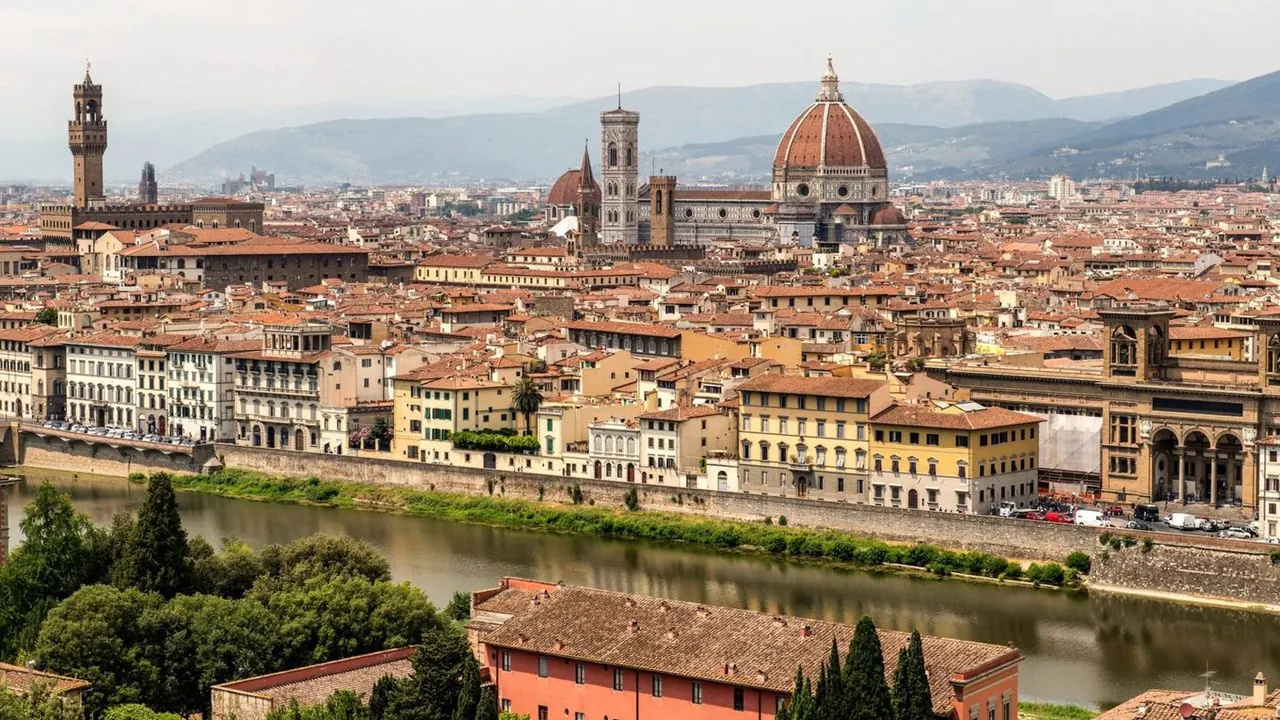
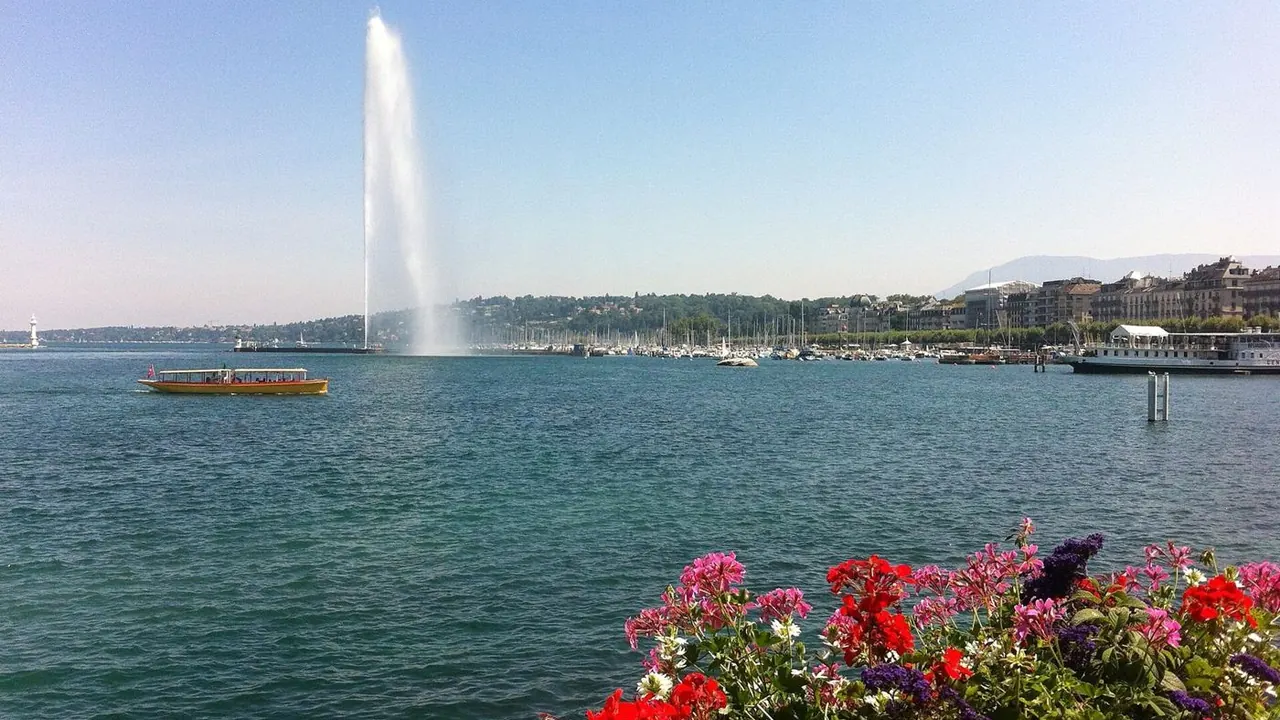
Photos: Florence by Wolfgang Weiser, Pexels License; Geneva by Diviosen, CC BY-SA 3.0, cropped.
Florence or Geneva?
Our verdict in twelve categories, each scored against the same fixed benchmark cities, and the climate month by month, so you can choose for your trip.
Choose Florence for
- culture and sights
- prices
- food and drink
Florence suits the traveller who wants art, good food and a string of famous towns within easy reach. The Renaissance is packed into a centre you can cross on foot, the trattorie and market counters feed you well without much ceremony, and Siena, Pisa, Lucca and the Chianti hills fill any spare days. It is not cheap, but next to Geneva your money goes noticeably further.
Choose Geneva for
- beaches
- nature and the outdoors
- wellness
Geneva is the better pick if you would rather spend your days outdoors and your evenings somewhere calm. It has mountains on every horizon, a clean lake you can swim in from the city centre, and trams and boats that make everything easy, so it works well for active couples and families with young children. The price is the catch. Expect to pay heavily for everything, and expect fewer great sights to fill a long stay.
Scoreboard
Twelve categories on one fixed scale from 0 to 100. The shaded stretch is the gap between the two.
Your match
Pick a travel style or drag the sliders, and both match scores follow your weighting.
Too close to call, 2 points apart
Wins on culture and sights and prices with your weighting.
Wins on beaches and nature and the outdoors with your weighting.
What matters to you?
Category by category
What the scores mean for a trip.
Beaches & swimming
Neither city has a beach of its own, but Geneva gets you into the water far more easily. In summer you can dive off the Bains des Pâquis jetty with the Jet d'Eau in view, or spread out on the lawns and pebbles of Genève-Plage, all without leaving town. The season is short and the shore is lido rather than sand.
From Florence, the sea means a day out to the sandy Versilia beaches around Viareggio, about an hour and a half by train. Otherwise a hot afternoon means a hotel or public pool. If you want sand and the sea, Florence is better treated as one stop on a trip that also includes the coast.
Food & drink
Florence has the stronger and more everyday food culture. You can eat lampredotto rolls from street carts, browse the produce at the Mercato Centrale and Sant'Ambrogio, and find honest bistecca and ribollita in Oltrarno trattorie, with Chianti vineyards starting just south of town. You need to avoid the set tourist menus around the Duomo, but good meals are easy to find.
Geneva cooks French food with a Swiss accent: lake perch, fondue and raclette in panelled brasseries, and local Chasselas to drink. It has polished fine dining in Carouge and the Old Town and a wide range of international kitchens, but almost no cheap casual eating. Meals here are refined but expensive, where Florence feeds you well at any price.
Culture & sights
This is where the two cities differ most. Florence holds one of the world's great concentrations of art: Brunelleschi's dome, Botticelli and Leonardo in the Uffizi, Michelangelo's David and the Bargello's sculpture, then the Pitti Palace, the Medici Chapels and the Brancacci Chapel. A week is not too long, and the big museums need booking.
Geneva's sights tell a different story, of Calvin's Reformation at St Pierre Cathedral and of the city's world role at the Palais des Nations and the Red Cross museum. CERN adds a scientific angle Florence can't match. It is a rewarding set, but it fills two or three days rather than a week.
Nightlife
Both cities go to bed early, but in different ways. Florence's evenings revolve around aperitivo and wine bars, with crowds holding drinks out on Piazza Santo Spirito, a more local scene at Sant'Ambrogio, and loud student pubs near the centre. In summer, bars open along the Arno.
Geneva is quieter on weeknights, but the Pâquis keeps its bars busy late. The alternative centres of Plainpalais and Jonction also run club nights and a small electronic scene, which Florence largely lacks. Choose Florence for lingering over a glass in a square, and Geneva if you want a dance floor now and then.
Nature & outdoors
Geneva is the stronger base for the outdoors. The Salève rises just over the French border, with a cable car, cliffs and paragliding, and the Jura offers forest hikes and cross-country skiing. On clear days Mont Blanc closes the view down the lake, and Chamonix and the ski resorts are close enough for a day.
Florence's countryside is gentler and shaped by people. You can walk the olive terraces up at Fiesole, cycle the cypress-lined lanes of Chianti, or go further to the beech forests of the Casentino and the marble peaks of the Apuan Alps. It is lovely country to walk through, though not wild, and summer heat cuts long walks short.
Day trips
Florence has an unusual number of famous towns within easy reach. Siena and Pisa are each roughly an hour away, walled Lucca a little more, and Bologna is under forty minutes by fast train. San Gimignano, Volterra and the Chianti villages are easy by car. You could spend a week on day trips without repeating one.
Geneva has fewer outings, but they are spread across two countries. Lake steamers call at Nyon, Lausanne and Montreux with the Château de Chillon, passing the Lavaux vineyard terraces. Medieval Yvoire and canal-lined Annecy are on the French side, and Gruyères and Bern each make a longer day out.
Good for families
Geneva is the easier city with children. The streets are safe and mostly flat, trams take pushchairs without fuss, and the Natural History Museum's big animal dioramas can hold young children for hours. Add the lakeside playgrounds and rides on the little yellow harbour boats, and the first few days go smoothly.
Florence takes more effort. Children enjoy climbing the dome, the secret passages of Palazzo Vecchio, the globes at the Museo Galileo and a run around the Boboli, but the main sights are made for adults. Narrow pavements and summer heat make it harder still. Neither city has a zoo or theme park, so families fill the gap with the Pinocchio park at Collodi from Florence, or a mountain day from Geneva.
Getting around
Geneva has the more complete transport system, though in either city you will cover the centre mostly on foot. In Florence the Duomo, the Uffizi and the Pitti are all within about twenty minutes' walk of each other, so you hardly need transport. There is no metro, though, and the stone paving and crowded pavements tire you out. A car is a burden inside the restricted historic centre and only earns its keep in the hill towns.
Geneva runs its trams, buses and yellow harbour boats as one punctual network. The airport is a few minutes from the main station by train, regional rail reaches the French suburbs and the rest of Switzerland, and you can get to the mountains without a car.
Shopping & style
Florence sells craft, and Geneva sells watches and jewellery. In Florence there is leather on market stalls and in workshops, marbled paper and bound notebooks, goldsmiths on the Ponte Vecchio, and gilders and restorers still at work in the Oltrarno, with the big fashion houses on Via de' Tornabuoni. Look closely at the leather, because not all of it is made by hand.
In Geneva, the flagship boutiques of the Swiss watch houses line the Rue du Rhône, and the chocolatiers are good for cheaper gifts. Carouge's design workshops and the Plainpalais flea market add character. Beyond these specialities, neither city has much more than ordinary high-street shops, and many Genevans cross into France to shop.
Affordability
Florence costs a lot for a city its size, but Geneva is in another league altogether. In Florence, central hotels and museum tickets eat into a budget. Street food, market lunches, cheap house wine and a centre you can walk let you claw much of it back, especially if you stay across the river or come in winter.
In Geneva, even a simple meal or a glass of wine costs far more than almost anywhere in Europe, and hotel rates climb further during conferences. Free city museums, free transport for hotel guests and cheap lake lidos help a little. Many careful spenders still sleep or eat across the border in France.
Live music & performing arts
The two are evenly matched, and both lean classical. Florence has the deeper history: opera was more or less born here, and the Maggio Musicale is one of Europe's oldest festivals. The Teatro della Pergola is a beautiful old house, but much of what visitors actually hear is short church concerts put on for tourists.
Geneva hears the Orchestre de la Suisse Romande in Victoria Hall, famed for its acoustics, and sees opera and ballet at the Grand Théâtre. Its live scene also reaches further, with concerts and dance at the Bâtiment des Forces Motrices in the Rhône and small jazz and rock venues. Florence has little of that kind outside the classical season.
Wellness & relaxation
Geneva is more restful in itself. In winter, the Bains des Pâquis turns into a sauna and hammam where regulars plunge into the cold lake. The lakefront hotels have serious spas, Sundays are very quiet, and Évian and Divonne are close across the border.
Florence's crowded centre is rarely calm in season, and the city has little bathing culture beyond hotel spas. The relaxation lies outside the city: the old spa halls of Montecatini Terme are under an hour by train, the open-air sulphur pools at Saturnia and Bagno Vignoni are further south, and a few slow nights on a farm stay in the hills are the Tuscan way to unwind.
When should you go?
Pick your month. The climate figures are measured averages, not a forecast.
Florence in July
Geneva in July
Daytime high, °C
Rainfall in the month, mm
Where the figures come from
Florence has no rain gauge within 25 km of the centre, so its rainfall comes from a gridded climate dataset read at the city rather than from a gauge further away.
Florence's sunshine is measured 71 km from the centre, at Pisa / S. Giusto.
Temperature and rainfall are climate normals, averaged over the years shown. Florence: 1995-2020 (sunshine 1991-2020, rainfall 1991-2020) normals, Firenze / Peretola (5.6 km from centre). Geneva: 1991-2020 normals, Geneve-Cointrin (5.7 km from centre).
Florence is at its best in April, May, late September and early October, when it is warm enough to sit outside but still fine for long days on foot. July and August are hot, with highs around 33°C, and the stone streets make walking in the afternoon hard work, though these are also the sunniest months. The rain comes in autumn: October and November are the wettest months, with over 120mm each, and winter is mild but grey.
Geneva runs cooler all year. Its summer peaks near 27°C, which is pleasant for walking and the only real window for swimming in the lake, roughly July and August. Rain falls fairly evenly through the year, so you can't count on a dry season, and winter is cold, dull and short on sunshine, with highs around 5°C. So Florence is the city for spring and autumn, while Geneva comes into its own in high summer, when Florence is at its hottest.
Which traveller are you?
On a culture and arts trip, Florence is the clear choice. The Uffizi, the Accademia, the Bargello and the frescoes of San Marco could fill a week, while Geneva's Reformation and diplomatic sights are well done but take two or three days.
For an outdoors trip, Geneva wins. The Salève cable car, the Jura ridges and Chamonix's high peaks are all close by, with sailing and paddling on the lake. Florence offers gentler walks and rides among olive terraces and Chianti vineyards.
On a tight budget, Florence is much the easier city. Lampredotto from a cart, market lunches, cheap house wine and a centre you can walk keep costs down. Geneva is costly at every level, and even budget travellers often end up sleeping across the border in France.
Before you go
| Measure | Florence | Geneva |
|---|---|---|
| Official language | Italian | French, German, Italian, Romansh |
| Currency | Euro (EUR) | Swiss Franc (CHF) |
| Sockets | CFL230 V, 50 Hz | CJ230 V, 50 Hz |
| Driving side | Right | Right |
| Time zone | UTC+1, UTC+2 in summer | UTC+1, UTC+2 in summer |
| Emergency number | 112 | 112 |
| Elevation | 50 m | 403 m |
| Main airport | Florence Airport, Peretola (FLR)6 km from centre46 non-stop destinations | Geneva International Airport (GVA)5 km from centre150 non-stop destinations |
| Public holidays this year | 13 days | 9 days |
By the numbers
| Measure | Florence | Geneva |
|---|---|---|
| City population | 360,930 | 211,152 |
| People per km² | 3,528 | 13,280 |
| Museums within 10 km | 141 | 34 |
| UNESCO World Heritage sites within 50 km | 4 | 2 |
Where else could you go?
Every comparison below shares a destination with this one, so you can follow Florence or Geneva somewhere new.